



الصفحة 5
الصفحة 5

Gesture in Human-Computer Interaction and Simulation ; 6th International Gesture Workshop, GW 2005, Berder Island, France, May 18-20, 2005, Revised Selected Papers
The international Gesture Workshops have become the leading interdisciplinary events for dissemination of the latest results on gesture-based communication. The goal of these workshops is to bring together researchers who want to meet and share ideas on advanced research on gesture related to multidisciplinary scienti?c ?elds. Depending on the ?elds, the objectives can be very di?erent. While physiology and biomechanics aim to extract fundamental knowledge of physical gesture, computer sciences try to capture di?erent aspects of gesture and extract features that help to identify, interpret or rebuild the underlying mechanisms of communication gestures. Other approaches and methodologies are followed by cognitive sciences and linguistics, bringing a complementary - derstanding of motor control and gesture meaning. The results can be enhanced by technological applications or demonstrations.

Genetic algorithms: theory, design and programming
We present a series of scientific contributions that delve into the intricate theoretical foundations and practical nuances of genetic algorithms (GAs). Beyond the academic realm, GAs have demonstrated profound applications in societal decision-making and engineering optimization, showcased through real-world examples and case studies. A dedicated section on programming principles offers a thorough guide for implementing GAs across diverse languages. This edition, tailored for researchers and academics, serves as a testament to the scientific advancements within the field, inviting readers to explore the nuanced journey from theoretical constructs to pragmatic applications in the dynamic landscape of GAs.
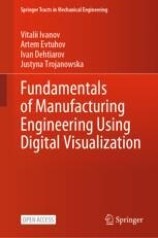
Fundamentals of manufacturing engineering using digital visualization
Offers a guide to core principles and practices of manufacturing engineering. It covers the design of, together with technological and measurement issues for, technical systems. Locating charts and setup schemes describing different machining processes are included. Concepts of product quality, with a focus on accuracy indicators, machining accuracy, roughness, and the impact of surface quality on exploitation properties are also explained. Furthermore, key machining methods, including turning, milling, hole machining, grinding, and gear machining, are analyzed in depth, covering their principles, applications, and techniques. The book is enriched by QR codes, linking to a mobile application presenting additional information about the content, for an interactive and extended learning experience. It also uses illustrations visualized with digital tools to promote a better understanding of the concepts.

Functional and logic programming ; 8th International Symposium, FLOPS 2006, Fuji-Susono, Japan, April 24-26, 2006, Proceedings
This book constitutes the refereed proceedings of the 8th International Symposium on Functional and Logic Programming, FLOPS 2006, held in Fuji-Susono, Japan, in April 2006. The 17 revised full papers presented together with 2 invited contributions were carefully reviewed and selected from 51 submissions. The papers are organized in topical sections on data types, FP extensions, type theory, LP extensions, analysis, contracts, as well as Web and GUI.

From model-driven design to resource management for distributed embedded systems ; IFIP TC 10 Working conference on distributed and parallel embedded systems (DIPES 2006) October 11-13, 2006, Braga, Portugal
From Model-Driven Design to Resource Management for Distributed Embedded Systems contains 16 original contributions as well as 12 invited papers by distinguished invited speakers. These papers were presented at the Working Conference on Distributed and Parallel Embedded Systems (DIPES 2006), which was held in October 2006 in Braga, Portugal, and sponsored by the International Federation for Information Processing (IFIP). This volume covers the following very timely topics: model-driven design, test and evolution of embedded systems, timing analysis and predictability, scheduling, allocation, communication and resource management in distributed real-time systems.

From GSM to LTE-Advanced Pro and 5G: An Introduction to Mobile Networks and Mobile Broadband
Offers an authoritative guide to the technical descriptions of the various wireless technologies currently in use. Explains the rationale behind their differing mechanisms and implementations while exploring the advantages and limitations of each technology. Reflects the significant changes in mobile network technology that have taken place since the third edition was published. Offers a new chapter on 5G NR that explores its non-standalone and standalone architecture. In the Wi-Fi chapter, additional sections focus on the new WPA3 authentication protocol, the new 802.11ax air interface and protocol extensions like 802.11k and 11v for meshed networks.

From brows to trust : Evaluating embodied conversational agents
This book will help experts and designers in the specification and development of applications incorporating ECAs. Part 1 provides guidelines for evaluation methodologies and the identification of design and evaluation parameters. Part 2 demonstrates the importance of considering the user's perspective and interaction experience. Part 3 addresses issues in fine-tuning design parameters of ECAs and verifying the perceived effect. Finally, in Part 4 lessons learned from a number of application case studies are presented. The book is intended for both ECA researchers in academia and industry, and developers and designers interested in applying the technology.
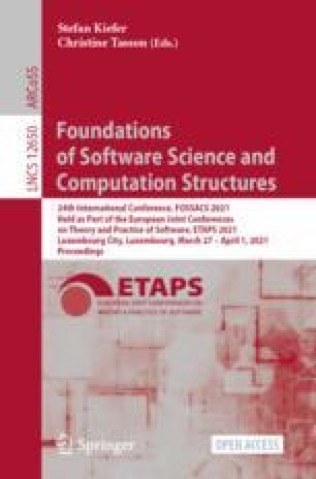
Foundations of software science and computation structures ; 24th International conference, FOSSACS 2021, Held as Part of the European joint conferences on theory and practice of software, ETAPS 2021, Luxembourg City, Luxembourg, March 27 – April 1, 2021, proceedings
This book constitutes the proceedings of the 24th International Conference on Foundations of Software Science and Computational Structures, FOSSACS 2021, which was held during March 27 until April 1, 2021, as part of the European Joint Conferences on Theory and Practice of Software, ETAPS 2021. The conference was planned to take place in Luxembourg and changed to an online format due to the COVID-19 pandemic.

Foundations of software science and computation structures ; 23rd International conference, FOSSACS 2020, Held as part of the European joint conferences on theory and practice of software, ETAPS 2020, Dublin, Ireland, April 25–30, 2020, proceedings
This book constitutes the proceedings of the 23rd International Conference on Foundations of Software Science and Computational Structures, FOSSACS 2020, which took place in Dublin, Ireland, in April 2020, and was held as Part of the European Joint Conferences on Theory and Practice of Software, ETAPS 2020.

Foundations of GTK+ Development
GTK+ is one of the most influential graphical toolkits for the Linux operating system. It is the technology upon which the GNOME and XFCE desktop environments are based, and its crucial to have clear understanding of its complexities to build even a simple Linux desktop application. Foundations of GTK+ Development guides you through these complexities, laying the foundation that will allow you to cross from novice to professional.

Foundations of fuzzy logic and soft computing ; 12th International Fuzzy Systems Association World Congress, IFSA 2007, Cancun, Mexico, Junw 18-21, 2007, Proceedings
This book comprises a selection of papers from IFSA 2007 on new methods and theories that contribute to the foundations of fuzzy logic and soft computing. methodologies. Soft computing consists of several computing paradigms which can be used to produce powerful intelligent systems for solving real-world problems.

Foundations of C++/CLI : The Visual C++ Language for .NET 3.5
Foundations of C++/CLI: The Visual C++ Language for .NET 3.5 introduces C++/CLI, Microsoft's extensions to the C++ syntax that allow you to target the common language runtime, the key to the heart of the .NET Framework 3.5. This book gives you a small, fast–paced primer that will kick–start your journey into the world of C++/CLI. In 13 no–fluff chapters, Microsoft insiders take readers into the core of the C++/CLI language and explain both how the language elements work and how Microsoft intends them to be used. This book is a beginner's guide, but it assumes a familiarity with programming basics. And it concentrates on explaining the aspects of C++/CLI that make it the most powerful and fun language of the .NET Framework. As such, this book is ideal if you're thinking of migrating to C++/CLI from another language.

Foundation models for natural language processing : pre-trained language models integrating media
Covers basic natural language processing models, pre-trained language models BERT, GPT, and sequence-to-sequence converters, as well as the concepts of self-attention and context-sensitive embedding. Various approaches to improving these models are then discussed, such as expanding the pre-training parameters, increasing the length of input texts, or incorporating additional knowledge. An overview of the best performing models is then provided for about twenty application areas, e.g., question answering, translation, story generation, dialogue systems, image generation from text, etc. For each application area, the strengths and weaknesses of existing models are discussed, and an overview of further developments is provided. In addition, links to freely available code are provided. The concluding chapter summarizes the economic opportunities, risk mitigation, and potential developments of AI.

Foundation Flex for Designers
All Flex applications look the same—a blue-gray background and silver-skinned components—right? That doesn't have to be the case, though. This book shows you how to ensure that your Flex 2 and 3 projects stand out from the crowd and provide your users with an application that is both visually stunning and beautifully functional. Flex Builder, coupled with the Adobe Creative Suite (CS3), is a powerful combination, providing all the tools you need to create compelling, vibrant interfaces. This book guides you through creating applications with Flex Builder, designing layouts in Fireworks, creating custom skins for your components in Photoshop and Illustrator, and using CSS to enhance the appearance of your rich Internet applications (RIAs).

Foundation Flash 8 Video
This book is the ultimate guide to Flash 8 video it offers practical advice, technical guidance, and a full series of creative projects ranging from the dead simple to the complex in a manner that talks to you as an equal and makes only one assumption: basic familiarity with the Flash interface. We start with the basicshow to edit video in some of the most popular packages available (such as iMovie and Movie Maker 2) and create a Flash video file and import it into Flash.
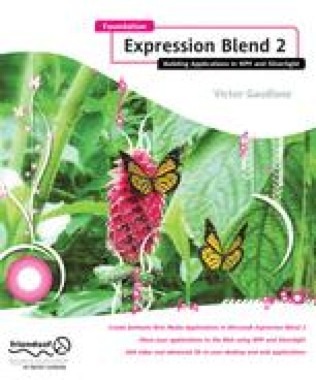
Foundation Expression Blend 2 : Building applications in WPF and silverlight
This book shows you how to take full advantage of Blend's interface, together with and Silverlight's vastly improved designer-developer workflow, guiding you through every step of development from downloading and installing of the development environment through creating finished, functional projects. You'll learn how to create simple drawing applications with the InkCanvas, make tabbed and scrollable interfaces, as well as build fully featured media players, photo galleries, and interactive 3D designs. Each chapter discusses major WPF and Silverlight features, provides a hands-on tutorial, and explains how that feature is implemented in the real world. In the end, you will have a collection of impressive WPF and Silverlight applications that can be added to your portfolio.
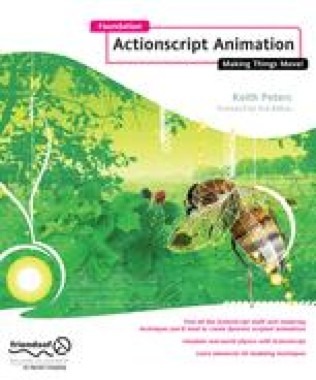
Foundation ActionScript animation : Making things move!
In this book Keith Peters guides you through some basic animation theory and then demystifies the math and physics behind creating realistic animation, looking at trigonometry, velocity and acceleration, and bouncing & friction. This book will teach you how to use Flash ActionScript to move the objects in your movies, rather than letting Flash's tween engine do it for you. The benefit of this is smaller, more realistic, more dynamic interactive movies that seem to come alive on your screen. Almost all of the code featured in this book will work fine in either Flash MX 2004 or Flash 8, and with a few minor adjustments, most of it can even be applied to Flash MX.

Formal Techniques for Networked and Distributed Systems - FORTE 2006 ; 26th IFIP WG 6.1 International Conference, Paris, France, September 26-29, 2006, Proceedings
This book constitutes the refereed proceedings of the 26th IFIP WG 6.1 International Conference on Formal Techniques for Networked and Distributed Systems, FORTE 2006, held in Paris, France, in September 2006. The 26 revised full papers and 4 short papers presented together with 3 invited lectures were carefully reviewed and selected from 177 submissions. The papers focus on the construction of middleware and services using formalised and verified approaches.

Formal concept analysis ; Vol. 3403 ; 3rd International Conference, ICFCA 2005, Lens, France, February 14-18, 2005, Proceedings
This book constitutes a comprehensive and systematic presentation of the state of the art of formal concept analysis and its applications. The first part of the book is devoted to foundational and methodological topics. The contributions in the second part demonstrate how formal concept analysis is successfully used outside of mathematics, in linguistics, text retrieval, association rule mining, data analysis, and economics. The third part presents applications in software engineering.

Formal approaches to software testing and runtime verification ; 1st Combined International Workshops FATES 2006 and RV 2006, Seattle, WA, USA, August 15-16, 2006, Revised Selected Papers
Software validation is one of the most cost-intensive tasks in modern software production processes. The objective of FATES/RV 2006 was to bring sci- tists from both academia and industry together to discuss formal approaches to test and analyze programs and monitor and guide their executions. Formal approaches to test may cover techniques from areas like theorem proving, model checking, constraint resolution, static program analysis, abstract interpretation, Markov chains, and various others. Formal approaches to runtime veri?cation use formal techniques to improve traditional ad-hoc monitoring techniques used in testing, debugging, performance monitoring, fault protection, etc.
