



الصفحة 42
الصفحة 42
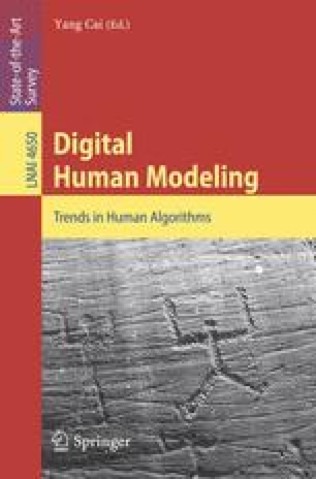
Digital Human Modeling : Trends in Human Algorithms
The emerging information technologies have given rise to new human patterns in terms of both physiological and psychological interactions. Human Algorithms aim to model human forms, interactions, and dynamics in this new context.

Digital fundamentals
For courses in digital circuits, digital systems (including design and analysis), digital fundamentals, digital logic, and introduction to computers Digital Fundamentals, Eleventh Edition, continues its long and respected tradition of offering students a strong foundation in the core fundamentals of digital technology, providing basic concepts reinforced by plentiful illustrations, examples, exercises, and applications.

Digital Fluency : Understanding the Basics of Artificial Intelligence, Blockchain Technology, Quantum Computing, and Their Applications for Digital Transformation
If you are curious about the basics of artificial intelligence, blockchain technology, and quantum computing as key enablers for digital transformation, Digital Fluency is your handy guide. The real-world applications of these cutting-edge technologies are expanding rapidly, and your daily life will continue to be affected by each of them. There is no better time than now to get started and become digitally fluent.

Digital Enterprise Technology : Perspectives and Future Challenges
Digital engineering methods and systems are vitally important for performing key technical and business functions of global enterprises in a distributed and collaborative manner. The product design and engineering systems are gradually being developed to include a variety of tools for DfX, as well as incorporate aspects of digital manufacturing.The chapters presented in this book are contributed by world class leaders in the field. This volume includes relevant examples of current state-of-art in the development and use of systems and methods for the digital modelling of global development and realization processes in the context of life cycle management.

Digital Design and Implementation with Field Programmable Devices
The focus of this book is on a practical knowledge of digital system design for programmable devices. The book covers all necessary topics under one cover, and covers each topic just enough that is actually used by an advanced digital designer. In the three parts of the book, we cover digital system design concepts, use of tools, and systematic design of digital systems

Digital cities III : Information technologies for social capital: Cross-cultural Perspectives ; 3rd international digital cities workshop, Amsterdam, The Netherlands, September 18-19, 2003, Revised Selected Papers
Digital cities constitutes a multidisciplinary field of research and development, where researchers, designers and developers of communityware interact and collaborate with social scientists studying the use and effects of these kinds of infrastructures and systems in their local application context. The field is rather young. After the diffusion of ICT in the world of organizations and companies, ICT entered everyday life. And this also influenced ICT research and development. The 1998 Workshop on Communityware and Social Interaction in Kyoto was an early meeting in which this emerging field was discussed.

Differential Evolution Algorithm with Type-2 Fuzzy Logic for Dynamic Parameter Adaptation with Application to Intelligent Control
This book focuses on the fields of fuzzy logic, bio-inspired algorithm, especially the differential evolution algorithm and also considering the fuzzy control area. The main idea is that these two areas together can help solve various control problems and to find better results. In this book, the authors test the proposed method using five benchmark control problems. First, the water tank, temperature, mobile robot, and inverted pendulum controllers are considered. For these 4 problems, experimentation was carried out using a Type-1 fuzzy system and an Interval Type-2 system. The last control problem was the D.C. motor, for which the experiments were performed with Type-1, Interval Type-2, and Generalized Type-2 fuzzy systems. When we use fuzzy systems combined with the differential evolution algorithm, we can notice that the results obtained in each of the controllers are better and with increasing uncertainty, the results are even better. For this reason, the authors consider in this book the proposed method using fuzzy systems and the differential evolution algorithm to improve the fuzzy controllers’ behavior in complex control problems.

Diagrammatic Representation and Inference ; 5th International Conference, Diagrams 2008, Herrsching, Germany, September 19-21, 2008. Proceedings
This book constitutes the refereed proceedings of the 5th International Conference on Theory and Application of Diagrams, Diagrams 2008, held in Herrsching, Germany, in September 2008.

Developments in Telecommunications : With a Focus on SS7 Network Reliability
This book summarizes important developments in telecommunications, including SS7 over IP, with a focus on SS7 network reliability.

Developments in Risk-based Approaches to Safety ; Proceedings of the Fourteenth Safety-citical Systems Symposium, Bristol, UK, 7-9 February 2006
The papers included in this volume address the most critical topics in the field of safety-critical systems. The focus this year, considered from various perspectives, is on recent developments in risk-based approaches. Subjects discussed include innovation in risk analysis, management risk, the safety case, software safety, language development and the creation of systems for complex control functions.

Developments in language theory ; Vol. 3572 ; 9th International Conference, DLT 2005, Palermo, Italy, July 4-8, 2005, Proceedings
Constitutes the refereed proceedings of the 9th International Conference on Developments in Language Theory, DLT 2005, held in Palermo, Italy in July 2005. Several issues in language theory are addressed including grammars, acceptors, and transducers for strings frees, graphs, and arrays; efficient text algorithms; and more.

Developments in language theory ; 8th International Conference, DLT 2004, Auckland, New Zealand, December 13-17, Proceedings
Basic Notions of Reaction Systems / A Kleene Theorem for a Class of Communicating Automata with Effective Algorithms / Algebraic and Topological Models for DNA Recombinant Processes / Contributed Papers : Regular Expressions for Two-Dimensional Languages Over One-Letter Alphabet / On Competence in CD Grammar Systems / The Dot-Depth and the Polynomial Hierarchy Correspond on the Delta Levels, and other

Developing Ambient Intelligence ; Proceedings of the International Conference on Ambient Intelligence Developments (AmI.d’07)
The research papers included in the AmI.d proceedings are devoted to both theoretical and applied research, cover the most leading-edge research and contain contributions that have been formally reviewed and chosen by a selected International Program Committee. The contributions cover a wide range of AmI topics.

Developing Ambient Intelligence ; Proceedings of the First International Conference on Ambient Intelligence Developments (AmID'06)
As Ambient Intelligence (AmI) ecosystems are rapidly becoming a reality, they raise new research challenges. Unlike predefined static architectures as we know them today, AmI ecosystems are bound to contain a large number of heterogeneous computing, communication infrastructures and devices that will be dynamically assembled. Architectures will be sensitive, adaptive, context-aware and responsive to users‚ needs and habits.Researchers need to both enable their user-friendly application in a growing number of areas while ensuring that these applications remain reliable and secure. Held in Sophia Antipolis (France) from September the 20th to September the 22nd 2006, the first edition of the AmI.d conference tackled the latest research challenges within AmI ecosystems, presented AmI applications as well as security solutions.

Detection of intrusions and malware, and vulnerability assessment ; 5th International Conference, DIMVA 2008, Paris, France, July 10-11, 2008. Proceedings
This book constitutes the refereed proceedings of the 5th International Conference on Detection of Intrusions and Malware, and Vulnerability Assessment, DIMVA 2008, held in Paris, France in July 2008.

Detection of intrusions and malware, and vulnerability assessment ; 17th International Conference, DIMVA 2020, Lisbon, Portugal, June 24–26, 2020, Proceedings
This book constitutes the proceedings of the 17th International Conference on Detection of Intrusions and Malware, and Vulnerability Assessment, DIMVA 2020, held in Lisbon, Portugal, in June 2020.* The 13 full papers presented in this volume were carefully reviewed and selected from 45 submissions. The contributions were organized in topical sections named: vulnerability discovery and analysis; attacks; web security; and detection and containment.

Designing virtual reality systems : The structured approach
Virtual Reality (VR) is a field of study that aims to create a system that provides a synthetic experience for its users. Developing and maintaining a VR system is a very difficult task, requiring in-depth knowledge in many different disciplines, such as sensing and tracking technologies, stereoscopic displays, multimodal interaction and processing, computer graphics and geometric modeling, dynamics and physical simulation, performance tuning, etc. The difficulty lies in the complexity of having to simultaneously consider many system goals, some of which are conflicting.

Designing machine learning systems : An iterative process for production-ready applications
Machine learning systems are both complex and unique. Each design decision--such as how to process and create training data, which features to use, how often to retrain models, and what to monitor--in the context of how it can help your system as a whole achieve its objectives. The iterative framework in this book uses actual case studies backed by ample references. The book will help you tackle scenarios such as: Engineering data and choosing the right metrics to solve a business problem Automating the process for continually developing, evaluating, deploying, and updating models Developing a monitoring system to quickly detect and address issues your models might encounter in production Architecting an ML platform that serves across use cases Developing responsible ML systems
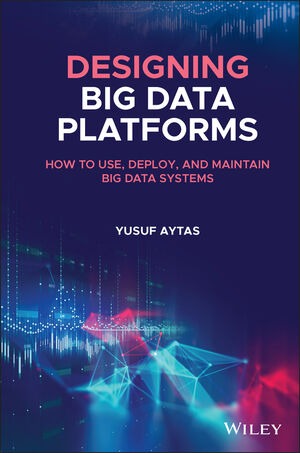
Designing big data platforms : How to use, deploy, and maintain big data systems
Provides expert guidance and valuable insights on getting the most out of Big Data systems. Helps readers understand how to process large amounts of data with well-known Linux tools and database solutions, use effective techniques to collect and manage data from multiple sources, transform data into meaningful business insights, and much more. Author Yusuf Aytas, a software engineer with a vast amount of big data experience, discusses the design of the ideal Big Data platform: one that meets the needs of data analysts, data engineers, data scientists, software engineers, and a spectrum of other stakeholders across an organization. Detailed yet accessible chapters cover key topics such as stream data processing, data analytics, data science, data discovery, and data security. This real-world manual for Big Data technologies: Provides up-to-date coverage of the tools currently used in Big Data processing and management / Offers step-by-step guidance on building a data pipeline, from basic scripting to distributed systems / Highlights and explains how data is processed at scale / Includes an introduction to the foundation of a modern data platform

Designing and evaluating e-management decision tools : The integration of decision and negotiation models into internet-multimedia technologies
Presents the most relevant concepts for designing intelligent decision tools in an Internet-based multimedia environment and assessing the tools using concepts of statistical design of experiments. The book covers : Decision modeling paradigms , Visual interactive decision modeling , Online preference elicitation , collaborative decision making , negotiation and conflict resolution , marketing decision optimization , and guidelines for designing and evaluating decision support tools. This book is designed for the following uses: 1) for researchers and engineers, who are seeking recent advances and who are developing e-management systems; 2) for practitioners and managers, who seek insights about ICT potential and using ICT for business intelligence management; and 3) for students, who seek theoretical and practical concepts of building and evaluating prototype decision tools.
