



الصفحة 4
الصفحة 4

Cooperative Information Agents XII ; 12th International Workshop, CIA 2008, Prague, Czech Republic, September 10-12, 2008. Proceedings
This book constitutes the refereed proceedings of the 12th International Workshop on Cooperative Information Agents, CIA 2008, held in Prague, Czech Republik, in September 2008.

Constraint-Based Mining and Inductive Databases ; European Workshop on Inductive Databases and Constraint Based Mining, Hinterzarten, Germany, March 11-13, 2004, Revised Selected Papers
The interconnected ideas of inductive databases and constraint-based mining are appealing and have the potential to radically change the theory and practice of data mining and knowledge discovery.

Constraint handling rules : Current research topics
The Constraint Handling Rules (CHR) language is a declarative concurrent committed-choice constraint logic programming language consisting of guarded rules that transform multisets of relations called constraints until no more change occurs. The aim of this volume was to attract high-quality research papers on these recent advances in Constraint Handling Rules.

Computers Helping People with Special Needs ; 11th International Conference, ICCHP 2008, Linz, Austria, July 9-11, 2008. Proceedings
This book constitutes the refereed proceedings of the 11th International Conference on Computers Helping People with Special Needs, ICCHP 2008, held in Linz, Austria in July 2008.

Computer-Human Interaction ; 8th Asia-Pacific Conference, APCHI 2008 Seoul, Korea, July 6-9, 2008 Proceedings
This book constitutes the refereed proceedings of the 8th Asia Pacific Conference on Computer Human Interaction, APCHI 2008, held in Seoul, Korea, in July 2008.

Computer Music Modeling and Retrieval. Sense of Sounds ; 4th International Symposium, CMMR 2007, Copenhagen, Denmark, August 27-31, 2007. Revised Papers
This book constitutes the thoroughly refereed post-conference proceedings of the 4th International Computer Music Modeling and Retrieval Symposium, CMMR 2007, held in Copenhagen, Denmark, in August 2007 jointly with the International Computer Music Conference 2007, ICMC 2007.

Computational intelligence : Research Frontiers : IEEE World Congress on Computational Intelligence, WCCI 2008, Hong Kong, China, June 1-6, 2008, Plenary/Invited Lectures
The book presents the expertise and experiences of leading researchers spanning a diverse spectrum of computational intelligence in the areas of neurocomputing, fuzzy systems, evolutionary computation, and adjacent areas.

Cloud Computing Solutions : Architecture, Data Storage, Implementation, and Security
Includes all the cloud-related technologies in a single platform, so that researchers, academicians, postgraduate students, and those in the industry can easily understand the cloud-based ecosystems. Discusses the evolution of cloud computing through grid computing and cluster computing. It will help researchers and practitioners to understand grid and distributed computing cloud infrastructure, virtual machines, virtualization, live migration, scheduling techniques, auditing concept, security and privacy, business models, and case studies through the state-of-the-art cloud computing countermeasures. The topics treated in the book include:The evolution of cloud computing from grid computing, cluster computing, and distributed systems / Covers cloud computing and virtualization environments / Discusses live migration, database, auditing, and applications as part of the materials related to cloud computing / Provides concepts of cloud storage, cloud strategy planning, and management, cloud security, and privacy issues / Explains complex concepts clearly and covers information for advanced users and beginners.

Managing Large-Scale Service Deployment ; 19th IFIP/IEEE International Workshop on Distributed Systems : Operations and Management, DSOM 2008, Samos Island, Greece, September 22-26, 2008. Proceedings
Contains all papers accepted for presentation at the 19th IFIP/IEEE International Workshop on Distributed Systems: Operations and Management (DSOM 2008),which was held September 25-26, 2008 on the island of Samos, Greece. DSOM 2008 was the 19th event in a series of annual workshops. It followed in the footsteps of previous s- cessful meetings, the most recent of which were held in San Jos´ e, California, USA (DSOM 2007), Dublin, Ireland (DSOM 2006), Barcelona, Spain (DSOM 2005), Davis, California, USA (DSOM 2004), Heidelberg, Germany (DSOM 2003), and Montreal, Canada (DSOM 2002).

Making Grids Work ; Proceedings of the CoreGRID Workshop on Programming Models Grid and P2P System Architecture Grid Systems, Tools and Environments 12-13 June 2007, Heraklion, Crete, Greece
Making Grids Work includes selected articles from the CoreGRID Workshop on Grid Programming Models, Grid and P2P Systems Architecture, Grid Systems, Tools and Environments held at the Institute of Computer Science, Foundation for Research and Technology - Hellas in Crete, Greece, June 2007. This workshop brought together representatives of the academic and industrial communities performing Grid research in Europe. Organized within the context of the CoreGRID Network of Excellence, this workshop provided a forum for the presentation and exchange of views on the latest developments in Grid Technology research. This volume is the 7th in the series of CoreGRID books.

Machine Learning for Multimedia Content Analysis
Challenges in complexity and variability of multimedia data have led to revolutions in machine learning techniques. Multimedia data, such as digital images, audio streams and motion video programs, exhibit richer structures than simple, isolated data items. A number of pixels in a digital image collectively conveys certain visual content to viewers. A TV video program consists of both audio and image streams that unfold the underlying story. To recognize the visual content of a digital image, or to understand the underlying story of a video program, we may need to label sets of pixels or groups of image and audio frames jointly.
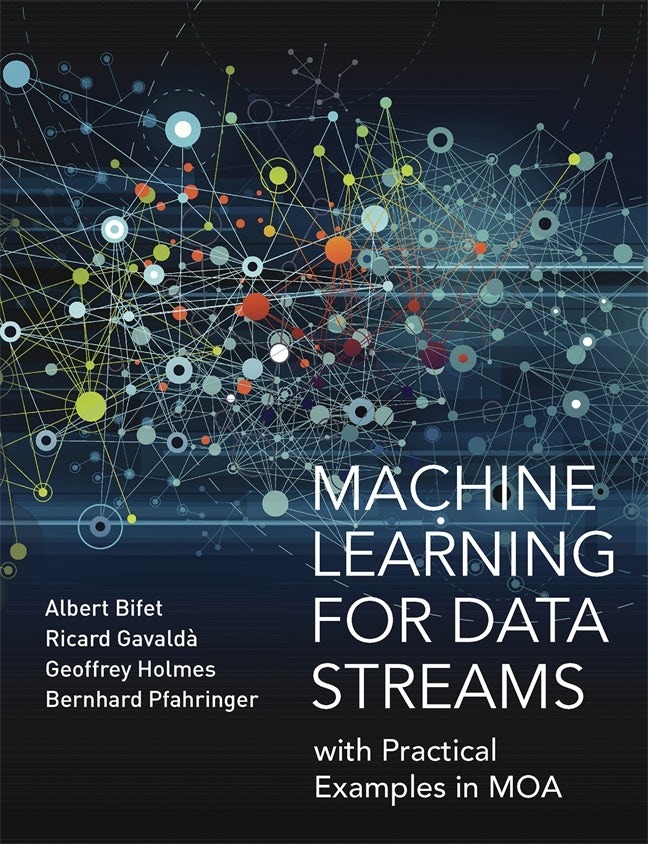
Machine learning for data streams : With practical examples in MOA
The book first offers a brief introduction to the topic, covering big data mining, basic methodologies for mining data streams, and a simple example of MOA. More detailed discussions follow, with chapters on sketching techniques, change, classification, ensemble methods, regression, clustering, and frequent pattern mining. Most of these chapters include exercises, an MOA-based lab session, or both. Finally, the book discusses the MOA software, covering the MOA graphical user interface, the command line, use of its API, and the development of new methods within MOA.

Machine Learning and Knowledge Discovery in Databases ; European Conference, ECML PKDD 2008, Antwerp, Belgium, September 15-19, 2008, Proceedings, Part II
Constitutes the refereed proceedings of the joint conference on Machine Learning and Knowledge Discovery in Databases: ECML PKDD 2008, held in Antwerp, Belgium, in September 2008.The 100 papers presented in two volumes, together with 5 invited talks, were carefully reviewed and selected from 521 submissions. In addition to the regular papers the volume contains 14 abstracts of papers appearing in full version in the Machine Learning Journal and the Knowledge Discovery and Databases Journal of Springer.
Logical Data Modeling : What it is and How to do it
LOGICAL DATA MODELING: What It Is and How To Do IT is directed toward three groups of people: (1) Business subject matter experts, (2) information technology professionals, (3) advanced students in Computer Science, Management Information Systems, and e-Business. Its purpose is to outline the basics of logical data modeling—specifically, data modeling for relational database management systems—in simple, practical terms and in a business context. The focus on relational data modeling is consciously made because it is superior in modeling real business activities.
Linked Open Data -- Creating Knowledge Out of Interlinked Data : Results of the LOD2 Project
Linked Open Data (LOD) is a pragmatic approach for realizing the Semantic Web vision of making the Web a global, distributed, semantics-based information system. This book presents an overview on the results of the research project “LOD2 -- Creating Knowledge out of Interlinked Data”. LOD2 is a large-scale integrating project co-funded by the European Commission within the FP7 Information and Communication Technologies Work Program. Commencing in September 2010, this 4-year project comprised leading Linked Open Data research groups, companies, and service providers from across 11 European countries and South Korea.

Knowledge Management In Action ; IFIP 20th World Computer Congress, Conference on Knowledge Management in Action, September 7-10, 2008, Milano, Italy
The IFIP series publishes state-of-the-art results in the sciences and technologies of information and communication. The scope of the series includes: foundations of computer science; software theory and practice; education; computer applications in technology; communication systems; systems modeling and optimization; information systems; computers and society; computer systems technology; security and protection in information processing systems; artificial intelligence; and human-computer interaction. Proceedings and post-proceedings of refereed international conferences in computer science and interdisciplinary fields are featured.
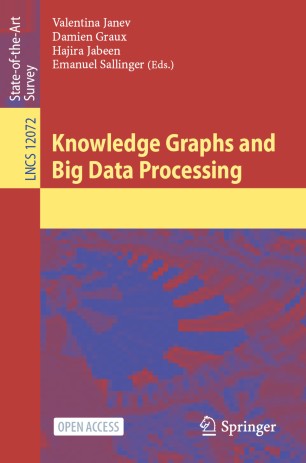
Knowledge graphs and big data processing
This book is part of the LAMBDA Project (Learning, Applying, Multiplying Big Data Analytics), funded by the European Union, GA No. 809965. Data Analytics involves applying algorithmic processes to derive insights.

Knowledge Engineering : Practice and Patterns ; 16th International Conference, EKAW 2008, Acitrezza, Italy, September 29 - October 2, 2008. Proceedings
Constitutes the refereed proceedings of the 16th International Conference on Knowledge Engineering and Knowledge Management, EKAW 2008, held in Acitrezza, Sicily, Italy, in September/October 2008.The 17 revised full papers and 15 revised short papers presented together with 3 invited talks were carefully reviewed and selected from 102 submissions. The papers are organized in topical sections on knowledge patterns and knowledge representation, matching ontologies and data integration, natural language, knowledge acquisition and annotations, search, query and interaction, as well as ontologies.

Journal on Data Semantics XI
The LNCS Journal on Data Semantics is devoted to the presentation of notable work that, in one way or another, addresses research and development on issues related to data semantics. The scope of the journal ranges from theories supporting the formal definition of semantic content to innovative domain-specific applications of semantic knowledge. The journal addresses researchers and advanced practitioners working on the semantic web, interoperability, mobile information services, data warehousing, knowledge representation and reasoning, conceptual database modeling, ontologies, and artificial intelligence.

Journal on Data Semantics X
Web semantics and semi-structured data , Semantic caching , Data warehousing and semantic data mining , Spatial, temporal, multimedia and multimodal semantics , Semantics in data visualization , Semantic services for mobile users , Supporting tools , Applications of semantic-driven approaches These topics are to be understood as specifically related to semantic issues. Contributions submitted to the journal and dealing with semantics of data will be considered even if they are not from the topics in the list. While the physical appearance of the journal issues is like the books from the we- known Springer LNCS series, the mode of operation is that of a journal. Contributions can be freely submitted by authors and are reviewed by the Editorial Board.
