



الصفحة 4
الصفحة 4

Computational linguistics and intelligent text processing ; Vol. 3878 ; 7th International Conference, CICLing 2006, Mexico City, Mexico, February 19-25, 2006, Proceedings
CICLing 2006 (www.CICLing.org) was the 7th Annual Conference on Intelligent Text Processing and Computational Linguistics. The CICLing conferences are intended to provide a wide-scope forum for discussion of the internal art and craft of natural language processing research and the best practices in its applications.
Computational linguistics and intelligent text processing ; 9th International Conference, CICLing 2008, Haifa, Israel, February 17-23, 2008. Proceedings
The CICLing conferences are intended to provide a wide-scope forum for the discussion of both the art and craft of natural language processing research and the best practices in its applications. This volume contains the papers accepted for oral presentation at the c- ference, as well as several of the best papers accepted for poster presentation.
Computational linguistics and intelligent text processing ; 8th International Conference, CICLing 2007, Mexico City, Mexico, February 18-24, 2007, Proceedings
This book cover all current issues in computational linguistics research and present intelligent text processing applications. The papers are organized in topical sections on: lexical resources, corpus-based knowledge acquisition, morphology and part-of-speech tagging, named entity recognition, temporal expression treatment, word segmentation, sentence splitting, chunking, grammar formalisms and syntax, word sense disambiguation and discrimination and semantics.

Computational linguistics and intelligent text processing ; Vol. 3406 ; 6th International Conference, CICLing 2005, Mexico City, Mexico, February 13-19, 2005, Proceedings
This book constitutes the refereed proceedings of the 6th International Conference on Computational Linguistics and Intelligent Text Processing, CICLing 2005, held in Mexico City, Mexico in February 2005. An approach that involves natural language analysis techniques for the treatment of software system functional requirements is described in this book. This approach is used as the basis for a process developed to generate sequence diagrams automatically from the textual specification of use cases. This facility has been integrated in the Requirements Engineering Phase of OO-Method, an automatic production environment of software. For this purpose, a translator that is based on natural language parser is used. The translator provides grammatical information to each use case sentence and it identifies the corresponding interaction. The automatic transformation is conceived and specified following an orientation that is based on models and patterns. The results of the validation of the transformation patterns are presented.

Command-Line Rust : A Project-Based Primer for Writing Rust CLIs
Rather than focusing on the language as a whole, this guide teaches Rust using a single small, complete, focused program in each chapter. Author Ken Youens-Clark shows you how to start, write, and test each of these programs to create a finished product. You'll learn how to handle errors in Rust, read and write files, and use regular expressions, Rust types, structs, and more.

Clinical text mining : Secondary use of electronic patient records
Describes the results of natural language processing and machine learning methods applied to clinical text from electronic patient records. It is divided into twelve chapters. Chapters 1-4 discuss the history and background of the original paper-based patient records, their purpose, and how they are written and structured. These initial chapters do not require any technical or medical background knowledge. The remaining eight chapters are more technical in nature and describe various medical classifications and terminologies such as ICD diagnosis codes, SNOMED CT, MeSH, UMLS, and ATC. Chapters 5-10 cover basic tools for natural language processing and information retrieval, and how to apply them to clinical text. The book’s closing chapters present a number of applications in clinical text mining and summarise the lessons learned from the previous chapters.

Manual of Digital Earth
This book offers a summary of the development of Digital Earth over the past twenty years. By reviewing the initial vision of Digital Earth, the evolution of that vision, the relevant key technologies, and the role of Digital Earth in helping people respond to global challenges, this publication reveals how and why Digital Earth is becoming vital for acquiring, processing, analysing and mining the rapidly growing volume of global data sets about the Earth.
Machine learning in healthcare : Fundamentals and recent applications
Discusses how to build various ML algorithms and how they can be applied to improve healthcare systems. Healthcare applications of AI are innumerable: medical data analysis, early detection and diagnosis of disease, providing objective-based evidence to reduce human errors, curtailing inter- and intra-observer errors, risk identification and interventions for healthcare management, real-time health monitoring, assisting clinicians and patients for selecting appropriate medications, and evaluating drug responses. Extensive demonstrations and discussion on the various principles of machine learning and its application in healthcare is provided, along with solved examples and exercises.
Machine learning for brain disorders
Organized into five parts. Part One presents the fundamentals of ML. Part Two looks at the main types of data used to characterize brain disorders, including clinical assessments, neuroimaging, electro- and magnetoencephalography, genetics and omics data, electronic health records, mobile devices, connected objects and sensors. Part Three covers the core methodologies of ML in brain disorders and the latest techniques used to study them. Part Four is dedicated to validation and datasets, and Part Five discusses applications of ML to various neurological and psychiatric disorders.

Mac OS X Leopard : Beyond the Manual
Good computer books make assumptions about the reader: what they do and don't know when they pick up the book, and what they want to know when they put it down. For each reader this could be very different; therefore, a book that suits one person may not be the best for another. Mac OS X Leopard: Beyond the Manual makes some assumptions too, ones that tend to differ from other Mac OS X books. First of all, we assume that you have used a computer in that past: that you know how to use a mouse and you know the proper place to stick a DVD to get it to play in your computer. We won't be showing you these things. (We will, however, demonstrate to our Mac converts how to “right click” on a trackpad with only one button!).

Logical aspects of computational linguistics ; 4th International Conference, LACL 2001, Le Croisic, France, June 27-29, 2001, Proceedings
Structural Equations in Language Learning.- On the Distinction between Model-Theoretic and Generative-Enumerative Syntactic Frameworks.- Contributed Papers.- A Formal Definition of Bottom-Up Embedded Push-Down Automata and Their Tabulation Technique.- An Algebraic Approach to French Sentence Structure.- Deductive Parsing of Visual Languages.- Lambek Grammars Based on Pregroups.- An Algebraic Analysis of Clitic Pronouns in Italian.- Consistent Identification in the Limit of Any of the Classes k-Valued Is NP-hard.- Polarized Non-projective Dependency Grammars.- On Mixing Deduction and Substitution in Lambek Categorial Grammars.- A Framework for the Hyperintensional Semantics of Natural Language with Two Implementations.- A Characterization of Minimalist Languages.- of Speech Tagging from a Logical Point of View.- Transforming Linear Context-Free Rewriting Systems into Minimalist Grammars.- Recognizing Head Movement.- Combinators for Paraconsistent Attitudes.- Combining Syntax and Pragmatic Knowledge for the Understanding of Spontaneous Spoken Sentences.- Atomicity of Some Categorially Polyvalent Modifiers.

Logic Programming ; Vol. 3668 : 21st International Conference, ICLP 2005, Sitges, Spain, October 2-5, 2005, Proceedings
This volume contains the proceedings of the 21st International Conference on Logic Programming which was held in Sitges (Barcelona), Spain, from October 2nd to 5th, 2005. The conference was colocated with the International Conf- ence on ConstraintProgramming(CP 2005)and the following 6 post-conference workshops: – CICLOPS 2005: Colloquium on Implementation of Constraint and Logic Programming Systems – CSLP 2005: Constraint Solving and Language Processing – WCB 2005: Constraint Based Methods for Bioinformatics – WLPE 2005: Logic-Based Methods in Programming Environments – MoVeLog 2005: Mobile Code Safety and Program Veri?cation Using C- putational Logic Tools – CHR 2005: Constraint Handling Rules The conferencecoincided with a solareclipse

Logic for Programming, Artificial Intelligence, and Reasoning ; Vol. 3835 : 12th International Conference, LPAR 2005, Montego Bay, Jamaica, December 2-6, 2005, Proceedings
Constitutes the refereed proceedings of the 12th International Conference on Logic for Programming, Artificial Intelligence, and Reasoning, LPAR 2005. This book presents 46 revised papers with 3 abstracts, addressing issues in logic programming, logic-based program manipulation, formal method, automated reasoning, and various kinds of AI logics.

Leveraging Data Science for Global Health
Explores ways to leverage information technology and machine learning to combat disease and promote health, especially in resource-constrained settings. It focuses on digital disease surveillance through the application of machine learning to non-traditional data sources.
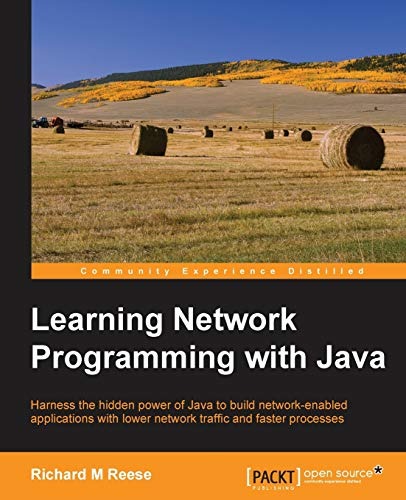
Learning network programming with Java
Learn to deliver superior server-to-server communication through the networking channels / Gain expertise of the networking features of your own applications to support various network architectures such as client/server and peer-to-peer Explore the issues that impact scalability, affect security, and allow applications to work in a heterogeneous environment

Learning and Intelligent Optimization ; 2nd International Conference, LION 2007 II, Trento, Italy, December 8-12, 2007. Selected Papers
The papers cover current issues of machine learning, artificial intelligence, mathematical programming and algorithms for hard optimization problems and are organized in topical sections on improving optimization through learning, variable neighborhood search, insect colony optimization, applications, new paradigms, cliques, stochastic optimization, combinatorial optimization, fitness and landscapes, and particle swarm optimization.

Knowledge Management for Health Care Procedures ; From Knowledge to Global Care, AIME 2007 Workshop K4CARE 2007, Amsterdam, The Netherlands, July 7, 2007, Revised Selected Papers
The incursion of information and communication technologies (ICT) in health care entails evident bene?ts at the levels of security and efciency that improve not only the quality of life of the patients, but also the quality of the work of the health care professionals and the costs of national health care systems. Leaving research approaches aside, the analysis of ICT in health care shows an evo- tion from the initial interest in representing and storing health care data (i. e. , electronic health care records) to the current interest of having remote access to electronic health care systems, as for example HL7 initiatives or telemedicine. This sometimes imperceptible evolution can be interpreted as a new step of the progress path of health care informatics.
Knowledge and Skill Chains in Engineering and Manufacturing : Information Infrastructure in the Era of Global Communications
Explores knowledge and skill chains in engineering and manufacturing in the age of global communications. Information infrastructure involves a range of activities from product planning, engineering, and manufacturing trough transportation, marketing, and repair/upgrade to returns and recycling/disposal. Distinct from the traditional engineering database, life-cycle support information has its own characteristic requirements, -- flexible extensibility, distributed architecture, multiple viewpoints, long-time archiving, and product usage information. Several authors address the architecture of the information infrastructure, its services and its requirements. Other papers focus on the knowledge and skill chains that develop in a variety of situations: the supply chain, the factory floor, the man-system interaction, etc. For each of these, state-of-the-art and state-of-research scenarios for various industrial sectors address both engineering and operations requirements in the current socio-economic environment.
Java Design Patterns : A Hands-On Experience with Real-World Examples
Covers classical design patterns with the latest editions of Java and Eclipse Includes implementation of the Java design patterns in real-world applications Each chapter has a Q&A section to help you understand the pros and cons of each design pattern

Compiler construction ; Vol. 3923 : 15th International Conference, CC 2006, Held as Part of the Joint European Conferences on Theory and Practice of Software, ETAPS 2006, Vienna, Austria, March 30-31, 2006, Proceedings
ETAPS 2006 was the ninth instance of the European Joint Conferences on Theory and Practice of Software. ETAPS is an annual federated conference that was established in 1998 by combining a number of existing and new conferences. The events that comprise ETAPS address various aspects of the system devel- ment process, including speci?cation, design, implementation, analysis and impro- ment. The languages, methodologies and tools which support these activities are all well within its scope. Di?erent blends of theory and practice are represented, with an inclination towards theory with a practical motivation on the one hand and soundly based practice on the other.
