



الصفحة 32
الصفحة 32

Fundamentals of Algebraic Graph Transformation
Graphs are widely used to represent structural information in the form of objects and connections between them. Graph transformation is the rule-based manipulation of graphs, an increasingly important concept in computer science and related fields. This is the first textbook treatment of the algebraic approach to graph transformation, based on algebraic structures and category theory.

Fundamentals and Methods of Machine and Deep Learning : Algorithms, Tools, and Applications
provides a practical approach by explaining the concepts of machine learning and deep learning algorithms, evaluation of methodology advances, and algorithm demonstrations with applications. In recent research studies, they are regarded as one of the disruptive technologies that will transform our future life, business, and the global economy. The recent explosion of digital data in a wide variety of domains, including science, engineering, Internet of Things, biomedical, healthcare, and many business sectors, has declared the era of big data, which cannot be analysed by classical statistics but by the more modern, robust machine learning and deep learning techniques. Since machine learning learns from data rather than by programming hard-coded decision rules, an attempt is being made to use machine learning to make computers that are able to solve problems like human experts in the field.
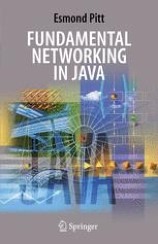
Fundamental networking in Java
This book is an in-depth learning and teaching resource for the understanding and programming of TCP/IP networking in Java. It covers 'everything you can do to a socket in Java' and explains when and why you might - or might not - want to do that. The book covers TCP and UDP using both blocking streams and non-blocking channels, and also SSL secure sockets in both blocking and non-blocking modes, unravelling the mysteries of the SSLEngine in the process. Particular attention is paid to the neglected topics of multi-homing and multicast. A unique chapter on client and server architectures uses a quantitative approach rather than the usual design-patterns approach, leading to architectures with predictable performance rather than just coding elegance.
Fundamental approaches to software engineering ; 25th International Conference, FASE 2022, Held as Part of the European Joint Conferences on Theory and Practice of Software, ETAPS 2022, Munich, Germany, April 2–7, 2022, Proceedings
The papers deal with the foundations on which software engineering is built, including topics like software engineering as an engineering discipline, requirements engineering, software architectures, software quality, model-driven development, software processes, software evolution, AI-based software engineering, and the specification, design, and implementation of particular classes of systems, such as (self-)adaptive, collaborative, AI, embedded, distributed, mobile, pervasive, cyber-physical, or service-oriented applications.

Fundamental approaches to software engineering ; 21st International Conference, FASE 2018, Held as Part of the European Joint Conferences on Theory and Practice of Software, ETAPS 2018, Thessaloniki, Greece, April 14-20, 2018, Proceedings
This book contains the proceedings of FASE 2018, the 21th International Conference on Fundamental Approaches to Software Engineering, held in Thessaloniki, Greece, in April 2018, the volume contains regular research papers that cover a wide range of topics, such as program and system analysis, model transformations, configuration and synthesis, graph modeling and transformation,software product lines, test selection, as well as learning and inference.

Fundamental approaches to software engineering ; 11th International Conference, FASE 2008, Held as Part of the Joint European conferences on theory and practice of software, ETAPS 2008, Budapest, Hungary, March 29-April 6, 2008. Proceedings
The fve main conferences received 571 submissions, 147 of which were accepted, giving an overall acceptance rate of less than 26%, with each conference below 27%.Congratulationsthereforetoallthe authorswhomadeittothe alprogramme! I hope that most of the other authors will still have found a way of participating in this exciting event, and that you will all continue submitting to ETAPS and contributing to make of it the best conference in the area،The events that comprise ETAPS address various aspects of the system velopment process,including specifcation, design, implementation, analysis and improvement.

Functional imaging and modeling of the heart ; 3rd International workshop, FIMH 2005, Barcelona, Spain, June 2-4, 2005, Proceedings
The FIMH conference was the ?rst attempt to agglutinate researchers from several complementary but often i- lated ?elds: cardiac imaging, signal and image processing, applied mathematics and physics, biomedical engineering and computer science, cardiology, radi- ogy, biology, and physiology. In the ?rst two editions, the conference received an enthusiastic acceptance by experts of all these communities. FIMH was ori- nally started as a European event and has increasingly attracted more and more people from the US and Asia. This edition of FIMH received the largest number of submissions so far with a result of 47 papers being accepted as either oral presentations or posters. There were a number of submissions from non-EU institutions which con?rms the growing interest in this series of meetings. All papers were reviewed by up to four reviewers. The accepted contributions were organized into 8 oral sessions and 3 poster sessions complemented by a number of invited talks. This year we tried to allocate as many papers as possible as oral presentations to facilitate more active participation and to stimulate multidisciplinary discussions.
Functional and logic programming ; 9th International Symposium, FLOPS 2008, Ise, Japan, April 14-16, 2008. Proceedings
This volume contains the proceedings of the 9th International Symposium on Functional and Logic Programming (FLOPS 2008), held in Ise, Japan, April 14-16, 2008 at the Ise City Plaza. FLOPS is a forum for research on all issues concerning functional progr- ming and logic programming. In particular it aims to stimulate the cro- fertilization as well as integration of the two paradigms. The Program Committee meeting was conducted electro- cally, for a period of two weeks in December 2007. After careful and thorough discussion, the ProgramCommittee selected20 papers(33%)for presentationat theconference.

Fun and Games ; 2nd International conference, Eindhoven, The Netherlands, October 20-21, 2008. Proceedings
This book constitutes the refereed proceedings of the Second International Conference on Fun and Games, held in Eindhoven, The Netherlands, in October 2008.The 17 revised full papers, presented together with 2 invited talks were carefully reviewed and selected from a total of 36 submissions. The papers encompass the study of computer games, game development and experiences by researchers from social sciences, computing, electrical engineering, design, etc. Main focus is given to topics such as tightly-coupled embodied control of movement-sensitive mobile devices, hypercomputation and cultural computing, emerging gaming paradigms.

FSTTCS 2006 : Foundations of software technology and theoretical computer science ; 26th International Conference, Kolkata, India, December 13-15, 2006, Proceed
This book constitutes the refereed proceedings of the 26th International Conference on the Foundations of Software Technology and Theoretical Computer Science, FSTTCS 2006, held in Kolkata, India, in December 2006. It contains 38 papers that cover a broad variety of current topics from the theory of computing, ranging from formal methods, discrete mathematics, complexity theory, and automata theory to theoretical computer science in general.

FSTTCS 2005 : Foundations of software technology and theoretical computer science ; 25th International conference, Hyderabad, India, December 15-18, 2005, Proceedings
This year marks a milestone in the history of FST&TCS, which ?rst took place in 1981. We would like to take this opportunity to express our appreciation of the foresight and commitment to excellence shown by the early organizersof the conference. The conference is now organized by IARCS (Indian Association for Researchin Computing Science), and the conference has been the foundation on which the IARCS community has been built. To commemorate the Silver Jubilee of FST&TCS.

FSTTCS 2004 : Foundations of software technology and theoretical computer science ; 24th International Conference, Chennai, India, December 16-18, 2004, Proceedings
The international conference on the Foundations of Software Technology and Theoretical Computer Science (FSTTCS) is the longest-running conference on computer science in India, and is organized under the aegis of the Indian As- ciation for Research in Computing Science, IARCS. Since its inception in 1981, the conference (held annually in the month of December) has helped in nurt- ing and creating an environment for the exchange of ideas amongst the research community in the country, by attracting top scientists around the world to the conference. This volume contains the proceedings of the 24th FSTTCS conf- ence held in December 2004. A strong point of the FSTTCS programmes has been excellent invited talks by eminent computer scientists of international renown.

Frontiers of Digital Transformation : Applications of the Real-World Data Circulation Paradigm
Proposing the concept of real-world data circulation (RWDC), this book presents various practical and industry-related studies in human, mechanical, and social data domains. RWDC is a new field of study, established by the information technology (IT) community.

Frontiers of Combining Systems ; 6th International Symposium, FroCoS 2007, Liverpool, UK, September 10-12, 2007. Proceedings
This book constitutes the refereed proceedings of the 6th International Symposium on Frontiers of Combining Systems, FroCoS 2007, held in Liverpool, UK, September 2007. combination issues in rewriting and programming as well as in logical frameworks and theorem proving systems.

Frontiers of combining systems ; 5th International Workshop, FroCoS 2005, Vienna, Austria, September 19-21, 2005, Proceedings
Constitutes the refereed proceedings of the 5th International Workshop on Frontiers of Combining Systems, FroCoS 2005, held in Vienna, Austria. This book includes 19 full papers that are organized in topical sections on combinations of logics, theories, and decision procedures; constraint solving and programming; and others.

Frontiers in Hardware Security and Trust : Theory, design and practice
The footprint and power constraints imposed on internet-of-things end-points, smart sensors, mobile and ad hoc network devices make traditional and software based cryptographic solutions that require a general-purpose processor increasingly unfeasible. The fact that security is not the primary functionality of these devices means that only a small portion of their limited processing power and storage is available for security, driving the need for alternative security solutions. Hardware security - including hardware obfuscation, hardware security primitives, side-channel attacks and so on - is therefore becoming an increasingly active research area in both academia and industry.
Frontiers in Algorithmics ; 14th International Workshop, FAW 2020, Haikou, China, October 19-21, 2020, Proceedings
This book constitutes the proceedings of the 14th International Workshop on Frontiers in Algorithmics, FAW 2020, held in Haikou, China, in May 2020. The conference was held virtually due to the COVID-19 pandemic. The 12 full papers presented in this volume were carefully reviewed and selected from 15 submissions. The workshop provides a focused forum on current trends of research on algorithms, discrete structures, and their applications, and brings together international experts at the research frontiers in these areas to exchange ideas and to present significant new results. The papers detail graph theory, scheduling and algorithm and complexity.
From web to social web : Discovering and deploying user and content profiles ; Workshop on Web Mining, WebMine 2006, Berlin, Germany, September 18, 2006
This book constitutes the refereed proceedings of the Workshop on Web Mining, WebMine 2006, held in Berlin, Germany, September 2006. Topics included are data mining based on analysis of bloggers and tagging, web mining, XML mining and further techniques of knowledge discovery.

From Opinion Mining to Financial Argument Mining
Financial opinion mining is a branch of traditional opinion mining and sentiment analysis which shares the basic notions of traditional approaches and adds its own domain-specific characteristics. In Sect. 1.1, we start with a common definition of general opinion mining after which we briefly overview traditional research directions.

From model-driven design to resource management for distributed embedded systems ; IFIP TC 10 Working conference on distributed and parallel embedded systems (DIPES 2006) October 11-13, 2006, Braga, Portugal
From Model-Driven Design to Resource Management for Distributed Embedded Systems contains 16 original contributions as well as 12 invited papers by distinguished invited speakers. These papers were presented at the Working Conference on Distributed and Parallel Embedded Systems (DIPES 2006), which was held in October 2006 in Braga, Portugal, and sponsored by the International Federation for Information Processing (IFIP). This volume covers the following very timely topics: model-driven design, test and evolution of embedded systems, timing analysis and predictability, scheduling, allocation, communication and resource management in distributed real-time systems.
