



الصفحة 31
الصفحة 31
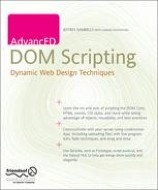
AdvancED DOM Scripting : Dynamic Web Design Techniques
As a web designer or developer, you know how powerful DOM scripting is for enhancing web pages and applications, adding dynamic functionality and improving the user experience. You've got a reasonable understanding of JavaScript and the DOM, but now you want to take your skills further. This book is all you need—it shows you how to add essential functionality to your web pages.
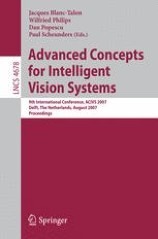
Advanced Concepts for Intelligent Vision Systems ; 9th International Conference, ACIVS 2007, Delft, The Netherlands, August 28-31, 2007, Proceedings
This volume collects the papers accepted for presentation at the Ninth International Conference on “Advanced Concepts for Intelligent Vision Systems”The ACIVS conference was established in 1999 in Baden-Baden (Germany) as part of a large m ulticonference. Since then ACIVS has been developed as an independent scientific event and has maintained the tradition of being a single track event with oral presentations of 25 minutes each, even though the number of participants has been steadily growing every year. The conference currently attracts computer scientists from more than 20 countries, mostly from Europe, Australia and Japan, but also from the USA, Asia and the Middle East.
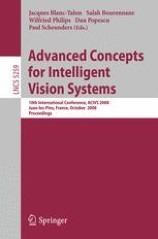
Advanced Concepts for Intelligent Vision Systems ; 10th International Conference, ACIVS 2008, Juan-les-Pins, France, October 20-24, 2008. Proceedings
This book constitutes the refereed proceedings of the 10th International Conference on Advanced Concepts for Intelligent Vision Systems, ACIVS 2008, held in Juan-les-Pins, France, in October 2008.
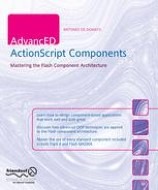
AdvancED ActionScript Components : Mastering the Flash Component Architecture
Macromedia's architecture is like a chest filled with precious jewels, and this book is quite simply the key to open it! One of the most important tools provided with Flash is the Macromedia Component Architecture: a framework of components written in ActionScript 2, based on established design patterns, that provides a wealth of functionality you can just bolt on to your Flash applications when desired. This can save you an enormous amount of time during application development and help you improve the quality of your code. What's more, the source code is included, so if you can't find the component you need within the component architecture, you can just modify existing components to create your own!
Ad-Hoc Networking ; IFIP 19th World Computer Congress, TC-6, IFIP Interactive Conference on Ad-Hoc Networking, August 20-25, 2006, Santiago, Chile
The IFIP series publishes state-of-the-art results in the sciences and technologies of information and communication. The scope of the series includes: foundations of computer science; software theory and practice; education; computer applications in technology; communication systems; systems modeling and optimization; information systems; computers and society; computer systems technology; security and protection in information processing systems; artificial intelligence; and human-computer interaction. Proceedings and post-proceedings of referred international conferences in computer science and interdisciplinary fields are featured. These results often precede journal publication and represent the most current research. The principal aim of the IFIP series is to encourage education and the dissemination and exchange of information about all aspects of computing.

Addressing Global Challenges and Quality Education ; 15th European Conference on Technology Enhanced Learning, EC-TEL 2020, Heidelberg, Germany, September 14–18, 2020, Proceedings
The chapters: “Designing an Online Self-Assessment for Informed Study Decisions: The User Perspective”; “Living with Learning Difficulties: Two Case Studies Exploring the Relationship Between Emotion and Performance in Students With Learning Difficulties”; “Applying Instructional Design Principles on Augmented Reality Cards for Computer Science Education”; and “Teaching Simulation Literacy With Evacuations - Concept, Technology, and Material for a Novel Approach” are available open access under a Creative Commons Attribution 4.0 International License via link.springer.com.
Adaptive Hypermedia and Adaptive Web-Based Systems : 5th International Conference, AH 2008, Hannover, Germany, July 29 - August 1, 2008. Proceedings
This book constitutes the refereed proceedings of the 5th International Conference on Adaptive Hypermedia and Adaptive Web-Based Systems, AH 2008, held in Hannover, Germany in July 2008.
Adaptive agents and multi-agent systems III : Adaptation and multi-Agent learning ; 5th, 6th, and 7th European Symposium, ALAMAS 2005-2007 on Adaptive and Learning Agents and Multi-Agent Systems, Revised Selected Papers
This book contains selected and revised papers of the European Symposium on Adaptive and Learning Agents and Multi-Agent Systems (ALAMAS).
Active Lighting and Its Application for Computer Vision : 40 Years of History of Active Lighting Techniques
Computer vision entails both passive and active illumination techniques. Whereas passive techniques observe the scene statically and analyse it as is, by contrast active techniques give the scene some actions and try to facilitate the analysis. In particular, active illumination techniques project specific light, for which the characteristics are known beforehand, to a target scene to enable stable and accurate analysis of the scene.
Action Research in Software Engineering: Theory and Applications
This book addresses action research (AR), one of the main research methodologies used for academia-industry research collaborations. It elaborates on how to find the right research activities and how to distinguish them from non-significant ones. Further, it details how to glean lessons from the research results, no matter whether they are positive or negative. Lastly, it shows how companies can evolve and build talents while expanding their product portfolio.
Abstraction, Reformulation, and Approximation ; 7th International Symposium, SARA 2007, Whistler, Canada, July 18-21, 2007, Proceedings
This volume contains the proceedings of SARA 2007, the seventh symposium, held at Whistler Village, British Columbia, Canada, July 18-21. Three distinguished speakers were invited to give keynote presentations, and their abstracts are included herein,It has been recognized since the inception of artificial intelligence that abstractions, problem reformulations and approximations (AR&A) are central to human common-sense reasoning and problem solving and to the ability of systems to reason effectively in complex domains.AR&A techniques have been used in a variety of problem-solving settings, including automated reasoning, cognitive modelling.

Abstraction, reformulation and approximation ; 6th International symposium, SARA 2005, Airth Castle, Scotland, UK, July 26-29, 2005, proceedings
This volume contains the proceedings of the 6th Symposium on Abstraction, Reformulation and Approximation (SARA 2005). the proceedings have been published in the LNAI series of Springer. Abstractions, reformulations and approximations (AR&A) have found app- cationsin avarietyofdisciplines andproblems, including constraintsatisfaction, design, diagnosis, machine learning, planning, qualitative reasoning, scheduling, resource allocation and theorem proving, but are also deeply rooted in philo- phy and cognitive science. The papers in this volume capture a cross-section of the various facets of the ?eld and of its applications. One of the primary uses of AR&A is oriented to overcome computational intractability. AR&A techniques, however, have also proved useful for knowledge acquisition, explanation and other applications.
Abstraction, refinement and proof for probabilistic systems
Probabilistic techniques are increasingly being employed in computer programs and systems because they can increase efficiency in sequential algorithms, enable otherwise nonfunctional distribution applications, and allow quantification of risk and safety in general. This makes operational models of how they work, and logics for reasoning about them, extremely important. Abstraction, Refinement and Proof for Probabilistic Systems presents a rigorous approach to modeling and reasoning about computer systems that incorporate probability. Its foundations lie in traditional Boolean sequential-program logic—but its extension to numeric rather than merely true-or-false judgments takes it much further, into areas such as randomized algorithms, fault tolerance, and, in distributed systems, almost-certain symmetry breaking. The presentation begins with the familiar "assertional" style of program development and continues with increasing specialization: Part I treats probabilistic program logic, including many examples and case studies; Part II sets out the detailed semantics; and Part III applies the approach to advanced material on temporal calculi and two-player games.
A Practical Theory of Reactive Systems : Incremental Modeling of Dynamic Behaviors
Presents a ""practical theory"" of reactive systems, with formal foundations in Temporal Logic of Actions. This book emphasises theoretical understanding of reactive behaviors and using ""horizontal"" modularity to manage their complexity. It illustrates the incremental specification by a number of examples of varying size and complexity
A Computational Model of Natural Language Communication : Interpretation, Inference, and Production in Database Semantics
Presents a high-level description of an artificial agent which humans can freely communicate with in their accustomed language. Part II analyzes the major constructions of natural language, i.e., intra- and extrapropositional functor - argument structure, coordination, and coreference, in the speaker and the hearer mode. Part III defines declarative specifications for fragments of English, which are used for an implementation in Java.
501 Math Word Problems
Contains only word problems - the kinds you encounter at school and on high stakes tests. Gaining familiarity with this specific question type is a proven technique for increasing test scores. The Skill Builder in Focus method provides the targeted practice on these questions necessary to attain higher scores. Questions are divided into six chapters: algebra, geometry, fractions, percents, decimals, and miscellaneous math. Within each chapter, questions move from easy to advanced, giving test-takers the opportunity to gain confidence in each math area. Each chapter contains questions, answers, and detailed explanations to reinforce learning and understanding. Diagrams and useful terminology help clarify math rules for effective studying and retention.
25 Years of Model Checking : History, Achievements, Perspectives
Model checking technology is among the foremost applications of logic to computer science and computer engineering. The model checking community has achieved many breakthroughs, bridging the gap between theoretical computer science and hardware and software engineering, and it is reaching out to new challenging areas such as system biology and hybrid systems. Model checking is extensively used in the hardware industry and has also been applied to the verification of many types of software. Model checking has been introduced into computer science and electrical engineering curricula at universities worldwide and has become a universal tool for the analysis of systems.
