



الصفحة 3
الصفحة 3

Advances in optical fiber communications
Given the increasing importance of a globally interconnected world, driven by modern digital services and the need for fast and reliable access to digital resources, communication networks are one of the key infrastructures in today’s society. In this scenario, fiber optics and optical devices play a leading role, as they allow for unprecedented growth in our capacity to cope with the ever-increasing traffic demand. Optical transmission solutions range from high-speed networks based on coherent detection and advanced modulation formats for long-haul-level communications, to networks still relying on traditional intensity modulation and direct detection receivers for short-reach communications, down to intra-data center scenarios.

Advanced driver assistance system (ADAS)
The purpose of Advanced Driver Assistance Systems (ADAS) is to reduce or eliminate driver errors, and to enhance efficiency in traffic and transportation. Our project is a means and a great contribution to safe driving, and the user does not need to install sensors or hard tools to the vehicle, and through it, the cost can be reduced and maintenance cost can be eliminated. The images are processed and segmented to find different features in the image. Segmented images are used for identification and classification based on various machine learning algorithms and neural networks. The main focus of ADAS technologies is to contribute to factors such as safety management and automated, stress-free driving for the driver
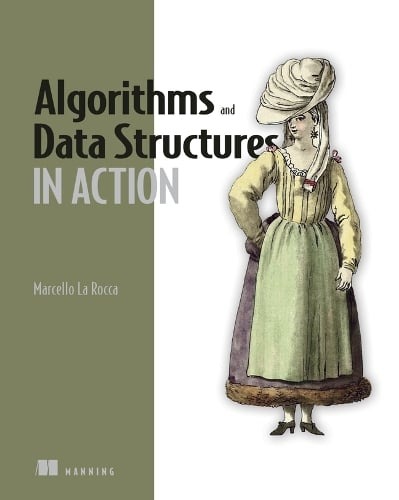
Advanced Algorithms and Data Structures
introduces a collection of algorithms for complex programming challenges in data analysis, machine learning, and graph computing. You’ll discover cutting-edge approaches to a variety of tricky scenarios. You’ll even learn to design your own data structures for projects that require a custom solution. What's inside Build on basic data structures you already know Profile your algorithms to speed up application Store and query strings efficiently Distribute clustering algorithms with MapReduce Solve logistics problems using graphs and optimization algorithms
Adaptive Machine Learning Algorithms with Python : Solve Data Analytics and Machine Learing Problems on Edge Devices
Learn to use adaptive algorithms to solve real-world streaming data problems. This book covers a multitude of data processing challenges, ranging from the simple to the complex. At each step, you will gain insight into real-world use cases, find solutions, explore code used to solve these problems, and create new algorithms for your own use. You will: Apply adaptive algorithms to practical applications and examples / Understand the relevant data representation features and computational models for time-varying multi-dimensional data / Derive adaptive algorithms for mean, median, covariance, eigenvectors (PCA) and generalized eigenvectors with experiments on real data / Speed up your algorithms and put them to use on real-world stationary and non-stationary data / Master the applications of adaptive algorithms on critical edge device computation applications
