



الصفحة 3
الصفحة 3

Fundamentals of information systems security ; 4th ed.
Provides a comprehensive overview of the concepts readers must know as they pursue careers in information systems security. The text opens with a discussion of emerging technologies and the risks, threats, and vulnerabilities associated with our digital world. Part II takes a deeper dive into the foundational knowledge areas and functions associated with a career in information security. The book closes with a survey of information security standards, professional certifications, and compliance laws. With its practical, conversational writing style and step-by-step examples, this text is a must-have resource for those entering the world of information systems security.

Fundamentals of Artificial Intelligence
Fundamentals of Artificial Intelligence introduces the foundations of present day AI and provides coverage to recent developments in AI such as Constraint Satisfaction Problems, Adversarial Search and Game Theory, Statistical Learning Theory, Automated Planning, Intelligent Agents, Information Retrieval, Natural Language & Speech Processing, and Machine Vision. The book features a wealth of examples and illustrations, and practical approaches along with the theoretical concepts. It covers all major areas of AI in the domain of recent developments. The book is intended primarily for students who major in computer science at undergraduate and graduate level but will also be of interest as a foundation to researchers in the area of AI.

From brows to trust : Evaluating embodied conversational agents
This book will help experts and designers in the specification and development of applications incorporating ECAs. Part 1 provides guidelines for evaluation methodologies and the identification of design and evaluation parameters. Part 2 demonstrates the importance of considering the user's perspective and interaction experience. Part 3 addresses issues in fine-tuning design parameters of ECAs and verifying the perceived effect. Finally, in Part 4 lessons learned from a number of application case studies are presented. The book is intended for both ECA researchers in academia and industry, and developers and designers interested in applying the technology.

Foundation Flex for Developers : Data-Driven Applications with PHP, ASP.NET, ColdFusion, and LCDS
Flex is a very powerful and versatile technology for creating web application front-ends. But what every good web application needs is a robust data source, be it XML, or a database. Flex is very adaptable in terms of connecting to data sources, and that is the main focus of this book. In Foundation Flex for Developers, author Sas Jacobs assumes that you've got the basics of Flex down already, and explores in detail how to create professional data-centric Flex 2 and Flex 3 applications. In the first half of the book, she starts off with a brief exploration of Flex and ActionScript 3.0, before looking at application essentials in detail—creating custom components, user and web browser interactions, binding, formatting, and validating data, debugging, and more. In the second half of the book, the focus is on connecting Flex to data sources, and covers XML, LiveCycle Data Services, PHP, ASP.NET, and ColdFusion in detail, via a series of step-by-step case studies.

Foundation 3ds Max 8 Architectural Visualization
Welcome to the world of 3D architectural visualizations using the most powerful and versatile 3D software package on the planet: 3ds Max. In just the last few years, the visualization industry has arguably become the fastest-growing 3D industry, and may soon overtake all others in total number of users. Just as the use of computer-aided design became the norm for nearly all architectural, engineering, and construction firms in the 1990s, 3D visualizations have become standard practice today. This book takes you through the challenge of learning one of the most complex computer programs ever created, by way of easy-to-follow tutorials and instruction. It specifically focuses on those parts of the program you need to know to produce stunning architectural visualizations.

Formal techniques for computer systems and business processes ; European performance engineering workshop, EPEW 2005 and International workshop on web services and formal methods, WS-FM 2005, Versailles, France, September 1-3, 2005, Proceedings
This book constitutes the refereed proceedings of two colocated international workshops EPEW 2005 (European Performance Engineering Workshop) and WS-FM 2005 (Web Services and Formal Methods) held in Versailles, France in September 2005. The 20 revised full papers presented were carefully reviewed and selected from 59 submissions. For EPEW 2005 only 10 papers - of the 32 submitted - were accepted for presentation; they deal with queueing theory, bounding techniques, stochastic model checking, communication schemes analysis for high-speed LAN, QOS analysis in wireless ad-hoc networks and optical networks analysis. The main topics of the 10 papers accepted for WS-FM 2005 - from 27 submissions - include: protocols and standards for WS (SOAP, WSDL, UDDI, etc.); languages and description methodologies for Choreography/Orchestration/Workflow (BPML, XLANG and BizTalk, WSFL, WS-BPEL, etc.); coordination techniques for WS (transactions, agreement, coordination services, etc.); semantics-based dynamic WS discovery services (based on Semantic Web/Ontology Techniques or other semantic theories); security, performance evaluation and quality of service of WS; semi-structured data and XML related technologies; comparisons with different related technologies/approaches.

Fault Diagnosis and Tolerance in Cryptography ; 3rd International Workshop, FDTC 2006, Yokohama, Japan, October 10, 2006, Proceedings
The sophistication of the underlying cryptographic algorithms, the high complexity of the implementations, and the easy access and low cost of cryptographic devices resulted in increased concerns regarding the reliability and security of crypto-devices. The effectiveness of side channel attacks on cryptographic devices, like timing and power-based attacks, has been known for some time. Several recent investigations have demonstrated the need to develop methodologies and techniques for designing robust cryptographic systems (both hardware and software) to protect them against both accidental faults and maliciously injected faults with the purpose of extracting the secret key. This trend has been particularly motivated by the fact that the equipment needed to carry out a successful side channel attack based on fault injection is easily accessible at a relatively low cost (for example, laser beam technology), and that the skills needed to use it are quite common.

Fast software encryption ; Vol. 3557 ; 12th International Workshop, FSE 2005, Paris, France, February 21-23, 2005, Revised Selected Papers
The Fast Software Encryption 2005 Workshop was the twelfth in a series of annual workshops on symmetric cryptography, sponsored for the fourth year by the International Association for Cryptologic Research (IACR). The workshop concentratedonallaspectsoffastprimitivesforsymmetriccryptology, including thedesign, cryptanalysisandimplementationofblockandstreamciphersaswell as hash functions and message authentication codes. The ?rst FSE workshop was held in Cambridge in 1993, followed by Leuven in 1994, Cambridge in 1996, Haifain1997, Parisin1998, Romein1999, NewYorkin2000, Yokohamain2001, Leuven in 2002, Lund in 2003, and New Delhi in 2004. This year, a total of 96 submissions were received. After an extensive review by the Program Committee, 30 submissions were accepted.

Expert C# 2005 Business Objects
Rockford Lhotka started writing his Business Objects books in 1996, and over the years, he's become one of the world's foremost authorities on building distributed object-oriented systems. His industry-standard VB .NET Business Objects book not only addresses changes in .NET 2.0 and Visual Studio 2005, but also reflects substantial enhancements and improvements to the CSLA .NET Framework and how it can be used to create enterprise-level .NET applications. The depth of Rockford's thinking now influences developers across language boundaries. With this book, you can learn directly from the expert whose framework has become universally accepted and respected.

Euro-Par 2020 : Parallel Processing ; 26th International Conference on Parallel and Distributed Computing, Warsaw, Poland, August 24–28, 2020, Proceedings
This book constitutes the proceedings of the 26th International Conference on Parallel and Distributed Computing, Euro-Par 2020, held in Warsaw, Poland, in August 2020. The conference was held virtually due to the coronavirus pandemic. The 39 full papers presented in this volume were carefully reviewed and selected from 158 submissions. They deal with parallel and distributed computing in general, focusing on support tools and environments; performance and power modeling, prediction and evaluation; scheduling and load balancing; high performance architectures and compilers; data management, analytics and machine learning; cluster, cloud and edge computing; theory and algorithms for parallel and distributed processing; parallel and distributed programming, interfaces, and languages; multicore and manycore parallelism; parallel numerical methods and applications; and accelerator computing.
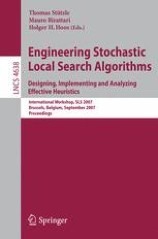
Engineering Stochastic Local Search Algorithms. Designing, Implementing and Analyzing Effective Heuristics ; International Workshop, SLS 2007, Brussels, Belgium, September 6-8, 2007, Proceedings
Stochastic local search (SLS) algorithms enjoy great popularity as powerful and versatile tools for tackling computationally hard decision and optimization pr- lems from many areas of computer science, operations research, and engineering. However, in recent years it has become evident that at the core of this development task there is a highly complex engineering process, which combines various aspects of algorithm design with empirical analysis techniques and problem-specific background, and which relies heavily on knowledge from a number of disciplines and areas, including computer science, operations research, artificial intelligence, and statistics. This development process needs to be - sisted by a sound methodology that addresses the issues arising in the various phases of algorithm design, implementation, tuning, and experimental eval- tion.
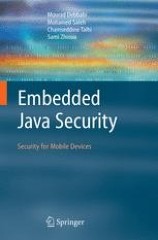
Embedded Java Security : Security for Mobile Devices
Whereas Java brings functionality and versatility to the world of mobile devices, at the same time it also introduces new security threats. The rapid growth of the number of mobile devices that support Java makes this a pressing issue. Embedded Java Security carefully examines the security aspects of Java and offers a security evaluation for the Java platform. After explaining background material on the architecture of embedded platforms and relating to its role in security, the book deconstructs the security model into its main components: It explains each component and relates it to the aim of securing the applications and the device. Toward this end, several implementations of the Java platform are examined and tested to relate the model to its actual implementation on devices. The security holes found are further used to clarify security issues and point out common errors. Finally, the book provides an evaluation of embedded Java security that includes security models and security tests performed on real-life implementations.

EC2ND 2005 ; Proceedings of the First European Conference on Computer Network Defence
This book contains the proceedings of the First European Conference on Computer Network Defence which took place in December 2005 at the University of Glamorgan in the UK. The theme of the conference is the protection of computer networks; and it provides an opportunity for workers in this area to become better informed about recent research developments as well as to exchange valuable insights and opinions.

Distributed computing ; Vol. 4167 ; 20th International Symposium, DISC 2006, Stockholm, Sweden, September 18-20, 2006, Proceedings
DISC, the International Symposium on DIStributed Computing, is an annual forum for presentation of research on all facets of distributed computing, inc- ding the theory, design, analysis, implementation, and application of distributed systems and networks. The 20th anniversary edition of DISC was held on S- tember 18-20, 2006, in Stockholm, Sweden. There were 145 extended abstracts submitted to DISC this year, and this - lume contains the 35 contributions selected by the Program Committee and one invited paper among these 145 submissions.
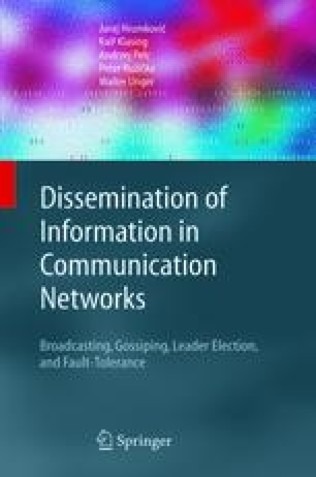
Dissemination of information in communication networks : Broadcasting, gossiping, leader election, and fault-tolerance
Preface Due to the development of hardware technologies (such as VLSI) in the early 1980s, the interest in parallel and distributive computing has been rapidly growingandinthelate1980sthestudyofparallelalgorithmsandarchitectures became one of the main topics in computer science. To bring the topic to educatorsandstudents,severalbooksonparallelcomputingwerewritten. The involvedtextbook“IntroductiontoParallelAlgorithmsandArchitectures”by F. Thomson Leighton in 1992 was one of the milestones in the development of parallel architectures and parallel algorithms. But in the last decade or so the main interest in parallel and distributive computing moved from the design of parallel algorithms and expensive parallel computers to the new distributive reality – the world of interconnected computers that cooperate (often asynchronously) in order to solve di?erent tasks.

Direct and inverse Sturm-Liouville problems : A method of solution
This book provides an introduction to the most recent developments in the theory and practice of direct and inverse Sturm-Liouville problems on finite and infinite intervals. A universal approach for practical solving of direct and inverse spectral and scattering problems is presented, based on the notion of transmutation (transformation) operators and their efficient construction. Analytical representations for solutions of Sturm-Liouville equations as well as for the integral kernels of the transmutation operators are derived in the form of functional series revealing interesting special features and lending themselves to direct and simple numerical solution of a wide variety of problems.

Digital Libraries : Universal and Ubiquitous Access to Information ; 11th International Conference on Asian Digital Libraries, ICADL 2008, Bali, Indonesia, December 2-5, 2008. Proceedings
This book constitutes the refereed proceedings of the 11th International Conference on Asian Digital Libraries, ICADL 2008, held in Bali, Indonesia, in December 2008.

Design and analysis of randomized algorithms : Introduction to design paradigms
Randomness is a powerful phenomenon that can be harnessed to solve various problems in all areas of computer science. Randomized algorithms are often more efficient, simpler and, surprisingly, also more reliable than their deterministic counterparts. Computing tasks exist that require billions of years of computer work when solved using the fastest known deterministic algorithms, but they can be solved using randomized algorithms in a few minutes with negligible error probabilities. Introducing the fascinating world of randomness, this book systematically teaches the main algorithm design paradigms – foiling an adversary, abundance of witnesses, fingerprinting, amplification, and random sampling, etc. – while also providing a deep insight into the nature of success in randomization. Taking sufficient time to present motivations and to develop the reader's intuition, while being rigorous throughout, this text is a very effective and efficient introduction to this exciting field.

Deepfake detection
Recently, various techniques of manipulating the video content have become available to everyone – online, one can find free applications e.g., for face swapping in videos. Such universal accessibility carries a notable risk of flooding online content with false information, affecting not only the greats of this world, but also the whole societies, also the rapid progress in synthetic image generation and manipulation has now come to a point where it raises significant concerns for the implications towards society. It is therefore necessary to develop a verification tool that will help assess the authenticity of the videos posted on the internet. This project describes the approach of using artificial intelligence solutions to detect doctored videos.
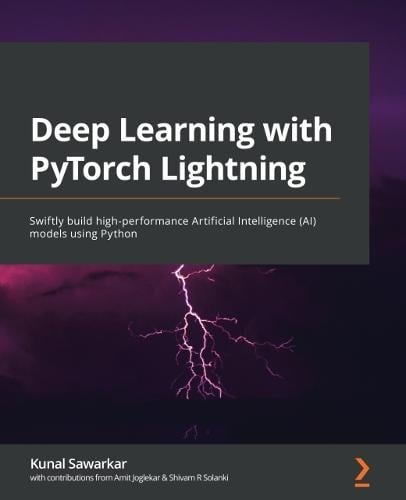
Deep Learning with PyTorch Lightning : Build and train high-performance artificial intelligence and self-supervised models using Python
You’ll learn how to configure PyTorch Lightning on a cloud platform, understand the architectural components, and explore how they are configured to build various industry solutions. You’ll build a neural network architecture, deploy an application from scratch, and see how you can expand it based on your specific needs, beyond what the framework can provide. In the later chapters, you’ll also learn how to implement capabilities to build and train various models like Convolutional Neural Nets (CNN), Natural Language Processing (NLP), Time Series, Self-Supervised Learning, Semi-Supervised Learning, Generative Adversarial Network (GAN) using PyTorch Lightning.
