



الصفحة 3
الصفحة 3

Fundamental approaches to software engineering ; 11th International Conference, FASE 2008, Held as Part of the Joint European conferences on theory and practice of software, ETAPS 2008, Budapest, Hungary, March 29-April 6, 2008. Proceedings
The fve main conferences received 571 submissions, 147 of which were accepted, giving an overall acceptance rate of less than 26%, with each conference below 27%.Congratulationsthereforetoallthe authorswhomadeittothe alprogramme! I hope that most of the other authors will still have found a way of participating in this exciting event, and that you will all continue submitting to ETAPS and contributing to make of it the best conference in the area،The events that comprise ETAPS address various aspects of the system velopment process,including specifcation, design, implementation, analysis and improvement.
Functional and logic programming ; 9th International Symposium, FLOPS 2008, Ise, Japan, April 14-16, 2008. Proceedings
This volume contains the proceedings of the 9th International Symposium on Functional and Logic Programming (FLOPS 2008), held in Ise, Japan, April 14-16, 2008 at the Ise City Plaza. FLOPS is a forum for research on all issues concerning functional progr- ming and logic programming. In particular it aims to stimulate the cro- fertilization as well as integration of the two paradigms. The Program Committee meeting was conducted electro- cally, for a period of two weeks in December 2007. After careful and thorough discussion, the ProgramCommittee selected20 papers(33%)for presentationat theconference.

Foundations of software science and computation structures ; 25th International conference, FOSSACS 2022, Held as Part of the European joint conferences on theory and practice of software, ETAPS 2022, Munich, Germany, April 2–7, 2022, proceedings
This book constitutes the proceedings of the 25th International Conference on Foundations of Software Science and Computational Structures, FOSSACS 2022, which was held during April 4-6, 2022, in Munich, Germany, as part of the European Joint Conferences on Theory and Practice of Software, ETAPS 2022. They deal with research on theories and methods to support the analysis, integration, synthesis, transformation, and verification of programs and software systems.

Foundations of software science and computation structures ; 23rd International conference, FOSSACS 2020, Held as part of the European joint conferences on theory and practice of software, ETAPS 2020, Dublin, Ireland, April 25–30, 2020, proceedings
This book constitutes the proceedings of the 23rd International Conference on Foundations of Software Science and Computational Structures, FOSSACS 2020, which took place in Dublin, Ireland, in April 2020, and was held as Part of the European Joint Conferences on Theory and Practice of Software, ETAPS 2020.

Foundations of software science and computation structures ; 22nd International conference, FOSSACS 2019, Held as part of the European joint conferences on theory and practice of software, ETAPS 2019, Prague, Czech Republic, April 6–11, 2019, proceedings
This book constitutes the proceedings of the 22nd International Conference on Foundations of Software Science and Computational Structures, FOSSACS 2019, which took place in Prague, Czech Republic, in April 2019, held as part of the European Joint Conference on Theory and Practice of Software, ETAPS 2019. The 29 papers presented in this volume were carefully reviewed and selected from 85 submissions. They deal with foundational research with a clear significance for software science.
Foundations of software science and computation structures ; 11th International conference, FOSSACS 2008, Held as part of the joint European conferences on theory and practice of software, ETAPS 2008, Budapest, Hungary, March 29 - April 6, 2008. proceedings
The fve main conferences received 571 submissions, 147 of which were accepted, giving an overall acceptance rate of less than 26%, with each conference below 27%.Congratulations there foretoall the authorswhomadeittothe fnalprogramme! I hope that most of the other authors will still have found a way of participating in this exciting event, and that you will all continue submitting to ETAPS and contributing to make of it the best conference in the area. The events that comprise ETAPS address various aspects of the system velopment process, including specifcation, design, implementation, analysis and improvement

Foundations of C++/CLI : The Visual C++ Language for .NET 3.5
Foundations of C++/CLI: The Visual C++ Language for .NET 3.5 introduces C++/CLI, Microsoft's extensions to the C++ syntax that allow you to target the common language runtime, the key to the heart of the .NET Framework 3.5. This book gives you a small, fast–paced primer that will kick–start your journey into the world of C++/CLI. In 13 no–fluff chapters, Microsoft insiders take readers into the core of the C++/CLI language and explain both how the language elements work and how Microsoft intends them to be used. This book is a beginner's guide, but it assumes a familiarity with programming basics. And it concentrates on explaining the aspects of C++/CLI that make it the most powerful and fun language of the .NET Framework. As such, this book is ideal if you're thinking of migrating to C++/CLI from another language.
Formal Modeling and Analysis of Timed Systems ; 6th International Conference, FORMATS 2008, Saint Malo, France, September 15-17, 2008. Proceedings
This book constitutes the refereed proceedings of the 6th International Conference on Formal Modeling and Analysis of Timed Systems, FORMATS 2008, held in Saint Malo, France, September 2008.The 17 revised full papers presented together with 3 invited talks were carefully reviewed and selected from 37 submissions. The papers are organized in topical sections on extensions of timed automata and semantics; timed games and logic; case studies; model-checking of probabilistic systems; verification and test; timed petri nets.
Formal Methods for Open Object-Based Distributed Systems ; 10th IFIP WG 6.1 International Conference, FMOODS 2008, Oslo, Norway, June 4-6, 2008 Proceedings
This book constitutes the refereed proceedings of the 10th IFIP WG 6.1 International Conference on Formal Methods for Open Object-Based Distributed Systems, FMOODS 2008, held in Oslo, Norway, in June 2008.The 14 revised full papers presented together with 1 invited lecture were carefully reviewed and selected from 35 submissions. The papers cover topcics such as semantics of object-oriented programming; formal techniques for specification, analysis, and refinement; model checking; theorem proving and deductive verification.

Formal Methods for Industrial Critical Systems ; 12th International Workshop, FMICS 2007, Berlin, Germany, July 1-2, 2007, Revised Selected Papers
This book constitutes the thoroughly refereed post-workshop proceedings of the 12th International Workshop on Formal Methods for Industrial Critical Systems, FMICS 2007, held in Berlin, Germany, in July 2007 - colocated with CAV 2007, the 19th International Conference on Computer Aided Verification.

Formal Methods for Computational Systems Biology ; 8th International School on Formal Methods for the Design of Computer, Communication, and Software Systems, SFM 2008 Bertinoro, Italy, June 2-7, 2008 Advanced Lectures
This volume presents the set of papers accompanying the lectures of the eighth International School on Formal Methods for the Design of Computer, Com- nication, and Software Systems (SFM). This series of schools addresses the use of formal methods in computer science asaprominent approach to theri gorousdesign of computer, communication, and software systems. The main aim of the SFM series is to ofer a good spectrum of current research in foundations as well as applications of formal methods, which can be of help for graduate students and young researchers who intend to approach the feld.
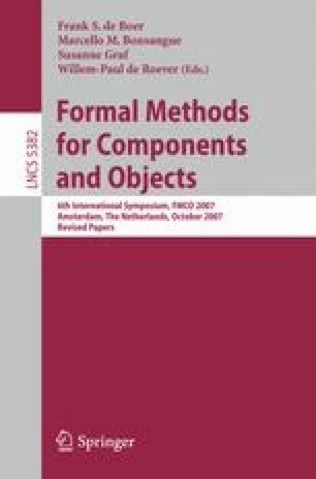
Formal Methods for Components and Objects ; 6th International Symposium, FMCO 2007, Amsterdam, The Netherlands, October 24-26, 2007, Revised Lectures
Formal methods have been applied successfully to the verification of medium-sized programs in protocol and hardware design.This book presents 12 revised papers submitted after the symposium by the speakers of each of the following European IST projects: the IST-FP6 project Mobius, developing the technology for establishing trust and security for the next generation of global computers; the IST-FP6 project SelfMan on self management for large-scale distributed systems based on structured overlay networks and components

Formal Methods and Testing : An Outcome of the FORTEST Network, Revised Selected Papers
This book constitutes the thoroughly refereed and peer-reviewed outcome of the Formal Methods and Testing (FORTEST) network - formed as a network established under UK EPSRC funding that investigated the relationships between formal (and semi-formal) methods and software testing - now being a subject group of two BCS Special Interest Groups: Formal Aspects of Computing Science (BCS FACS) and Special Interest Group in Software Testing (BCS SIGIST).

Formal Methods and Software Engineering ; 10th International Conference on Formal Engineering Methods, ICFEM 2008, Kitakyushu-City, Japan, October 27-31, 2008. Proceedings
This book constitutes the refereed proceedings of the 10th International Conference on Formal Engineering Methods, ICFEM 2008, held in Kitakyushu-City, Japan, October 2008.The 20 revised full papers together with 3 invited talks presented were carefully reviewed and selected from 62 submissions. The papers address all current issues in formal methods and their applications in software engineering. They are organized in topical sections on specification and verification; testing; verification; model checking and analysis; tools; application of formal methods; semantics.

FM 2008 : Formal methods ; 15th International symposium on formal methods, Turku, Finland, May 26-30, 2008 Proceedings
This book presents the refereed proceedings of the 15th International Symposium on Formal Methods, FM 2008, held in Turku, Finland in May 2008.The 23 revised full papers presented together with 4 invited contributions and extended abstracts of 5 invited industrial presentations were carefully reviewed and selected from 106 submissions. The papers are organized in topical sections on programming language analysis, verification, real-time and concurrency, grand chellenge problems, fm practice, runtime monitoring and analysis, communication, constraint analysis, and design.

FM 2006: Formal Methods ; 14th International Symposium on Formal Methods, Hamilton, Canada, August 21-27, 2006, Proceedings
This book presents the refereed proceedings of the 14th International Symposium on Formal Methods, FM 2006, held in Hamilton, Canada, August 2006. The book presents 36 revised full papers together with 2 invited contributions and extended abstracts of 7 invited industrial presentations, organized in topical sections on interactive verification, formal modelling of systems, real time, industrial experience, specification and refinement, programming languages, algebra, formal modelling of systems, and more.

Fluent Python : Clear, Concise, and Effective Programming
You’ll learn how to write effective, modern Python 3 code by leveraging its best ideas. Don’t waste time bending Python to fit patterns you learned in other languages. Discover and apply idiomatic Python 3 features beyond your past experience. Author Luciano Ramalho guides you through Python’s core language features and libraries and teaches you how to make your code shorter, faster, and more readable.

Engineering Multi-Agent Systems ; 7th International Workshop, EMAS 2019, Montreal, QC, Canada, May 13–14, 2019, Revised Selected Papers
This book constitutes the thoroughly refereed post-conference proceedings of the 7th International Workshop on Engineering Multi-Agent Systems, EMAS 2019, held in Montreal, QC, Canada, in May 2019. The 13 revised full papers presented in this book were carefully selected and reviewed from 20 submissions. The papers are grouped in the following topical sections: Multi-Agent Interaction and Organization; Simulation; Social Awareness and Explainability; Learning and Reconfiguration; and Implementation Techniques and Tools.

ECOOP 2008 - Object-Oriented Programming ; 22nd European Conference Paphos, Cyprus, July 7-11, 2008 Proceedings
This book constitutes the refereed proceedings of the 22nd European Conference on Object-Oriented Programming, ECOOP 2008, held in Paphos, Cyprus, in July 2008.

Domain-driven design with Java, a practitioner's guide : create simple, elegant, and valuable software solutions for complex business problems
Helps you as a developer and architect to put your knowledge to work in order to create elegant software designs that are enjoyable to work with and easy to reason about. You'll begin with an introduction to the concepts of domain-driven design and discover various ways to apply them in real-world scenarios. You'll also appreciate how DDD is extremely relevant when creating cloud native solutions that employ modern techniques such as event-driven microservices and fine-grained architectures. As you advance through the chapters, you'll get acquainted with core DDD's strategic design concepts such as the ubiquitous language, context maps, bounded contexts, and tactical design elements like aggregates and domain models and events. You'll understand how to apply modern, lightweight modeling techniques such as business value canvas, Wardley mapping, domain storytelling, and event storming, while also learning how to test-drive the system to create solutions that exhibit high degrees of internal quality.
