



الصفحة 3
الصفحة 3

Computer Vision - ACCV 2006 ; Vol. 3852 ; 7th Asian Conference on Computer Vision, Hyderabad, India, January 13-16, 2006, Proceedings, Part II
ACCV has been making its rounds through the Asian landscape and came to India this year. Interest in computer vision is increasing and ACCV 2006 attracted about 500 submission. The evaluation team consisted of 27 experts serving as Area Chairs and about 270 reviewers in all. The whole process was conducted electronically in a double-blind manner,a ?rstfor ACCV.

Computer Vision - ACCV 2006 ; Vol. 3851 ; 7th Asian Conference on Computer Vision, Hyderabad, India, January 13-16, 2006, Proceedings, Part I
proceedings. ACCV has been making its rounds through the Asian landscape and came to India this year. Interest in computer vision is increasing and ACCV 2006 attracted about 500 submission. The evaluation team consisted of 27 experts serving as Area Chairs and about 270 reviewers in all. The whole process was conducted electronically in a double-blind manner,a ?rstfor ACCV.

Computer Graphics for Artists : An Introduction
Far too often artists, even professionals, lack a basic understanding of the principles of computer graphics resulting in inefficiency and a lower quality of work. This book addresses these issues by providing fundamental information in a university course format, with theoretical material, detailed illustrations, and projects to test the reader’s understanding of the concepts covered.

Computer algebra and geometric algebra with applications ; 6th International Workshop, IWMM 2004, Shanghai, China, May 19-21, 2004 and International Workshop, GIAE 2004, Xian, China, May 24-28, 2004.Revised Selected Papers
MathematicsMechanization consistsoftheory,softwareandapplicationofc- puterized mathematical activities such as computing, reasoning and discovering. ItsuniquefeaturecanbesuccinctlydescribedasAAA(Algebraization,Algori- mization, Application). The name “Mathematics Mechanization” has its origin in the work of Hao Wang (1960s), one of the pioneers in using computers to do research in mathematics, particularly in automated theorem proving. Since the 1970s, this research direction has been actively pursued and extensively dev- oped by Prof. Wen-tsun Wu and his followers. It di?ers from the closely related disciplines like Computer Mathematics, Symbolic Computation and Automated Reasoning in that its goal is to make algorithmic studies and applications of mathematics the major trend of mathematics development in the information age.

Computational science -- ICCS 2005 ; Vol. 3514 ; 5th International Conference, Atlanta, GA, USA, May 22-25, 2005, Proceedings, Part I
This book constitutes the refereed proceedings of the Fifth International Conference on Computational Science (ICCS 2005) held in Atlanta, Georgia, USA, 2005, Computational science is rapidly maturing as a mainstream discipline. It is central to an ever-expanding variety of ?elds in which computational methods and tools enable new discoveries with greater accuracy and speed. The primary objectives of this conference were to discuss problems and solutions in allareas,toidentifynewissues,toshapefuturedirectionsofresearch,andtohelp users apply various advanced computational techniques. The event highlighted recent developments in algorithms, computational kernels, next generation c- puting systems, tools, advanced numerical methods, data-driven systems, and emerging application ?elds, such as complex systems, ?nance, bioinformatics, computational aspects of wireless and mobile networks, graphics, and hybrid computation.

B 2007 : Formal Specification and Development in B ; 7th International Conference of B Users, Besancon, France, January 7-19, 2007, Proceedings
These proceedingsrecordthe papers presented at the Seventh InternationalC- ference of B Users (B 2007), held in the city of Besan¸ con in the east of France. All the submitted papers in these proceedings were peer reviewed by at least three reviewers drawn from the B committee, depending on the subject matter of the paper. The authorsof the papersforB 2007werefrom Australia,Canada, Finland, Germany, France, Switzerland, and the UK. The conference featured a rangeof contributions by distinguished invited speakers drawn from both ind- try and academia.
Artificial intelligence and simulation ; 13th international conference on AI, simulation, and planning in high autonomy systems, AIS 2004, Jeju Island, Korea, October 4-6, 2004, Revised Selected Papers
This volume is the proceedings of AIS 2004. The AI, Simulation and Planning in High Autonomy Systems (AIS) 2004 C- ference was held on Korea, AIS 2004 was the thirteenth in the series ofbiennial conferences on AI and simulation. The conf- enceprovidedthemajorforumforresearchers ,scientistsandengineerstopresent the state-of-the-art research results in the theory and applications of AI, si- lation and their fusion. This volume includes the invited speakers’ papers, along with thepapers presented in the conference.In addition to the scientific tracks presented.

Artifical intelligence for human computing ; ICMI 2006 and IJCAI 2007 International Workshops, Banff, Canada, November 3, 2006 Hyderabad, India, January 6, 2007 Revised Selceted Papers
This book contains the thoroughly refereed post-proceedings of two events discussing AI for Human Computing.It presented a vision of the future of computing technology in which AI, in particular machine learning and agent technology, plays an essential role.

Articulated Motion and Doformable Objects ; 4th International Conference, AMDO 2006, Port d'Andratx, Mallorca, Spain, July 11-14, 2006, Proceedings
The subject of the conference was ongoing research in articulated motionon a sequence of images and sophisticated models for deformable objects. Thegoals of these areas are to understand and interpret the motion of complexobjects that can be found in sequences of images in the real world. The maintopics considered as priority were: geometric and physical deformable models,motion analysis, articulated models and animation, modelling and visualizationof deformable models, deformable models applications, motion analysis applica-tions, single or multiple human motion analysis and synthesis, face modelling,tracking, recovering and recognition models, virtual and augmentedreality, haptics devices, biometrics techniques.

Articulated motion and deformable objects ; 5th International Conference, AMDO 2008, Port d’Andratx, Mallorca, Spain, July 9-11, 2008. Proceedings
This book constitutes the refereed proceedings of the 5th International Conference on Articulated Motion and Deformable Objects, AMDO 2008, held in Port d'Andratx, Mallorca, Spain, in July 2008.

Affective computing and intelligent interaction ; 1st international conference, ACII 2005, Beijing, China, October 22-24, 2005, Proceedings
Traditionally, the machine end of human–machine interaction has been very passive, and certainly has had no means of recognizing or expressing a?ective information. But without the ability to process such information, computers cannot be expected to communicate with humans in a natural way. The ability to recognize and express a?ect is one of the most important features of - man beings. We therefore expect that computers will eventually have to have the ability to process a?ect and to interact with human users in ways that are similar to those in which humans interact with each other. A?ective computing and intelligent interaction is a key emerging technology that focuses on m- iad aspects of the recognition, understanding, and expression of a?ective and emotional states by computers.
Advances in web based learning - ICWL 2007 ; 6th International conference Edinburgh, UK, August 15-17, 2007 Revised Papers
This book contributes the thoroughly refereed post-conference proceedings of the 6th International Conference on Web-Based Learning, ICWL 2007, held in Edinburgh, UK, in August 2007.
Advances in multimedia modeling ; 13th International multimedia modeling conference, MMM 2007, Singapore, January 9-12, 2007, Proceedings, Part II
The two volume set LNCS 4351 and LNCS 4352 constitutes the refereed proceedings of the 13th International Multimedia Modeling Conference, MMM 2007, held in Singapore in January 2007. Based on rigorous reviewing, the program committee selected 123 carefully revised full papers of the main technical sessions and 33 revised full papers of four special sessions from a total of 392 submissions for presentation in two volumes.
Advances in multimedia modeling ; 13th International multimedia modeling conference, MMM 2007, Singapore, January 9-12, 2007, Proceedings, Part I
The two volume set LNCS 4351 and LNCS 4352 constitutes the refereed proceedings of the 13th International Multimedia Modeling Conference, MMM 2007, held in Singapore in January 2007. Based on rigorous reviewing, the program committee selected 123 carefully revised full papers of the main technical sessions and 33 revised full papers of four special sessions from a total of 392 submissions for presentation in two volumes.
Advances in multimedia information processing - PCM 2006 ; 7th Pacific Rim Conference on Multimedia, Hangzhou, China, November 2-4, 2006, Proceedings
PCM 2006 again brought together researchers, developers, practitioners, and educators in the ?eld of multimedia from around the world. Both theoretical breakthroughs and practical systems were presented at the conference. There were sessions from multimedia retrieval to multimedia coding to multimedia security,coveringa wide spectrum of multimedia research. We received 755 submissions and the number was the largest among all the PCMs.the additional reviewers who generously spent many hours. The many useful comments provided by the reviewing process are very useful to authors’ current and future research.
Advances in Image and Video Technology ; 2nd Pacific Rim Symposium, PSIVT 2007 Santiago, Chile, December 17-19, 2007 Proceedings
The aim of the symposium was to promote and disseminate ongoing research on multi- dia hardware and image sensor technologies, graphics and visualization, image analysis, multiple view imaging and processing, computer vision applications, image and video coding, and multimedia processing. The volume is a realization of the ongoing success of the Pacific Rim Symposium on Video and Image Te- nology
Advances in Image and Video Technology ; 1st Pacific Rim Symposium, PSIVT 2006, Hsinchu, Taiwan, December 10-13, 2006, Proceedings
The conference of the 1st IEEE Pacisc-Rim Symposium on Image and Video Technology (PSIVT 2006) was held at Hsinchu, Taiwan, Republic of China, on December 11–13, 2006. This volume contains papers selected for presentation at this conference. The aim of this conference was to bring together theoretical advances and practical implementations contributing to, or being involved in, image and video technology. PSIVT 2006 featured a comprehensive program including tutorials, keynote and invited talks, oral paper presentations, and posters. We received 450 s- missions from 22 countries and accepted 141 papers among those (i.e., de?ning an acceptance rate of 31.3%). The intention was to establish PSIVT as a t- quality series of symposia. Decisions were discult sometimes, but we hope that the ?nal result is acceptable to all involved.
Advances in computer graphics and computer vision ; International conferences VISAPP and GRAPP 2006, Setúbal, Portugal, February 25-28, 2006, Revised Selected Papers
Includes selected papers from the first International Conferences on Computer Vision Theory and Applications (VISAPP), and Computer Graphics Theory and Applications (GRAPP),
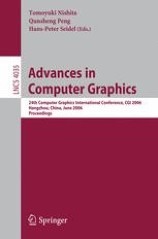
Advances in computer graphics ; 24th Computer graphics international conference, CGI 2006, Hangzhou, China, June 26-28, 2006, Proceedings
Contains 39 full papers and 39 short papers accepted by CGI 2006. CGI conference was initially founded by the Computer Graphics Society in 1983 and has now become a widely recognized, high-quality academic conference in the field of computer graphics. Recent CGI conferences were held in New York (2005), Crete (2004), Tokyo (2003), Bradford (2002), Hong Kong (2001) and Geneva (2000). The CGI 2006 Program Committee received an overwhelming 387 submissions from many countries worldwide. China and Korea contributed many enthusiastic submissions. Based on the strict review comments of international experts, we selected 38 full papers and 37 short papers for presentations.
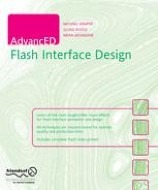
AdvancED Flash Interface Design
Flash allows users to create some amazing interactive interfaces to interact with rich Internet applications, e-learning systems, and simple web sites. In this book, two of the most talented Flash designers in the world will show you how to use them effectively to create breathtaking visuals for your Flash web sites. You'll also learn how to take advantage of Flash's powerful built-in vector-based drawing tools.
