



الصفحة 29
الصفحة 29

Deep learning and computer vision in remote sensing-I
In the last few years, huge amounts of progress have been made regarding remote sensing in the field of computer vision. This success and progress is mostly due to the effectiveness of deep learning (DL) algorithms. In addition, the remote sensing community has shifted its attention to DL, and DL algorithms have been used to achieve significant success in many image analysis tasks. However, with regard to remote sensing, a number of challenges caused by difficulties in data acquisition and annotation have not been fully solved yet. This reprint is a collection of novel developments in the field of remote sensing using computer vision, deep learning, and artificial intelligence. The articles published involve fundamental theoretical analyses as well as those demonstrating their application to real-world problems.

Deep fake detection
Deep learning has been successfully applied to solve various complex problems ranging from big data analytics to computer vision and human-level control. Deep learning advances however have also been employed to create software that can cause threats to privacy, democracy and national security. One of those deep learning-powered applications recently emerged is “deepfake”. Deepfake algorithms can create fake images and videos that humans cannot distinguish them from authentic ones. The proposal of technologies that can automatically detect and assess the integrity of digital visual media is therefore indispensable.

Decoding the city urbanism in the Age of Big Data
Shows how Big Data change reality and, hence, the way we deal with the city. They demonstrate how the Lab interprets digital data as material that can be used for the formulation of a different urban future. The publication also looks at the negative aspects of the city-related data acquisition and control.

Declarative agent languages and technologies III ; 3rd International Workshop, DALT 2005, Utrecht, The Netherlands, July 25, 2005, Selected and Revised Papers
The workshop on Declarative Agent Languages and Technologies is a we- established venue for researchers interested in sharing their experiences in the areas of declarative and formal aspects of agents and multi-agent systems, and in engineering and technology. Today it is still a challenge to develop techno- gies that can satisfy the requirements of complex agent systems. The design and development of multi-agent systems still calls for models and technologies that ensure predictability, enable feature discovery, allow for the veri?cation of properties, and guarantee ?exibility. Declarative approaches are potentially a valuable means for satisfying the needs of multi-agent system developers and for specifying multi-agent systems.

Declarative agent languages and technologies II ; 2nd international workshop, DALT 2004, New York, NY, USA, July 19, 2004, revised selected papers
Nearly 40 research groups worldwide were motivated to contribute to this event by submitting their most recent research achievements, covering a wide variety of the topics listed in the call for papers. More than 30 top researchers agreed to join the Program Committee, which then collectively faced the hard task of selecting the one-day event program. The fact that research in multi-agent systems is no longer only a novel and promising research horizon at dawn is, in our opinion, the main reason behind DALT’s (still short) success story. On the one hand, agent theories and app- cations are mature enough to model complex domains and scenarios, and to successfully address a wide range of multifaceted problems, thus creating the urge to make the best use of this expressive and versatile paradigm, and also pro?t from all the important results achieved so far. On the other hand, bui- ing multi-agent systems still calls for models and technologies that could ensure system predictability, accommodate ?exibility, heterogeneity and openness, and enable system veri?cation.

Dataset Studio
Data is the new oil, which means that AI engineers can face difficulties in locating suitable datasets. Dataset Studio is a comprehensive platform designed to support AI engineers in the creation and optimization of datasets. This project offers a diverse range of services that encompass data collection, data augmentation, and data classification. As a result, this software empowers engineers by automatically generating structured data through the utilization of advanced tools and AI techniques. By automating the laborious tasks of manual data collection and extraction, Dataset Studio effectively streamlines the workflow for AI engineers, enabling them to save valuable time and focus on the more intricate aspects of dataset development and refinement.

Databases, Information Systems, and Peer-to-Peer Computing ; International Workshops, DBISP2P 2005/2006, Trondheim, Norway, August 28-29, 2006, Revised Selected Papers
The P2P paradigm lends itself to constructing large-scale, complex, adaptive, autonomous and heterogeneous database and information systems, endowed with clearly specified and difierential capabilities to negotiate, bargain, coordinate and self-organize the information exchanges in large-scale networks. This vision will have a radical impact on the structure of complex organizations (business, sci- tific or otherwise) and on the emergence and the formation of social communities, and on how the information is organized and processed. The P2P information paradigm naturally encompasses static and wireless connectivity and static and mobile architectures. Wireless connectivity combined with the increasingly small and powerful mobile devices and sensors poses new challenges as well as opp- tunities to the database community. Information becomes ubiquitous, highly distributed and accessible anywhere and at any time over highly dynamic, - stable networks with very severe constraints on the information management and processing capabilities.

Databases, information systems, and peer-to-peer computing ; 2nd international workshop, DBISP2P 2004, Toronto, Canada, August 29-30, 2004, revised selected papers
Peer-to-peer (P2P) paradigm lends itself to constructing large-scale complex, adaptive, - tonomous and heterogeneous database and information systems, endowed with clearly speci?ed and di?erential capabilities to negotiate, bargain, coordinate, and self-organize the information exchanges in large-scale networks. This vision will have a radical impact on the structure of complex organizations (business, scienti?c, or otherwise) and on the emergence and the formation of social c- munities, and on how the information is organized and processed. The P2P information paradigm naturally encompasses static and wireless connectivity, and static and mobile architectures. Wireless connectivity c- bined with the increasingly small and powerful mobile devices and sensors pose new challenges to as well as opportunities for the database community. Inf- mation becomes ubiquitous, highly distributed and accessible anywhere and at any time over highly dynamic, unstable networks with very severe constraints on the information management and processing capabilities.

Database systems for advanced applications ; Vol. 3453 ; 10th international conference, DASFAA 2005, Beijing, China, April 17-20, 2005, Proceedings
Data Stream Mining and Resource Adaptive Computation.- Purpose Based Access Control for Privacy Protection in Database Systems.- Complex Networks and Network Data Mining.- Bioinformatics.- Indexing DNA Sequences Using q-Grams.- PADS: Protein Structure Alignment Using Directional Shape Signatures.- LinkageTracker: A Discriminative Pattern Tracking Approach to Linkage Disequilibrium Mapping.- Watermarking and Encryption.- Query Optimization in Encrypted Database Systems.- Watermarking Spatial Trajectory Database.- Effective Approaches for Watermarking XML Data.- XML Query Processing.- A Unifying Framework for Merging and Evaluating XML Information.- Efficient Evaluation of Partial Match Queries for XML Documents Using Information Retrieval Techniques.- PathStack: A Holistic Path Join Algorithm for Path Query with Not-Predicates on XML Data.- XML Coding and Metadata Management.- An Improved Prefix Labeling Scheme: A Binary String Approach for Dynamic Ordered XML.- Efficiently Coding and Indexing XML Document.- XQuery-Based TV-Anytime Metadata Management.- Data Mining.- Effective Database Transformation and Efficient Support Computation for Mining Sequential Patterns.
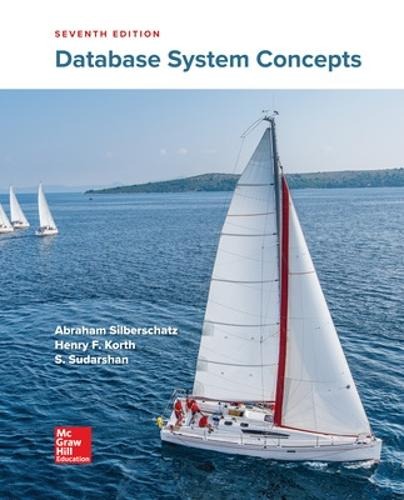
Database System Concepts
Presents the fundamental concepts of database management. This text is suitable for a first course in databases at the junior/senior undergraduate level or the first year graduate level

Database performance at scale: a practical guide
Optimizing database performance at the scale required for today’s data-intensive applications often requires more than performance tuning and scaling out. This book shares commonly overlooked considerations, pitfalls, and opportunities that have helped many teams break through database performance plateaus. It’s neither a definitive guide to distributed databases nor a beginner’s resource. Rather, it’s a look at the many different factors that impact performance, and our top field-tested recommendations for navigating them. Chapter 1 provides two (fun and fanciful) tales that surface some of the many roadblocks you might face and highlight the range of strategies for navigating around them.

Database and XML Technologies ; Vol. 4156 ; 4th International XML Database Symposium, XSym 2006, Seoul, Korea, September 10-11, 2006, Proceedings
The theme of the XML Database Symposium (XSym) is the convergence of database technology with XML technology. Since the first International XML Symposium in 2003, XSym has continued to provide a forum for academics, practitioners, users and vendors to discuss the use of and synergy between advanced XML technologies. XSym 2006 received 32 full paper submissions. Each submitted paper underwent a rigorous review by independent referees. These proceedings represent a collection of eight excellent research papers. Their focus is on building XML repositories and covers the following topics: XML query processing, caching, indexing and navigation support, structural matching, temporal XML, and XML updates.
Database : Enterprise, skills and innovation; 22nd British national conference on databases, BNCOD 22, Sunderland, UK, July 5-7, 2005, Proceedings
The British National Conference on Databases (BNCOD) was established in 1980 as a forum for research into the theory and practice of databases. The original conference in the series took place at the University of Aberdeen. To be precise, this conference was in fact entitled ICOD which stood for International Conference on Databases. It was the intention, when the series began, that an ICOD would take place every two years, whilst a BNCOD would run in the years in between. As the record shows ICOD was only held in 1980 and 1983. The more junior conference has managed to acquire a lifetime much longer than that of its senior relative! If truth wereknown,however,BNCOD has,overthe years,growninto ICOD and although the conference is still titled “British National,” it is, in fact, an international conference that takes place on a yearly basis. Proof of this can be obtained simply by looking at the table of contents of these proceeding which clearlyshowthatthe majorityofpaperspresentedatthis year’sconferencecame from contributors whose a?liations are outside the UK. Despitetherangeofpapersono?er,BNCODstillretainsitsuniquelyBritish ?avor. The Programme Committee is drawn from UK academics and the c- ference is always held at a British university (or in earlier years a polytechnic!).

Data structure and algorithms using C++ : A practical implementation
Intended to flow from the basic concepts of C++ to technicalities of the programming language, its approach and debugging. The chapters of the book flow with the formulation of the problem, it's designing, finding the step-by-step solution procedure along with its compilation, debugging and execution with the output. Keeping in mind the learner’s sentiments and requirements, the exemplary programs are narrated with a simple approach so that it can lead to creation of good programs that not only executes properly to give the output, but also enables the learners to incorporate programming skills in them. The style of writing a program using a programming language is also emphasized by introducing the inclusion of comments wherever necessary to encourage writing more readable and well commented programs. As practice makes perfect, each chapter is also enriched with practice exercise questions so as to build the confidence of writing the programs for learners.

Data science, AI, and machine learning in drug development
The confluence of big data, AI, and machine learning has led to a paradigm shift in how innovative medicines are developed and healthcare delivered. To fully capitalize on these technological advances, it is essential to systematically harness data from diverse sources and leverage digital technologies and advanced analytics to enable data-driven decisions. Data science stands at a unique moment of opportunity to lead such a transformative change. Intended to be a single source of information, Data Science, AI, and Machine Learning in Drug Research and Development covers a wide range of topics on the changing landscape of drug R&D, emerging applications of big data, AI and machine learning in drug development, and the build of robust data science organizations to drive biopharmaceutical digital transformations

Data science on the Google cloud platform : Implementing end-to-end real-time data pipelines : From ingest to machine learning
Learn how easy it is to apply sophisticated statistical and machine learning methods to real-world problems when you build using Google Cloud Platform (GCP). This hands-on guide shows data engineers and data scientists how to implement an end-to-end data pipeline with cloud native tools on GCP. You'll work through a sample business decision by employing a variety of data science approaches. Follow along by building a data pipeline in your own project on GCP, and discover how to solve data science problems in a transformative and more collaborative way. Employ best practices in building highly scalable data and ML pipelines on Google Cloud Automate and schedule data ingest using Cloud Run Create and populate a dashboard in Data Studio Build a real-time analytics pipeline using Pub/Sub, Dataflow, and BigQuery Conduct interactive data exploration with BigQuery Create a Bayesian model with Spark on Cloud Dataproc Forecast time series and do anomaly detection with BigQuery ML Aggregate within time windows with Dataflow Train explainable machine learning models with Vertex AI Operationalize ML with Vertex AI Pipelines

Data science for economics and finance : Methodologies and applications
The book starts with an introduction on the use of data science technologies in economics and finance and is followed by thirteen chapters showing success stories of the application of specific data science methodologies, touching on particular topics related to novel big data sources and technologies for economic analysis (e.g. social media and news); big data models leveraging on supervised/unsupervised (deep) machine learning; natural language processing to build economic and financial indicators; and forecasting and nowcasting of economic variables through time series analysis.

Data parallel C++programming accelerated systems using C++ and SYCL
Full of practical advice, detailed explanations, and code examples to illustrate key topics. SYCL enables access to parallel resources in modern accelerated heterogeneous systems. Now, a single C++ application can use any combination of devices–including GPUs, CPUs, FPGAs, and ASICs–that are suitable to the problems at hand. This book teaches data-parallel programming using C++ with SYCL and walks through everything needed to program accelerated systems. The book begins by introducing data parallelism and foundational topics for effective use of SYCL. Later chapters cover advanced topics, including error handling, hardware-specific programming, communication and synchronization, and memory model considerations.

Data mining and knowledge management ; Chinese academy of sciences symposium CASDMKD 2004, Beijing, China, July 12-14, 2004, Revised Paper
Knowledge management for enterprise: These papers address various issues related to the application of knowledge management in corporations using various techniques. A particular emphasis here is on coordination and cooperation. • Risk management: Better knowledge management also requires more advanced techniques for risk management, to identify, control, and minimize the impact of uncertain events, as shown in these papers, using fuzzy set theory and other approaches for better risk management. • Integration of data mining and knowledge management: As indicated earlier, the integration of these two research fields is still in the early stage. Nevertheless, as shown in the papers selected in this volume, researchers have endearored to integrate data mining methods such as neural networks with various aspects related to knowledge management,

Data Mining and Diagnosing IC Fails
This book brings together a large number of analysis techniques that are suitable for IC fail data, but that are not available elsewhere in a single place. Several of the techniques, in fact, have been presented only recently in technical conferences. The purpose of the book is to bring together in one place a large number of analysis, data mining and diagnosis techniques that have proven to be useful in analyzing IC fails. The descriptions of the techniques and analysis routines is sufficiently detailed that profession manufacturing engineers can implement them in their own work environment
