



الصفحة 27
الصفحة 27

Making Globally Distributed Software Development a Success Story : International Conference on Software Process, ICSP 2008 Leipzig, Germany, May 10-11, 2008 Proceedings
This volume contains papers presented at the International Conference on Software Process (ICSP 2008) held in Leipzig, Germany, during May 10-11, 2008. ICSP 2008 was the second conference of the ICSP series. The theme of ICSP 2008 was “Making Globally Distributed Software Development a Success Story. ” Software developers work in a dynamic context of frequently changing technologies and with limited resources. Globally distributed development teams are under ev- increasing pressure to deliver their products more quickly and with higher levels of qu- ity. At the same time, global competition is forcing software development organizations to cut costs by rationalizing processes, outsourcing part of or all development activities, reusing existing software in new or modified applications, and evolving existing systems to meet new needs, while still minimizing the risk of projects failing to deliver.
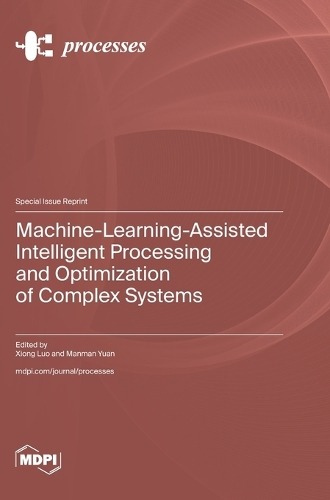
Machine-learning-assisted intelligent processing and optimization of complex systems
Focuses on the most recent developments in intelligent optimization methods and their applications in various test cases. The reprint covers various topics, including distributed multiagent modeling, metaheuristic algorithms, multisource data fusion, mobile computing and mobile sensing, machine learning-based intelligent processing for modeling complex manufacturing systems, and data-driven intelligent modeling
Machine learning methods for reverse engineering of defective structured surfaces
Pascal Laube presents machine learning approaches for three key problems of reverse engineering of defective structured surfaces: parametrization of curves and surfaces, geometric primitive classification and inpainting of high-resolution textures. The proposed methods aim to improve the reconstruction quality while further automating the process. The contributions demonstrate that machine learning can be a viable part of the CAD reverse engineering pipeline.

Machine Learning for Multimodal Interaction ; Vol.4299 ; 3rd International Workshop, MLMI 2006, Bethesda, MD, USA, May 1-4, 2006, Revised Selected Papers
This book contains a selection of refereed papers presented at the 3rd Workshop on Machine Learning for Multimodal Interaction (MLMI 2006), held in Bethesda MD, USA during May 1–4, 2006.

Machine Learning for Multimodal Interaction ; Vol.3869 ; 2nd International Workshop, MLMI 2005, Edinburgh, UK, July 11-13, 2005, Revised Selected Papers
The papers are organized in topical sections on multimodal processing, HCI and applications, discourse and dialogue, emotion, visual processing, speech and audio processing, and NIST meeting recognition evaluation

Machine Learning for Multimodal Interaction ; Vol.3361 : 1st International Workshop, MLMI 2004, Martigny, Switzerland, June 21-23, 2004, Revised Selected Papers
his book contains a selection of refereed papers presented at the 1st Wo- shop on Machine Learning for Multimodal Interaction (MLMI 2004), held at the “Centre du Parc,” Martigny, Switzerland, during June 21–23, 2004. The workshop was organized and sponsored jointly by three European projects, – AMI, Augmented Multiparty Interaction, http://www.amiproject.org – PASCAL, Pattern Analysis, Statistical Modeling and Computational Learning, http://www.pascal-network.org – M4, Multi-modal Meeting Manager, http://www.m4project.org as well as the Swiss National Centre of Competence in Research (NCCR): – IM2: Interactive Multimodal Information Management, http://www.im2.ch MLMI 2004 was thus sponsored by the European Commission and the Swiss National Science Foundation.

Machine Learning for Multimodal Interaction ; 5th International Workshop, MLMI 2008, Utrecht, The Netherlands, September 8-10, 2008. Proceedings
The 12 revised full papers and 15 revised poster papers presented together with 5 papers of a special session on user requirements and evaluation of multimodal meeting browsers/assistants were carefully reviewed and selected from 47 submissions. The papers cover a wide range of topics related to human-human communication modeling and processing, as well as to human-computer interaction, using several communication modalities. Special focus is given to the analysis of non-verbal communication cues and social signal processing, the analysis of communicative content, audio-visual scene analysis, speech processing, interactive systems and applications.
Machine Learning and Robot Perception
Presents some of the most recent research results in the area of machine learning and robot perception. The chapters represent new ways of solving real-world problems. This book will appeal to researchers, senior undergraduate/postgraduate students, application engineers and scientists.
Machine Learning and Data Mining for Computer Security : Methods and Applications
Presents research conducted in academia and industry on methods and applications of machine learning and data mining for problems in computer security and will be of interest to researchers and practitioners, as well students.
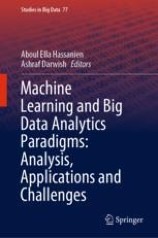
Machine Learning and Big Data Analytics Paradigms : Analysis, Applications and Challenges
Intended to present the state of the art in research on machine learning and big data analytics. The accepted chapters covered many themes including artificial intelligence and data mining applications, machine learning and applications, deep learning technology for big data analytics, and modeling, simulation, and security with big data. It is a valuable resource for researchers in the area of big data analytics and its applications.
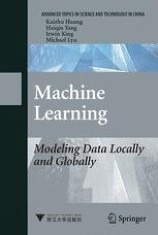
Machine Learning : Modeling Data Locally and Globally
Machine Learning - Modeling Data Locally and Globally presents a novel and unified theory that tries to seamlessly integrate different algorithms. Specifically, the book distinguishes the inner nature of machine learning algorithms as either "local learning"or "global learning."This theory not only connects previous machine learning methods, or serves as roadmap in various models, but – more importantly – it also motivates a theory that can learn from data both locally and globally. This would help the researchers gain a deeper insight and comprehensive understanding of the techniques in this field. The book reviews current topics,new theories and applications.

Logic-Based Program Synthesis and Transformation ; 17th International Symposium, LOPSTR 2007, Kongens Lyngby, Denmark, August 23-24, 2007, Revised Selected Papers
Contains a selectionofthe the paperspresentedatthe 17thInter- tional Symposium on Logic-Based Program Synthesis and Transformation, that was held in Kongens Lyngby, Denmark, August 23-24,2007. LOPSTR thus traditionally solicits papers in the areas of: specification, synthesis, verification, transformation, analysis, optimization, composition, security, reuse, applications andtools, component-baseds of tware development, software architectures, age- based software development and program refnement. Formal proceedings are produced only after the symposium, so that authors can incorporate this feed back in the published papers.
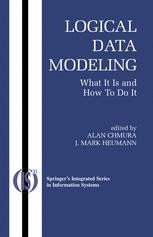
Logical Data Modeling : What it is and How to do it
LOGICAL DATA MODELING: What It Is and How To Do IT is directed toward three groups of people: (1) Business subject matter experts, (2) information technology professionals, (3) advanced students in Computer Science, Management Information Systems, and e-Business. Its purpose is to outline the basics of logical data modeling—specifically, data modeling for relational database management systems—in simple, practical terms and in a business context. The focus on relational data modeling is consciously made because it is superior in modeling real business activities.

Logical approaches to computational barriers ; 2nd Conference on Computability in Europe, CiE 2006, Swansea, UK, June 30-July 5, 2006, Proceedings
The sources of new ideas and methods include practical developments in areas such as neural networks, quantum computation, natural computation, molecular computation, and computational learning. Applications are everywhere, especially, in algebra, analysis and geometry, or data types and programming. This volume, Logical Approaches to Computational Barriers, is the proce- ings of the second in a series of conferences of CiE that was held at the Depa- ment of Computer Science, Swansea University, 30 June - 5 July, 2006.

Logic, language, information and computation ; 15th International Workshop, WoLLIC 2008 Edinburgh, UK, July 1-4, 2008 Proceedings
The papers cover all pertinent subjects in computer science with particular interest in cross-disciplinary topics. Typical areas of interest are: foundations of computing and programming; novel computation models and paradigms; broad notions of proof and belief; formal methods in software and hardware development; logical approach to natural language and reasoning; logics of programs, actions and resources; foundational aspects of information organization, search, flow, sharing, and protection.

Logic Programming ; Vol. 3668 : 21st International Conference, ICLP 2005, Sitges, Spain, October 2-5, 2005, Proceedings
This volume contains the proceedings of the 21st International Conference on Logic Programming which was held in Sitges (Barcelona), Spain, from October 2nd to 5th, 2005. The conference was colocated with the International Conf- ence on ConstraintProgramming(CP 2005)and the following 6 post-conference workshops: – CICLOPS 2005: Colloquium on Implementation of Constraint and Logic Programming Systems – CSLP 2005: Constraint Solving and Language Processing – WCB 2005: Constraint Based Methods for Bioinformatics – WLPE 2005: Logic-Based Methods in Programming Environments – MoVeLog 2005: Mobile Code Safety and Program Veri?cation Using C- putational Logic Tools – CHR 2005: Constraint Handling Rules The conferencecoincided with a solareclipse

LNA-ESD Co-Design for Fully Integrated CMOS Wireless Receivers
LNA-ESD Co-Design for Fully Integrated CMOS Wireless Receivers fits in the quest for complete CMOS integration of wireless receiver front-ends. With a combined discussion of both RF and ESD performance, it tackles one of the final obstacles on the road to CMOS integration.

Life System Modeling and Simulation; International Conference on Life System Modeling, and Simulation, LSMS 2007, Shanghai, China, September 14-17, 2007. Proceedings
The International Conference on Life System Modeling and Simulation (LSMS) was formed to bring together international researchers and practitioners in the field of life system modeling and simulation as well as life system-inspired theory and methodology. The arrival of the 21st century has been marked by a resurgence of research interest both in arriving at a systems-level und- standing of biology and in applying such knowledge in complex real-world appli- tions. Consequently, computational methods and intelligence in systems, biology, as well as bio-inspired computational intelligence, have emerged as key drivers for new computational methods. For this reason papers dealing with theory, techniques and real-world applications relating to these two themes were especially solicited.

Leveraging the Semantics of Topics Maps ; 2nd International Conference on Topic Maps Research and Applications, TMRA 2006, Leipzig, Germany, October 11-12, 2006, Revised Selected papers
The papers in this volume were presented at TMRA 2006, the International Conference on Topic Maps Research and Applications, held October 11–12, 2006, in Leipzig, Germany. TMRA 2006 was the second conference of an annual series of international conferences dedicated to Topic Maps in research and industry.

Leveraging Applications of Formal Methods ; 1st International Symposium, ISoLA 2004, Paphos, Cyprus, October 30 - November 2, 2004, Revised Selected Papers
This book constitutes the thoroughly refereed post-proceedings of the First International Symposium on Leveraging Applications of Formal Methods, ISoLA 2004, held in Paphos, Cyprus in October/November 2004. The 12 revised full papers presented were carefully selected from more than 70 submissions. The papers discuss issues related to the adoption and use of rigorous tools and methods for the specification, analysis, verification, certification, construction, test, and maintenance of systems. In particular, by discussing common problems, requirements, algorithms, methodologies, and practices, ISoLA aims at supporting researchers in their quest to improve the utility, reliability, flexibility, and efficiency of tools for building systems, and users in their search for adequate solutions to their problems.
