



الصفحة 27
الصفحة 27

Applications of evolutionary computing ; Vol. 3907 : EvoWorkshops 2006: EvoBIO, EvoCOMNET, EvoHOT, EvoIASP, EvoINTERACTION, EvoMUSART, and EvoSTOC, Budapest, Hungary, April 10-12, 2006, Proceedings
This book constitutes the refereed joint proceedings of seven workshops on evolutionary computing, EvoWorkshops 2006, held in Budapest, Hungary, in April 2006. The 65 revised full papers and 13 revised short papers presented were carefully reviewed and selected from a total of 149 submissions. In accordance with the seven workshops covered, the papers are organized in topical sections on evolutionary bioinformatics, evolutionary computation in communications, networks, and connected systems, evolutionary computation in hardware optimization, evolutionary computation in image analysis and signal processing, interactive evolution and humanized computational intelligence, evolutionary music and art, and evolutionary algorithms in stochastic and dynamic environments.

Applications of evolutionary computing ; EvoWorkshops 2007 : EvoCOMNET, EvoFIN, EvoIASP, EvoINTERACTION, EvoMUSART, EvoSTOC, and EvoTransLog, Valencia, Spain, April 11-13, 2007, Proceedings
This volume contains contributions for EvoCOMNET, EvoFIN, EvoIHOT, EvoMUSART, EvoSTIM, and EvoTRANSLOC. The 51 revised full papers presented were carefully reviewed and selected from numerous submissions. This volume presents an overview about the latest research in EC. Areas where evolutionary computation techniques have been applied range from telecommunication networks to complex systems, finance and economics, games, image analysis, evolutionary music and art, parameter optimization, scheduling, and logistics. These papers may provide guidelines to help new researchers tackling their own problem using EC.

Applications and Usability of Interactive TV; 8th Iberoamerican Conference, jAUTI 2019, Rio de Janeiro, Brazil, October 29–November 1, 2019, Revised Selected Papers
This book constitutes the refereed proceedings of the 8th Iberoamerican Conference on Applications and Usability of Interactive Television, jAUTI 2019, in Rio de Janeiro, Brazil, in October 2019. The 10 full papers presented were carefully reviewed and selected from 35 submissions. The papers are organized in topical sections on Design and Development; Second Screen and Crossmedia; Interaction Techniques and Technologies; Accessibility; User Experience.

Applications and Innovations in Intelligent Systems XV ; Proceedings of AI-2007, the Twenty-seventh SGAI International Conference on Innovative Techniques and Applications of Artificial Intelligence
The papers in this volume are the refereed application papers presented at AI-2007, the Twenty-seventh SGAI International Conference on Innovative Techniques and Applications of Artificial Intelligence, held in Cambridge in December 2007.

Application and Theory of Petri Nets 2002 ; 23rd International Conference, ICATPN 2002, Adelaide, Australia, June 24-30, 2002. Proceedings
This book constitutes the refereed proceedings of the 23rd International Conference on Application and Theory of Petri Nets, ICATPN 2002, held in Adelaide, Australia, in June 2002. The 18 regular papers and one tool presentation presented together with six invited paper were carefully reviewed and selected from 45 submissions. All current issues on research and development of Petri nets are addressed, in particular concurrent systems analysis, model validation, business process management, reactive systems, workflow processes, wireless transaction protocols.
Ant Colony Optimization and Swarm Intelligence ; 5th International Workshop, ANTS 2006, Brussels, Belgium, September 4-7, 2006, Proceedings
ANTS – The International Workshop on Ant Colony Optimization and Swarm Intelligence is now at its ?fth edition. The series started in 1998 with the - ganization of ANTS 1998. At that time the goal was to gather in a common meeting those researchers interested in ant colony optimization: more than 50 researchers from around the world joined for the ?rst time in Brussels, Belgium, to discuss ant colony optimization and swarm intelligence related research. A selectionofthebest paperspresentedatthe workshopwaspublished asa special issue of the Future Generation Computer Systems journal (Vol. 16, No. 8, 2000). Two years later, ANTS 2000, organized again in Brussels, attracted more than 70 participants. The 41 extended abstracts presented as talks or posters at the workshopwere collected in a booklet distributed to participants, and a selection of the best papers was published as a special section of the IEEE Transactions on Evolutionary Computation (Vol. 6, No. 4, 2002).

Annotating, Extracting and Reasoning about Time and Events ; International Seminar, Dagstuhl Castle, Germany, April 20-15, 2005, Revised Papers
The book presented centers around an emergingde factost and ardfortime and event annotation: TimeML. TimeML has recently been adopted as a candidate for an ISO standard, and is currently being reviewed in this capacity.It discussions focussed on the following three Time- related issues: using the TimeML language efiectively for consistent annotation, determining how useful such annotation is for further processing,and describing modifications that should be applied to the standard for applications such as question-answering and information retrieval. Discussions at the Dagstuhl Seminar led to new researchideas, and a variety

Anaphora : Analysis, Algorithms and Applications ; 6th Discourse Anaphora and Anaphor Resolution Colloquium, DAARC 2007, Lagos Portugal, March 29-30, 2007, Selected Papers
This book presented sections on human processing and performance, language analysis and representation, resolution methodology and algorithms, as well as computational systems and applications.

Analysis and Design of Information Systems : Third ed.
This third edition of the successful Analysis and Design of Information Systems provides a comprehensive introduction and user-friendly survey to all aspects of business transformation and analysis, and aims to provide the complex set of tools covering all types of systems, including legacy, transactional, database, and web/e-commerce topics.

An introduction to ontology engineering
Provides the reader with a comprehensive introductory overview of ontology engineering. A secondary aim is to provide hands-on experience in ontology development that illustrate the theory. The book is divided into three blocks: Block I: logic foundations for ontologies both regarding the languages (mainly First Order predicate Logic, Description Logics, and OWL) and automated reasoning. Block II: developing good ontologies with methods and methodologies, the top-down approach with foundational ontologies, and the bottom-up approach to extract as much useful content as possible from legacy material. Block III: advanced topics with a selection of areas of specialisation, including Ontology-Based Data Access, the interaction between ontologies and natural languages (multilingual ontologies, controlled natural language), and advanced modelling with additional language features (fuzzy and temporal ontologies)

Ambient Intelligence in Everyday Life : Foreword by Emile Aarts
Originating from the Workshop on Ambient Intelligence in Everyday Life held at the Miramar Congress Center, San Sebastian, Spain, in July 2005, this book is devoted to the cognitive aspects of ambient intelligence. The 15 carefully reviewed and revised articles presented are organized in topical sections on human-centric computing, ambient interfaces, and architectures for ambient intelligence.

Ambient intelligence for scientific discovery : Foundations, theories, and systems
Many difficult scientific discovery tasks can only be solved in interactive ways, by combining intelligent computing techniques with intuitive and adaptive user interfaces. It is inevitable to use human intelligence in scientific discovery systems: human eyes can capture complex patterns and relationships, along with detecting the exceptional cases in a data set; the human brain can easily manipulate perceptions to make decisions. Ambient intelligence is about this kind of ubiquitous and autonomous human interaction with information. Scientific discovery is a process of creative perception and communication, dealing with questions like: how do we significantly reduce information while maintaining meaning, or how do we extract patterns from massive data and growing data resources. Originating from the SIGCHI Workshop on Ambient Intelligence for Scientific Discovery, this state-of-the-art survey is organized in three parts: new paradigms in scientific discovery, ambient cognition, and ambient intelligence systems. Many chapters share common features such as interaction, vision, language, and biomedicine.
Ambient Intelligence ; European Conference, AmI 2008, Nuremberg, Germany, November 19-22, 2008. Proceedings
This book constitutes the refereed proceedings of the Second European Conference on Ambient Intelligence, AmI 2008, held in Nuremberg, Germany, in November 2008.

Ambient Intelligence ; European Conference, AmI 2007, Darmstadt, Germany, November 7-10, 2007, Proceedings
This book presented sections on mobility and sensing, applications of AmI, activity and location sensing, AmI and artificial intelligence, AmI middleware and infrastructure, and interaction with the environment. The book is rounded off by a section on case studies and lessons learned, presenting a high level selection of current research reports and papers that reflect the most important activities of current ambient intelligence research.

Ambient intelligence : A novel paradigm
Ambient Intelligence (AmI) is an integrating technology for supporting a pervasive and transparent infrastructure for implementing smart environments. Such technology is used to enable environments for detecting events and behaviors of people and for responding in a contextually relevant fashion. AmI proposes a multi-disciplinary approach for enhancing human machine interaction. The authors start with a description of the iDorm as an example of a smart environment conforming to the AmI paradigm, and introduces computer vision as an important component of the system. Other computer vision examples describe visual monitoring for the elderly, classic and novel surveillance techniques using clusters of cameras installed in indoor and outdoor application domains, and the monitoring of public spaces. Face and speech recognition systems are also covered as well as enhanced LEGO blocks for novel educational purposes. The book closes with a provocative chapter on how a cybernetic system can be designed as the backbone of a human machine interaction.
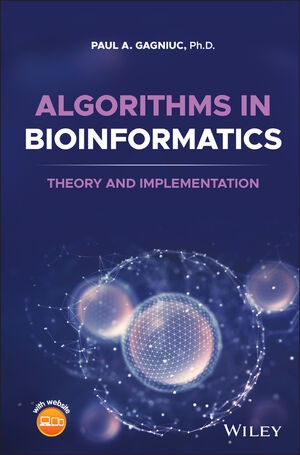
Algorithms in Bioinformatics : Theory and Implementation
Explores a comprehensive and insightful treatment of the practical application of bioinformatic algorithms in a variety of fields. Delivers a fulsome treatment of some of the main algorithms used to explain biological functions and relationships. It introduces readers to the art of algorithms in a practical manner which is linked with biological theory and interpretation. The book covers many key areas of bioinformatics, including global and local sequence alignment, forced alignment, detection of motifs, Sequence logos, Markov chains or information entropy. Other novel approaches are also described, such as Self-Sequence alignment, Objective Digital Stains (ODSs) or Spectral Forecast and the Discrete Probability Detector (DPD) algorithm. Readers will also benefit from the inclusion of: A detailed presentation of new methods, such as Self-sequence alignment, Objective Digital Stains and Spectral Forecast ; A treatment of sequence alignment, including local sequence alignment, global sequence alignment and forced sequence alignment with full implementations ; Discussions of position-specific weight matrices, including the count, weight, relative frequencies, and log-likelihoods matrices ; A detailed presentation of the methods related to Markov Chains as well as a description of their implementation in Bioinformatics and adjacent fields ; An examination of information and entropy, including sequence logos and explanations related to their meaning ; A chapter on philosophical transactions that allows the reader a broader view of the prediction process ; Extensive worked examples with detailed case studies that point out the meaning of different results

Ajax Patterns and Best Practices
Ajax is taking us into the next generation of web applications. Ajax has broken the client-server barrier by decoupling the client from the server, but an Ajax application still needs a server to extract content from. The most effective use of Ajax and the server requires an understanding of REST, an architectural style used to define Web services. Ajax Patterns and Best Practices explores dynamic web applications that combine Ajax and REST as a single solution. A major advantage of REST is that, like Ajax, it can be used with today's existing technologies.

AI*IA 2007 : Artificial intelligence and human-oriented computing ; 10th Congress of the Italian Association for Artificial Intelligence, Rome, Italy, September 10-13, 2007, Proceedings
The book is organized in topical sections on knowledge representation and reasoning, multiagent systems, distributed AIai, knowledge engineering, ontologies and the semantic Web, machine learning, natural language processing, information retrieval and extraction, planning and scheduling, AI and applications. Three special tracks depicting progresses in significant application fields that represent increasingly relevant topics contain 18 additional papers on AI and robotics, AI and expressive media, and intelligent access to multimedia information

AI virtual mouse system
Even today, many people still find interacting with computers and hardware to be an unpleasant experience, despite the development of input devices over decades. Computers and hardware should be tailored to our natural modes of communication: Body language and speech. Intelligent machines that can work alongside computers are now being developed, allowing for friendlier Human-Computer Interaction (HCI). this project, intends a hand gesture-based system that allows users to control virtual keyboard, desktop mouse movements and connect it with mobile phone in order to monitor and control.
AI in learning : Designing the future
AI (artificial intelligence) is predicted to radically change teaching and learning in both schools and industry causing radical disruption of work. AI can support well-being initiatives and lifelong learning but educational institutions and companies need to take the changing technology into account. Moving towards AI supported by digital tools requires a dramatic shift in the concept of learning, expertise and the businesses built off of it. Based on the latest research on AI and how it is changing learning and education, this book will focus on the enormous opportunities to expand educational settings with AI for learning in and beyond the traditional classroom. This book also introduces ethical challenges related to learning and education, while connecting human learning and machine learning.
