



الصفحة 27
الصفحة 27

High Availability and Disaster Recovery : Concepts, Design, Implementation
Companies and other organizations depend more than ever on the availability of their Information Technology, and most mission critical business processes are IT-based processes. Business continuity is the ability to do business under any circumstances and is an essential requirement modern companies are facing. High availability and disaster recovery are contributions of the IT to fulfill this requirement. And companies will be confronted with such demands to an even greater extent in the future, since their credit ratings will be lower without such precautions. Both, high availability and disaster recovery, are realized by redundant systems. Redundancy can and should be implemented on different abstraction levels: from the hardware, the operating system and middleware components up to the backup computing center in case of a disaster. This book presents requirements, concepts, and realizations of redundant systems on all abstraction levels, and all given examples refer to UNIX and Linux systems.

Hexagonal image processing : A practical approach
Hexagonal Image Processing provides an introduction to the processing of hexagonally sampled images, includes a survey of the work done in the field, and presents a novel framework for hexagonal image processing (HIP) based on hierarchical aggregates. Digital image processing is currently dominated by the use of square sampling lattices, however, hexagonal sampling lattices can also be used to define digital images. The strengths offered by hexagonal lattices over square lattices are considerable: • higher packing density, • uniform connectivity of points (pixels) in the lattice, • better angular resolution by virtue of having more nearest neighbours, and • superlative representation of curves. The utility of the HIP framework is demonstrated by implementing several basic image processing techniques (for the spatial and frequency domain) and some applications. The HIP framework serves as a tool for comparing processing of images defined on a square vs hexagonal grid, to determine their relative merits and demerits. The theory and algorithms covered are supplemented by attention to practical details such as accommodating hardware that support only images sampled on a square lattice. Including a Foreword written by Professor Narendra Ahuja, an eminent researcher in the field of Image Processing and Computer Vision, the book’s fresh approach to the subject offers insight and workable know-how to both researchers and postgraduates.

Heterogeneous Objects Modelling and Applications : Collection of Papers on Foundations and Practice
Heterogeneous object modelling is a new and quickly developing research area. This book is one of the first attempts to systematically cover the most relevant themes and problems of this new and challenging subject area. It is a collection of invited papers and papers co-authored by the editors. Each chapter presents either new research results or a survey on the following topics:Formal models and abstractions of heterogeneous objects including geometric, topological, discrete and continuous models, operations forming special algebras and conversions between different model types.

Heterogeneity in statistical genetics : How to assess, address, and account for mixtures in association studies
Heterogeneity, or mixtures, are ubiquitous in genetics. Even for data as simple as mono-genic diseases, populations are a mixture of affected and unaffected individuals. Still, most statistical genetic association analyses, designed to map genes for diseases and other genetic traits, ignore this phenomenon.In this book, we document methods that incorporate heterogeneity into the design and analysis of genetic and genomic association data. Among the key qualities of our developed statistics is that they include mixture parameters as part of the statistic, a unique component for tests of association. A critical feature of this work is the inclusion of at least one heterogeneity parameter when performing statistical power and sample size calculations for tests of genetic association.

Hebbian Learning and Negative Feedback Networks
This book is the outcome of a decade’s research into a speci?c architecture and associated learning mechanism for an arti?cial neural network: the - chitecture involves negative feedback and the learning mechanism is simple Hebbian learning. The research began with my own thesis at the University of Strathclyde, Scotland, under Professor Douglas McGregor which culminated with me being awarded a PhD in 1995 [52], the title of which was “Negative Feedback as an Organising Principle for Arti?cial Neural Networks”. Naturally enough, having established this theme, when I began to sup- vise PhD students of my own, we continued to develop this concept and this book owes much to the research and theses of these students at the Applied Computational Intelligence Research Unit in the University of Paisley . All of Chapters 3 to 8 deal with single stream arti?cial neural networks.

Heavy-Tailed Time Series
This book aims to present a comprehensive, self-contained, and concise overview of extreme value theory for time series, incorporating the latest research trends alongside classical methodology.Additionally, the book incorporates complete proofs and exercises with solutions as well as substantive reference lists and appendices, featuring a novel commentary on the theory of vague convergence.

Hearing faces
Our project aims to aid deaf-mute people by tracking hand movements of the deaf-mute person for word level American Sign Language using WLASL model that include 2D CNN -3D CNN and RNN networks training on WLASL large video dataset, then generating the corresponding text and analyzing the person's facial gestures to generate information related to the tone of voice that is most appropriate to the person's age, gender, and race through MTCNN network algorithm that training on generated dataset by us depending on blending VOXCELEB dataset and VGGFACE dataset .
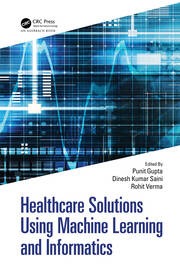
Healthcare solutions using machine learning and informatics
Covers novel and innovative solutions for the healthcare that apply machine learning and biomedical informatics technology. The healthcare sector is one of the most critical in society. This book presents a series of artificial intelligence, machine learning, intelligent IoT-based solutions for medical image analysis, medical big data processing, disease predictions. Machine learning and artificial intelligence use cases in healthcare presented in the book give researchers, practitioners, and students a wide range of practical examples of cross-domain convergence. The wide variety of topics covered include: Artificial Intelligence in healthcare Machine learning solutions for such disease as diabetes, arthritis, cardiovascular disease, and COVID-19 Big data analytics solutions for healthcare data processing Reliable biomedical applications using AI models Intelligent IoT in healthcare. The book explains fundamental concepts as well as the advanced use cases illustrating how to apply emerging technologies such as machine learning, AI models, data informatics into practice to tackle challenges in the field of healthcare with real-world scenarios. Chapters contributed by noted academicians and professionals examine various solutions, frameworks, applications, case studies, and best practices in the healthcare domain
Health information systems : Technological and management perspectives
Details a variety of scenarios in the context of both health and heath care, including where prevention and wellness are related, such as the treatment of both acute and chronic diseases. Stakeholder requirements are also described to provide perspectives for describing the architectures and management techniques associated with health information systems, enabling the reader to develop a detailed holistic overview of the subject. Health Information Systems: Technological and Management Perspectives features a detailed overview of how information systems in health care can be managed and is a vital resource for medical informatics students seeking an up-to-date text on the topic.

Health Information Science ; 9th International Conference, HIS 2020, Amsterdam, The Netherlands, October 20–23, 2020, Proceedings
This book constitutes the proceedings of the 9th International Conference on Health Information Science, HIS 2020, which took place in Amsterdam, The Netherlands, during October 20-23, 2020. The 11 full papers and 6 short papers presented in this volume were carefully reviewed and selected from 62 submissions. They were organized in topical sections named: mental health; medical record processing; medical information systems; medical diagnosis with machine learning; and health behavior and medication.
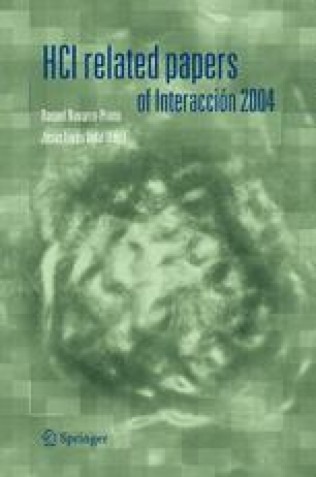
HCI related papers of Interacción 2004 ; Conference proceedings
The present book contains a collection of the best papers presented at the 5th International Conference on Interacción Persona Ordenador (IPO) (which is Human Computer Interaction in Spanish), which took place in th th Lleida on May 5 -7 , 2004. . The main goals of Interacción 2004 were: To expand the conference scope with internationally recognised invited speakers. The plenary talks were presented by Alan Dix, Yvonne Rogers, Geritt van der Veer, and Angel Puerta. To open the participation to Spanish speaker worldwide in order to be a point of reference of this discipline not only in Spain but also in the wider Spanish speaking community. This goal was reached through a very diverse program which included panels and posters sessions, where many different aspect of the Human Computer Interaction (HCI) were presented. All through the program, research from outside Spain was reflected through the contributions from people of other countries.

Hardware and software, verification and testing ; 2nd International Haifa Verification Conference, HVC 2006, Haifa, Israel, October 23-26, 2006, Revised Selected Papers
The Haifa Verification Conference 2006 took place for the second year in a row at the IBM Haifa Research Lab and at the Haifa University in Israel during October 23–26, 2006. The verification conference was a three-day, single-track conference followed by a one-day tutorial on PSL.

Hardware and software : Verification and testing ; 3rd International Haifa Verification Conference, HVC 2007, Haifa, Israel, October 23-25, 2007. Proceedings
These are the conference proceedings of the 4th Haifa Verifcation Conference, held October 27–30, 2008 in Haifa, Israel. This international conference is a unique venue that brings together leading researchers and practitioners of both formal and dynamic verifcation, for both hardware and software systems. This year’s conference extended the successes of the previous years, with a largejumpinthenumberofsubmitted papers. with many more high-quality papers than we had room to accept. Submissions came from 19 di?erent countries, re?ecting the growing international visibility of the conference. Of the 49 submissions, 43 were regular papers, 2 of which were later withdrawn, and 6 were tool papers. After a rigorous review process.

Hardware and software : Verification and testing ; 1st International Haifa Verification Conference, Haifa, Israel, November 13-16, 2005, Revised Selected Papers
The First Haifa Verification Conference was held at the IBM Haifa Research Lab and at the Haifa University in Israel from November 13 to16, 2005. The conference incorporated three different workshops that took place separately in previous years. The IBM Verification Workshop is now its sixth year, the IBM Software Testing Workshop is now in its fourth year, and the PADTAD Workshop on testing and debugging multi-threaded and parallel software was held for the third time. The Verification Conference was a three-day, single-track conference followed by a one-day tutorial on the testing and review of multi-threaded code. The conference presented a unique combination of fields that brought together the hardware and software testing communities. Merging the different communities under a single roof gave the conference a distinctive flavor and provided the participants with added benefits. While the applications in these separate fields are different, the techniques used are often very similar. By offering lectures in these disparate but related disciplines, the conference engendered an environment of collaboration and discovery.

Hardening Windows
Hardening is the process of protecting a system against unknown threats. System administrators harden against that which they think could be a threat. Administrators know the Internet is a hostile environment. Although they can't tell, for example, that a hacker will attempt to gain access to the SQL server next Tuesday, they can bet money there'll be an attempt soon and should "batten down the hatches" in anticipation. Hardening Windows, Second Edition is the definitive "counterintelligence" guide to performing preventative security measures for the Windows operating system. This second edition covers the release of Windows XP Service Pack 2 and its new security features, including the Windows Firewall and the Security Center. It also covers Windows Server 2003 Service Pack 1, Windows Server R2's new Security Configuration Wizard, Windows NT, Windows 2000, branch-office security features, and new setup options.

Hardening Linux
“Hardening” is the process of protecting a system and its applications against unknown threats. Hardening Linux identifies many of the risks of running Linux hosts and applications and provides practical examples and methods to minimize those risks. The book is written for Linux/UNIX administrators who do not necessarily have in-depth knowledge of security but need to know how to secure their networks.

Haptics : Perception, Devices and Scenarios ; 6th International Conference, EuroHaptics 2008 Madrid, Spain, June 10-13, 2008 Proceedings
This book constitutes the refereed proceedings of the 6th International Conference on Human Haptic Sensing and Touch Enabled Computer Applications, EuroHaptics 2008, held in Madrid, Spain, in June 2008.The 119 revised full papers presented were carefully reviewed and selected from 150 submissions. The papers are organized in topical sections on control and technology, haptic perception and psychophysics, haptic devices, haptics rendering and display, multimodal interaction and telepresence, as well as haptic applications.

Haptic and Audio Interaction Design ; 3rd International Workshop, HAID 2008 Jyväskylä, Finland, September 15-16, 2008 Proceedings
This book constitutes the refereed proceedings of the Third International Workshop on Haptic and Audio Interaction Design, HAID 2008 held in Jyväskylä, Finland, in September 2008.The 13 revised full papers presented were carefully reviewed and selected for inclusion in the book. The papers are organized in topical sections on visual impairment, applications of multimodality, evaluation, conceptual integration of audio and haptics, interaction techniques, and perception.

Haptic and Audio Interaction Design ; 2nd International Workshop, HAID 2007 Seoul, Korea, November 29-30, 2007 Proceedings
This book constitutes the refereed proceedings of the Second International Workshop on Haptic and Audio Interaction Design, HAID 2007 held in Seoul, South Korea, in November 2007. The papers are organized in topical sections on tactile displays, communication and games, accessibility and navigation, as well as design.

Haptic and Audio Interaction Design ; 1st International Workshop, HAID 2006, Glasgow, UK, August 31 - September 1, 2006, Proceedings
Overview The International Workshop on Haptic and Audio Interaction Design was - ganized as part of the EPSRC-funded MultiVis project. The main focus of the workshop was to investigate how the modalities of sound and haptics (touch) could be used together in interaction, and what novel interfaces could be p- vided when they are used in conjunction. What are the relative advantages of each of the modalities when used alone and together? Are there reasons why haptic-based information is moreuseful in certain situations than equivalent - dio information? How can di?erent modalities be used together to create c- pelling and useful interaction with computer-based systems?
