



الصفحة 26
الصفحة 26

Compiler construction ; Vol. 3443 : 14th International Conference, CC 2005, Held as Part of the Joint European Conferences on Theory and Practice of Software, ETAPS 2005, Edinburgh, UK, April 4-8, 2005. Proceedings
"This book constitutes the refereed proceedings of 14th International Conference, CC 2005, Held as Part of the Joint European Conferences on Theory and Practice of Software, ETAPS 2005, including Topics Programming Languages, Compilers, Interpreters Logics and Meanings of Programs / Mathematical Logic and Formal Languages / Software Engineering / Artificial Intelligence"

Compiler construction ; 17th International Conference, CC 2008, Held as Part of the Joint European Conferences on Theory and Practice of Software, ETAPS 2008, Budapest, Hungary, March 29 - April 6, 2008. Proceedings
This book constitutes the proceedings of the 17th International Conference on Compiler Construction, CC 2008. It covers analysis and transformations, compiling for parallel architectures, runtime techniques and tools, analyses, and atomicity and transactions.

Classification of covid-19 in lung images
The novel coronavirus 2019 (COVID-2019), which first appeared in Wuhan city of China in December 2019, spread rapidly around the world and became a pandemic. It has caused a devastating effect on both daily lives, public health, and the global economy. It is critical to detect the positive cases as early as possible so as to prevent the further spread of this epidemic and to quickly treat affected patients. The need for auxiliary diagnostic tools has increased as there are no accurate automated toolkits available. Recent findings obtained using radiology imaging techniques suggest that such images contain salient information about the COVID-19 virus. Application of advanced artificial intelligence (AI) techniques coupled with radiological imaging can be helpful for the accurate detection of this disease, and can also be assistive to overcome the problem of a lack of specialized physicians in remote villages.

Chinese Computational Linguistics ; 19th China National Conference, CCL 2020, Hainan, China, October 30 – November 1, 2020, Proceedings
This book constitutes the proceedings of the 19th China National Conference on Computational Linguistics, CCL 2020, held in Hainan, China, in October/November 2020. The 32 full and 2 short papers presented in this volume were carefully reviewed and selected from 99 submissions. They were organized in topical sections named: fundamental theory and methods of computational linguistics; information retrieval, dialogue and question answering; text generation and summarization; knowledge graph and information extraction; machine translation and multilingual information processing; minority language information processing; language resource and evaluation; social computing and sentiment analysis; and NLP applications.

Charting a new course : Natural language processing and information retrieval : Essays in Honour of Karen Spärck Jones
This book celebrates the life and work of Karen Spärck Jones in her seventieth year. she is one of the major figures of 20th century and early 21st Century computing and information processing. It book consists of fifteen new and original chapters written by leading international authorities reviewing the state of the art and her influence in the areas in which Karen Spärck Jones has been active. Although she has a publication record which goes back over forty years, it is clear even the very early work reviewed in the book can be read with profit by those working on recent developments in information processing like bioinformatics and the semantic web.

Challenges in Ad Hoc Networking ; 4th Annual Mediterranean Ad Hoc Networking Workshop, June 21-24, 2005, Île de Porquerolles, France
The IFIP series publishes state-of-the-art results in the sciences and technologies of information and communication. The scope of the series includes: foundations of computer science; software theory and practice; education; computer applications in technology; communication systems; systems modeling and optimization; information systems; computers and society; computer systems technology; security and protection in information processing systems; artificial intelligence; and human-computer interaction. Proceedings and post-proceedings of referred international conferences in computer science and interdisciplinary fields are featured. These results often precede journal publication and represent the most current research.

Cellular Automata and Discrete Complex Systems ; 26th IFIP WG 1.5 International Workshop, AUTOMATA 2020, Stockholm, Sweden, August 10–12, 2020, Proceedings
This volume constitutes the refereed post-conference proceedings of the 26th IFIP WG 1.5 International Workshop on Cellular Automata and Discrete Complex Systems, AUTOMATA 2020, held in Stockholm, Sweden, in August 2020. The workshop was held virtually. The 11 full papers presented in this book were carefully reviewed and selected from a total of 21 submissions. The topics of the conference include dynamical, topological, ergodic and algebraic aspects of CA and DCS, algorithmic and complexity issues, emergent properties, formal languages, symbolic dynamics, tilings, models of parallelism and distributed systems, timing schemes, synchronous versus asynchronous models, phenomenological descriptions, scientific modeling, and practical applications.

Case-Based Approximate Reasoning
Case-based reasoning (CBR) has received a great deal of attention in recent years and has established itself as a core methodology in the field of artificial intelligence. The key idea of CBR is to tackle new problems by referring to similar problems that have already been solved in the past. More precisely, CBR proceeds from individual experiences in the form of cases. The generalization beyond these experiences typically relies on a kind of regularity assumption demanding that 'similar problems have similar solutions'. Making use of different frameworks of approximate reasoning and reasoning under uncertainty, notably probabilistic and fuzzy set-based techniques, this book develops formal models of the above inference principle, which is fundamental to CBR. The case-based approximate reasoning methods thus obtained especially emphasize the heuristic nature of case-based inference and aspects of uncertainty in CBR. This way, the book contributes to a solid foundation of CBR which is grounded on formal concepts and techniques from the aforementioned fields. Besides, it establishes interesting relationships between CBR and approximate reasoning, which not only cast new light on existing methods but also enhance the development of novel approaches and hybrid systems.

Cartoony story app = تطبيق قصة كارتونية
The translation of textual narratives into immersive visual representations poses a significant challenge in the field of artificial intelligence. Traditional cartoon generation techniques face formidable technical challenges and require substantial resources. Research efforts towards direct video synthesis from text have encountered obstacles in developing efficient techniques. In parallel, researchers propose an alternative approach involving the generation of dynamic sequences of images portraying children's story narratives. This approach includes applying various visual effects to highlight motion, interaction, and excitement in storytelling. By dynamically generating a sequence of images reflecting the narrative's progression and applying diverse visual effects, this alternative method offers a flexible and practical solution to cartoon generation challenges, providing an efficient and effective experience akin to video while retaining the magical appeal of visual storytelling. ...

Carpooling optimization
The aim of this project is to collect and use the GPS data from mobile devices to get geolocations and translate this data to paths, starting points and destinations to detect patterns out of each individual trajectories that have stochastic nature on the close sight and find representations of those patterns. The second half of the artificial intelligence algorithms has the task of finding the optimal matching of the patterns that were detected in a computation efficient way that achieve the most efficient way of transportation.

Car deal : The ultimate used-cars marketplace
This is an effort to represents the design and implementation of a mobile application that serves as a marketplace for buying and selling used cars. The application is developed using Flutter, a popular cross-platform framework, and integrates an Artificial Intelligence (AI) model to predict the price of used cars based on various parameters, such as the car's model, age, mileage, and condition. The report provides a comprehensive overview of the project's development process, including the use of agile methodology and various technologies, such as Firebase, Python, and TensorFlow. The AI model's accuracy is evaluated using statistical metrics, such as Mean Absolute Error (MAE) and Root Mean Squared Error (RMSE).

Canadian Semantic Web
This book covers a variety of well known topics of interest to practitioners in industry and research scientists. The range of topics includes languages, tools and methodologies for the semantic Web, semantic Web-based ontology management and engineering, semantic Web services, practical applications of the semantic Web techniques, artificial intelligence methods and tools for the semantic Web, software agents on the semantic Web, visualization and modeling of the semantic Web. The goal of this book is to provide a state-of-the-art review of the research as well as to introduce topics of interest to experts.

Brainlesion: Glioma, Multiple Sclerosis, Stroke and Traumatic Brain Injuries ; 7th International Workshop, BrainLes 2021, Held in Conjunction with MICCAI 2021, Virtual Event, September 27, 2021, Revised Selected Papers, Part I
The content of thebook covers the current state-of-the-art literature on federated learning applications for cancer research and Vclinical oncology analysis, as well as an overview of the deep learning approaches improving the current standard of care for brain lesions and current neuroimaging challenges. It is also focusing on the accepted BrainLes workshop submissions, is to provide an overview of new advances of medical image analysis in all the aforementioned brain pathologies. It brings together researchers from the medical image analysis domain, neurologists, and radiologists working on at least one of these diseases. The aim is to consider neuroimaging biomarkers used for one disease applied to the other diseases.
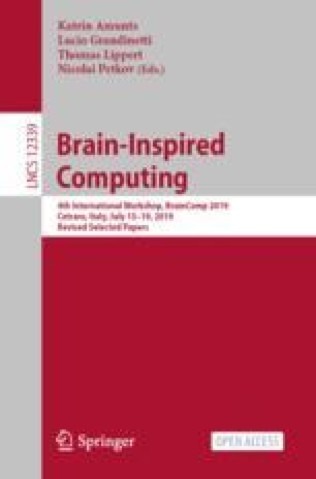
Brain-inspired computing ; 4th International Workshop, BrainComp 2019, Cetraro, Italy, July 15–19, 2019, Revised Selected Papers
The 11 papers presented in this volume were carefully reviewed and selected for inclusion in this book. They deal with research on brain atlasing, multi-scale models and simulation, HPC and data infra-structures for neuroscience as well as artificial and natural neural architectures.
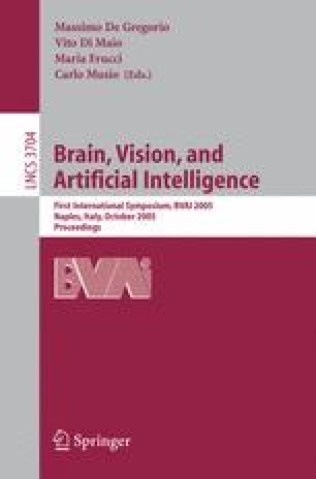
Brain, vision, and artificial intelligence ; 1st International Symposium, BVAI 2005, Naples, Italy, October 19-21, 2005, Proceedings
This book constitutes the refereed proceedings of the First International Symposium on Brain, Vision and Artificial Intelligence, BVAI 2005, held in Naples, Italy in October 2005. The 48 revised papers presented together with 6 invited lectures were carefully reviewed and selected from more than 80 submissions for inclusion in the book. The papers are addressed to the following main topics and sub-topics: brain basics - neuroanatomy and physiology, development, plasticity and learning, synaptic, neuronic and neural network modelling; natural vision - visual neurosciences, mechanisms and model systems, visual perception, visual cognition; artificial vision - shape perception, shape analysis and recognition, shape understanding; artificial inteligence - hybrid intelligent systems, agents, and cognitive models.

Boosting Collaborative Networks 4.0 ; 21st IFIP WG 5.5 Working Conference on Virtual Enterprises, PRO-VE 2020, Valencia, Spain, November 23–25, 2020, Proceedings
This book constitutes the refereed proceedings of the 21st IFIP WG 5.5 Working Conference on Virtual Enterprises, PRO-VE 2020, held in Valencia, Spain, in November 2020. The conference was held virtually. The 53 full papers were carefully reviewed and selected from 135 submissions. They provide a comprehensive overview of major challenges and recent advances in various domains related to the digital transformation and collaborative networks and their applications with a strong focus on the following areas related to the main theme of the conference: collaborative business ecosystems; collaborative business models; collaboration platform; data and knowledge services; blockchain and knowledge graphs; maintenance, compliance and liability; digital transformation; skills for organizations of the future
Blockchain, artificial intelligence, and the internet of things : Possibilities and opportunities
Provides basic concepts and deep knowledge about various security mechanisms that can be implemented in IoT through Blockchain technology. This book aids readers in gaining insight and knowledge about providing security and solutions to different challenges in IoT using Blockchain technology. This book primarily focuses on challenges to addressing the integration of the IoT with Blockchain with respect to potential benefits for IoT. This book gives descriptive analysis of Blockchain integrated with IoT applications and platforms for the development of IoT solutions along with possible topologies to that integration. Several application examples are included in a variety of industries / Provides the latest on secure IIoT communication using Blockchain technology for Industry 4.0 / Includes updates on using Blockchain technology in secure vehicular communication (VANET), healthcare, retail, and gaming / Provides the latest on secure IIoT communication using Blockchain technology for Industry 4.0

Blind smart helmet
The Smart Helmet for the Blind is a project aimed at providing solutions for the challenges faced by blind individuals in their daily lives. The problem of detecting objects, identifying obstacles and distances, knowing the current location, and using a mobile application is a common issue for blind people. To address these problems, the Smart Helmet project was created, utilizing advanced technology and artificial intelligence to provide real-time assistance to the wearer. The helmet is connected to a Raspberry Pi 4, which processes information from the helmet's cameras and AI algorithms to analyze and predict the surrounding environment for a blind person.

Biometrics, Computer Security Systems and Artificial Intelligence Applications
This book presents the most recent achievements in some fascinating and rapidly developing fields within Computer Science. The scientific works presented in this book have been partitioned into three topical groups: Image Analysis and Biometrics, Computer Security Systems, and Artificial Intelligence and Applications. Image Analysis and Biometrics is the branch of Computer Science dealing with the very difficult task of artificial, visual perception of objects and surroundings, as well as the problems connected with it. Computer Security and Safety is at present a very important and intensively investigated branch of Computer Science because of the menacing activity of hackers and computer viruses.

Biomedical data mining for information retrieval : Methodologies, techniques, and applications
Discusses data mining, biomedical image processing, information retrieval with broad coverage of basic scientific applications. covers the topic of mining biomedical text, images and visual features towards information retrieval. Biomedical and health informatics is an emerging field of research at the intersection of information science, computer science, and healthcare and brings tremendous opportunities and challenges due to easily available and abundant biomedical data for further analysis. The aim of healthcare informatics is to ensure the high-quality, efficient healthcare, better treatment and quality of life by analyzing biomedical and healthcare data including patient’s data, electronic health records (EHRs) and lifestyle. Previously, it was a common requirement to have a domain expert to develop a model for biomedical or healthcare; however, recent advancements in representation learning algorithms allows us to automatically to develop the model. Biomedical image mining, a novel research area, due to the vast amount of available biomedical images, increasingly generates and stores digitally.
