



الصفحة 21
الصفحة 21

Arabic talking heads
The need for someone to talk to about what is going on inside us while ensuring privacy has become a necessary requirement, especially since some people in our Arab societies judge people who visit a psychiatrist as mentally ill. Therefore, in this project, we propose a solution to the previous problem, where an Arabic-speaking robot, through an interactive chat application can mitigate the psychological and negative effects that humans are exposed to in various cases.

Arabic AI-generated adverts = إعلانات عربية مولدة بالذكاء الاصطناعي
In the ever-evolving landscape of digital marketing, our groundbreaking platform emerges, harnessing the power of artificial intelligence to revolutionize the creation of marketing campaigns. This innovative solution seamlessly combines neural networks, natural language generation, and multimedia processing capabilities to generate comprehensive and personalized marketing assets from a single product image. At its core, the platform leverages deep learning models that analyze the visual characteristics of the uploaded product image and identifies key features and attributes to define the product category, this enables the generation of compelling and persuasive marketing content tailored to the specific product. The platform's multi-faceted approach encompasses three distinct components: text generation, poster creation, and video advertisement production. Utilizing advanced natural language generation techniques, it crafts engaging marketing text that captures the essence and unique selling points of the product. Simultaneously, its image processing capabilities produce visually stunning promotional posters that blend the product image with eye-catching graphics and typography. along with creating captivating video advertisements optimized for social media and online advertising campaigns.
Applied Parallel Computing ; State of the Art in Scientific Computing
Introduction The PARA workshops in the past were devoted to parallel computing methods in science and technology. There have been seven PARA meetings to date: PARA’94, PARA’95 and PARA’96 in Lyngby, Denmark, PARA’98 in Umea, ? Sweden, PARA 2000 in Bergen, N- way, PARA 2002 in Espoo, Finland, and PARA 2004 again in Lyngby, Denmark. The ?rst six meetings featured lectures in modern numerical algorithms, computer science, en- neering, and industrial applications, all in the context of scienti?c parallel computing. This meeting in the series, the PARA 2004 Workshop with the title “State of the Art in Scienti?c Computing.

Applications of evolutionary computing ; Vol. 3449 ; Evoworkshops : EvoBIO, EvoCOMNET, EvoHot, EvoIASP, EvoMUSART, and EvoSTOC
Evolutionary computation (EC) techniques are e?cient nature-inspired pl- ning and optimization methods based on the principles of natural evolution and genetics. Due to their e?ciency and the simple underlying principles, these methods can be used for a large number of problems in the context of problem solving,optimization,andmachinelearning. Alargeandcontinuouslyincreasing number of researchers and practitioners make use of EC techniques in many - plication domains. The book at hand presents a careful selection of relevant EC applications combined with thorough examinations of techniques for a successful application of EC. The presented papers illustrate the current state of the art in the application of EC and should help and inspire researchers and practitioners to develop e?cient EC methods for design and problem solving.

Antennas & propagation for wireless communication systems ; 2nd ed.
Antennas and propagation are of fundamental importance to the coverage, capacity and quality of all wireless communication systems. This book provides a solid grounding in antennas and propagation, covering terrestrial and satellite radio systems in both mobile and fixed contexts. Building on the highly successful first edition, this fully updated text features significant new material and brand new exercises and supplementary materials to support course tutors. A vital source of information for practising and aspiring wireless communication engineers as well as for students at postgraduate and senior undergraduate levels, this book provides a fundamental grounding in the principles of antennas and propagation without excessive recourse to mathematics. It also equips the reader with practical prediction techniques for the design and analysis of a very wide range of common wireless communication systems.

Analysis and Modeling of Faces and Gestures ; 3rd International Workshop, AMFG 2007 Rio de Janeiro, Brazil, October 20, 2007 Proceedings
The book covered by these accepted papers include feature representation, 3D face, robust recognition under pose and illumination variations,video-basedface recognition,learning,facial motion analysis, body pose estimation, and sign recognition.

An Invitation to Abstract Mathematics
this book begins with a playful exploration of the building blocks of mathematics, such as definitions, axioms, and proofs. A study of the fundamental concepts of logic, sets, and functions follows, before focus turns to methods of proof. Having covered the core of a transition course, the author goes on to present a selection of advanced topics that offer opportunities for extension or further study. Throughout, appendices touch on historical perspectives, current trends, and open questions, showing mathematics as a vibrant and dynamic human enterprise.This second edition has been reorganized to better reflect the layout and curriculum of standard transition courses. It also features recent developments and improved appendices. An Invitation to Abstract Mathematics is ideal for those seeking a challenging and engaging transition to advanced mathematics, and will appeal to both undergraduates majoring in mathematics, as well as non-math majors interested in exploring higher-level concepts.

An Introduction to Optical Wireless Mobile Communications
Discusses existing conventional radio frequency (RF)-based wireless access technology and presents the challenges that can impact the requirements of the future wave of new wireless services in the context of artificial intelligence (AI) driven autonomous systems and machine-type communications. The relationship between visible light communications (VLC) and light fidelity (LiFi), is explored, and the major advantages of VLC and LiFi such as security and data density, and discuss existing research challenges are also introduced. Channel modeling techniques are provided for mobile multiuser scenarios, and will introduce key building blocks to achieve LiFi cellular networks achieving orders of magnitude improvements of area spectral efficiency compared to state-of-the-art. Challenges that arise from moving from a static point-to-point visible light link to a LiFi network that is capable of serving hundreds of mobile and fixed nodes are discussed. An overview of recent standardization activities and the commercialization challenges of this disruptive technology is also provided.

An introduction to ontology engineering
Provides the reader with a comprehensive introductory overview of ontology engineering. A secondary aim is to provide hands-on experience in ontology development that illustrate the theory. The book is divided into three blocks: Block I: logic foundations for ontologies both regarding the languages (mainly First Order predicate Logic, Description Logics, and OWL) and automated reasoning. Block II: developing good ontologies with methods and methodologies, the top-down approach with foundational ontologies, and the bottom-up approach to extract as much useful content as possible from legacy material. Block III: advanced topics with a selection of areas of specialisation, including Ontology-Based Data Access, the interaction between ontologies and natural languages (multilingual ontologies, controlled natural language), and advanced modelling with additional language features (fuzzy and temporal ontologies)

An introduction to description logics
Designed so that domain knowledge can be described and so that computers can reason about this knowledge. DLs have recently gained increased importance since they form the logical basis of widely used ontology languages, in particular the web ontology language OWL. Written by four renowned experts, this is the first textbook on description logics. It is suitable for self-study by graduates and as the basis for a university course. Starting from a basic DL, the book introduces the reader to their syntax, semantics, reasoning problems and model theory and discusses the computational complexity of these reasoning problems and algorithms to solve them.

Ambient Intelligence ; European Conference, AmI 2008, Nuremberg, Germany, November 19-22, 2008. Proceedings
This book constitutes the refereed proceedings of the Second European Conference on Ambient Intelligence, AmI 2008, held in Nuremberg, Germany, in November 2008.

Ambient Intelligence ; European Conference, AmI 2007, Darmstadt, Germany, November 7-10, 2007, Proceedings
This book presented sections on mobility and sensing, applications of AmI, activity and location sensing, AmI and artificial intelligence, AmI middleware and infrastructure, and interaction with the environment. The book is rounded off by a section on case studies and lessons learned, presenting a high level selection of current research reports and papers that reflect the most important activities of current ambient intelligence research.

Ambient intelligence : A novel paradigm
Ambient Intelligence (AmI) is an integrating technology for supporting a pervasive and transparent infrastructure for implementing smart environments. Such technology is used to enable environments for detecting events and behaviors of people and for responding in a contextually relevant fashion. AmI proposes a multi-disciplinary approach for enhancing human machine interaction. The authors start with a description of the iDorm as an example of a smart environment conforming to the AmI paradigm, and introduces computer vision as an important component of the system. Other computer vision examples describe visual monitoring for the elderly, classic and novel surveillance techniques using clusters of cameras installed in indoor and outdoor application domains, and the monitoring of public spaces. Face and speech recognition systems are also covered as well as enhanced LEGO blocks for novel educational purposes. The book closes with a provocative chapter on how a cybernetic system can be designed as the backbone of a human machine interaction.
Algorithms on Trees and Graphs : With Python Code
Introduces graph algorithms on an intuitive basis followed by a detailed exposition using structured pseudocode, with correctness proofs as well as worst-case analyses. Centered around the fundamental issue of graph isomorphism, the content goes beyond classical graph problems of shortest paths, spanning trees, flows in networks, and matchings in bipartite graphs. Advanced algorithmic results and techniques of practical relevance are presented in a coherent and consolidated way. Numerous illustrations, examples, problems, exercises, and a comprehensive bibliography support students and professionals in using the book as a text and source of reference. Furthermore, Python code for all algorithms presented is given in an appendix. Topics and features: Algorithms are first presented on an intuitive basis, followed by a detailed exposition using structured pseudocode / Correctness proofs are given, together with a worst-case analysis of the algorithms / Full implementation of all the algorithms in Python / An extensive chapter is devoted to the algorithmic techniques used in the book / Solutions to all the problems
Algorithms in Invariant Theory
The book of Sturmfels is both an easy-to-read textbook for invariant theory and a challenging research monograph that introduces a new approach to the algorithmic side of invariant theory. The Groebner bases method is the main tool by which the central problems in invariant theory become amenable to algorithmic solutions.
Algorithms for Decision Making
A broad introduction to algorithms for decision making under uncertainty, introducing the underlying mathematical problem formulations and the algorithms for solving them. Automated decision-making systems or decision-support systems—used in applications that range from aircraft collision avoidance to breast cancer screening—must be designed to account for various sources of uncertainty while carefully balancing multiple objectives. This textbook provides a broad introduction to algorithms for decision making under uncertainty, covering the underlying mathematical problem formulations and the algorithms for solving them.
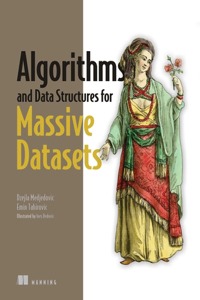
Algorithms and data structures for massive datasets
Learn: Probabilistic sketching data structures for practical problems Choosing the right database engine for your application Evaluating and designing efficient on-disk data structures and algorithms Understanding the algorithmic trade-offs involved in massive-scale systems Deriving basic statistics from streaming data Correctly sampling streaming data Computing percentiles with limited space resources Algorithms and Data Structures for Massive Datasets reveals a toolbox of new methods that are perfect for handling modern big data applications. You'll explore the novel data structures and algorithms that underpin Google, Facebook, and other enterprise applications that work with truly massive amounts of data. These effective techniques can be applied to any discipline, from finance to text analysis. Graphics, illustrations, and hands-on industry examples make complex ideas practical to implement in your projects--and there's no mathematical proofs to puzzle over. Work through this one-of-a-kind guide, and you'll find the sweet spot of saving space without sacrificing your data's accuracy. About the Technology Standard algorithms and data structures may become slow--or fail altogether--when applied to large distributed datasets. Choosing algorithms designed for big data saves time, increases accuracy, and reduces processing cost.

Algorithms and architectures for parallel processing ; 8th International Conference, ICA3PP 2008, Cyprus, June 9-11, 2008 Proceedings
This book constitutes the refereed proceedings of the 8th International Conference on Algorithms and Architectures for Parallel Processing, ICA3PP 2008, held in Agia Napa, Cyprus, in June 2008.

Algorithms - ESA 2008 ; 16th Annual European Symposium, Karlsruhe, Germany, September 15-17, 2008. Proceedings
This book constitutes the refereed proceedings of the 16th Annual European Symposium on Algorithms, ESA 2008, held in Karlsruhe, Germany, in September 2008 in the context of the combined conference ALGO 2008.

Algorithms - ESA 2006 ; 14th Annual European Symposium, Zurich, Switzerland, September 11-13, 2006, Proceedings
This book constitutes the refereed proceedings of the 14th Annual European Symposium on Algorithms, ESA 2006, held in Zurich, Switzerland, in the context of the combined conference ALGO 2006. The book presents 70 revised full papers together with abstracts of 3 invited lectures. The papers address all current subjects in algorithmics, reaching from design and analysis issues of algorithms over to real-world applications and engineering of algorithms in various fields.
