



الصفحة 2
الصفحة 2

Intelligent Tutoring Systems ; 8th International Conference, ITS 2006, Jhongli, Taiwan, June 26-30, 2006 Proceedings
This book constitutes the refereed proceedings of the 8th International Conference on Intelligent Tutoring Systems, ITS 2006, held in Jhongli, Taiwan in June 2006. The 67 revised full papers and 40 poster papers presented together with abstracts of 6 keynote talks were carefully reviewed and selected from over 200 submissions. The papers are organized in topical sections on assessment, authoring tools, bayesian reasoning and decision-theoretic approaches, case-based and analogical reasoning, cognitive models, collaborative learning, elearning and web-based intelligent tutoring systems, error detection and handling, feedback, gaming behavior, learner models, motivation, natural language techniques for intelligent tutoring systems, scaffolding, simulation, as well as tutorial dialogue and narrative.

Intelligent Techniques for Web Personalization ; IJCAI 2003 Workshop, ITWP 2003, Acapulco, Mexico, August 11, 2003, Revised Selected Papers
Web personalizationcan be de?ned as any set of actions that can tailor the Web experience to a particular user or set of users. The experience can be something as casualas browsinga Web site oras (economically)signi?cantas tradingstock or purchasing a car. The actions can range from simply making the presentation more pleasing to anticipating the needs of a user and providing customized and relevant information. To achieve e?ective personalization, organizations must rely on all available data, including the usage and click-stream data (re?e- ing user behavior), the site content, the site structure, domain knowledge, user demographics and pro?les. In addition, e?cient and intelligent techniques are needed to mine these data for actionable knowledge, and to e?ectively use the discovered ...

Integrated formal methods ; 3rd International Conference, IFM 2002, Turku, Finland, May 15-18, 2002. Proceedings.
IFM 2002 explored the relations between formal methods and graphical notations, especially the industrial standard language for software design, the Unified Modeling Language (UML). The themes of IFM 2002 reflect what we believe is a growing trend in the Formal Methods and Software Engineering research communities. Over the last threedecades,computer scientists have developed a range of formalisms focusing on particular aspects of behavior or analysis, such as sequential program structures, concurrent program structures, data and information structures, temporal reasoning, deductive proof, and model checking. Much effort is now being devoted to integrating these methods in order to combine their advantages and ensure they scale up to industrial needs. Graphical notations are now widely used in software engineering and there is growing recognition of the importance of providing these with the for mal underpinnings and form alanalysis capabilities found in formal methods.

Informatics in the Future ; Proceedings of the 11th European Computer Science Summit (ECSS 2015), Vienna, October 2015
This volume discusses the prospects and evolution of informatics (or computer science), which has become the operating system of our world, and is today seen as the science of the information society. Its artifacts change the world and its methods have an impact on how we think about and perceive the world. Classical computer science is built on the notion of an “abstract” machine, which can be instantiated by software to any concrete problem-solving machine, changing its behavior in response to external and internal states, allowing for self-reflective and “intelligent” behavior. However, current phenomena such as the Web, cyber physical systems or the Internet of Things show us that we might already have gone beyond this idea, exemplifying a metamorphosis from a stand-alone calculator to the global operating system of our society.

Hybrid Systems : Computation and Control ; Vol.3927 ; 9th International Workshop, HSCC 2006, Santa Barbara, CA, USA, March 29-31, 2006, Proceedings
The focus is on modeling, analysis, and implementation of dynamic and reactive systems involving both discrete and continuous behaviors. Topics addressed include tools for analysis and verification, control and optimization, modeling, engineering applications, and new directions in language support and implementation.

Hybrid Systems : Computation and Control ; 11th International Workshop, HSCC 2008, St. Louis, MO, USA, April 22-24, 2008. Proceedings
Contains the proceedings ofthe 11th Workshop on Hybrid Systems: Computation and Control (HSCC 2008) held in St. Louis, Missouriduring April 22–24,2008.The annual workshop on hybrid systems focuses on research inbedded ,reactive systems in volving theinterplay between symbolic/switchingand continuous dynamical behaviors. HSCC attracts academic as well as industrial researchers to exchange information on the latest developments of applications and theoretical advancements in the design, analysis, control, optimization, and implementation of hybrid systems, with particular attention to embedded and networked control systems. We would like to thank the Program Committee members and the reviewers for an excellent job of evaluating the submissions and participating in the online Program Committee discussions.

Hybrid Estimation of Complex Systems
This monograph provides a tool-set for hybrid estimation that can successfully monitor the behavior of complex artifacts with a large number of possible operational and failure modes such as production plants, automotive or aeronautic systems, and autonomous robots.

Human-Computer Interaction and Cybersecurity Handbook - Human Factors and Ergonomics
Covers all areas of human–computer interaction and human factors in cybersecurity Includes information for IT specialists, who often desire more knowledge about the human side of cybersecurity Provides a reference for other disciplines such as psychology, behavioral science, software engineering, and security management Offers a source of information for cybersecurity practitioners in government agencies and private enterprises Presents new areas such as smart networking and devices

Human-centered software engineering - Integrating usability in the software development lifecycle
Human-CenteredSoftwareEngineering: BridgingHCI,UsabilityandSoftwareEngineering From its beginning in the 1980’s, the ?eld of human-computer interaction (HCI) has beende?nedasamultidisciplinaryarena. BythisImeanthattherehas beenanexplicit recognition that distinct skills and perspectives are required to make the whole effort of designing usable computer systems work well. Thus people with backgrounds in Computer Science (CS) and Software Engineering (SE) joined with people with ba- grounds in various behavioral science disciplines (e. g. , cognitive and social psych- ogy, anthropology) in an effort where all perspectives were seen as essential to creating usable systems. But while the ?eld of HCI brings individuals with many background disciplines together to discuss a common goal - the development of useful, usable, satisfying systems - the form of the collaboration remains unclear.

Human Aspects of Information Security and Assurance ; 14th IFIP WG 11.12 International Symposium, HAISA 2020, Mytilene, Lesbos, Greece, July 8–10, 2020, Proceedings
This book constitutes the proceedings of the 14th IFIP WG 11.12 International Symposium on Human Aspects of Information Security and Assurance, HAISA 2020, held in Mytilene, Lesbos, Greece, in July 2020.* The 27 full papers presented in this volume were carefully reviewed and selected from 43 submissions. They are organized in the following topical sections: privacy and COVID-19; awareness and training; social engineering; security behavior; education; end-user security; usable security; security policy; and attitudes and perceptions.

History of Computing and Education 3 (Hce3) ; IFIP 20th World Computer Congress, Proceedings of the Third IFIP Conference on the History of Computing and Education WG 9.7/TC9, History of Computing, September 7–10, 2008, Milano, Italy
The IFIP series publishes state-of-the-art results in the sciences and technologies of information and communication. The scope of the series includes: foundations of computer science; software theory and practice; education; computer applications in technology; communication systems; systems modeling and optimization; information systems; computers and society; computer systems technology; security and protection in information processing systems; artificial intelligence; and human-computer interaction. Proceedings and post-proceedings of refereed international conferences in computer science and interdisciplinary fields are featured. These results often precede journal publication and represent the most current research.

Health Information Science ; 9th International Conference, HIS 2020, Amsterdam, The Netherlands, October 20–23, 2020, Proceedings
This book constitutes the proceedings of the 9th International Conference on Health Information Science, HIS 2020, which took place in Amsterdam, The Netherlands, during October 20-23, 2020. The 11 full papers and 6 short papers presented in this volume were carefully reviewed and selected from 62 submissions. They were organized in topical sections named: mental health; medical record processing; medical information systems; medical diagnosis with machine learning; and health behavior and medication.

Hands-On Design Patterns with Java : Learn Design Patterns That Enable the Building of Large-Scale Software Architectures
Java design patterns are reusable and proven solutions to software design problems. This book covers over 60 battle-tested design patterns used by developers to create functional, reusable, and flexible software. Hands-On Design Patterns with Java starts with an introduction to the Unified Modeling Language (UML), and delves into class and object diagrams with the help of detailed examples. You'll study concepts and approaches to object-oriented programming (OOP) and OOP design patterns to build robust applications. As you advance, you'll explore the categories of GOF design patterns, such as behavioral, creational, and structural, that help you improve code readability and enable large-scale reuse of software. You’ll also discover how to work effectively with microservices and serverless architectures by using cloud design patterns, each of which is thoroughly explained and accompanied by real-world programming solutions. By the end of the book, you’ll be able to speed up your software development process using the right design patterns, and you’ll be comfortable working on scalable and maintainable projects of any size.

Ground improvement and reinforced soil structures ; Proceedings of Indian Geotechnical Conference 2020 Vol. 2
This volume comprises the select proceedings of the Indian Geotechnical Conference (IGC) 2020. The contents focus on recent developments in geotechnical engineering for sustainable tomorrow. The volume covers the topics related advances in ground improvement of weak foundation soils for various civil engineering projects and design/construction of reinforced soil structures with different fill materials using synthetic and natural reinforcements in different forms.
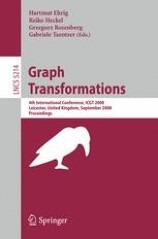
Graph Transformations ; 4th International Conference, ICGT 2008, Leicester, United Kingdom, September 7-13, 2008. Proceedings
This book constitutes the refereed proceedings of the 4th International Conference on Graph Transformations, ICGT 2008, held in Leicester, UK, in September 2008.The 27 revised full papers presented together with 5 tutorial and workshop papers and 3 invited lectures were carefully selected from 57 submissions. All current aspects in graph drawing are addressed including hypergraphs and termgraph rewriting, applications of graph transformation, execution of graph transformations, compositional systems, validation and verification, graph languages and special transformation concepts, as well as patterns and model transformations.

Functional Verification of Programmable Embedded Architectures : A Top-Down Approach
This book presents a top-down validation methodology that complements the existing bottom-up approaches. It leverages the system architect’s knowledge about the behavior of the design through architecture specification using an Architecture Description Language (ADL). The authors also address two fundamental challenges in functional verification: lack of a golden reference model, and lack of a comprehensive functional coverage metric.

From Digital Twins to Digital Selves and Beyond : Engineering and Social Models for a Trans-humanist World
This book aims at deepening the understanding of the relation between cyber-physical systems (CPSs) as socio-technical systems and their digital representations with intertwined artificial intelligence (AI). The authors describe why it is crucial for digital selves to be able to develop emotional behavior and why a humanity-inspired AI is necessary so that humans and humanoids can coexist.

From Animals to Animats 9 ; 9th International Conference on Simulation of Adaptive Behavior, SAB 2006, Rome, Italy, September 25-29, 2006, Proceedings
This book constitutes the refereed proceedings of the 9th International Conference on Simulation of Adaptive Behavior, SAB 2006. The 35 revised full papers and 35 revised poster papers presented are organized in topical sections on the animat approach to adaptive behaviour, perception and motor control, action selection and behavioral sequences, navigation and internal world models, learning and adaptation, evolution, collective and social behaviours, applied adaptive behavior and more.

From Animals to Animats 10 ; 10th International Conference on Simulation of Adaptive Behavior, SAB 2008, Osaka, Japan, July 7-12, 2008. Proceedings
This book constitutes the refereed proceedings of the 10th International Conference on Simulation of Adaptive Behavior, SAB 2008, held in Osaka, Japan in July 2008.The 30 revised full papers and 21 revised poster papers presented were carefully reviewed and selected from 110 submissions. The papers are organized in topical sections on the animat approach to adaptive behaviour, evolution, navigation and internal world models, perception and control, learning and adaptation, cognition, emotion and behaviour, collective and social behaviours, adaptive behaviour in language and communication, and applied adaptive behaviour.

Foundation PHP for Dreamweaver 8
In this book, we look specifically at using Dreamweaver's built-in server behaviors to build dynamic web sites using PHP and MySQL, the world's most popular open source server-side language and database server combination, which are both reliable, powerful, and open source (and therefore free to use). This version of Dreamweaver includes more powerful support for PHP and MySQL than ever before, and we'll show you how to make this work for you. No previous experience of PHP or MySQL is necessary to use this book. Examples built throughout the book include a content management system, and an online image gallery. All examples are designed to meet modern usability requirements and be web standards-compliant.
