



الصفحة 2
الصفحة 2

Grid Computing Security
In this book Chakrabarti has structured the issues pertaining to grid computing security into three main categories: architecture-related, infrastructure-related, and management-related issues. He discusses all three categories in detail, presents existing solutions, standards, and products, and pinpoints their shortcomings and open questions.

Generator remote controlling using internet connection
The traditional technique of monitoring the electricity generated through regular checks on the alternator variables: oil, temperature, voltage and current on a daily basis. Therefore, maintaining a normal performance cycle requires hard work and is often imprecise. The idea is to create an application that monitors wireless generators using the popular smartphone Android operating system. Implemented sensors deliver analog signals that provide real-time data on the status of the generator. This data is converted and programmed through the Node MCU microcontroller, which reads the results from the sensors and then converts into a signal, which is transmitted to the android phone, through a router. Thus live feedback of the generator status is ensured. In addition, this project provides a control button that can actually turn this generator on and off. This project is the first step towards bringing systems and control together as it revolutionizes the ideology of monitoring and displaying real-time data that can be implemented in different fields according to different needs. These fields include electricity, mechanics, and communications.

Formal approaches to software testing and runtime verification ; 1st Combined International Workshops FATES 2006 and RV 2006, Seattle, WA, USA, August 15-16, 2006, Revised Selected Papers
Software validation is one of the most cost-intensive tasks in modern software production processes. The objective of FATES/RV 2006 was to bring sci- tists from both academia and industry together to discuss formal approaches to test and analyze programs and monitor and guide their executions. Formal approaches to test may cover techniques from areas like theorem proving, model checking, constraint resolution, static program analysis, abstract interpretation, Markov chains, and various others. Formal approaches to runtime veri?cation use formal techniques to improve traditional ad-hoc monitoring techniques used in testing, debugging, performance monitoring, fault protection, etc.

FM 2008 : Formal methods ; 15th International symposium on formal methods, Turku, Finland, May 26-30, 2008 Proceedings
This book presents the refereed proceedings of the 15th International Symposium on Formal Methods, FM 2008, held in Turku, Finland in May 2008.The 23 revised full papers presented together with 4 invited contributions and extended abstracts of 5 invited industrial presentations were carefully reviewed and selected from 106 submissions. The papers are organized in topical sections on programming language analysis, verification, real-time and concurrency, grand chellenge problems, fm practice, runtime monitoring and analysis, communication, constraint analysis, and design.

Disruptive trends in automation technology
The industrial sector is being transformed by the convergence of information technology and operational technology. The latter is another name for automation technology and covers established systems such as supervisory control and data acquisition (SCADA), programmable logic controllers (PLC), fieldbuses, and automation and control systems. As this technology is connected to the Internet and 5G networks, some monitoring, control, and analytic functionalities are deployed to the edge or cloud, and researchers are challenged to ensure the security, dependability, real-time performance, and maintainability of the resulting systems. The big data that is accessible from these systems create opportunities for artificial intelligence applications that can further disrupt the established practices in the automation domain.

Digital Watermarking ; Vol. 3710 ; 4th International Workshop, IWDW 2005, Siena, Italy, September 15-17, 2005, Proceedings
We are delighted to welcome the attendees of the Fourth International Wo- shop on Digital Watermarking (IWDW). Watermarking continues to generate strong academic interest. Commercialization of the technology is proceeding at a steadypace. We haveseen watermarkingadoptedfor DVD audio.Fingerpri- ing technology was successfully used to determine the source of pirated video material. Furthermore, a number of companies are using watermarking as an enabling technology for broadcast monitoring services. Watermarking of digital cinema contentis anticipated. Future applications may also come from areas- related to digital rights management. For example, the use of watermarking to enhance legacy broadcast and communication systems is now being considered. IWDW 2005 o?ers an opportunity to re?ect upon the state of the art in digital watermarking as well as discuss directions for future research and applications. This year we accepted 31 papers from 74 submissions. This 42% acceptance rate indicates our commitment to ensuring a very high quality conference.

Designing machine learning systems : An iterative process for production-ready applications
Machine learning systems are both complex and unique. Each design decision--such as how to process and create training data, which features to use, how often to retrain models, and what to monitor--in the context of how it can help your system as a whole achieve its objectives. The iterative framework in this book uses actual case studies backed by ample references. The book will help you tackle scenarios such as: Engineering data and choosing the right metrics to solve a business problem Automating the process for continually developing, evaluating, deploying, and updating models Developing a monitoring system to quickly detect and address issues your models might encounter in production Architecting an ML platform that serves across use cases Developing responsible ML systems

Designing & Implementing an IDS in SDN
Solving the problem of the various type of unknown attacks that are hitting not only companies but also high level business individuals, of course we know that there is no way to stop the attacks permanently but this project is attempting to reduce these attacks to the possible minimum where it can detect the attack and declare its type so that the hostile can at least know what is the type of attacks on him and what to do in response and build a higher security. This system is implemented using the SDN environment and IDS technology for monitoring the traffic on the network and for detecting the attack and its type. Also the SDN technology has a built-in OpenFlow protocol. To work in an OF environment, any device that wants to communicate to an SDN controller must support the OpenFlow protocol.

Data-Driven Fault Detection and Reasoning for Industrial Monitoring
Assesses the potential of data-driven methods in industrial process monitoring engineering. The process modeling, fault detection, classification, isolation, and reasoning are studied in detail. These methods can be used to improve the safety and reliability of industrial processes. Fault diagnosis, including fault detection and reasoning, has attracted engineers and scientists from various fields such as control, machinery, mathematics, and automation engineering. Combining the diagnosis algorithms and application cases, this book establishes a basic framework for this topic and implements various statistical analysis methods for process monitoring.

Crime detection camera
This paper presents a comprehensive crime detection system that uses a combination of hardware and software to monitor homes and communities in real time. The system consists of a Raspberry Pi 4B, a Raspberry Pi Camera V2, a flame sensor, an MQ-6 gas sensor, and a microphone, which are all connected to a database management system powered by MySQL. The data collected from these devices is analyzed by machine learning algorithms to detect crimes, such as theft or robbery, as well as fires and gas leaks. The system also includes a mobile app, ‘Safe Home’ which provides live video monitoring and real-time notifications to users, and an employee dashboard to monitor all statistics and manage all implemented systems.

Computer Vision and Internet of Things : Technologies and Applications
Explores the utilization of Internet of Things (IoT) with computer vision and its underlying technologies in different applications areas. Using a series of present and future applications – including business insights, indoor-outdoor securities, smart grids, human detection and tracking, intelligent traffic monitoring, e-health departments, and medical imaging – this book focuses on providing a detailed description of the utilization of IoT with computer vision and its underlying technologies in critical application areas, such as smart grids, emergency departments, intelligent traffic cams, insurance, and the automotive industry.

Managing Traffic Performance in Converged Networks ; 20th International Teletraffic Congress, ITC20 2007, Ottawa, Canada, June 17-21, 2007, Proceedings
Managing traffic performance is a critical enabler for success. Reaching the desired performance levels requires adapting processes such as network planning, resource engineering, and network monitoring to the converged network milieu.

Managing Next Generation Networks and Services ; 10th Asia-Pacific Network Operations and Management Symposium, APNOMS 2007, Sapporo, Japan, October 10-12, 2007, Proceedings
The 48 revised full papers and 30 revised short papers cover management of distributed networks, network configuration and planning, network security management, sensor and ad-hoc networks, network monitoring, routing and traffic engineering, management of wireless networks and security on wireless networks.

Management of Convergence Networks and Services ; 9th Asia-Pacific Network Operations and Management Symposium, APNOMS 2006, Busan, Korea, September 27-29, 2006, Proceedings
Constitutes the refereed proceedings of the 9th Asia-Pacific Network Operations and Management Symposium, APNOMS 2006. This book presents 50 revised full papers and 25 revised short papers, organized in topical sections on management of ad hoc and sensor networks, network measurements and monitoring, mobility management, QoS management, and more

Managed Software Evolution
This book presents the outcomes of the “Design for Future – Managed Software Evolution” .The different lifecycles of software and hardware platforms lead to interoperability problems in such systems. Instead of separating the development, adaptation and evolution of software and its platforms, as well as aspects like operation, monitoring and maintenance, they should all be integrated into one overarching process. Accordingly, the book is split into three major parts, the first of which includes an introduction to the nature of software evolution, followed by an overview of the specific challenges and a general introduction to the case studies used in the project. The second part of the book consists of the main chapters on knowledge carrying software, and cover tacit knowledge in software evolution, continuous design decision support, model-based round-trip engineering for software product lines, performance analysis strategies, maintaining security in software evolution, learning from evolution for evolution, and formal verification of evolutionary changes. In turn, the last part of the book presents key findings and spin-offs. The individual chapters there describe various case studies, along with their benefits, deliverables and the respective lessons learned. An overview of future research topics rounds out the coverage.
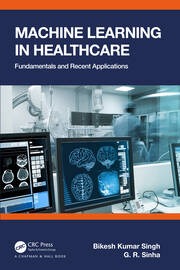
Machine learning in healthcare : Fundamentals and recent applications
Discusses how to build various ML algorithms and how they can be applied to improve healthcare systems. Healthcare applications of AI are innumerable: medical data analysis, early detection and diagnosis of disease, providing objective-based evidence to reduce human errors, curtailing inter- and intra-observer errors, risk identification and interventions for healthcare management, real-time health monitoring, assisting clinicians and patients for selecting appropriate medications, and evaluating drug responses. Extensive demonstrations and discussion on the various principles of machine learning and its application in healthcare is provided, along with solved examples and exercises.
Machine learning for cyber-physical systems: selected papers from the international conference ML4CPS 2023
Contains selected papers from the international conference ML4CPS – Machine Learning for Cyber-Physical Systems, which was held in Hamburg (Germany), from 29 to 31 March 2023. Cyber-physical systems are adaptive and learning: they analyze their environment and, based on observations, learn patterns, associations and predictive models. Typical applications are condition monitoring, predictive maintenance, image processing and diagnostics. Machine learning is the key technology for these developments.

Machine Learning for Cyber Physical Systems : Selected papers from the International Conference ML4CPS 2018
Presents new approaches to Machine Learning for Cyber Physical Systems, experiences and visions. Cyber Physical Systems are characterized by their ability to adapt and to learn: They analyze their environment and, based on observations, they learn patterns, correlations and predictive models. Typical applications are condition monitoring, predictive maintenance, image processing and diagnosis. Machine Learning is the key technology for these developments.
Machine Learning Approaches in Cyber Security Analytics
Introduces various machine learning methods for cyber security analytics. With an overwhelming amount of data being generated and transferred over various networks, monitoring everything that is exchanged and identifying potential cyber threats and attacks poses a serious challenge for cyber experts. Further, as cyber attacks become more frequent and sophisticated, there is a requirement for machines to predict, detect, and identify them more rapidly. Machine learning offers various tools and techniques to automate and quickly predict, detect, and identify cyber attacks.
Machine Intelligence and Big Data Analytics for Cybersecurity Applications
Presents the latest advances in machine intelligence and big data analytics to improve early warning of cyber-attacks, for cybersecurity intrusion detection and monitoring, and malware analysis. Cyber-attacks have posed real and wide-ranging threats for the information society. Detecting cyber-attacks becomes a challenge, not only because of the sophistication of attacks but also because of the large scale and complex nature of today’s IT infrastructures. It discusses novel trends and achievements in machine intelligence and their role in the development of secure systems and identifies open and future research issues related to the application of machine intelligence in the cybersecurity field.
