



الصفحة 2
الصفحة 2

Fashionity
This project is an AI fashion design system to generate fashion images based on user textual description. The proposed system incorporates advanced technology for dissemination and machine translation with the aim of facilitating a seamless user experience for input in both Arabic and English languages. Moreover, the project encompasses the incorporation of a recommendation system that proposes appropriate visual content based on user style. The primary objective of this project is to develop a robust framework capable of generating high-quality images based on textual descriptions, providing recommendations for similar clothing items, and facilitating the retrieval of photographic and apparel articles through image search.

Face Biometrics for Personal Identification : Multi-Sensory Multi-Modal Systems
This book provides an ample coverage of theoretical and experimental state-of-the-art work as well as new trends and directions in the biometrics field. It offers students and software engineers a thorough understanding of how some core low-level building blocks of a multi-biometric system are implemented. While this book covers a range of biometric traits including facial geometry, 3D ear form, fingerprints, vein structure, voice, and gait, its main emphasis is placed on multi-sensory and multi-modal face biometrics algorithms and systems. "Multi-sensory" refers to combining data from two or more biometric sensors, such as synchronized reflectance-based and temperature-based face images. "Multi-modal" biometrics means fusing two or more biometric modalities, like face images and voice timber. The first part addresses new and emerging face biometrics. Emphasis is placed on biometric systems where single sensor and single modality are employed in challenging imaging conditions. The second part on multi-sensory face biometrics deals with the personal identification task in challenging variable illuminations and outdoor operating scenarios by employing visible and thermal sensors. The third part of the book focuses on multi-modal face biometrics by integrating voice, ear, and gait modalities with facial data. The last part presents generic chapters on multi-biometrics fusion methodologies and performance prediction techniques.

Embedded Software and Systems ; 3rd International Conference, ICESS 2007, Daegu, Korea, May 14-16, 2007, Proceedings
This book introduces sections on embedded architecture, embedded hardware, embedded software, HW-SW co-design and SoC, multimedia and HCI, pervasive/ubiquitous computing and sensor network, power-aware computing, real-time systems, security and dependability, and wireless communication.

Distributed computing in sensor systems Vol. 4026 ; 2nd IEEE International Conference, DCOSS 2006, San Francisco, CA, USA, June 18-20, 2006, Proceedings
The book constitutes the refereed proceedings of the Second International Conference on Distributed Computing in Sensor Systems, DCOSS 2006, held in San Francisco, California, USA in June 2006. The papers focus on distributed computing issues in large-scale networked sensor systems, including systematic design techniques and tools; they cover topics such as distributed algorithms and applications, programming support and middleware, data aggregation and dissemination, security, information fusion, lifetime maximization, and localization.

Digital cities III : Information technologies for social capital: Cross-cultural Perspectives ; 3rd international digital cities workshop, Amsterdam, The Netherlands, September 18-19, 2003, Revised Selected Papers
Digital cities constitutes a multidisciplinary field of research and development, where researchers, designers and developers of communityware interact and collaborate with social scientists studying the use and effects of these kinds of infrastructures and systems in their local application context. The field is rather young. After the diffusion of ICT in the world of organizations and companies, ICT entered everyday life. And this also influenced ICT research and development. The 1998 Workshop on Communityware and Social Interaction in Kyoto was an early meeting in which this emerging field was discussed.

Designing Ubiquitous Information Environments : Socio-Technical Issues and Challenges; IFIP TC8 WG 8.2 International Working Conference, August 1-3, 2005, Cleveland, Ohio, U.S.A.
The book brings in diverse perspectives on ubiquitous information environments, from computer-supported collaborative work, institutional perspective, diffusion of innovation, management, sociology, individual cognition, and software engineering. It also covers a variety of technologies that make up ubiquitous information environments including RFID, wireless grid, GPS, mobile phones, and wireless local area network. The papers cover many contexts of ubiquitous computing including personal use, library, automobile, healthcare, police, professional knowledge work, remote diagnostics of machines, and marketing, attesting to the wide range of potential of ubiquitous information environments.

Database and XMLTechnologies ; 5th International XML Database Symposium, XSym 2007, Vienna, Austria, September 23-24, 2007, Proceedings
This book discuss the use of and synergy between databases and XML. It provided theory and practice of XML data management and its applications. This volume also contains current research in XPath and XQuery processing, XML Updates, Temporal XML and Constraints.

Computer Vision Systems ; 2nd International Workshop, ICVS 2001 Vancouver, Canada, July 7-8, 2001 Proceedings
Computer Vision has reached a level of maturity that allows us not only to p- form research on individual methods and system components but also to build fully integrated computer vision systems of signi cant complexity. This opens a number of new problems related to system architecture, methods for system synthesis and veri cation, active vision systems, control of perception and - tion, knowledge and system representation, context modeling, cue integration, etc. By focusing on methods and concepts for the construction of fully integrated vision systems, ICVS aims to bring together researchers interested in computer vision systems. Similar to the previous event in Las Palmas, ICVS 2001 was organized as a single-track workshop consisting of high-quality.
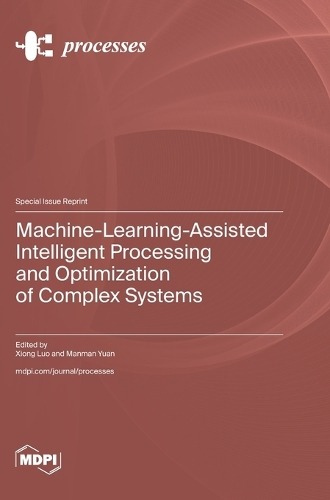
Machine-learning-assisted intelligent processing and optimization of complex systems
Focuses on the most recent developments in intelligent optimization methods and their applications in various test cases. The reprint covers various topics, including distributed multiagent modeling, metaheuristic algorithms, multisource data fusion, mobile computing and mobile sensing, machine learning-based intelligent processing for modeling complex manufacturing systems, and data-driven intelligent modeling

Location- and Context-Awareness ; Vol. 3479 ; First International Workshop, LoCA 2005, Oberpfaffenhofen, Germany, May 12-13, 2005, Proceedings
The workshop was organized by the Institute of Communications and Navigation of the German Aerospace Center (DLR) in Oberpfa?enhofen, and the Mobile and Distributed Systems Group of the University of Munich. During the workshop, novel positioning algorithms and location sensing techniques were discussed, comprising not only enhancements of singular systems, like positioning in GSM or WLAN, but also hybrid technologies, such as the integration of global satellite systems with inertial positioning. Furthermore, improvements in sensor technology, as well as the integration and fusion of sensors, were addressed both on a theoretical and on an implementation level. Personal and confidential data, such as location data of users, have p- found implications for personal information privacy. Thus privacy protection, privacy-oriented location-aware systems, and how privacy aspects the feasibility and usefulness of systems were also addressed in the workshop.
Linked Open Data -- Creating Knowledge Out of Interlinked Data : Results of the LOD2 Project
Linked Open Data (LOD) is a pragmatic approach for realizing the Semantic Web vision of making the Web a global, distributed, semantics-based information system. This book presents an overview on the results of the research project “LOD2 -- Creating Knowledge out of Interlinked Data”. LOD2 is a large-scale integrating project co-funded by the European Commission within the FP7 Information and Communication Technologies Work Program. Commencing in September 2010, this 4-year project comprised leading Linked Open Data research groups, companies, and service providers from across 11 European countries and South Korea.

Iterating Infusion : Clearer Views of Objects, Classes, and Systems
Iterating Infusion presents comprehensive tools for you to best manage and work with object orientation. These include simplified fundamental concepts, popular language comparisons, advanced designing strategies, a broad usage progression, thorough design notations (interaction algebra), and data-oriented (fundamentally-OO) languages. The title, Iterating Infusion, alludes to the fact that any system has multiple, coexisting functional levels and that new levels—both lower and higher—are continually added to the same functional area. The practical effect is to bring processes into focus, always clarifying the vague. The extreme form of this is when separate but compatible technologies are brought together to create advancements; these can be baby-steps or great leaps, with varying amounts of effort. In more general terms, the same thing in a different context can take on much more power. And actually, this phenomenon is at the heart of object-oriented software.

Compiler construction ; Vol. 3923 : 15th International Conference, CC 2006, Held as Part of the Joint European Conferences on Theory and Practice of Software, ETAPS 2006, Vienna, Austria, March 30-31, 2006, Proceedings
ETAPS 2006 was the ninth instance of the European Joint Conferences on Theory and Practice of Software. ETAPS is an annual federated conference that was established in 1998 by combining a number of existing and new conferences. The events that comprise ETAPS address various aspects of the system devel- ment process, including speci?cation, design, implementation, analysis and impro- ment. The languages, methodologies and tools which support these activities are all well within its scope. Di?erent blends of theory and practice are represented, with an inclination towards theory with a practical motivation on the one hand and soundly based practice on the other.

Cartoony story app = تطبيق قصة كارتونية
The translation of textual narratives into immersive visual representations poses a significant challenge in the field of artificial intelligence. Traditional cartoon generation techniques face formidable technical challenges and require substantial resources. Research efforts towards direct video synthesis from text have encountered obstacles in developing efficient techniques. In parallel, researchers propose an alternative approach involving the generation of dynamic sequences of images portraying children's story narratives. This approach includes applying various visual effects to highlight motion, interaction, and excitement in storytelling. By dynamically generating a sequence of images reflecting the narrative's progression and applying diverse visual effects, this alternative method offers a flexible and practical solution to cartoon generation challenges, providing an efficient and effective experience akin to video while retaining the magical appeal of visual storytelling. ...

Business agility and information technology diffusion ; IFIP TC8 WG 8.6 International working Conference, May 8-11, 2005, Atlanta, Georgia, USA
Addresses issues related to business agility and the diffusion of Information Technology (IT). Success, even survival, in today's business environment has been made complex and difficult by technologically-based competitive pressure. One promising strategy is to be agile and ready to adapt quickly to changes in the environment or market. Such strategy takes shape as an agile software development, agile manufacturing, agile modeling and agile iterations. In contrast, successful IT diffusion is known to be a process that takes time and careful effort. Many IT projects that succeeded in developing a product have subsequently failed in changing the behavior of the target group when diffusion just didn't happen. Therefore this volume responds to the question: What is the relationship between agility and IT diffusion? The book's scope will cover information systems and technology issues, as well as organizational and managerial issues, related to agility and IT diffusion. The planned perspectives include topics such as diffusion of agile methods, enabling business agility with IT, creating agile environments that facilitate diffusion of IT, theories and frameworks for understanding diffusion and agility issues, best practices relating to business agility and IT diffusion, software process improvement and agility, diffusion studies of specific agile technologies, and impacts of diffusion of IT agile methods.
Artificial neural networks : Formal Models and Their Applications – ICANN 2005 ; 15th International Conference, Warsaw, Poland, September 11-15, 2005, Proceedings, Part II
The second volume contains 162 contributions related to Formal Models and their Applications and deals with new neural network models, supervised learning algorithms, ensemble-based learning, unsupervised learning, recurent neural networks, reinforcement learning, bayesian approaches to learning, learning theory, artificial neural networks for system modeling, decision making, optimalization and control, knowledge extraction from neural networks, temporal data analysis, prediction and forecasting, support vector machines and kernel-based methods, soft computing methods for data representation, analysis and processing, data fusion for industrial, medical and environmental applications, non-linear predictive models for speech processing, intelligent multimedia and semantics, applications to natural language processing, various applications, computational intelligence in games, and issues in hardware implementation.

Artificial Intelligence for Cloud and Edge Computing
Discusses the future possibilities of AI with cloud computing and edge computing. Aims to conduct analyses, implementation and discussion of many tools (of artificial intelligence, machine learning and deep learning and cloud computing, fog computing, and edge computing including concepts of cyber security) for understanding integration of these technologies. Readers can quickly get an overview of these emerging topics and get many ideas of the future of AI with cloud, edge, and in many other areas. Topics include machine and deep learning techniques for Internet of Things based cloud systems; security, privacy and trust issues in AI based cloud and IoT based cloud systems; AI for smart data storage in cloud-based IoT; blockchain based solutions for AI based cloud and IoT based cloud systems.This book is relevent to researchers, academics, students, and professionals. Presents fusion of cloud computing services and AI technology for bringing a significant change in the technology industry; Includes self-assessment problems for increasing knowledge of real world problems, i.e., how AI and cloud/edge computing can change business for the better; Provides innovative results of integrations of AI in other applications such as healthcare, finance, manufacturing, transportation, agriculture, etc.

Artificial intelligence and simulation ; 13th international conference on AI, simulation, and planning in high autonomy systems, AIS 2004, Jeju Island, Korea, October 4-6, 2004, Revised Selected Papers
This volume is the proceedings of AIS 2004. The AI, Simulation and Planning in High Autonomy Systems (AIS) 2004 C- ference was held on Korea, AIS 2004 was the thirteenth in the series ofbiennial conferences on AI and simulation. The conf- enceprovidedthemajorforumforresearchers ,scientistsandengineerstopresent the state-of-the-art research results in the theory and applications of AI, si- lation and their fusion. This volume includes the invited speakers’ papers, along with thepapers presented in the conference.In addition to the scientific tracks presented.

Applied cryptography and network security ; Vol. 3989 : 4th International Conference, ACNS 2006, Singapore, June 6-9, 2006, Proceedings
The 4th International Conference on Applied Cryptography and Network Security(ACNS 2006)washeldin Singapore,during June6-9,2006.ACNS 2006 brought together individuals from academia and industry involved in multiple research disciplines of cryptography and security to foster exchange of ideas. This volume (LNCS 3989) contains papers presented in the academic track. ACNS was set a high standard when it was initiated in 2003. There has been a steady improvement in the quality of its program in the past 4 years: ACNS 2003 (Kunming, China), ACNS 2004 (Yellow Mountain, China), ACNS 2005 (New York, USA), ACNS 2006 (Singapore). The average acc- tance rate is kept at around 16%. We wish to receive the continued support from the community of cryptographyand security worldwide to further improve its quality and make ACNS one of the leading conferences.

Anisotropy Across Fields and Scales
This book focuses on processing, modeling, and visualization of anisotropy information…
