



الصفحة 2
الصفحة 2

Informatics in the Future ; Proceedings of the 11th European Computer Science Summit (ECSS 2015), Vienna, October 2015
This volume discusses the prospects and evolution of informatics (or computer science), which has become the operating system of our world, and is today seen as the science of the information society. Its artifacts change the world and its methods have an impact on how we think about and perceive the world. Classical computer science is built on the notion of an “abstract” machine, which can be instantiated by software to any concrete problem-solving machine, changing its behavior in response to external and internal states, allowing for self-reflective and “intelligent” behavior. However, current phenomena such as the Web, cyber physical systems or the Internet of Things show us that we might already have gone beyond this idea, exemplifying a metamorphosis from a stand-alone calculator to the global operating system of our society.
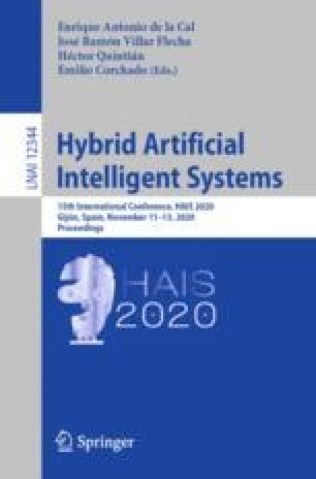
Hybrid Artificial Intelligent Systems ; 15th International Conference, HAIS 2020, Gijón, Spain, November 11-13, 2020, Proceedings
This book constitutes the refereed proceedings of the 15th International Conference on Hybrid Artificial Intelligent Systems, HAIS 2020, held in Gijón, Spain, in November 2020. The 65 regular papers presented in this book were carefully reviewed and selected from 106 submissions. The papers are grouped into these topics: advanced data processing and visualization techniques; bio-inspired models and optimization; learning algorithms; data mining, knowledge discovery and big data; and hybrid artificial intelligence applications.

How Data Quality Affects our Understanding of the Earnings Distribution
This book demonstrates how data quality issues affect all surveys and proposes methods that can be utilised to deal with the observable components of survey error in a statistically sound manner. This book begins by profiling the post-Apartheid period in South Africa's history when the sampling frame and survey methodology for household surveys was undergoing periodic changes due to the changing geopolitical landscape in the country. This book profiles how different components of error had disproportionate magnitudes in different survey years, including coverage error, sampling error, nonresponse error, measurement error, processing error and adjustment error.
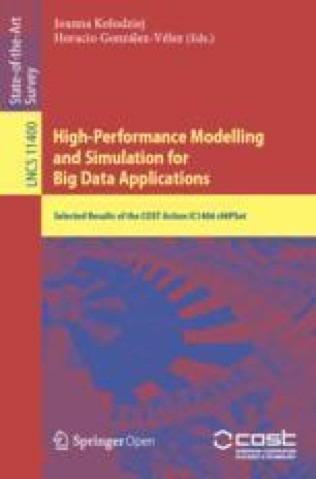
High-Performance Modelling and Simulation for Big Data Applications: Selected Results of the COST Action IC1406 cHiPSet
This book is the final compendium of case studies emanated from “High-Performance Modelling and Simulation for Big Data Applications” (cHiPSet).cHiPSet has created a sustainable reference network linking applied research in High Performance Computing (HPC) and Modelling & Simulation to tangibly address Big Data challenges.cHiPSet has also endeavoured to use and exploit results through Open Science practices, i.e., open access publication, open access to data repositories, and open-source software development. A testament to this philosophy, this compendium is set to become a required reference for the fast-changing fields of HPC, Big Data, and Modelling & Simulation.

High Performance Computing for Geospatial Applications
This volume fills a research gap between the rapid development of High Performance Computing (HPC) approaches and their geospatial applications. With a focus on geospatial applications, the book discusses in detail how researchers apply HPC to tackle their geospatial problems. Based on this focus, the book identifies the opportunities and challenges revolving around geospatial applications of HPC. Readers are introduced to the fundamentals of HPC, and will learn how HPC methods are applied in various specific areas of geospatial study.
Healthcare solutions using machine learning and informatics
Covers novel and innovative solutions for the healthcare that apply machine learning and biomedical informatics technology. The healthcare sector is one of the most critical in society. This book presents a series of artificial intelligence, machine learning, intelligent IoT-based solutions for medical image analysis, medical big data processing, disease predictions. Machine learning and artificial intelligence use cases in healthcare presented in the book give researchers, practitioners, and students a wide range of practical examples of cross-domain convergence. The wide variety of topics covered include: Artificial Intelligence in healthcare Machine learning solutions for such disease as diabetes, arthritis, cardiovascular disease, and COVID-19 Big data analytics solutions for healthcare data processing Reliable biomedical applications using AI models Intelligent IoT in healthcare. The book explains fundamental concepts as well as the advanced use cases illustrating how to apply emerging technologies such as machine learning, AI models, data informatics into practice to tackle challenges in the field of healthcare with real-world scenarios. Chapters contributed by noted academicians and professionals examine various solutions, frameworks, applications, case studies, and best practices in the healthcare domain

Handbook on artificial intelligence -empowered applied software engineering ; Vol.1 : Novel methodologies to engineering smart software systems
Provides a structured overview of artificial intelligence-empowered applied software engineering. Evolving technological advancements in big data, smartphone and mobile software applications, the Internet of Things and a vast range of application areas in all sorts of human activities and professions lead current research towards the efficient incorporation of artificial intelligence enhancements into software and the empowerment of software with artificial intelligence.

Handbook of smart cities
This Handbook presents a comprehensive and rigorous overview of the state-of-the-art on Smart Cities. It provides the reader with an authoritative, exhaustive one-stop reference on how the field has evolved and where the current and future challenges lie. From the foundations to the many overlapping dimensions (human, energy, technology, data, institutions, ethics etc.)

Handbook of big data analytics ; Vol.2 : Applications in ICT, security and business analytics
Big Data analytics is the complex process of examining big data to uncover information such as correlations, hidden patterns, trends and user and customer preferences, to allow organizations and businesses to make more informed decisions. These methods and technologies have become ubiquitous in all fields of science, engineering, business and management due to the rise of data-driven models as well as data engineering developments using parallel and distributed computational analytics frameworks, data and algorithm parallelization, and GPGPU programming. However, there remain potential issues that need to be addressed to enable big data processing and analytics in real time.

Handbook of big data analytics ; Vol.1 : Methodologies
Big Data analytics is the complex process of examining big data to uncover information such as correlations, hidden patterns, trends and user and customer preferences, to allow organizations and businesses to make more informed decisions. These methods and technologies have become ubiquitous in all fields of science, engineering, business and management due to the rise of data-driven models as well as data engineering developments using parallel and distributed computational analytics frameworks, data and algorithm parallelization, and GPGPU programming. However, there remain potential issues that need to be addressed to enable big data processing and analytics in real time. This volume presents several methodologies to support Big Data analytics including database management, processing frameworks and architectures, data lakes, query optimization strategies, towards real-time data processing, data stream analytics, Fog and Edge computing, and Artificial Intelligence and Big Data.

Future data and security engineering ; 7th International conference, FDSE 2020, Quy Nhon, Vietnam, November 25–27, 2020, Proceedings
This book constitutes the proceedings of the 7th International Conference on Future Data and Security Engineering, FDSE 2020, which was supposed to be held in Quy Nhon, Vietnam, in November 2020, but the conference was held virtually due to the COVID-19 pandemic. The 24 full papers (of 53 accepted full papers) presented together with 2 invited keynotes were carefully reviewed and selected from 161 submissions. The other 29 accepted full and 8 short papers are included in CCIS 1306. The selected papers are organized into the following topical headings: security issues in big data; big data analytics and distributed systems; advances in big data query processing and optimization; blockchain and applications; industry 4.0 and smart city: data analytics and security; advanced studies in machine learning for security; and emerging data management systems and applications.

Future data and security engineering : Big data, security and privacy, smart city and industry 4.0 applications ; 7th International Conference, FDSE 2020, Quy Nhon, Vietnam, November 25–27, 2020, Proceedings
This book constitutes the proceedings of the 7th International Conference on Future Data and Security Engineering, FDSE 2020, held in Quy Nhon, Vietnam, in November 2020.* The 29 full papers and 8 short were carefully reviewed and selected from 161 submissions. The selected papers are organized into the following topical headings: big data analytics and distributed systems; security and privacy engineering; industry 4.0 and smart city: data analytics and security; data analytics and healthcare systems; machine learning-based big data processing; emerging data management systems and applications; and short papers: security and data engineering.

Fundamentals of Clinical Data Science
This book comprehensively covers the fundamentals of clinical data science, focusing on data collection, modelling and clinical applications. Topics covered in the first section on data collection include: data sources, data at scale (big data), data stewardship (FAIR data) and related privacy concerns. Aspects of predictive modelling using techniques such as classification, regression or clustering, and prediction model validation will be covered in the second section. The third section covers aspects of (mobile) clinical decision support systems, operational excellence and value-based healthcare.

Fundamentals and Methods of Machine and Deep Learning : Algorithms, Tools, and Applications
provides a practical approach by explaining the concepts of machine learning and deep learning algorithms, evaluation of methodology advances, and algorithm demonstrations with applications. In recent research studies, they are regarded as one of the disruptive technologies that will transform our future life, business, and the global economy. The recent explosion of digital data in a wide variety of domains, including science, engineering, Internet of Things, biomedical, healthcare, and many business sectors, has declared the era of big data, which cannot be analysed by classical statistics but by the more modern, robust machine learning and deep learning techniques. Since machine learning learns from data rather than by programming hard-coded decision rules, an attempt is being made to use machine learning to make computers that are able to solve problems like human experts in the field.

Expert Clouds and Applications ; Proceedings of ICOECA 2021
Features original papers from International Conference on Expert Clouds and Applications (ICOECA 2021), organized by GITAM School of Technology, Bangalore, India during February 18–19, 2021. It covers new research insights on artificial intelligence, big data, cloud computing, sustainability, and knowledge-based expert systems. The book discusses innovative research from all aspects including theoretical, practical, and experimental domains that pertain to the expert systems, sustainable clouds, and artificial intelligence technologies.
Evaluation of text summaries based on linear optimization of content metrics
Covers both theoretical contributions and practical applications in security system design by applying the Internet of Things (IoT) and CI. It further explains the application of IoT in the design of modern security systems and how IoT blended with computational intel- ligence can make any security system improved and realizable. Key features: Focuses on the computational intelligence techniques of security system design Covers applications and algorithms of discussed computational intelligence techniques Includes convergence-based and enterprise integrated security systems with their applications Explains emerging laws, policies, and tools affecting the landscape of cyber security Discusses application of sensors toward the design of security systems This book will be useful for graduate students and researchers in electrical, computer engineering, security system design and engineering

Encyclopedia of GIS "Geographical Information Sciences"
provides up-to-date information on emerging topics such as spatial big data, smart-phone GIS, urban computing and mobile recommender systems. It also expands the first edition’s rich set of GIS-related commercial and societal applications such as geo-targeting, geo-fencing and understanding climate changes, while enabling more comprehensive coverage of classical GIS topics such as map projections, global positioning systems and spatial cognition. The entries explain the key software, data sets and processes used by geographers and computational scientists. Additionally, the reference emphasizes the role of GIS in business and mobile intelligence. By offering more diversified GIS-related topics from theory and research than most of the other available literature, the authors equip newcomers to the field with principles as well as applications.
Emerging Technologies in Computing ; 3rd EAI International Conference, iCETiC 2020, London, UK, August 19–20, 2020, Proceedings
This book constitutes the refereed conference proceedings of the Third International Conference on Emerging Technologies in Computing, iCEtiC 2020, held in London, UK, in August 2020. Due to VOVID-19 pandemic the conference was helt virtually.The 25 revised full papers were reviewed and selected from 65 submissions and are organized in topical sections covering blockchain and cloud computing; security, wireless sensor networks and IoT; AI, big data and data analytics; emerging technologies in engineering, education and sustainable development.
e-Learning, e-Education, and Online Training ; 6th EAI International Conference, eLEOT 2020, Changsha, China, June 20-21, 2020, Proceedings, Part II
Constitutes the proceedings of the 6th International Conference on e-Learning, e-Education, and Online Training, eLEOT 2020, held in Changsha, China, in June 2020. The conference was held virtually due to the COVID-19 pandemic. The 68 full papers presented were carefully reviewed and selected from 141 submissions. They focus on most recent and innovative trends and new technologies in for educational modernization, such as artificial intelligence and big data. The theme of eLEOT 2020 was “Education with New Generation Information Technology”.
e-Learning, e-Education, and Online Training ; 6th EAI International Conference, eLEOT 2020, Changsha, China, June 20-21, 2020, Proceedings, Part I
Constitutes the proceedings of the 6th International Conference on e-Learning, e-Education, and Online Training, eLEOT 2020, held in Changsha, China, in June 2020. The conference was held virtually due to the COVID-19 pandemic. The 68 full papers presented were carefully reviewed and selected from 141 submissions. They focus on most recent and innovative trends and new technologies in for educational modernization, such as artificial intelligence and big data. The theme of eLEOT 2020 was “Education with New Generation Information Technology”.
