



الصفحة 2
الصفحة 2

Multimedia Retrieval
The single chapters of this textbook explain the general architecture of multimedia information retrieval systems; various metadata languages like Dublin Core, RDF, or MPEG; pattern recognition through Markov models, unsupervised learning, and pattern clustering; various indexing approaches to audio and video streams; interaction and control; the protection of content and user privacy; and search effectiveness and efficiency.

Multimedia Database Retrieval : A Human-Centered Approach
Multimedia Database Retrieval: A Human-Centered Approach presents the latest development in user-centered methods and the state-of-the-art in visual media retrieval. It includes discussion on perceptually inspired non-linear paradigm in user-controlled interactive retrieval (UCIR) systems. It also features a coherent approach which focuses on specific topics within content/concept-based retrievals via audio-visual information modeling of multimedia. Highlights include: * Exploring an adaptive machine that can learn from its environment * Optimizing the learning system by incorporating self-organizing adaptation into the retrieval process * Demonstrating state-of-the-art applications within small, medium, and large databases
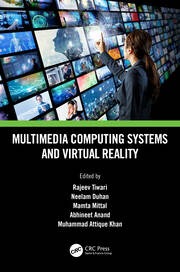
Multimedia computing systems and virtual reality
Presents recent advancements in multimedia systems as they relate to various application areas such as healthcare services and agriculture-related industries. The authors also discuss human-machine interface design, graphics modelling, rendering/animation, image/graphics techniques/systems and visualization. They then go on to explore multimedia content adaptation for interoperable delivery. Finally, the book covers cultural heritage, philosophical/ethical/societal/international issues, standards-related virtual technology and multimedia uses. This book is intended for computer engineers and computer scientists developing applications for multimedia and virtual reality and professionals working in object design and visualization, transformation, modelling and animation of the real world.

Multi-Agent-Based Simulation VII ; International Workshop, MABS 2006, Hakodate, Japan, May 8, 2006, Revised and Invited Papers
This book constitutes the thoroughly refereed proceedings of the 7th International Workshop on Multi-Agent-Based Simulation, MABS 2006. The 12 revised full papers presented together with three short papers and two invited papers were carefully reviewed and selected from 25 submissions during two rounds of reviewing.

Multi-Agent Systems and Applications IV ; 4th International Central and Eastern European Conference on Multi-Agent Systems, CEEMAS 2005, Budapest, Hungary, September 15-17, 2005, Proceedings
In the very competitive field of agent oriented conferences and workshops nowadays (such as AAMAS, WI/IAT, EUMAS, CIA, MATES) the special profile of CEEMAS is that it is trying to bridge the gap between applied research achievements and theoretical research activities. Our ambition is to provide a forum for presenting theoretical research with an evident application potential, implemented application prototypes and their properties, as well as industrial case studies of successful (but also unsuccessful) agent technology deployments. This is why the CEEMAS proceedings volume provides a collection of research and application papers. The technical research paper section of the proceedings (see pages 11–499) contains pure research papers as well as research results in application settings while the application papers section (see pages 500–530) contains papers focused on application aspects. The goal is to demonstrate the real life value and commercial reality of multi-agent systems as well as to foster communication between academia and industry in this field.
Multi-Agent and Multi-Agent-Based Simulation ; Joint Workshop MABS 2004
The aim of the workshop was to provide a forum for work in both appli- tions of multi-agent-based simulation and the technical challenges of simulating large multi-agent systems (MAS). There has been considerable recent progress in modelling and analyzing multi-agent systems, and in techniques that apply MAS models to complex real-world systems such as social systems and organi- tions. Simulation is an increasingly important strand that weaves together this work. In high-risk, high-cost situations, simulations provide critical cost/benefit leverage, and make possible explorations that cannot be carried out in situ: – Multi-agent approaches to simulating complex systems are keytools in interdisciplinary studies of social systems. Agent-based social simulation (ABSS) research simulates and synthesizes social behavior in order to understand real social systems with properties of self-organization, scalability, robustness, and openness. – In the MAS community, simulation has been applied to awide range of MAS research and design problems, from models of complex individual agents - ploying sophisticated internal mechanisms to models of large-scale societies of relatively simple agents which focus more on the interactions between agents.

Mouse controller using electroencephalography (EEG) device
The growing technologies related to neuroscience has to lead many innovative applications, most importantly Electroencephalography, or EEG for short. This field of study has become recently a trend that many companies around the world have started to enter the race of conquering the brain and controlling everything from a mouse controller to the whole human body. This project aims to help disabled people use a computer with ease and simplicity without needing to use their hands, or anything really, which they can achieve by wearing a headset or get someone to put it on them. The headset is designed to read brain activities and send it to a computer program to understand where the user wants to move the mouse cursor on the computer screen using an Artificial Intelligence model. This project helps further researches in this field which pushes the technology even further from where it is now. The device designed for this project can be repurposed pretty easily to serve many different applications other than controlling a mouse.

Modelling and Development of Intelligent Systems ; 6th International Conference, MDIS 2019, Sibiu, Romania, October 3–5, 2019, Revised Selected Papers
This volume constitutes the refereed proceedings of the 6th International Conference on Modelling and Development of Intelligent Systems, MDIS 2019, held in Sibiu, Romania, in October 2019. The 13 revised full papers presented in the volume were carefully reviewed and selected from 31 submissions. The papers are organized in topical sections on adaptive systems; conceptual modelling; data mining; intelligent systems for decision support; machine learning.

Modeling and simulation of complex communication networks
Covers important topics and approaches related to the modeling and simulation of complex communication networks from a complex adaptive systems perspective. The authors present different modeling paradigms and approaches as well as surveys and case studies. Modern network systems such as Internet of Things, Smart Grid, VoIP traffic, Peer-to-Peer protocol, and social networks, are inherently complex. They require powerful and realistic models and tools not only for analysis and simulation but also for prediction. With contributions from an international panel of experts, this book is essential reading for networking, computing, and communications professionals, researchers and engineers in the field of next generation networks and complex information and communication systems, and academics and advanced students working in these fields.

Modeling and Retrieval of Context ; 2nd International Workshop, MRC 2005, Edinburgh, UK, July 31-August 1, 2005, Revised Selected Papers
Computing in context has become a necessity in modern and intelligent IT - plications. With the use of mobile devices and current research on ubiquitous computing, context-awareness has become a major issue. However, context and context-awareness are crucial not only for mobile and ubiquitous computing. They are also vital for spanning various application areas, such as collaborative softwareand Web engineering,personaldigital assistantsand peer-to-peer inf- mation sharing, health care work?ow and patient control, and adaptive games and e-learning solutions. In these areas, context serves as a major source for reasoning, decision making, and adaptation, as it covers not only application knowledge but also environmental knowledge.Likewise, modeling and retrieving context is an important part of modern knowledge management processes.
Modeling and Management of Fuzzy Semantic RDF Data
Presents the latest research findings in fuzzy RDF data modeling and management. Fuzziness widely exist in many data and knowledge intensive applications. With the increasing amount of metadata available, efficient and scalable management of massive semantic data with uncertainty is of crucial importance. This book goes to great depth concerning the fast-growing topic of technologies and approaches of modeling and managing fuzzy metadata with Resource Description Framework (RDF) format. Its major topics include representation of fuzzy RDF data, fuzzy RDF graph matching, query of fuzzy RDF data, and persistence of fuzzy RDF data in diverse databases. The objective of the book is to provide the state-of-the-art information to researchers, practitioners, and postgraduates students who work on the area of big data intelligence and at the same time serve as the uncertain data and knowledge engineering professional as a valuable real-world reference.
Model-Driven Design Using Business Patterns
This book takes exactly this step: it shows you how to apply the pattern ideas in business applications and presents more than 20 structural and behavioral business patterns that use the REA (resources, events, agents) pattern as a common backbone. If you are a developer working on business frameworks, you can use the patterns presented to derive the right abstractions (e.g., business objects) and to design and ensure that the meta-rules (e.g., process patterns) are followed by the developers of the actual applications. And if you are an application developer, you can use these patterns to design your business application, to ensure that it does not violate the domain rules, and to adapt the application to changing requirements without the need to change the overall architecture. As with patterns in general, this approach allows for both more flexible and more solid software architectures and hence better software quality.
Model-Based Engineering of Collaborative Embedded Systems : Extensions of the SPES Methodology
This book presents the results of the "Collaborative Embedded Systems" (CrESt) project, aimed at adapting and complementing the methodology underlying modeling techniques developed to cope with the challenges of the dynamic structures of collaborative embedded systems (CESs) based on the SPES development methodology.

Model Driven Engineering Languages and Systems ; 11th International Conference, MoDELS 2008, Toulouse, France, September 28 - October 3, 2008. Proceedings
The book also contains three keynote speeches and contributions to workshops, symposia, tutorials and panels at the conference. The papers are organized in topical sections on Model Transformation: Foundations; Requirements Modeling; Domain-Specific Modeling; Model Transformation: Techniques, Composition and Analysis of Behavioral Models; Model Comprehension; Model Management; Behavioral Conformance and Refinement; Metamodeling and Modularity; Constraints; Model Analysis; Service-Oriented Architectures; Adaptive and Autonomic Systems; Empirical Studies; Evolution and Reverse Engineering; Modeling Language Semantics; Dependability Analysis and Testing; Aspect-Oriented Modeling; Structural Modeling;and Embedded Systems.
Model Driven Architecture and Ontology Development
Gaševic and his co-authors try to fill this gap by covering the subject of MDA application for ontology development on the Semantic Web. Part I of their book describes existing technologies, tools, and standards like XML, RDF, OWL, MDA, and UML. Part II presents the first detailed description of OMG’s new ODM (Ontology Definition Metamodel) initiative, a specification which is expected to be in the form of an OMG language like UML. Finally, Part III is dedicated to applications and practical aspects of developing ontologies using MDA-based languages.

Mobility Aware Technologies and Applications ; 2nd International Workshop, MATA 2005, Montreal, Canada, October 17 -- 19, 2005, Proceedings
The beginning of the twenty-first century is characterized by global markets, and the mobility of people is becoming an important fact of life. Consequently, the mobile user is demanding appropriate technical solutions to make use of customized information and communication services. In this context the notion of next-generation networks (NGNs), which are driven by the convergence of the entertainment sector, the mobile Internet, and fixed/mobile telecommunications, is emerging. Such NGNs are aggregating a variety of different access networks and supporting the seamless connection of an open set of end-user devices, and due to the adoption of an all-IP network paradigm they enable a much better integration of voice and data services. Coincidently the buzzword ‘fixed mobile convergence’ (FMC) describes the current trend towards providing common services across fixed and mobile networks resulting in the medium term in the full integration of fixed and mobile telecommunication networks. The adoption of appropriate middleware technologies and the provision of - called service delivery platforms driven by the ongoing innovation in the field of information technologies provides today the technical foundation for supporting terminal, personal and service mobility and thus the implementation of real seamless information and communication services. Furthermore, users are nowadays looking, in light of an omnipresent service environment, for a much higher degree of customization and context awareness in the services they use. The papers in this volume look at these enabling mobility-aware technologies and their use for implementing mobility-aware and context-aware applications.

Mobile Information Systems : Infrastructure and Design for Adaptivity and Flexibility
The book is divided into three parts: core technologies for mobile information systems (e.g., adaptive middleware and flexible e-services), enabling technologies (like data management on small devices or adaptive low-power hardware architectures or wireless networks), and methodological aspects of mobile information systems design (such as service profiling or user interface and e-service design for context-aware applications). It provides researchers in academia and industry with a comprehensive vision on innovative aspects which can be used as a basis for the development of new frameworks and applications.

Mobile and Wireless Communications with Practical Use-Case Scenarios
While wireless technologies had a spectacular evolution over the past years, the present trend is to adopt a global heterogeneous network of shared standards that enables the provisioning of Quality of Service and Quality of Experience to the end-user. To this end, enabling technologies like Machine Learning, Internet of Things, Digital Twins, are seen as promising solutions for next generation networks that will enable an intelligent adaptive interconnected environment with support for prediction and decision making so that the heterogeneous applications and users requirements can be highly satisfied. The aim of this textbook is to provide the readers with a comprehensive technical foundation of the mobile communication systems and wireless network design, operations and applications of various radio access technologies. Additionally, it also introduces the reader to the latest advancements in technologies in terms of Internet of Things ecosystem, Machine Learning and Digital Twins for IoT-enabled intelligent environments. Furthermore, this textbook also includes practical use-case scenarios using Altair WinProp Software as well as Phyton, TensorFlow and Jupiter as support for practice-based laboratory sessions"

Mining Complex Data ; ECML/PKDD 2007 Third International Workshop, MCD 2007, Warsaw, Poland, September 17-21, 2007, Revised Selected Papers
This book constitutes the refereed proceedings of the Third International Workshop on Mining Complex Data, MCD 2007, held in Warsaw, Poland, in September 2007, co-located with ECML and PKDD 2007.The 20 revised full papers presented were carefully reviewed and selected; they present original results on knowledge discovery from complex data. In contrast to the typical tabular data, complex data can consist of heterogenous data types, can come from different sources, or live in high dimensional spaces. All these specificities call for new data mining strategies.

Mind conversation = التنبؤ بالحروف العربية من خلال الإشارات الدماغية
Throughout history, humans have long dreamed of understanding what goes on inside the human mind—what people are thinking or feeling. It seemed like something from a far-off future or a magical realm. But now, thanks to amazing technology called EEG and BCI, this dream is turning into reality. EEG stands for electroencephalography. It's a way of listening to what the brain is up to by placing small sensors on or near the head. These sensors pick up tiny electrical signals produced by the brain's activity. It's like eavesdropping on the brain's conversations with itself. BCI, or Brain-Computer Interface, is like a bridge between the brain and machines. It lets the brain talk to devices or computers. This means people can control things without using their hands or voices. Our system takes advantage of EEG and BCI to create something helpful, a special mobile app. This app is designed for people who can't move their bodies, like those who are paralyzed. It helps them use their phones to express what they are thinking about.
