



الصفحة 19
الصفحة 19

E-Commerce and Web Technologies ; Vol. 3590 ; 6th International conference, EC-Web 2005, Copenhagen, Denmark, August 23-26, 2005, Proceedings
We welcome you to the 6th International Conference on E-Commerce and Web Technology (EC-Web 2005) held in Copenhagen, Denmark. It was held in conjunction with DEXA 2005. This conference was organized for the first time in Greenwich, UK, in 2000, and it has been able to attract an increasing number of participants and interest, reflecting the progress made in the field. As in the five previous years, EC-Web 2005 served as a forum that brought together researchers from academia and practitioners from industry to discuss the current state of the art in e-commerce and Web technologies.

E-CARGO and role-based collaboration : Modeling and solving problems in the complex
A model for collaboratively solving complex problems Explains the nature of collaboration, explores an easy-to-follow process of collaboration, and defines a model to solve complex problems in collaboration and complex systems. Written by a noted expert on the topic, the book initiates the study of an effective collaborative system from a novel perspective. The role-based collaboration (RBC) methodology investigates the most important aspects of a variety of collaborative systems including societal-technical systems. The models and algorithms can also be applied across system engineering, production, and management. Contains a set of concepts, models, and algorithms for the analysis, design, implementation, maintenance, and assessment of a complex system Presents computational methods that use roles as a primary underlying mechanism to facilitate collaborative activities including role assignment Explores the RBC methodology that concentrates on the aspects that can be handled by individuals to establish a well-formed team Offers an authoritative book written by a noted expert on the topic

Early Aspects: Current Challenges and Future Directions ; 10th International Workshop, Vancouver, Canada, March 13, 2007, Revised Selected Papers
Traditionally, aspect-oriented software development (AOSD) has focused on the implementation phase of the software lifecycle: aspects are identified and captured mainly in code. Therefore, most current AOSD approaches place the burden for aspect identification and management on the programmer working at low levels of abstraction. However, aspects are often present well before the implementation phase, such as in domain models, requirements and software architecture. Identification and capture of these early aspects ensure that aspects related to the problem domain (as opposed to merely the implementation) will be appropriately captured, reasoned about and available. This offers improved opportunities for early recognition and negotiation of trade-offs and allows forward and backward aspect traceability. This makes requirements, architecture, and implementation more seamless, and allows a more systematic application of aspects.

Dynamical Vision ; ICCV 2005 and ECCV 2006 Workshops, WDV 2005 and WDV 2006, Beijing, China, October 21, 2005, Graz, Austria, May 13, 2006, Revised Papers
Classical multiple-view geometry studies the reconstruction of a static scene - served by a rigidly moving camera. However, in many real-world applications the scene may undergo much more complex dynamical changes. For instance, the scene may consist of multiple moving objects (e.g., a trafic scene) or arti- lated motions (e.g., a walking human) or even non-rigid dynamics (e.g., smoke, fire, or a waterfall). In addition, some applications may require interaction with the scene through a dynamical system (e.g., vision-guided robot navigation and coordination). To study the problem of reconstructing dynamical scenes, many new al- braic, geometric, statistical, and computational tools have recently emerged in computer vision, computer graphics, image processing, and vision-based c- trol.

Dynamic brain : From neural spikes to behaviors ; 12th International Summer School on Neural Networks, Erice, Italy, December 5-12, 2007, Revised Lectures
The volume presents 12 thoroughly revised tutorial papers based on lectures given by leading researchers at the 12th International Summer School on Neural Networks in Erice, Italy, in December 2007.

Domain-driven design with Java, a practitioner's guide : create simple, elegant, and valuable software solutions for complex business problems
Helps you as a developer and architect to put your knowledge to work in order to create elegant software designs that are enjoyable to work with and easy to reason about. You'll begin with an introduction to the concepts of domain-driven design and discover various ways to apply them in real-world scenarios. You'll also appreciate how DDD is extremely relevant when creating cloud native solutions that employ modern techniques such as event-driven microservices and fine-grained architectures. As you advance through the chapters, you'll get acquainted with core DDD's strategic design concepts such as the ubiquitous language, context maps, bounded contexts, and tactical design elements like aggregates and domain models and events. You'll understand how to apply modern, lightweight modeling techniques such as business value canvas, Wardley mapping, domain storytelling, and event storming, while also learning how to test-drive the system to create solutions that exhibit high degrees of internal quality.

Domain Modeling and the Duration Calculus : International Training School, Shanghai, China, September 17-21, 2007, Advanced Lectures
The book presented provide competent coverage of software security, domain modeling of software engineering, and duration calculus for real time systems - originating from lectures of leading experts in these fields from Europe and Asia.It addressed in detail are: development of real-time systems, domain engineering using abstract modeling, the area of duration calculus, and formal methods like language description using the operational semantics approach.

DNA Computing ; 13th International Meeting on DNA Computing, DNA13, Memphis, TN, USA, June 4-8, 2007, Revised Selected Papers
This book constitutes the thoroughly refereed postproceedings of the 13th International Meeting on DNA Computing, DNA 13, held in Memphis, TN, USA, June 4-8, 2007.

Distributed network systems : From concepts to implementations
This textbook covers both theoretical and practical aspects of distributed computing. It describes the client-server model for developing distributed network systems, the communication paradigms used in a distributed network system, and the principles of reliability and security in the design of distributed network systems. Based on theoretical introductions, the book presents various implementation strategies and techniques for building distributed network systems, including examples in TCP/IP communications, the use of remote procedure call and remote method invocation techniques, and the development of web-based applications, distributed databases, and mobile computing systems.
Distributed computing and networking ; 8th International conference, ICDCN 2006, Guwahati, India, December 27-30, 2006, Proceedings
VI realm between distributed computing and networking, namely, Modeling Biological Networks, Network Security, Algorithmic Issues in Wireless Sensor Networks, and Optical Networking. This was made possible by the efforts of the Tutorial Chairs, Sr- har Iyer and Pinaki Mitra. The Organizing Committee worked hard to ensure that the participants enjoyed a comfortable stay and the technical meetings proceeded as smoothly as possible.

Distributed computing and Internet Technology ; 1st International Conference, ICDCIT 2004, Bhubaneswar, India, December 22-24, 2004, Proceedings
Taming the Dynamics of Disributed Data - DISTRIBUTED COMPUTING -- Data in Your Space -- Enabling Technologies for Harnessing Information Explosion -- Fair Leader Election by Randomized Voting -- An Efficient Leader Election Algorithm for Mobile Ad Hoc Networks -- Distributed Balanced Tables: A New Approach - Performance Evaluation of Gigabit Ethernet and SCI in a Linux Cluster -- Performance Evaluation of a Modified-Cyclic-Banyan Based ATM / IP Switching Fabric -- A Scalable and Robust QoS Architecture for WiFi P2P Networks -- NEC: Node Energy Based Clustering Protocol for Wireless Sensor Networks with Guaranteed Connectivity,and other
Distributed computing – IWDC 2005 ; 7th International Workshop, Kharagpur, India, December 27-30, 2005, Proceedings
This book constitutes the refereed proceedings of the 7th International Workshop on Distributed Computing, IWDC 2004, held in Kharagpur, India in December 2005. The 28 revised full papers and 33 revised short papers presented together with 5 invited keynote talks were carefully reviewed and selected from 253 submissions. The papers are organized in topical sections on theory of distributed computing, sensor networks, fault tolerance, optical networks, peer-to-peer networks, wireless networks, network security, grid and networks, middleware and data management, mobility management, and distributed artificial intelligence.

Distributed applications and interoperable systems ; Vol. 3543 ; 5th IFIP WG 6.1 International conference, DAIS 2005, Athens, Greece, June 15-17, 2005, Proceedings
ThisvolumecontainstheproceedingsoftheIFIPWG6. 1InternationalWorking Conference on Distributed Applications and Interoperable Systems V held in Athens, Greece, on June 15–17, 2005. The conference program presented the state of the art in research concerning distributed and interoperable systems. The emergence of 4th-generation c- munication systems, the evolution of Internet technologies, the convergence of telecom and datacom, wireless and ?xed communication systems and appli- tions pave the path for ubiquitous service and application provision. Innovative solutions are required for the development, implementation and operation of distributed applications in complex IT environments full of diversity and h- erogeneity. Today, the emerging wide spectrum of distributed systems.

Distributed Applications and Interoperable Systems ; 7th IFIP WG 6.1 International Conference, DAIS 2007, Paphos, Cyprus, June 6-8, 2007, Proccedings
This book presented context-awareness, adaptation, mobility, distributed applications and peer-to-peer computing, all of which relate to the sustainability of distributed applications and integrated systems.

Distributed and Parallel Systems : From Cluster to Grid Computing
This book devoted to general algorithmic aspects of parallel and distributed computing and grid computing. This book includes a good overview of recent advances in various aspects of parallel and distributed computing. This volume also includes various crucial questions tied to the infrastructure and advanced problems and challenges of grid computing.

Disruptive trends in automation technology
The industrial sector is being transformed by the convergence of information technology and operational technology. The latter is another name for automation technology and covers established systems such as supervisory control and data acquisition (SCADA), programmable logic controllers (PLC), fieldbuses, and automation and control systems. As this technology is connected to the Internet and 5G networks, some monitoring, control, and analytic functionalities are deployed to the edge or cloud, and researchers are challenged to ensure the security, dependability, real-time performance, and maintainability of the resulting systems. The big data that is accessible from these systems create opportunities for artificial intelligence applications that can further disrupt the established practices in the automation domain.

Discrete Geometry for Computer Imagery ; 14th IAPR International Conference, DGCI 2008, Lyon, France, April 16-18, 2008. Proceedings
This book constitutes the refereed proceedings of the 14th IAPR TC-18 International Conference on Discrete Geometry for Computer Imagery, DGCI 2008, held in Lyon, France, in April 2008.
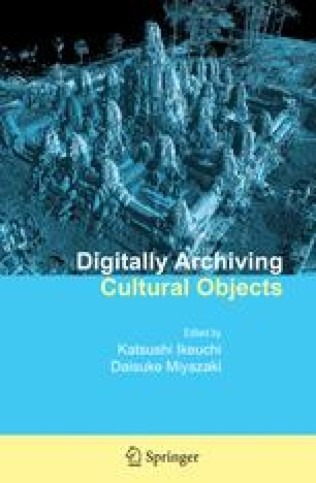
Digitally Archiving Cultural Objects
Digitally Archiving Cultural Objects describes thorough research and methods for preserving cultural heritage objects through the use of 3D digital data. These methods were developed through using computer vision and computer graphics technologies.

Digital transformation in semiconductor manufacturing ; Proceedings of the 1st and 2nd European advances in digital transformation Conference, EADTC 2018, Zittau, Germany and EADTC 2019, Milan, Italy
This book reports on cutting-edge electrical engineering and microelectronics solutions to foster and support digitalization in the semiconductor industry.

Digital Mammography ; 8th International Workshop, IWDM 2006, Manchester, UK, June 18-21, 2006, Proceedings
This volume of Springer’s Lecture Notes in Computer Science series records th the proceedings of the 8 International Workshop on Digital Mammography (IWDM), which was held in Manchester, UK, June 18–21, 2006. The meetings bringtogetheradiversesetofresearchers(physicists,mathematicians,computer scientists, engineers), clinicians (radiologists, surgeons) and representatives of industry, who are jointly committed to developing technology, not just for its ownsake,but to supportclinicians inthe earlydetection andsubsequentpatient management of breast cancer.
