



الصفحة 19
الصفحة 19

Human-computer interaction – INTERACT 2007 ; 11th IFIP TC 13 International Conference, Rio de Janeiro, Brazil, September 10-14, 2007, Proceedings, Part II
This book is part of a two-volume work that constitutes the refereed proceedings of the 11th IFIP TC13 International Conference on Human-Computer Interaction, INTERACT 2007, held in Rio de Janeiro, Brazil in September 2007. It covers tangible user interfaces and interaction; as well as software engineering and HCI.
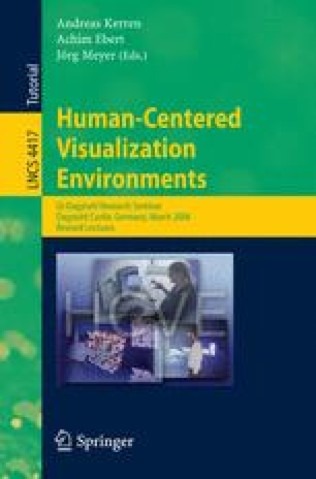
Human-centered visualization environments : GI-Dagstuhl Research Seminar, Dagstuhl Castle, Germany, March 5-8, 2006, Revised Papers
This tutorial book features an augmented selection of the material presented at the GI-Dagstuhl Research Seminar on Human-Centered Visualization Environments, HCVE 2006, held in Dagstuhl Castle, Germany in March 2006. It presents eight tutorial lectures that are the thoroughly cross-reviewed and revised versions of the summaries and findings presented and discussed at the seminar.
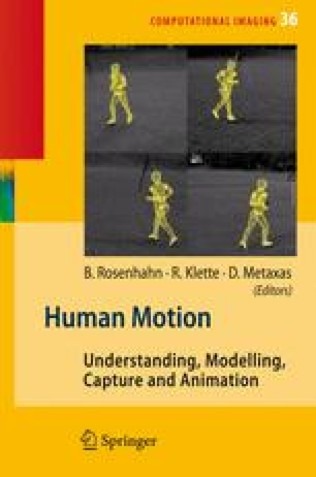
Human motion : Understanding, modeling, capture and animation
Edward Muybridge (1830–1904) is known as the pioneer in motion capt- ing with his famous experiments in 1887 called “Animal Locomotion”. Since then, the feld of animal or human motion analysis has grown in many dir- tions. However, research and results that involve human-like animation and the recovery of motion is still far from being satisfactory. Progress in human motion analysis depends on empirically anchored and grounded research in computer vision, computer graphics, and biomechanics. This book is based on a June 2006 workshop held in Dagstuhl, Germany. This workshop brought together for the frst time researchers from the afo- mentioned disciplines.

Human interactive proofs ; 2nd International workshop, HIP 2005, Bethlehem, PA, USA, May 19-20, 2005, Proceedings
Constitutes the refereed proceedings of the Second International Workshop on Human Interactive Proofs, HIP 2005, held in Bethlehem, PA, USA in May 2005. This book is devoted to the new class of security protocols called human interactive proofs. It includes sections such as: CAPTCHAs and performance analysis, and HIP architectures.
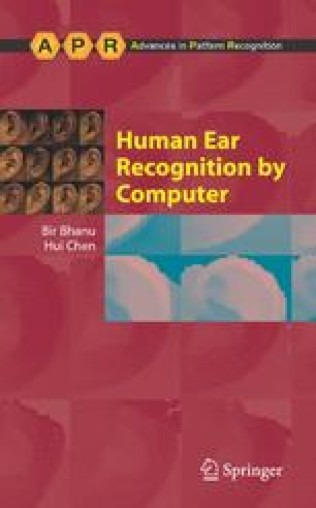
Human Ear Recognition by Computer
Human Ear Recognition by Computer is the first book on the automatic recognition of human ears. It presents an entire range of computational algorithms for recognition of humans by their ears. These algorithms have been tested and validated on the largest databases that are available today,This state-of-the-art research reference explores all aspects of 3D ear recognition, including representation, detection, recognition, indexing and performance prediction. It has been written for a professional audience of both researchers and practitioners within industry, and is also ideal as an informative text for graduate students in computer science and engineering.

Human Aspects of Information Security and Assurance ; 14th IFIP WG 11.12 International Symposium, HAISA 2020, Mytilene, Lesbos, Greece, July 8–10, 2020, Proceedings
This book constitutes the proceedings of the 14th IFIP WG 11.12 International Symposium on Human Aspects of Information Security and Assurance, HAISA 2020, held in Mytilene, Lesbos, Greece, in July 2020.* The 27 full papers presented in this volume were carefully reviewed and selected from 43 submissions. They are organized in the following topical sections: privacy and COVID-19; awareness and training; social engineering; security behavior; education; end-user security; usable security; security policy; and attitudes and perceptions.

How to engineer software : A model-based approach
The book promotes development scalability through domain partitioning and subdomain partitioning. It also explores software documentation that specifically and intentionally adds value for development and maintenance. Contains many illustrative examples of model-based software engineering, from semantic model all the way to executable code Explains how to derive verification (acceptance) test cases from a semantic model Describes project estimation, along with alternative software development and maintenance processes Shows how to develop and maintain cost-effective software that solves real-world problems

How to Code .NET : Tips and Tricks for Coding .NET 1.1 and .NET 2.0 Applications Effectively
How to Code .NET: Tips and Tricks for Coding .NET 1.1 and .NET 2.0 Applications Effectively provides solutions to certain problems. That is, specific problems. This book provides detailed, authoritative explanations of good .NET coding techniques.

How Data Quality Affects our Understanding of the Earnings Distribution
This book demonstrates how data quality issues affect all surveys and proposes methods that can be utilised to deal with the observable components of survey error in a statistically sound manner. This book begins by profiling the post-Apartheid period in South Africa's history when the sampling frame and survey methodology for household surveys was undergoing periodic changes due to the changing geopolitical landscape in the country. This book profiles how different components of error had disproportionate magnitudes in different survey years, including coverage error, sampling error, nonresponse error, measurement error, processing error and adjustment error.

Honeypots for Windows
Installing a honeypot inside your network as an early warning system can significantly improve your security. Currently, almost every book and resource about honeypots comes from a Unix background, which leaves Windows administrators still grasping for help. But Honeypots for Windows is a forensic journeyhelping you set up the physical layer, design your honeypot, and perform malware code analysis. You'll discover which Windows ports need to be open on your honeypot to fool those malicious hackers, and you'll learn about numerous open source tools imported from the Unix world. Install a honeypot on your DMZ or at home and watch the exploits roll in! Your honeypot will capture waves of automated exploits, and youll learn how to defend the computer assets under your control.
High-Performance Modelling and Simulation for Big Data Applications: Selected Results of the COST Action IC1406 cHiPSet
This book is the final compendium of case studies emanated from “High-Performance Modelling and Simulation for Big Data Applications” (cHiPSet).cHiPSet has created a sustainable reference network linking applied research in High Performance Computing (HPC) and Modelling & Simulation to tangibly address Big Data challenges.cHiPSet has also endeavoured to use and exploit results through Open Science practices, i.e., open access publication, open access to data repositories, and open-source software development. A testament to this philosophy, this compendium is set to become a required reference for the fast-changing fields of HPC, Big Data, and Modelling & Simulation.

High-Linearity CMOS RF Front-End Circuits
High-Linearity CMOS RF Front-End Circuits presents some unique techniques to enhance the linearity of both the receiver and transmitter. For example, using harmonic cancellation techniques, the linearity of the receiver front-end can be increased by few tens of dB with only minimal impact on the other circuit parameters. The new parallel class A&B power amplifier can not only increase the transmitter's output power in the linear range, but can also result in significant savings in power consumption. High-Linearity CMOS RF Front-End Circuits can be used as a textbook for graduate courses in RF CMOS design and will also be useful as a reference for the practicing engineer.

Higher Education in the Era of the Fourth Industrial Revolution
This collection examines how higher education responds to the demands of the automation economy and the fourth industrial revolution. Considering significant trends in how people are learning, coupled with the ways in which different higher education institutions and education stakeholders are implementing adaptations, it looks at new programs and technological advances that are changing how and why we teach and learn. The book addresses trends in liberal arts integration of STEM innovations, the changing role of libraries in the digital age, global trends in youth mobility, and the development of lifelong learning programs.
High Performance SQL Server " Consistent Response for Mission-Critical Applications
An excellent complement to query performance tuning books and provides the other half of what you need to know by focusing on configuring the instances on which mission-critical queries are executed. You will: Understand SQL Server's database engine and how it processes queries / Configure instances in support of high-throughput applications / Provide consistent response times to varying user numbers and query volumes / Design databases for high-throughput applications with focus on performance / Record performance baselines and monitor SQL Server instances against them / Troubleshot and fix performance problems

High performance embedded architectures and compilers ; 3rd International Conference, HiPEAC 2008, Göteborg, Sweden, January 27-29, 2008. Proceedings
This book constitutes the refereed proceedings of the Third International Conference on High Performance Embedded Architectures and Compilers, HiPEAC 2008, held in Göteborg, Sweden, January 27-29, 2008. The 25 revised full papers presented together with 1 invited keynote paper were carefully reviewed and selected from 77 submissions. The papers are organized in topical sections on Multithreaded and Multicore Processors, Reconfigurable - ASIP, Compiler Optimizations, Industrial Processors and Application Parallelization, Power-Aware Techniques, High-Performance Processors, Profiles: Collection and Analysis as well as Optimizing Memory Performance.

High performance embedded architectures and compilers ; 2nd International Conference, HiPEAC 2007, Ghent, Belgium, January 28-30, 2007. Proceedings
This book constitutes the refereed proceedings of the Second International Conference on High Performance Embedded Architectures and Compilers, HiPEAC 2007, held in Ghent, Belgium, in January 2007. The 19 revised full papers presented together with one invited keynote paper were carefully reviewed and selected from 65 submissions.

High Performance Computing for Geospatial Applications
This volume fills a research gap between the rapid development of High Performance Computing (HPC) approaches and their geospatial applications. With a focus on geospatial applications, the book discusses in detail how researchers apply HPC to tackle their geospatial problems. Based on this focus, the book identifies the opportunities and challenges revolving around geospatial applications of HPC. Readers are introduced to the fundamentals of HPC, and will learn how HPC methods are applied in various specific areas of geospatial study.
High performance computing for computational science - VECPAR 2008 ; 8th International Conference, Toulouse, France, June 24-27, 2008. Revised Selected Papers
This book constitutes the thoroughly refereed post-conference proceedings of the 8th International Conference on High Performance Computing for Computational Science, VECPAR 2008, held in Toulouse, France, in June 2008.The 51 revised full papers presented together with the abstract of a surveying and look-ahead talk were carefully reviewed and selected from 73 submissions. The papers are organized in topical sections on parallel and distributed computing, cluster and grid computing, problem solving environment and data centric, numerical methods, linear algebra, computing in geosciences and biosciences, imaging and graphics.

High performance computing for computational science - VECPAR 2006 ; 7th International Conference, Rio de Janeiro, Brazil, June 10-13, 2006, Revised Selected and Invited Papers
This book constitutes the thoroughly refereed post-proceedings of the 7th International Conference on High Performance Computing for Computational Science, VECPAR 2006, held in Rio de Janeiro, Brazil, in June 2006.

High performance computing and communications ; Vol.3726 ; 1st International Conference, HPCC 2005, Sorrento, Italy, September, 21-23, 2005, Proceedings
Constitutes the refereed proceedings of the First International Conference on High-Performance Computing and Communications, HPCC 2005, held in Sorrento, Italy. This book includes 76 revised full papers and 44 revised short papers. These papers are organized in topical sections on network protocols, routing, and algorithms; and others.
