



الصفحة 18
الصفحة 18

Introduction to PHP for Scientists and Engineers : Beyond JavaScript
This text presents key information needed to write your own online science and engineering applications, including reading, creating and manipulating data files stored as text on a server, thereby overcoming the limitations of a client-side language.

Introduction to Operating System Design and Implementation : The OSP 2 Approach
This book exposes students to many essential features of operating systems while at the same time isolating them from low-level, machine-dependent concerns. With its accompanying software, the book contains enough projects for up to three semesters.
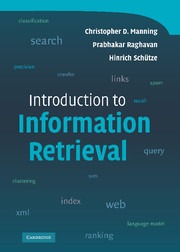
Introduction to information retrieval
Teaches classical and web information retrieval, including web search and the related areas of text classification and text clustering from basic concepts. It gives an up-to-date treatment of all aspects of the design and implementation of systems for gathering, indexing, and searching documents; methods for evaluating systems; and an introduction to the use of machine learning methods on text collections. All the important ideas are explained using examples and figures, making it perfect for introductory courses in information retrieval for advanced undergraduates and graduate students in computer science.
Introduction to Geometric Computing
The geometric ideas in computer science, mathematics, engineering, and physics have considerable overlap and students in each of these disciplines will eventually encounter geometric computing problems. The topic is traditionally taught in mathematics departments via geometry courses, and in computer science through computer graphics modules. This text isolates the fundamental topics affecting these disciplines and lies at the intersection of classical geometry and modern computing.

Introduction to data systems : Building from Python
Encompassing a broad range of forms and sources of data, this textbook introduces data systems through a progressive presentation. Introduction to Data Systems covers data acquisition starting with local files, then progresses to data acquired from relational databases, from REST APIs and through web scraping. It teaches data forms/formats from tidy data to relationally defined sets of tables to hierarchical structure like XML and JSON using data models to convey the structure, operations, and constraints of each data form.

Introduction to Cryptography : Principles and Applications
In the first part, this book covers the key concepts of cryptography on an undergraduate level, from encryption and digital signatures to cryptographic protocols. In the second part, more advanced topics are addressed, such as the bit security of one-way functions and computationally perfect pseudorandom bit generators.

Introduction to Computer Graphics : Using Java 2D and 3D
This book introduces the most important basic concepts of computer graphics, coupling the technical background and theory with practical examples and applications throughout. Its user-friendly approach enables the reader to gain understanding through the theory at work, via the many example programs provided. With only elementary knowledge of the programming language Java, the reader will be able to create their own images and animations immediately, using Java 2D and/or Java 3D.

Introduction to C++ Programming and Graphics
Introduction to C++ Programming and Graphics offers a venue for rapidly learning the language by concisely revealing its grammar, syntax and main features, and by explaining the key ideas behind object oriented programming (OOP), with emphasis on scientific computing.

Introduction to C++ : 500+ Difficulty-Scaled Solved Programming Exercises
Includes more than 500 exercises and examples of progressive difficulty to aid the reader in understanding the C++ principles and to see how concepts can materialize in code. The examples are designed to be short, concrete, and substantial, quickly giving the reader the ability to understand how to apply correctly and efficiently the features of the C++ language and to get a solid programming know-how. Rest assured that if you are able to understand this book's examples and solve the exercises, you can safely go on to edit larger programs, you will be able to develop your own applications, and you will have certainly established a solid fundamental conceptual and practical background to expand your knowledge and skills

Introduction to blender 3.0 : Learn organic and architectural modeling, lighting, materials, painting, rendering, and compositing with blender
Explains modeling, materials, lighting, painting, and more with Blender and other external tools. You will configure a 3D architectural environment and set up the workflow of an art and design project within Blender. You will use Blender's main tools—mesh modeling and sculpting—to create virtual objects and environments. And, you will explore building materials and light scenes, followed by drawing and virtual painting. Chapters cover rendering scenes and transforming them into 2D images or videos. You will learn to use Blender 3.0 for video editing as a compositor and video sequence editor (VSE or sequencer) with a wide range of effects available through the nodal system. You Will Learn : Create objects and architectural buildings with different techniques of 3D modeling / Master creating an environment for your objects and how to light them / Determine how to create node materials and assign them to your Blender objects / Pick up UV unwrapping and texture painting / Get closer to painting and drawing in Blender / Render your scenes and create stunning videos

Introduction to Assembly Language Programming : For Pentium and RISC Processors
Assembly language continues to hold a core position in the programming world because of its similar structure to machine language and its very close links to underlying computer-processor architecture and design. These features allow for high processing speed, low memory demands, and the capacity to act directly on the system’s hardware. This completely revised second edition of the highly successful Introduction to Assembly Language Programming introduces readers to assembly language programming and its role in computer programming and design. It focuses on providing a firm grasp of the main features of assembly programming, and how it can be used to improve a computer's performance. The revised edition covers a broad scope of subjects and adds valuable material on protected-mode Pentium programming, MIPS assembly language programming, and use of the NASM and SPIM assemblers for a Linux orientation. All of the language's main features are covered in depth. The book requires only some basic experience with a structured, high-level language.

Introduction to Algorithms
Combines rigor and comprehensiveness. The book covers a broad range of algorithms in depth, yet makes their design and analysis accessible to all levels of readers. Each chapter is relatively self-contained and can be used as a unit of study. The algorithms are described in English and in a pseudocode designed to be readable by anyone who has done a little programming. The explanations have been kept elementary without sacrificing depth of coverage or mathematical rigor. The first edition became a widely used text in universities worldwide as well as the standard reference for professionals. The second edition featured new chapters on the role of algorithms, probabilistic analysis and randomized algorithms, and linear programming.

Introduction to Algorithms
Combines rigor and comprehensiveness. It covers a broad range of algorithms in depth, yet makes their design and analysis accessible to all levels of readers, with self-contained chapters and algorithms in pseudocode. Since the publication of the first edition, Introduction to Algorithms has become the leading algorithms text in universities worldwide as well as the standard reference for professionals. This fourth edition has been updated throughout.

Introduction pratique aux bases de données relationnelles = A practical introduction to relational databases
Cet ouvrage introduit le lecteur dans le domaine des bases de données relationnelles en présentant une vaste sélection de sujets portant sur la modélisation des données, les langages de base de données, l'architecture des systèmes et l'évolution post-relationnelle. - Notions fondamentales: le modèle relationnel, les composants d’un système de gestion de bases de données, l’organisation de la mise en œuvre d’une base de données, les tâches de gestion des données. - De l'analyse à la base de données : le modèle entité association, la généralisation et l’agrégation, les dépendances et les formes normales,les contraintes d’intégrité. - Aperçu des langages de requête et de manipulation des données: l’algèbre relationnelle, le calcul des prédicats, SQL, QUEL, QBE, le traitement des valeurs nulles, la protection des données. - Les composants de l'architecture d'un système de bases de données : la compilation, l’interprétation et l’optimisation des requêtes, l’environnement multiutilisateur, le concept de transaction et la sérialisation, les méthodes optimiste et pessimiste, les structures de stockage et les méthodes d’accès. L’intégration et la migration des bases de données: l’exploitation des bases de données hétérogènes, les bases de données sur le Web, les règles de conversion pour effectuer l’intégration et la migration, les variantes de migration des bases de données hétérogènes, la planification de l’intégration et de la migration.

Introduction à SCILAB
Ce livre est organisé en deux parties. La première partie est consacrée au langage Scilab et à son environnement. Dans la seconde partie, les fonctionnalités des grands domaines d'utilisation du calcul numérique sont décrites et illustrées par des exemples: calcul matriciel, simulation, optimisation, résolution d'équations, statistiques.

Intertwingled : The work and influence of Ted Nelson
This engaging volume celebrates the life and work of Theodor Holm “Ted” Nelson, a pioneer and legendary figure from the history of early computing. Presenting contributions from world-renowned computer scientists and figures from the media industry, the book delves into hypertext, the docuverse, Xanadu, and other products of Ted Nelson’s unique mind.

Internet of things. information processing in an increasingly connected world ; First IFIP International Cross-Domain Conference, IFIPIoT 2018, Held at the 24th IFIP World Computer Congress, WCC 2018, Poznan, Poland, September 18-19, 2018, Revised Selected Papers
This book cover a wide range of topics from a technology to a business perspective and include among others hardware, software and management aspects, process innovation, privacy, power consumption, architecture, applications.

Internet of things from hype to reality : The road to digitization
Presents updated material on its core content: an end-to-end IoT architecture that is comprised of devices, network, compute, storage, platform, applications along with management and security components. As with the second edition, it is organized into six main parts: an IoT reference model; fog computing and the drivers; IoT management and applications; smart services in IoT; IoT standards; and case studies. This edition’s features include overhaul of the IoT Protocols (Chapter 5) to include an expanded treatment of low-power wide area networks including narrow band IoT (NB-IoT) protocol, updated IoT platforms and capabilities (Chapter 7) to include comparison of commercially available platforms (e.g. AWS IoT Platform, Google Cloud IoT Platform, Microsoft Azure IoT Platform, and PTC ThinkWorx), updated security (Chapter 8) to include approaches for securing IoT devices with examples of IoT devices used in security attacks and associated solutions including MUD and DICE, and finally new Appendix B to include six IoT project detailed for students.

Internet and Network Economics ; Vol. 4286 ; 2nd International Workshop, WINE 2006, Patras, Greece, December 15-17, 2006, Proceedings
Constitutes the refereed proceedings of the Second International Workshop on Internet and Network Economics, WINE 2006, held in Patras, Greece in December 2006. The 32 revised full papers presented together with 3 invited talks were carefully reviewed and selected from 79 submissions. The papers contain foundational and mathematical work from theories, methodologies, and applications in computer science, economics, mathematics, and management sciences for solving problems arisen in internet technologies, grid computing, network communication protocols, as well as social economic issues in virtual communities enabled through the World Wide Web.
Internet and Network Economics ; Vol. 3828 : 1st International Workshop, WINE 2005, Hong Kong, China, December 15-17, 2005, Proceedings
Consists of the main program of 31 papers, of which the submitter email accounts are: 10 from edu (USA) accounts, 3 from hk (Hong Kong), 2 each from il (Isreal), cn (China), ch (Switzerland), de (Germany), jp (Japan), gr (Greece), 1 each from hp. com, sohu. com, pl (Poland), fr (France), ca (Canada), and in (India). In addition, 77 papers from 20 countries or regions and 6 dot. coms were selected for 16 special focus tracks in the areas of Internet and Algorithmic Economics; E-Commerce Protocols; Security; Collaboration, Reputation and Social Networks; Algorithmic Mechanism; Financial Computing; Auction Algorithms; Online Algorithms; Collective Rationality; Pricing Policies; Web Mining Strategies; Network Economics; Coalition Strategies; Internet Protocols; Price Sequence; Equilibrium.
