



الصفحة 18
الصفحة 18

Machine Learning Refined : Foundations, Algorithms, and Applications
Provides students with the fundamental knowledge and practical tools needed to conduct research and build data-driven products. The authors prioritize geometric intuition and algorithmic thinking, and include detail on all the essential mathematical prerequisites, to offer a fresh and accessible way to learn. Practical applications are emphasized, with examples from disciplines including computer vision, natural language processing, economics, neuroscience, recommender systems, physics, and biology.

Machine Learning for Cyber Physical Systems : Selected papers from the International Conference ML4CPS 2018
Presents new approaches to Machine Learning for Cyber Physical Systems, experiences and visions. Cyber Physical Systems are characterized by their ability to adapt and to learn: They analyze their environment and, based on observations, they learn patterns, correlations and predictive models. Typical applications are condition monitoring, predictive maintenance, image processing and diagnosis. Machine Learning is the key technology for these developments.

Machine learning approach for cloud data analytics in IoT
Covers the multidimensional perspective of machine learning through the perspective of cloud computing and Internet of Things ranging from fundamentals to advanced applications. Elucidates some of the best practices and their respective outcomes in cloud and fog computing environments. It focuses on all the various research issues related to big data storage and analysis, large-scale data processing, knowledge discovery and knowledge management, computational intelligence, data security and privacy, data representation and visualization, and data analytics. The featured technologies presented in the book optimizes various industry processes using business intelligence in engineering and technology. Light is also shed on cloud-based embedded software development practices to integrate complex machines so as to increase productivity and reduce operational costs. The various practices of data science and analytics which are used in all sectors to understand big data and analyze massive data patterns are also detailed in the book.
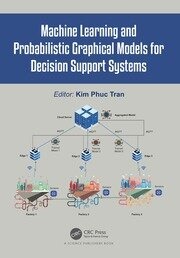
Machine Learning and Probabilistic Graphical Models for Decision Support Systems
Presents recent advancements in research, a review of new methods and techniques, and applications in decision support systems (DSS) with Machine Learning and Probabilistic Graphical Models, which are very effective techniques in gaining knowledge from Big Data and in interpreting decisions. It explores Bayesian network learning, Control Chart, Reinforcement Learning for multicriteria DSS, Anomaly Detection in Smart Manufacturing with Federated Learning, DSS in healthcare, DSS for supply chain management, etc. Researchers and practitioners alike will benefit from this book to enhance the understanding of machine learning, Probabilistic Graphical Models, and their uses in DSS in the context of decision making with uncertainty. The real-world case studies in various fields with guidance and recommendations for the practical applications of these studies are introduced in each chapter.

Machine Learning and Knowledge Extraction ; 5th IFIP TC 5, TC 12, WG 8.4, WG 8.9, WG 12.9 International Cross-Domain Conference, CD-MAKE 2021, Virtual Event, August 17–20, 2021, Proceedings
Constitutes the refereed proceedings of the 5th IFIP TC 5, TC 12, WG 8.4, WG 8.9, WG 12.9 International Cross-Domain Conference, CD-MAKE 2021, held in virtually in August 2021. The 20 full papers and 2 short papers presented were carefully reviewed and selected from 48 submissions. The cross-domain integration and appraisal of different fields provides an atmosphere to foster different perspectives and opinions; it will offer a platform for novel ideas and a fresh look on the methodologies to put these ideas into business for the benefit of humanity.

Machine Learning and Knowledge Discovery in Databases ; European Conference, ECML PKDD 2008, Antwerp, Belgium, September 15-19, 2008, Proceedings, Part II
Constitutes the refereed proceedings of the joint conference on Machine Learning and Knowledge Discovery in Databases: ECML PKDD 2008, held in Antwerp, Belgium, in September 2008.The 100 papers presented in two volumes, together with 5 invited talks, were carefully reviewed and selected from 521 submissions. In addition to the regular papers the volume contains 14 abstracts of papers appearing in full version in the Machine Learning Journal and the Knowledge Discovery and Databases Journal of Springer.

Machine Learning and Knowledge Discovery in Databases ; European Conference, ECML PKDD 2008, Antwerp, Belgium, September 15-19, 2008, Proceedings, Part I
Constitutes the refereed proceedings of the joint conference on Machine Learning and Knowledge Discovery in Databases: ECML PKDD 2008, held in Antwerp, Belgium, in September 2008.The 100 papers presented in two volumes, together with 5 invited talks, were carefully reviewed and selected from 521 submissions. In addition to the regular papers the volume contains 14 abstracts of papers appearing in full version in the Machine Learning Journal and the Knowledge Discovery and Databases Journal of Springer.

Machine learning and its application to reacting flows: ml and combustion
These two fields, ML and turbulent combustion, have large body of work and knowledge on their own, and this book brings them together and explain the complexities and challenges involved in applying ML techniques to simulate and study reacting flows. This is important as to the world’s total primary energy supply (TPES), since more than 90% of this supply is through combustion technologies and the non-negligible effects of combustion on environment. Although alternative technologies based on renewable energies are coming up, their shares for the TPES is are less than 5% currently and one needs a complete paradigm shift to replace combustion sources. The book covers the current state of the art in these two topics and outlines the challenges involved, merits and drawbacks of using ML for turbulent combustion simulations including avenues which can be explored to overcome the challenges.

Machine Learning and Data Mining in Pattern Recognition ; 4th International Conference, MLDM 2005, Leipzig, Germany, July 9-11, 2005, Proceedings
Today, artificial intelligence deals with large amounts of data and knowledge and finds new information using machine learning and data mining. Machine learning and data mining are irreplaceable subjects and tools for the theory of pattern recognition and in applications of pattern recognition such as bioinformatics and data retrieval. This was the fourth edition of MLDM in Pattern Recognition which is the main event of Technical Committee 17 of the International Association for Pattern Recognition; it started out as a workshop and continued as a conference in 2003. Today, there are many international meetings which are titled “machine learning” and “data mining”, whose topics are text mining, knowledge discovery, and applications. This meeting from the first focused on aspects of machine learning and data mining in pattern recognition problems. We planned to reorganize classical and well-established pattern recognition paradigms from the viewpoints of machine learning and data mining. Though it was a challenging program in the late 1990s, the idea has inspired new starting points in pattern recognition and effects in other areas such as cognitive computer vision.

Machine Learning : The Basics
Approaches ML as the computational implementation of the scientific principle. This principle consists of continuously adapting a model of a given data-generating phenomenon by minimizing some form of loss incurred by its predictions. Trains readers to break down various ML applications and methods in terms of data, model, and loss, thus helping them to choose from the vast range of ready-made ML methods.
Machine Learning : Modeling Data Locally and Globally
Machine Learning - Modeling Data Locally and Globally presents a novel and unified theory that tries to seamlessly integrate different algorithms. Specifically, the book distinguishes the inner nature of machine learning algorithms as either "local learning"or "global learning."This theory not only connects previous machine learning methods, or serves as roadmap in various models, but – more importantly – it also motivates a theory that can learn from data both locally and globally. This would help the researchers gain a deeper insight and comprehensive understanding of the techniques in this field. The book reviews current topics,new theories and applications.

Machine Learning : ECML 2005 ; 16th European Conference on Machine Learning, Porto, Portugal, October 3-7, 2005, Proceedings
The European Conference on Machine Learning (ECML) and the European Conference on Principles and Practice of Knowledge Discovery in Databases (PKDD) were jointly organized this year for the ?fth time in a row, after some years of mutual independence before. After Freiburg (2001), Helsinki (2002), Cavtat (2003) and Pisa (2004), Porto received the 16th edition of ECML and the 9th PKDD in October 3–7. Having the two conferences together seems to be working well: 585 di?erent paper submissions were received for both events, which maintains the high s- mission standard of last year. Of these, 335 were submitted to ECML only, 220 to PKDD only and 30 to both. Such a high volume of scienti?c work required a tremendous e?ort from Area Chairs, Program Committee members and some additional reviewers. On average, PC members had 10 papers to evaluate, and Area Chairs had 25 papers to decide upon. We managed to have 3 highly qualified independent reviews per paper (with very few exceptions) and one additional overall input from one of the Area Chairs. After the authors’ responses and the online discussions for many of the papers, we arrived at the ?nal selection of 40 regular papers for ECML and 35 for PKDD. Besides these, 32 others were accepted as short papers for ECML and 35 for PKDD. This represents a joint acceptance rate of around 13% for regular papers and 25% overall.

Logical aspects of computational linguistics ; 4th International Conference, LACL 2001, Le Croisic, France, June 27-29, 2001, Proceedings
Structural Equations in Language Learning.- On the Distinction between Model-Theoretic and Generative-Enumerative Syntactic Frameworks.- Contributed Papers.- A Formal Definition of Bottom-Up Embedded Push-Down Automata and Their Tabulation Technique.- An Algebraic Approach to French Sentence Structure.- Deductive Parsing of Visual Languages.- Lambek Grammars Based on Pregroups.- An Algebraic Analysis of Clitic Pronouns in Italian.- Consistent Identification in the Limit of Any of the Classes k-Valued Is NP-hard.- Polarized Non-projective Dependency Grammars.- On Mixing Deduction and Substitution in Lambek Categorial Grammars.- A Framework for the Hyperintensional Semantics of Natural Language with Two Implementations.- A Characterization of Minimalist Languages.- of Speech Tagging from a Logical Point of View.- Transforming Linear Context-Free Rewriting Systems into Minimalist Grammars.- Recognizing Head Movement.- Combinators for Paraconsistent Attitudes.- Combining Syntax and Pragmatic Knowledge for the Understanding of Spontaneous Spoken Sentences.- Atomicity of Some Categorially Polyvalent Modifiers.

Logic, Language, and Computation ; 6th International Tbilisi Symposium on Logic, Language, and Computation. Batumi, Georgia, September 12-16, 2005, Revised Selected Papers
Edited in collaboration with FoLLI, the Association of Logic, Language and Information, this book constitutes the second volume of the FoLLI LNAI subline. It represents the thoroughly refereed post-proceedings of the 6th International Tbilisi Symposium on Logic, Language, and Computation, TbiLLC 2005, held in Batumi, Georgia, in September 2005.

Logic Programming and Nonmonotonic Reasoning ; 9th International Conference, LPNMR 2007, Tempe, AZ, USA, May 15-17, 2007, Proceedings
This book constitutes the refereed proceedings of the 9th International Conference on Logic Programming and Nonmonotonic Reasoning, LPNMR 2007, held in Tempe, AZ, USA, May 2007.

Logic Programming and Nonmonotonic Reasoning ; 8th International Conference, LPNMR 2005, Diamante, Italy, September 5-8, 2005, Proceedings
Thesearetheproceedingsofthe8thInternational Conference on Logic Progr- mingandNonmonotonicReasoning (LPNMR2005).Followingthepreviousones held in Washington, DC, USA (1991), Lisbon, Portugal (1993), Lexington, KY, USA(1995), Dagstuhl, Germany(1997), ElPaso, TX, USA(1999), Vienna, A- tria (2001) and Ft. Lauderdale, FL, USA (2004), the eighth conference was held in Diamante, Italy, from 5th to 8th of September 2005. TheaimoftheLPNMRconferencesistobringtogetherandfacilitateinter- tions between active researchers interested in all aspects concerning declarative logic programming, nonmonotonic reasoning, knowledge representation, and the design of logic-based systems and database systems. LPNMR strives to enc- pass theoretical and experimental studies that lead to the implementation of practi...

Logic programming ; 23rd International Conference, ICLP 2007, Porto, Portugal, September 8-13, 2007, Proceedings
The 22 revised full papers together with two invited talks, 15 poster presentations, and the abstracts of five doctoral consortium articles cover all issues of current research in logic programming, including theory, functional and constraint logic programming, program analysis, answer-set programming, semantics, and applications.

Logic for Programming, Artificial Intelligence, and Reasoning ; 15th International Conference, LPAR 2008, Doha, Qatar, November 22-27, 2008. Proceedings
This book constitutes the refereed proceedings of the 15th International Conference on Logic for Programming, Artificial Intelligence, and Reasoning, LPAR 2008, which took place in Doha, Qatar, during November 22-27, 2008.The 45 revised full papers presented together with 3 invited talks were carefully revised and selected from 153 submissions. The papers address all current issues in automated reasoning, computational logic, programming languages and their applications and are organized in topical sections on automata, linear arithmetic, verification knowledge representation, proof theory, quantified constraints, as well as modal and temporal logics.

Location- and Context-Awareness ; Vol. 3987 ; 2nd International Workshop, LoCA 2006, Dublin, Ireland, May 10-11, 2006, Proceedings
Contain the papers presented at the 2 International Workshop on Location- and Context-Awareness in May of 2006. As computing moves increasingly into the everyday world, the importance of location and context knowledge grows. The range of contexts encountered while sitting at a desk working on a computer is very limited compared to the large variety of situations experienced away from the desktop. For computing to be relevant and useful in these situations, the computers must have knowledge of the user’s activity, resources, state of mind, and goals, i.e., the user’s context, of which location is an important indicator. This workshop was intended to present research aimed at sensing, inferring, and using location and context data in ways that help the user.

Local Pattern Detection ; International Seminar Dagstuhl Castle, Germany, April 12-16, 2004, Revised Selected Papers
Introduction The dramatic increase in available computer storage capacity over the last 10 years has led to the creation of very large databases of scienti?c and commercial information. The need to analyze these masses of data has led to the evolution of the new field knowledge discovery in databases (KDD) at the intersection of machine learning, statistics and database technology. Being interdisciplinary by nature, the field offers the opportunity to combine the expertise of different fields into a common objective. Moreover, within each field diverse methods have been developed and justified with respect to different quality criteria. We have to investigate how these methods can contributet o solving the problem of KDD. Traditionally, KDD was seeking to end global models for the data that - plain most of the instances of the database and describe the general structure of the data. Examples are statistical time series models, cluster models, logic programs with high coverageor classi?cation models like decision trees or linear decision functions. In practice, though, the use of these models often is very l- ited, because global models tend to end only the obvious patterns in the data, 1 which domain experts already are aware of . What is really of interest to the users are the local patterns that deviate from the already-known background knowledge. David Hand, who organized a workshop in 2002, proposed the new field of local patterns.
