



الصفحة 18
الصفحة 18

Cold Micro Metal Forming : Research Report of the Collaborative Research Center “Micro Cold Forming” (SFB 747), Bremen, Germany
This book contains the research report of the Collaborative Research Center “Micro Cold Forming” (SFB 747) of the University of Bremen, Germany. The topical research focus lies on new methods and processes for a mastered mass production of micro parts which are smaller than 1mm (by forming in batch size higher than one million). The target audience primarily comprises research experts and practitioners in production engineering, but the book may also be of interest to graduate students alike.
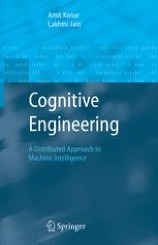
Cognitive engineering : A distributed approach to machine intelligence
Cognitive Engineering: A Distributed Approach to Machine Intelligence explores the design issues of intelligent engineering systems. Beginning with the foundations of psychological modeling of the human mind, the main emphasis is given to parallel and distributed realization of intelligent models for application in reasoning, learning, planning and multi-agent co-ordination problems. The last two chapters provide case studies on human-mood detection and control, and behavioral co-operation of mobile robots. This is the first comprehensive text of its kind, bridging the gap between Cognitive Science and Cognitive Systems Engineering. Each chapter includes plenty of numerical examples and exercises with sufficient hints, so that the reader can solve the exercises on their own. Computer simulations are also included in most chapters to give a clear idea about the application of the algorithms undertaken in the book. In addition, mathematical analysis on convergence and stability of the neuro-fuzzy models will enable the reader to pursue their research career in cognitive engineering.

Cognitive Computing in Human Cognition : Perspectives and Applications
This edited book designs the Cognitive Computing in Human Cognition to analyze to improve the efficiency of decision making by cognitive intelligence. The book is also intended to attract the audience who work in brain computing, deep learning, transportation, and solar cell energy. Due to this in the recent era, smart methods with human touch called as human cognition is adopted by many researchers in the field of information technology with the Cognitive Computing.

Cloud-Based Benchmarking of Medical Image Analysis
Presents the VISCERAL project benchmarks for analysis and retrieval of 3D medical images (CT and MRI) on a large scale, which used an innovative cloud-based evaluation approach where the image data were stored centrally on a cloud infrastructure and participants placed their programs in virtual machines on the cloud. The book presents the points of view of both the organizers of the VISCERAL benchmarks and the participants.

Cloud Computing Solutions : Architecture, Data Storage, Implementation, and Security
Includes all the cloud-related technologies in a single platform, so that researchers, academicians, postgraduate students, and those in the industry can easily understand the cloud-based ecosystems. Discusses the evolution of cloud computing through grid computing and cluster computing. It will help researchers and practitioners to understand grid and distributed computing cloud infrastructure, virtual machines, virtualization, live migration, scheduling techniques, auditing concept, security and privacy, business models, and case studies through the state-of-the-art cloud computing countermeasures. The topics treated in the book include:The evolution of cloud computing from grid computing, cluster computing, and distributed systems / Covers cloud computing and virtualization environments / Discusses live migration, database, auditing, and applications as part of the materials related to cloud computing / Provides concepts of cloud storage, cloud strategy planning, and management, cloud security, and privacy issues / Explains complex concepts clearly and covers information for advanced users and beginners.

Cloud Computing Enabled Big-Data Analytics in Wireless Ad-hoc Networks
Discusses intelligent computing through the Internet of Things (IoT) and Big-Data in vehicular environments in a single volume. It covers important topics, such as topology-based routing protocols, heterogeneous wireless networks, security risks, software-defined vehicular ad-hoc networks, vehicular delay tolerant networks, and energy harvesting for WSNs using rectenna.

Clinical text mining : Secondary use of electronic patient records
Describes the results of natural language processing and machine learning methods applied to clinical text from electronic patient records. It is divided into twelve chapters. Chapters 1-4 discuss the history and background of the original paper-based patient records, their purpose, and how they are written and structured. These initial chapters do not require any technical or medical background knowledge. The remaining eight chapters are more technical in nature and describe various medical classifications and terminologies such as ICD diagnosis codes, SNOMED CT, MeSH, UMLS, and ATC. Chapters 5-10 cover basic tools for natural language processing and information retrieval, and how to apply them to clinical text. The book’s closing chapters present a number of applications in clinical text mining and summarise the lessons learned from the previous chapters.
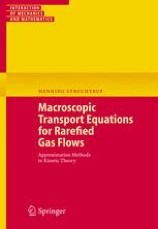
Macroscopic Transport Equations for Rarefied Gas Flows : Approximation Methods in Kinetic Theory
This book discusses classical and modern methods to derive macroscopic transport equations for rarefied gases from the Boltzmann equation, for small and moderate Knudsen numbers, i.e.as well as the new order of magnitude method, which avoids the short-comings of the classical methods, but retains their benefits.

Machines, Computations, and Universality ; 5th International Conference, MCU 2007, Orleans, France, September 10-13, 2007, Proceedings
The 18 revised full papers presented together with nine invited papers cover Turing machines, register machines, word processing, cellular automata, tiling of the plane, neural networks, molecular computations, BSS machines, infinite cellular automata, real machines, and quantum computing.

Machines, Computations, and Universality ; 4th International Conference, MCU 2004, Saint Petersburg, Russia, September 21-24, 2004, Revised Selected Papers
Constitutes the post-proceedings of the 4th International Conference on Machines, Computations, and Universality, MCU 2004, held in St Petersburg, Russia in September 2004. This book covers a variety of foundational aspects in theoretical computer science such as cellular automata, molecular computing, quantum computing, and formal languages
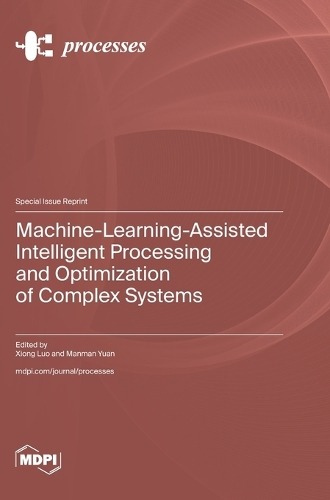
Machine-learning-assisted intelligent processing and optimization of complex systems
Focuses on the most recent developments in intelligent optimization methods and their applications in various test cases. The reprint covers various topics, including distributed multiagent modeling, metaheuristic algorithms, multisource data fusion, mobile computing and mobile sensing, machine learning-based intelligent processing for modeling complex manufacturing systems, and data-driven intelligent modeling

Machine Learning: ECML 2007 ; 18th European Conference on Machine Learning, Warsaw, Poland, September 17-21, 2007, Proceedings
The two premier annual European conferences in the areas of machine learning and data mining have been collocated ever since the ?rst joint conference in Freiburg, 2001. The European Conference on Machine Learning (ECML) traces its origins to 1986, when the ?rst European Working Session on Learning was held in Orsay, France. The European Conference on Principles and Practice of KnowledgeDiscoveryinDatabases(PKDD) was?rstheldin1997inTrondheim, Norway.

Machine Learning: ECML 2006 ; 17th European Conference on Machine Learning, Berlin, Germany, September 18-22, 2006, Proceedings
This book constitutes the refereed proceedings of the 17th European Conference on Machine Learning, ECML 2006, held in Berlin, Germany in September 2006, jointly with PKDD 2006. The 46 revised full papers and 36 revised short papers presented together with abstracts of 5 invited talks were carefully reviewed and selected from 564 papers submitted to both, ECML and PKDD. The papers present a wealth of new results in the area and address all current issues in machine learning.

Machine Learning, Image Processing, Network Security and Data Sciences ; 2nd International conference, MIND 2020, Silchar, India, July 30 - 31, 2020, Proceedings, Part II
This two-volume set (CCIS 1240-1241) constitutes the refereed proceedings of the Second International Conference on Machine Learning, Image Processing, Network Security and Data Sciences, MIND 2020, held in Silchar, India. Due to the COVID-19 pandemic the conference has been postponed to July 2020. The 79 full papers and 4 short papers were thoroughly reviewed and selected from 219 submissions. The papers are organized according to the following topical sections: data science and big data; image processing and computer vision; machine learning and computational intelligence; network and cyber security.

Machine learning, image processing, network security and data sciences ; 2nd International conference, MIND 2020, Silchar, India, July 30 - 31, 2020, Proceedings, Part I
This two-volume set (CCIS 1240-1241) constitutes the refereed proceedings of the Second International Conference on Machine Learning, Image Processing, Network Security and Data Sciences, MIND 2020, held in Silchar, India. Due to the COVID-19 pandemic the conference has been postponed to July 2020. The 79 full papers and 4 short papers were thoroughly reviewed and selected from 219 submissions. The papers are organized according to the following topical sections: data science and big data; image processing and computer vision; machine learning and computational intelligence; network and cyber security.

Machine Learning Techniques for Multimedia : Case Studies on Organization and Retrieval
This book provides a comprehensive coverage of the most important machine learning techniques used and their application in this domain. Arising from the EU MUSCLE network, a program that drew together multidisciplinary teams with expertise in machine learning, pattern recognition, artificial intelligence, and image, video, text and crossmedia processing, the book first introduces the machine learning principles and techniques that are applied in multimedia data processing and analysis. The second part focuses on multimedia data processing applications, with chapters examining specific machine learning issues in domains .
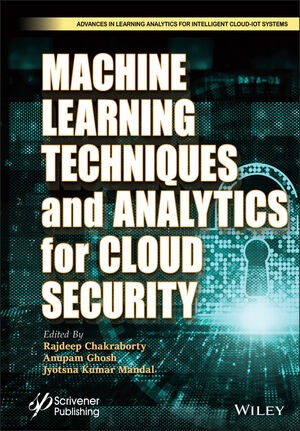
Machine Learning Techniques and Analytics for Cloud Security
covers new methods, surveys, case studies, and policy with almost all machine learning techniques and analytics for cloud security solutions
Machine Learning Refined : Foundations, Algorithms, and Applications
Provides students with the fundamental knowledge and practical tools needed to conduct research and build data-driven products. The authors prioritize geometric intuition and algorithmic thinking, and include detail on all the essential mathematical prerequisites, to offer a fresh and accessible way to learn. Practical applications are emphasized, with examples from disciplines including computer vision, natural language processing, economics, neuroscience, recommender systems, physics, and biology.

Machine learning refined : Foundations, algorithms, and applications
Providing a unique approach to machine learning, this text contains fresh and intuitive, yet rigorous, descriptions of all fundamental concepts necessary to conduct research, build products, tinker, and play. By prioritizing geometric intuition, algorithmic thinking, and practical real world applications in disciplines including computer vision, natural language processing, economics, neuroscience, recommender systems, physics, and biology, this text provides readers with both a lucid understanding of foundational material as well as the practical tools needed to solve real-world problems. With in-depth Python and MATLAB/OCTAVE-based computational exercises and a complete treatment of cutting edge numerical optimization techniques, this is an essential resource for students and an ideal reference for researchers and practitioners working in machine learning, computer science, electrical engineering, signal processing, and numerical optimization
Machine learning methods for reverse engineering of defective structured surfaces
Pascal Laube presents machine learning approaches for three key problems of reverse engineering of defective structured surfaces: parametrization of curves and surfaces, geometric primitive classification and inpainting of high-resolution textures. The proposed methods aim to improve the reconstruction quality while further automating the process. The contributions demonstrate that machine learning can be a viable part of the CAD reverse engineering pipeline.
