



الصفحة 18
الصفحة 18
Computational methods in systems biology ; Vol. 4210 ; International Conference, CMSB 2006, Trento, Italy, October 18-19, 2006, Proceedings
This book constitutes the refereed proceedings of the International Conference on Computational Methods in Systems Biology, CMSB 2006, held in Trento, Italy, in October 2006. The papers present a variety of techniques from computer sciences, such as language design, concurrency theory, software engineering, and formal methods.
Computational methods in systems biology ; International Conference CMSB 2007, Edinburgh, Scotland, September 20-21, 2007, Proceedings
This book presented present a variety of techniques from computer science, such as language design, concurrency theory, software engineering, and formal methods, for biologists, physicists, and mathematicians interested in the systems-level understanding of cellular processes.

Computational logic in multi-agent systems ; Vol. 3487 ; 5th International Workshop, CLIMA V, Lisbon, Portugal, September 29-30, 2004, Revised Selected and Invited Papers
The notion of agency has recently increased its in?uence in the research and - velopment of computational logic based systems, while at the same time sign- cantly gaining from decades of research in computational logic. Computational logic provides a well-de?ned, general, and rigorous framework for studying s- tax, semantics and procedures, for implementations, environments, tools, and standards, facilitating the ever important link between speci?cation and ver- cation of computational systems. The purpose of the Computational Logic in Multi-agent Systems (CLIMA) international workshop series is to discuss techniques, based on computational logic, for representing, programming, and reasoning about multi-agent systems in a formal way. Former CLIMA editions were conducted in conjunction with other major computational logic and AI events Thesubmittedpapersshowedthatthelogicalfoundationsofmulti-agent systems are felt by a large community to be a very important research topic, upon which classical AI and agent-related issues are to be addressed.

Computational linguistics and intelligent text processing ; Vol. 3406 ; 6th International Conference, CICLing 2005, Mexico City, Mexico, February 13-19, 2005, Proceedings
This book constitutes the refereed proceedings of the 6th International Conference on Computational Linguistics and Intelligent Text Processing, CICLing 2005, held in Mexico City, Mexico in February 2005. An approach that involves natural language analysis techniques for the treatment of software system functional requirements is described in this book. This approach is used as the basis for a process developed to generate sequence diagrams automatically from the textual specification of use cases. This facility has been integrated in the Requirements Engineering Phase of OO-Method, an automatic production environment of software. For this purpose, a translator that is based on natural language parser is used. The translator provides grammatical information to each use case sentence and it identifies the corresponding interaction. The automatic transformation is conceived and specified following an orientation that is based on models and patterns. The results of the validation of the transformation patterns are presented.

Computational intelligence, cyber security and computational models. models and techniques for intelligent systems and automation ; 4th International Conference, ICC3 2019, Coimbatore, India, December 19–21, 2019, Revised Selected Papers
This book constitutes the proceedings of the 4th International Conference on Computational Intelligence, Cyber Security, and Computational Models, ICC3 2019, which was held in Coimbatore, India, in December 2019. The 9 papers presented in this volume were carefully reviewed and selected from 38 submissions. They were organized in topical sections named: computational intelligence; cyber security; and computational models.

Computational Discovery of Scientific Knowledge : Introduction, Techniques, and Applications in Environmental and Life Sciences
Advances in technology have enabled the collection of data from scientific observations, simulations, and experiments at an ever-increasing pace. For the scientist and engineer to benefit from these enhanced data collecting capabilities, it is becoming clear that semi-automated data analysis techniques must be applied to find the useful information in the data. Computational scientific discovery methods can be used to this end: they focus on applying computational methods to automate scientific activities, such as finding laws from observational data. In contrast to mining scientific data, which focuses on building highly predictive models, computational scientific discovery puts a strong emphasis on discovering knowledge represented in formalisms used by scientists and engineers, such as numeric equations and reaction pathways. This state-of-the-art survey provides an introduction to computational approaches to the discovery of scientific knowledge and gives an overview of recent advances in this area, including techniques and applications in environmental and life sciences.

Computational Collective Intelligence ; 12th International Conference, ICCCI 2020, Da Nang, Vietnam, November 30 – December 3, 2020, Proceedings
This volume constitutes the refereed proceedings of the 12th International Conference on Computational Collective Intelligence, ICCCI 2020, held in Da Nang, Vietnam, in November 2020.* The 70 full papers presented were carefully reviewed and selected from 314 submissions. The papers are grouped in topical sections on: knowledge engineering and semantic web; social networks and recommender systems; collective decision-making; applications of collective intelligence; data mining methods and applications; machine learning methods; deep learning and applications for industry 4.0; computer vision techniques; biosensors and biometric techniques; innovations in intelligent systems; natural language processing; low resource languages processing; computational collective intelligence and natural language processing; computational intelligence for multimedia understanding; and intelligent processing of multimedia in web systems.

Combinatorial pattern matching ; Vol.4009) ; 17th Annual Symposium, CPM 2006, Barcelona, Spain, July 5-7, 2006, Proceedings
The book presents 33 revised full papers together with 3 invited talks, organized in topical sections on data structures, indexing data structures, probabilistic and algebraic techniques, applications in molecular biology, string matching, data compression, and dynamic programming
Combinatorial pattern matching ; 19th Annual Symposium, CPM 2008, Pisa, Italy, June 18-20, 2008 Proceedings
This book constitutes the refereed proceedings of the 19th Annual Symposium on Combinatorial Pattern Matching, CPM 2008, held in Pisa, Italy, in June 2008.

Combinatorial optimization and applications ; 2nd International Conference, COCOA 2008, St. John’s, NL, Canada, August 21-24, 2008. Proceedings
This book constitutes the refereed proceedings of the Second International Conference on Combinatorial Optimization and Applications, COCOA 2008, held in St. John's, Canada, in August 2008.

Coding for Data and Computer Communications
In a unique, single volume, this highly versatile text/reference introduces readers to the importance of channel coding (error-correcting codes), secure coding (cryptography), and source coding (data compression). It is organized in three main parts and uses clear, nonmathematical explanations to develop the concepts, principles, and techniques in each area of coding. Requiring only a general familiarity with computer methods, the book deals with all aspects of coding and its relevance to fast, secure, and reliable data transmission and storage. Features & Benefits: Presents comprehensive coverage of areas of coding often found in separate books, and stresses data coding’s relevance in today’s world / Provides a wealth of examples and exercises (with solutions) to help readers easily grasp the material / Incorporates an extensive chapter on data hiding, a sparsely documented topic of increasing importance in the community / Includes an author-supplied website with supplementary material / Possesses a detailed bibliography and helpful glossary, index, and appendixes (including projects for self-study).

CMOS PLL synthesizers : Analysis and design
CMOS PLL Synthesizers: Analysis and Design presents both fundamentals and state-of-the-art PLL synthesizer design and analysis techniques. A complete overview of both system-level and circuit-level design and analysis is given. A 16mW, 2.4GHz, sub-2V, S D fractional-N synthesizer prototype is implemented in 0.35mm CMOS. It features a high-speed and robust phase-switching prescaler, and a low-complexity and area-efficient loop capacitance multiplier, which tackle speed and integration bottlenecks of PLL synthesizers." "This book is useful as a PLL synthesizer manual for both academic researchers and industry design engineers.

CMOS Current-Mode Circuits for Data Communications
Addresses the analysis and design principles of CMOS current mode circuits and their applications for data communications. The analytical methods and design principles are based on the characteristics of MOS devices applied to current CMOS technologies. Major topics include: design techniques for current mode circuits, electrical signaling for high speed data links, current-mode transmitters and receivers, switching noise and grounding of mixed mode circuits, a comparison of voltage-mode with current-mode circuits, ESD protection, and additional related topics. Examples are given of CMOS technologies from leading semiconductor companies and analyzed using the latest computer-aided design tools by leading design companies. CMOS Current-Mode Circuits for Data Communications is a valuable reference for circuit design engineers and hardware system engineers.

Cloud Native Architecture and Design : A Handbook for Modern Day Architecture and Design with Enterprise-Grade Examples
Explains the fundamentals of cloud-native architecture and services, what cloud principles and patterns to use, and details of designing a cloud-native element. And Progresses to cover the details of how IT systems can modernize to embrace cloud-native architecture, and also provides details of various enterprise assessment techniques to decide what systems can move and cannot move into the cloud. Architecting and designing a cloud-native system isn’t possible without modernized software engineering principles, the culture of automation, and the culture of innovation. As such, this book covers the details of cloud-native software engineering methodologies, and process, and how to adopt an automated governance approach across enterprises with the adoption of artificial intelligence. You will: Discover cloud-native principles and patterns, and how you can leverage them to solve your business problems ; Gain the techniques and concepts you need to adapt to design a cloud-native application ; Use assessment techniques and tools for IT modernization ; Apply cloud-native engineering principles to the culture of automation and culture of innovation ; Harness the techniques and tools to run your cloud-native applications and automate infrastructure ; Operate your cloud-native applications by using AI techniques and zero operation techniques

Cloud Computing Solutions : Architecture, Data Storage, Implementation, and Security
Includes all the cloud-related technologies in a single platform, so that researchers, academicians, postgraduate students, and those in the industry can easily understand the cloud-based ecosystems. Discusses the evolution of cloud computing through grid computing and cluster computing. It will help researchers and practitioners to understand grid and distributed computing cloud infrastructure, virtual machines, virtualization, live migration, scheduling techniques, auditing concept, security and privacy, business models, and case studies through the state-of-the-art cloud computing countermeasures. The topics treated in the book include:The evolution of cloud computing from grid computing, cluster computing, and distributed systems / Covers cloud computing and virtualization environments / Discusses live migration, database, auditing, and applications as part of the materials related to cloud computing / Provides concepts of cloud storage, cloud strategy planning, and management, cloud security, and privacy issues / Explains complex concepts clearly and covers information for advanced users and beginners.

Mathematical Foundations of Computer Science 2008 ; 33rd International Symposium, MFCS 2008, Toru´n, Poland, August 25-29, 2008. Proceedings
Constitutes the refereed proceedings of the 33rd International Symposium on Mathematical Foundations of Computer Science, MFCS 2008, held in Torun, Poland, in August 2008.The 45 revised full papers presented together with 5 invited lectures were carefully reviewed and selected from 119 submissions. All current aspects in theoretical computer science and its mathematical foundations are addressed, ranging from algorithmic game theory, algorithms and data structures, artificial intelligence, automata and formal languages, bioinformatics, complexity, concurrency and petrinets, cryptography and security, logic and formal specifications, models of computations, parallel and distributed computing, semantics and verification.
Markov Models for Pattern Recognition : From Theory to Applications
Describes the underlying theoretical concepts - covering Hidden Markov models and Markov chain models - and presents the techniques and algorithmic solutions essential to creating real world applications. The actual use of Markov models in their three main application areas - namely speech recognition, handwriting recognition, and biological sequence analysis - is presented with examples of successful systems.
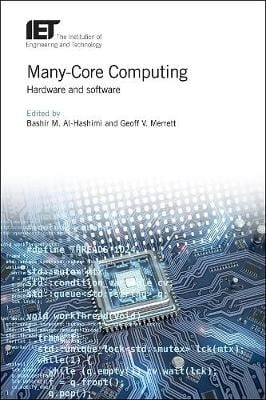
Many-Core Computing : Hardware and software
Provides a timely and coherent account of the recent advances in many-core computing research. Starting with programming models, operating systems and their applications; it presents runtime management techniques, followed by system modelling, verification and testing methods, and architectures and systems. Computing has moved away from a focus on performance-centric serial computation, instead towards energy-efficient parallel computation. This provides continued performance increases without increasing clock frequencies, and overcomes the thermal and power limitations of the dark-silicon era. As the number of parallel cores increases, we transition into the many-core computing era. There is considerable interest in developing methods, tools, architectures and applications to support many-core computing.
Managing Cyber Threats : Issues, Approaches, and Challenges
Brings together the latest techniques for managing cyber threats, developed by some of the world’s leading experts in the area. The book includes broad surveys on a number of topics, as well as specific techniques. It provides an excellent reference point for researchers and practitioners in the government, academic, and industrial communities who want to understand the issues and challenges in this area of growing worldwide importance.

Making Globally Distributed Software Development a Success Story : International Conference on Software Process, ICSP 2008 Leipzig, Germany, May 10-11, 2008 Proceedings
This volume contains papers presented at the International Conference on Software Process (ICSP 2008) held in Leipzig, Germany, during May 10-11, 2008. ICSP 2008 was the second conference of the ICSP series. The theme of ICSP 2008 was “Making Globally Distributed Software Development a Success Story. ” Software developers work in a dynamic context of frequently changing technologies and with limited resources. Globally distributed development teams are under ev- increasing pressure to deliver their products more quickly and with higher levels of qu- ity. At the same time, global competition is forcing software development organizations to cut costs by rationalizing processes, outsourcing part of or all development activities, reusing existing software in new or modified applications, and evolving existing systems to meet new needs, while still minimizing the risk of projects failing to deliver.
