



الصفحة 18
الصفحة 18

Image Analysis and Recognition ; Vol. 3656 ; 2ond International Conference, ICIAR 2005, Toronto, Canada, September 28-30, 2005, Proceedings
ICIAR 2005, the International Conference on Image Analysis and Recognition, was the second ICIAR conference, and was held in Toronto, Canada. ICIAR is organized annually, and alternates between Europe and North America. ICIAR 2004 was held in Porto, Portugal. The idea of o?ering these conferences came as a result of discussion between researchers in Portugal and Canada to encourage collaboration and exchange, mainly between these two countries, but also with the open participation of other countries, addressing recent advances in theory, methodology and applications. TheresponsetothecallforpapersforICIAR2005wasencouraging.From295 full papers submitted, 153 were ?nally accepted (80 oral presentations, and 73 posters). The review process was carried out by the Program Committee m- bers and other reviewers ; all are experts in various image analysis and recognition areas. Each paper was reviewed by at least two reviewers, and also checked by the conference co-chairs. The high quality of the papers in these proceedings is attributed ?rst to the authors,and second to the quality of the reviews provided by the experts. We would like to thank the authors for responding to our call, andwewholeheartedlythankthe reviewersfor theirexcellentwork,andfortheir timely response. It is this collective e?ort that resulted in the strong conference program and high-quality proceedings in your hands.

Image Analysis and Processing – ICIAP 2005 ; 13th International Conference, Cagliari, Italy, September 6-8, 2005, Proceedings
This volume contains the Proceedings of the 13th International Conference on Image Analysis and Processing (ICIAP 2005), held in Cagliari, Italy, at the conference centre “Centro della Cultura e dei Congressi”, on September 6–8, 2005. ICIAP 2005 was the thirteenth edition of a series of conferences organized every two years by the Italian group of researchersa?liated to the International Association for Pattern Recognition (GIRPR) with the aim to bring together researchers in image processing and pattern recognition from around the world. As for the previous editions, conference topics concerned the theory of image analysis and processing and its classical and Internet-driven applications. The central theme of ICIAP 2005 was “Pattern Recognition in the Internet and Mobile Communications Era”. The interest for such a theme was con?rmed by the large number of papers dealing with it, the special session devoted to pattern recognition for computer network security, and the emphasis of two invited talks on Internet and mobile communication issues. ICIAP 2005 received 217 paper submissions. Fifteen papers were collected into the two special sessions dealing with Pattern Recognition for Computer Network Security and Computer Vision for Augmented Reality and Augmented Environments.

Image Analysis ; 14th Scandinavian Conference, SCIA 2005, Joensuu, Finland, June 19-22, 2005, Proceedings
This proceedings volume collects the scienti?c presentations of the Scandinavian Conference on Image Analysis, SCIA 2005, which was held at the University of Joensuu, Finland, June 19–22, 2005. The conference was the fourteenth in the series of biennial conferences started in 1980. The name of the series re?ects the fact that the conferences are organized in the Nordic (Scandinavian) countries, following the cycle Sweden, Finland, Denmark, and Norway. The event itself has always been international in its participants and presentations. Today there are many conferences in the ?elds related to SCIA. In this s- uation our goal is to keep up the reputation for the high quality and friendly environment of SCIA. We hope that participants feel that it’s worth attending the conference. Therefore, both the scienti?c and social program were designed to support the best features of a scienti?c meeting: to get new ideas for research and to have the possibility to exchange thoughts with fellow scientists.

Hyperspectral Data Compression
HYPERSPECTRAL DATA COMPRESSION presents the most recent results in the field of compression of remote sensing 3D data, with a focus on multispectral and hyperspectral imagery. This book is essential for researchers working across related fields including: multi-dimensional data compression, multispectral and hyperspectral data archives, remote sensing, scientific image processing, military and aerospace image processing, image segmentation, image classification, and target detection.

Hydra = هايدرا
Forgery involves the use of advanced algorithms to replicate and distribute deceptive products across various categories, casting shadows of doubt on the authenticity of goods. Although counterfeit detection can be useful in identifying and mitigating fraudulent activities, the widespread presence of counterfeit goods poses significant dangers, undermining consumer confidence and brand reputation. To underscore the severity of this issue, consider instances such as fake luxury items flooding the market, counterfeit electronics compromising safety, or bogus pharmaceuticals endangering health. Addressing this issue is critical in maintaining the integrity of brands, safeguarding consumer well-being, and preserving trust in the marketplace. The ability to distinguish between authentic and counterfeit products is paramount in ensuring accurate decision-making and preventing the harmful consequences of fraudulent goods. This technological context underscores the urgency of developing and deploying cutting-edge solutions to combat the evolving landscape of product forgery. Hydra emerges as a robust solution, utilizing a comprehensive approach that includes extracting posts and images from search engine tools, and is integrated with AI models to detect forgery. The Hydra platform not only provides users with a powerful tool for detecting counterfeit products but also offers tangible benefits such as enhanced brand security, increased awareness about the prevalence of forgeries, and the opportunity to actively participate in a real-time community.

Hybrid Systems : Computation and Control ; Vol.3927 ; 9th International Workshop, HSCC 2006, Santa Barbara, CA, USA, March 29-31, 2006, Proceedings
The focus is on modeling, analysis, and implementation of dynamic and reactive systems involving both discrete and continuous behaviors. Topics addressed include tools for analysis and verification, control and optimization, modeling, engineering applications, and new directions in language support and implementation.

Hybrid Systems : Computation and Control ; 11th International Workshop, HSCC 2008, St. Louis, MO, USA, April 22-24, 2008. Proceedings
Contains the proceedings ofthe 11th Workshop on Hybrid Systems: Computation and Control (HSCC 2008) held in St. Louis, Missouriduring April 22–24,2008.The annual workshop on hybrid systems focuses on research inbedded ,reactive systems in volving theinterplay between symbolic/switchingand continuous dynamical behaviors. HSCC attracts academic as well as industrial researchers to exchange information on the latest developments of applications and theoretical advancements in the design, analysis, control, optimization, and implementation of hybrid systems, with particular attention to embedded and networked control systems. We would like to thank the Program Committee members and the reviewers for an excellent job of evaluating the submissions and participating in the online Program Committee discussions.

Hybrid Systems : Computation and Control ; Vol. # 3414 ; 8th International Workshop, HSCC 2005, Zurich, Switzerland, March 9-11, 2005, Proceedings
Contains the proceedings of the 8th Workshop on Hybrid S- tems: Computation and Control(HSCC2005)heldinZurich, Switzerlandduring March 9-11, 2005. The annual workshop on hybrid systems attracts researchers from academia and industry interested in modeling, analysis, and implemen- tion of dynamic and reactive systems involving both discrete and continuous - haviors. This year's HSCC was technically co-sponsored by the IEEE Control Systems Society. The program consisted of 3 invited talks and 40 regular papers selected from 91 regular submissions. The program covered topics such as tools for analysis and verification, control and optimization, modeling, engineering applications, and emerging directions in programming language support and implementation. We would like to thank the Program Committee members and reviewers for an excellent job of evaluating the submissions and participating in the online Program Committee discussions.

Hybrid metaheuristics ; Vol. 4030 ; 3rd International Workshop, HM 2006, Gran Canaria, Spain, October 13-14, 2006, Proceedings
The selection of papers for HM 2006 consolidated some of the mainstream issues that have emerged from the past editions. Firstly, there are prominent examples of e?ective hybrid techniques whose design and implementation were motivated by challenging real-world applications. We believe this is particularly important for two reasons: on the one hand, researchers are conscious that the primary goal of developing algorithms is to solve relevant real-life problems; on the other hand, the path towarde?cient solving methods for practical problems is a source of new outstanding ideas and theories. A second important issue is that the research community on metaheur- tics has become increasingly interested in and open to techniques and methods known from arti?cial intelligence (AI) and operations research (OR). So far, the most representative examples of such integration have been the use of AI/OR techniques as subordinates of metaheuristic methods. As a historical and - ymological note, this is in perfect accordance with the original meaning of a metaheuristic as a “general strategy controlling a subordinate heuristic. ” The awareness of the need for a sound experimental methodology is a third keypoint.

Hybrid metaheuristics ; Vol. 3636 ; 2nd International Workshop, HM 2005, Barcelona, Spain, August 29-30, 2005. Proceedings
Constitutes the refereed proceedings of the Second International Workshop on Hybrid Metaheuristics, HM 2005, held in Barcelona, Spain, in August 2005. In this book, the papers addresses topics such as: low-level hybridization, high-level hybridization, portfolio techniques, expert systems, co-operative search, taxonomy, terminology, and more.

Hybrid metaheuristics ; 5th International Workshop, HM 2008, Málaga, Spain, October 8-9, 2008. Proceedings
This book constitutes the refereed proceedings of the 5th International Workshop on Hybrid Metaheuristics, HM 2008, held in Malaga, Spain, in October 2008.The 14 revised full papers presented were carefully reviewed and selected from 33 submissions. The papers discuss specific aspects of combinations of metaheuristics and other solving techniques for tackling particular relevant constrained optimization problems, such as fiber optic networks, time tabling and freight train scheduling problems.

Hybrid metaheuristics ; 4th International Workshop,HM 2007, Dortmund, Germany, October 8-9, 2007, Proceedings
This book constitutes the refereed proceedings of the 4th International Workshop on Hybrid Metaheuristics, HM 2007, held in Dortmund, Germany. The 14 revised full papers discuss specific aspects of hybridization of metaheuristics, hybrid metaheuristics design, development and testing.

Hybrid Intelligent Systems for Pattern Recognition Using Soft Computing : An Evolutionary Approach for Neural Networks and Fuzzy Systems
This monograph describes new methods for intelligent pattern recognition using soft computing techniques including neural networks, fuzzy logic, and genetic algorithms. Hybrid intelligent systems that combine several soft computing techniques are needed due to the complexity of pattern recognition problems.

Human-Computer Interaction : Interaction design and usability ; 12th International Conference, HCI International 2007, Beijing, China, July 22-27, 2007, Proceedings, Part I
The 12th International Conference on Human-Computer Interaction, HCI Inter- tional 2007, was held in Beijing, P.R. This volume, edited by Julie A. Jacko, contains papers in the thematic area of Human-Computer Interaction, addressing the following major topics: • Interaction Design: Theoretical Issues, Methods, Techniques and Practice • Usability and Evaluation Methods and Tools • Understanding Users and Contexts of Use • Models and Patterns in HCI

Human-centered visualization environments : GI-Dagstuhl Research Seminar, Dagstuhl Castle, Germany, March 5-8, 2006, Revised Papers
This tutorial book features an augmented selection of the material presented at the GI-Dagstuhl Research Seminar on Human-Centered Visualization Environments, HCVE 2006, held in Dagstuhl Castle, Germany in March 2006. It presents eight tutorial lectures that are the thoroughly cross-reviewed and revised versions of the summaries and findings presented and discussed at the seminar.

Human work interaction design : Designing for human work ; The 1st IFIP TC 13.6 WG Conference: Designing for Human Work, February 13-15, 2006, Madeira, Portugal
International Federation for Information Processing The IFIP series publishes state-of-the-art results in the sciences and technologies of information and communication. The scope of the series includes: foundations of computer science; software theory and practice; education; computer applications in technology; communication systems; systems modeling and optimization; information systems; computers and society; computer systems technology; security and protection in information processing systems; artificial intelligence; and human-computer interaction. Proceedings and post-proceedings of referred international conferences in computer science and interdisciplinary fields are featured. These results often precede journal publication and represent the most current research. The principal aim of the IFIP series is to encourage education and the dissemination and exchange of information about all aspects of computing.
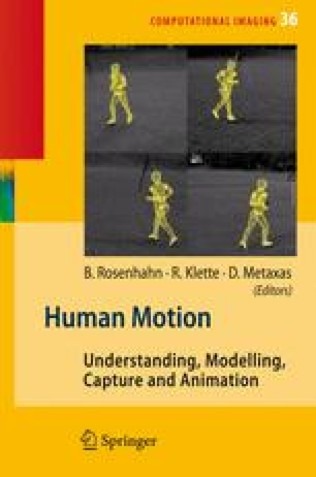
Human motion : Understanding, modeling, capture and animation
Edward Muybridge (1830–1904) is known as the pioneer in motion capt- ing with his famous experiments in 1887 called “Animal Locomotion”. Since then, the feld of animal or human motion analysis has grown in many dir- tions. However, research and results that involve human-like animation and the recovery of motion is still far from being satisfactory. Progress in human motion analysis depends on empirically anchored and grounded research in computer vision, computer graphics, and biomechanics. This book is based on a June 2006 workshop held in Dagstuhl, Germany. This workshop brought together for the frst time researchers from the afo- mentioned disciplines.

Human interface and the management of information : Methods, techniques and tools in information design ; Symposium on human interface 2007, Held as Part of HCI International 2007, Beijing, China, July 22-27, 2007, Proceedings, Part I
The 12th International Conference on Human-Computer Interaction, HCI Inter- tional 2007, was held in Beijing, P.R. This volume, edited by Michael J. Smith and Gavriel Salvendy, contains papers in the thematic area of Human Interface and the Management of Information, addressing the following major topics: • Design and Evaluation Methods and Techniques • Visualizing Information • Retrieval, Searching, Browsing and Navigation • Development Methods and Techniques • Advanced Interaction Technologies and Techniques.

Human interface and the management of information : Interacting in information environments ; Symposium on Human Interface 2007, Held as Part of HCI International 2007, Beijing, China, July 22-27, 2007, Proceedings, Part II
The 12th International Conference on Human-Computer Interaction, HCI Inter- tional 2007, was held in Beijing, P.R. This volume, edited by Michael J. Smith and Gavriel Salvendy, contains papers in the thematic area of Human Interface and the Management of Information, addressing the following major topics: • Communication and Collaboration • Knowledge, Learning and Education • Mobile Interaction • Interacting with the World Wide Web and Electronic Services • Business Management and Industrial Applications • Environment, Transportation and Safety.

Human interactive proofs ; 2nd International workshop, HIP 2005, Bethlehem, PA, USA, May 19-20, 2005, Proceedings
Constitutes the refereed proceedings of the Second International Workshop on Human Interactive Proofs, HIP 2005, held in Bethlehem, PA, USA in May 2005. This book is devoted to the new class of security protocols called human interactive proofs. It includes sections such as: CAPTCHAs and performance analysis, and HIP architectures.
