



الصفحة 136
الصفحة 136
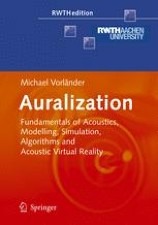
Auralization : Fundamentals of acoustics, modelling, simulation, algorithms and acoustic virtual reality
"Auralization" is the technique of creation and reproduction of sound on the basis of computer data. With this tool is it possible to predict the character of sound signals which are generated at the source and modified by reinforcement, propagation and transmission in systems such as rooms, buildings, vehicles or other technical devices. This book is organized as a comprehensive collection of the basics of sound and vibration, acoustic modelling, simulation, signal processing and audio reproduction. Implementations of the auralization technique are described using examples drawn from various fields in acoustic’s research and engineering, architecture, sound design and virtual reality.

Augmented reality, virtual reality, and computer graphics ; 7th International Conference, AVR 2020, Lecce, Italy, September 7–10, 2020, Proceedings, Part II
The 2-volume set LNCS 12242 and 12243 constitutes the refereed proceedings of the 7th International Conference on Augmented Reality, Virtual Reality, and Computer Graphics, AVR 2020, held in Lecce, Italy, in September 2020.* The 45 full papers and 14 short papers presented were carefully reviewed and selected from 99 submissions. The papers discuss key issues, approaches, ideas, open problems, innovative applications and trends in virtual reality, augmented reality, mixed reality, 3D reconstruction visualization, and applications in the areas of cultural heritage, medicine, education, and industry.
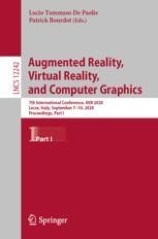
Augmented reality, virtual reality, and computer graphics ; 7th International conference, AVR 2020, Lecce, Italy, September 7–10, 2020, Proceedings, Part I
he 2-volume set LNCS 12242 and 12243 constitutes the refereed proceedings of the 7th International Conference on Augmented Reality, Virtual Reality, and Computer Graphics, AVR 2020, held in Lecce, Italy, in September 2020.* The 45 full papers and 14 short papers presented were carefully reviewed and selected from 99 submissions. The papers discuss key issues, approaches, ideas, open problems, innovative applications and trends in virtual reality, augmented reality, mixed reality, 3D reconstruction visualization, and applications in the areas of cultural heritage, medicine, education, and industry.
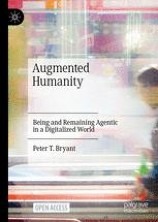
Augmented Humanity : Being and Remaining Agentic in a Digitalized World
This book will examine the implications of digitalization for the understanding of humanity, conceived as a community of intelligent agency. It addresses important topics across a range of social and behavioral theories and identifies a range of novel mechanisms and their social behavioral effects. Across the book, the author highlights the expansion of intelligent processing capability brought about by digitalization and the challenges this exposes for integrating artificial and human capabilities

Audacious Education Purposes : How Governments Transform the Goals of Education Systems
This book offers a comparative study of eight ambitious national reforms that sought to create opportunities for students to gain the necessary breath of skills to thrive in a rapidly changing world.

Attractivity and bifurcation for nonautonomous dynamical systems
Although, bifurcation theory of equations with autonomous and periodic time dependence is a major object of research in the study of dynamical systems since decades, the notion of a nonautonomous bifurcation is not yet established. In this book, two different approaches are developed which are based on special definitions of local attractivity and repulsivity.

Attitudes, beliefs, motivation and identity in mathematics education : An overview of the field and future directions
Records the state of the art in research on mathematics-related affect. It discusses the concepts and theories of mathematics-related affect along the lines of three dimensions. The first dimension identifies three broad categories of affect: motivation, emotions, and beliefs. The book contains one chapter on motivation, including discussions on how emotions and beliefs relate to motivation. There are two chapters that focus on beliefs and a chapter on attitude which cross-cuts through all these categories. The second dimension covers a rapidly fluctuating state to a more stable trait. All chapters in the book focus on trait-type affect and the chapter on motivation discusses both these dimensions. The third dimension regards the three main levels of theorizing: physiological (embodied), psychological (individual) and social. All chapters reflect that mathematics-related affect has mainly been studied using psychological
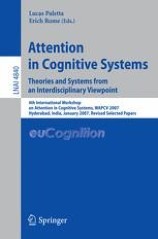
Attention in Cognitive Systems : Theories and Systems from an Interdisciplinary Viewpoint ; 4th International Workshop on Attention in Cognitive Systems, WAPCV 2007 Hyderabad, India, January 8, 2007 Revised Selected Papers
The embodied nature of sensory-motor intelligence requires a continuous and focused interplay between the control of motor activities and the interpretation of feedback from perceptual modalities. Decision making about the selection of information from the incoming sensory stream – in tune with contextual processing on a current task and an agent’s global objectives – becomes a further challenging issue in attentional control. Attention must operate at interfaces between bottom-up driven world int- pretation and top-down driven information selection, thus acting at the core of arti?cial cognitive systems. These insights have already induced changes in AI-related disciplines, such as the design of behavior-based robot control and the computational modeling of animats. Today, the development of enabling technologiessuch as autonomous robotic systems,miniaturizedmobile–evenwearable–sensors,andambientintelligence systems involves the real-time analysis of enormous quantities of data. These data have to be processed in an intelligent way to provide “on time delivery” of the required relevant information. Knowledge has to be applied about what needs to be attended to, and when, and what to do in a meaningful sequence, in correspondence with visual feedback.
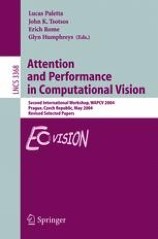
Attention and Performance in Computational Vision ; 2nd International Workshop, WAPCV 2004, Prague, Czech Republic, May 15, 2004, Revised Selected Papers
This book constitutes the thoroughly refereed post-proceedings of the Second International Workshop on Attention and Performance in Computational Vision, WAPCV 2004, held in Prague, Czech Republic in May 2004. The goal of this workshop was to provide an interdisciplinary forum tocommunicatecomputationalmodelsofvisualattentionfromvariousviewpoints,such as from computer vision, psychology, robotics and neuroscience. The motivation for - terdisciplinarity was communication and inspiration beyond the individual community, to focus discussion on computational modelling, to outline relevant objectives for p- formance comparison, to explore promising application domains, and to discuss these with reference to all related aspects of cognitive vision.

Attendnce system during covid-19
Authentication system has become a hot topic in the field of security, one of the most interested methods of authentication systems is the radio frequency identity (RFID) which is used in this project to build a smart record attendance system that contains many features, one of it to determine whether the student is wearing a mask or not by using Deep Learning algorithms, another feature is the student's temperature measurement through an electronic sensor. The results obtained are processed and stored by the processing unit which is the Raspberry pi then display the data on a mobile application.
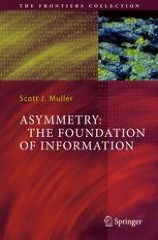
Asymmetry : The foundation of information
As individual needs have arisen in the fields of physics, electrical engineering and computational science, each has created its own theories of information to serve as conceptual instruments for advancing developments. This book provides a coherent consolidation of information theories from these different fields.It provides a versatile tool for quantifying complexity and information capacity in any physical system.
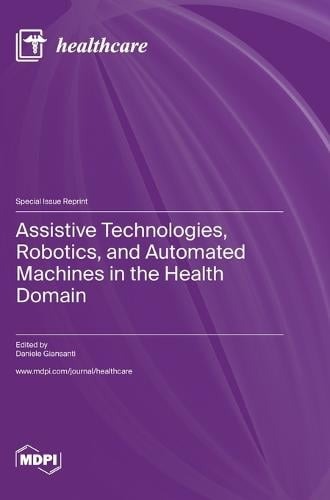
Assistive technologies, robotics, and automated machines in the health domain
The field of healthcare is constantly evolving and advancing with new technologies and innovations. Among these, assistive technologies, robotics, and automated machines are rapidly gaining ground as powerful tools to improve the quality of care and enhance patient outcomes. From wearable devices that monitor vital signs to surgical robots that assist in complex procedures, these technologies have the potential to revolutionize the way we deliver healthcare. The development and the integration of assistive technologies, care robots, and automated machines are strategic both as single components, when paired together, and when interconnected in the health domain.This reprint explores the latest developments in assistive technologies, robotics, and automated machines in the health domain, providing a comprehensive overview of their applications and potential impact. The reprint is for the benefit of healthcare professionals, researchers, engineers, and students interested in these rapidly evolving fields.

Assembly language for x86 processors ; 8th ed.
Focuses on its primary goal, to teach students how to write and debug programs at the machine level. It will never replace a complete book on computer architecture, but it does give students the first-hand experience of writing software in an environment that teaches them how a computer works. Our premise is that students retain knowledge better when theory is combined with experience. In an engineering course, students construct prototypes; in a computer architecture course, students should write machine-level programs.

Assembly Language for x86 Processors ; 7th ed.
Focuses on its primary goal, to teach students how to write and debug programs at the machine level. It will never replace a complete book on computer architecture, but it does give students the first-hand experience of writing software in an environment that teaches them how a computer works. Our premise is that students retain knowledge better when theory is combined with experience. In an engineering course, students construct prototypes; in a computer architecture course, students should write machine-level programs.
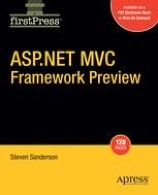
ASP.NET MVC Framework Preview
The ASP.NET MVC framework is the latest evolution of Microsoft's ASP.NET web platform. It introduces a radical high–productivity programming model, promotes cleaner code architecture, supports test–driven development, and provides powerful extensibility, combined with all the benefits of ASP.NET 3.5. ASP.NET MVC Framework Preview is a first look at this technology's main features, designed to give you a head start getting to grips with this powerful new technology.
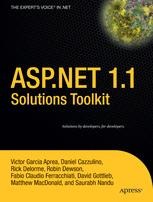
ASP.NET 1.1 Solutions Toolkit
This collection of reusable ASP.NET components serves two purposes. First, the components are ready to use, so you may add exciting features to your own ASP.NET websites. Second, each component's design and implementation is discussed, and you'll discover tips and tricks applicable for developing your own controls. Controls can be cut and pasted or used as templates for you to build your own controls. And the 15 included controls (programs) cover a broad range of situations, providing you both working coded solutions to your problem and the rationalization behind those solutions. Overall, this highly anticipated book provides immediate solutions to range of common problems.
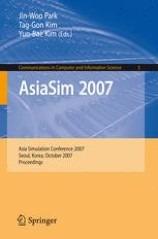
AsiaSim 2007 ; Asia Simulation Conference 2007, Seoul, Korea, October 10-12, 2007, Proceedings
This book contains modeling, simulation, and their applications.It also contains e-business, supply chain management, general and engineering applications, manufacturing, medical, military,networks, transportation, traffic and virtual reality.

Asian Digital Libraries. Looking Back 10 Years and Forging New Frontiers ; 10th International Conference on Asian Digital Libraries, ICADL 2007, Hanoi, Vietnam, December 10-13, 2007. Proceedings
The theme reflects upon the growth of the digital libraries community and explores new areas that the community could delve into in the coming years.
Artificial neural networks with Java : Tools for Building Neural Network Applications
Covers the internals of front and back propagation and helps you understand the main principles of neural network processing. You also will learn how to prepare the data to be used in neural network development and you will be able to suggest various techniques of data preparation for many unconventional tasks. You will learn: Use Java for the development of neural network applications / Prepare data for many different tasks / Carry out some unusual neural network processing / Use a neural network to process non-continuous functions / Develop a program that recognizes handwritten digits

Artificial neural networks in Pattern Recognition ; 9th IAPR TC3 Workshop, ANNPR 2020, Winterthur, Switzerland, September 2–4, 2020, Proceedings
This book constitutes the refereed proceedings of the 9th IAPR TC3 International Workshop on Artificial Neural Networks in Pattern Recognition, ANNPR 2020, held in Winterthur, Switzerland, in September 2020. The conference was held virtually due to the COVID-19 pandemic. The 22 revised full papers presented were carefully reviewed and selected from 34 submissions. The papers present and discuss the latest research in all areas of neural network-and machine learning-based pattern recognition. They are organized in two sections: learning algorithms and architectures, and applications.
