



الصفحة 11
الصفحة 11

Clinical text mining : Secondary use of electronic patient records
Describes the results of natural language processing and machine learning methods applied to clinical text from electronic patient records. It is divided into twelve chapters. Chapters 1-4 discuss the history and background of the original paper-based patient records, their purpose, and how they are written and structured. These initial chapters do not require any technical or medical background knowledge. The remaining eight chapters are more technical in nature and describe various medical classifications and terminologies such as ICD diagnosis codes, SNOMED CT, MeSH, UMLS, and ATC. Chapters 5-10 cover basic tools for natural language processing and information retrieval, and how to apply them to clinical text. The book’s closing chapters present a number of applications in clinical text mining and summarise the lessons learned from the previous chapters.

Mathematical Knowledge Management ; Vol. 4108 ; 5th International Conference, MKM 2006, Wokingham, UK, August 11-12, 2006, Proceedings
This book constitutes the refereed proceedings of the 5th International Conference on Mathematical Knowledge Management, MKM 2006, held in Wokingham, UK in August 2006 as official satellite event of the International Congress of Mathematicians, ICM 2006. The 22 revised full papers presented were carefully selected during two rounds of reviewing and improvement. The papers in this volume cover the whole area of mathematical knowledge management in the intersection of mathematics, computer science, library science, and scientific publishing. The papers are organized in topical sections on proof representations, proof processing, knowledge extraction, knowledge representation, as well as systems and tools.

Managing Large-Scale Service Deployment ; 19th IFIP/IEEE International Workshop on Distributed Systems : Operations and Management, DSOM 2008, Samos Island, Greece, September 22-26, 2008. Proceedings
Contains all papers accepted for presentation at the 19th IFIP/IEEE International Workshop on Distributed Systems: Operations and Management (DSOM 2008),which was held September 25-26, 2008 on the island of Samos, Greece. DSOM 2008 was the 19th event in a series of annual workshops. It followed in the footsteps of previous s- cessful meetings, the most recent of which were held in San Jos´ e, California, USA (DSOM 2007), Dublin, Ireland (DSOM 2006), Barcelona, Spain (DSOM 2005), Davis, California, USA (DSOM 2004), Heidelberg, Germany (DSOM 2003), and Montreal, Canada (DSOM 2002).

Making Globally Distributed Software Development a Success Story : International Conference on Software Process, ICSP 2008 Leipzig, Germany, May 10-11, 2008 Proceedings
This volume contains papers presented at the International Conference on Software Process (ICSP 2008) held in Leipzig, Germany, during May 10-11, 2008. ICSP 2008 was the second conference of the ICSP series. The theme of ICSP 2008 was “Making Globally Distributed Software Development a Success Story. ” Software developers work in a dynamic context of frequently changing technologies and with limited resources. Globally distributed development teams are under ev- increasing pressure to deliver their products more quickly and with higher levels of qu- ity. At the same time, global competition is forcing software development organizations to cut costs by rationalizing processes, outsourcing part of or all development activities, reusing existing software in new or modified applications, and evolving existing systems to meet new needs, while still minimizing the risk of projects failing to deliver.
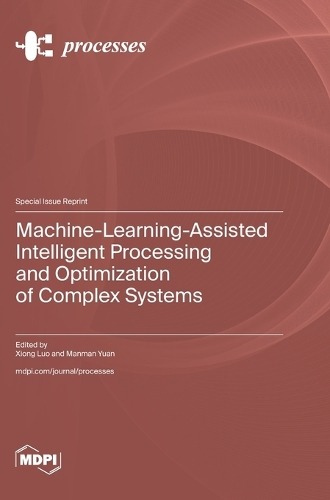
Machine-learning-assisted intelligent processing and optimization of complex systems
Focuses on the most recent developments in intelligent optimization methods and their applications in various test cases. The reprint covers various topics, including distributed multiagent modeling, metaheuristic algorithms, multisource data fusion, mobile computing and mobile sensing, machine learning-based intelligent processing for modeling complex manufacturing systems, and data-driven intelligent modeling

Machine learning, image processing, network security and data sciences ; 2nd International conference, MIND 2020, Silchar, India, July 30 - 31, 2020, Proceedings, Part I
This two-volume set (CCIS 1240-1241) constitutes the refereed proceedings of the Second International Conference on Machine Learning, Image Processing, Network Security and Data Sciences, MIND 2020, held in Silchar, India. Due to the COVID-19 pandemic the conference has been postponed to July 2020. The 79 full papers and 4 short papers were thoroughly reviewed and selected from 219 submissions. The papers are organized according to the following topical sections: data science and big data; image processing and computer vision; machine learning and computational intelligence; network and cyber security.

Machine Learning Techniques for Multimedia : Case Studies on Organization and Retrieval
This book provides a comprehensive coverage of the most important machine learning techniques used and their application in this domain. Arising from the EU MUSCLE network, a program that drew together multidisciplinary teams with expertise in machine learning, pattern recognition, artificial intelligence, and image, video, text and crossmedia processing, the book first introduces the machine learning principles and techniques that are applied in multimedia data processing and analysis. The second part focuses on multimedia data processing applications, with chapters examining specific machine learning issues in domains .

Machine Learning for Multimedia Content Analysis
Challenges in complexity and variability of multimedia data have led to revolutions in machine learning techniques. Multimedia data, such as digital images, audio streams and motion video programs, exhibit richer structures than simple, isolated data items. A number of pixels in a digital image collectively conveys certain visual content to viewers. A TV video program consists of both audio and image streams that unfold the underlying story. To recognize the visual content of a digital image, or to understand the underlying story of a video program, we may need to label sets of pixels or groups of image and audio frames jointly.

Machine Learning and Knowledge Discovery in Databases ; European Conference, ECML PKDD 2008, Antwerp, Belgium, September 15-19, 2008, Proceedings, Part II
Constitutes the refereed proceedings of the joint conference on Machine Learning and Knowledge Discovery in Databases: ECML PKDD 2008, held in Antwerp, Belgium, in September 2008.The 100 papers presented in two volumes, together with 5 invited talks, were carefully reviewed and selected from 521 submissions. In addition to the regular papers the volume contains 14 abstracts of papers appearing in full version in the Machine Learning Journal and the Knowledge Discovery and Databases Journal of Springer.

Machine Learning and Data Mining in Pattern Recognition ; 4th International Conference, MLDM 2005, Leipzig, Germany, July 9-11, 2005, Proceedings
Today, artificial intelligence deals with large amounts of data and knowledge and finds new information using machine learning and data mining. Machine learning and data mining are irreplaceable subjects and tools for the theory of pattern recognition and in applications of pattern recognition such as bioinformatics and data retrieval. This was the fourth edition of MLDM in Pattern Recognition which is the main event of Technical Committee 17 of the International Association for Pattern Recognition; it started out as a workshop and continued as a conference in 2003. Today, there are many international meetings which are titled “machine learning” and “data mining”, whose topics are text mining, knowledge discovery, and applications. This meeting from the first focused on aspects of machine learning and data mining in pattern recognition problems. We planned to reorganize classical and well-established pattern recognition paradigms from the viewpoints of machine learning and data mining. Though it was a challenging program in the late 1990s, the idea has inspired new starting points in pattern recognition and effects in other areas such as cognitive computer vision.
Machine Learning : Modeling Data Locally and Globally
Machine Learning - Modeling Data Locally and Globally presents a novel and unified theory that tries to seamlessly integrate different algorithms. Specifically, the book distinguishes the inner nature of machine learning algorithms as either "local learning"or "global learning."This theory not only connects previous machine learning methods, or serves as roadmap in various models, but – more importantly – it also motivates a theory that can learn from data both locally and globally. This would help the researchers gain a deeper insight and comprehensive understanding of the techniques in this field. The book reviews current topics,new theories and applications.

Logic, language, information and computation ; 14th International Workshop, WoLLIC 2007, Rio de Janeiro, Brazil, July 2-5, 2007, Proceedings
The Workshop on Logic, Language, Information and Computation (WoLLIC) is an annual international forum on inter-disciplinary research involving formal logic, computing and programming theory, and natural language and reasoning. The WoLLIC meetings alternate between Brazil (and Latin America) and other countries, with the aim of fostering interest in applied logic among Latin Am- ican scientists and students, and facilitating their interaction with the international - plied logic community.

Logic, Language, and Computation ; 6th International Tbilisi Symposium on Logic, Language, and Computation. Batumi, Georgia, September 12-16, 2005, Revised Selected Papers
Edited in collaboration with FoLLI, the Association of Logic, Language and Information, this book constitutes the second volume of the FoLLI LNAI subline. It represents the thoroughly refereed post-proceedings of the 6th International Tbilisi Symposium on Logic, Language, and Computation, TbiLLC 2005, held in Batumi, Georgia, in September 2005.
Linked Open Data -- Creating Knowledge Out of Interlinked Data : Results of the LOD2 Project
Linked Open Data (LOD) is a pragmatic approach for realizing the Semantic Web vision of making the Web a global, distributed, semantics-based information system. This book presents an overview on the results of the research project “LOD2 -- Creating Knowledge out of Interlinked Data”. LOD2 is a large-scale integrating project co-funded by the European Commission within the FP7 Information and Communication Technologies Work Program. Commencing in September 2010, this 4-year project comprised leading Linked Open Data research groups, companies, and service providers from across 11 European countries and South Korea.

Leveraging the Semantics of Topics Maps ; 2nd International Conference on Topic Maps Research and Applications, TMRA 2006, Leipzig, Germany, October 11-12, 2006, Revised Selected papers
The papers in this volume were presented at TMRA 2006, the International Conference on Topic Maps Research and Applications, held October 11–12, 2006, in Leipzig, Germany. TMRA 2006 was the second conference of an annual series of international conferences dedicated to Topic Maps in research and industry.

Law and the Semantic Web : Legal Ontologies, Methodologies, Legal Information Retrieval, and Applications
As part of this objective, ICT (information and communication technologies) services should become available for every citizen, and for all schools, homes and businesses. The book you have in front of you is about Semantic Web technology and law. Law is something omnipresent; all citizens — at some points in their lives — have to deal with it. In addition, law involves a large group of professionals, and is a mul- billion business world wide. Information technology is important because it that can improve citizens’ interaction with law, as well as improve legal professionals’ work environment. Legal professionals dedicate a significant amount of their time to finding, reading, analyzing and synthesizing information in order to take decisions, and prepare advice and trials, among other tasks. As part of the “Semantic-Based Knowledge and Content Systems” Strategic Objective, the European Commission is funding projects to construct technology to make the Semantic Web vision come true. 1 The articles in this book are related to two current foci of the Strategic Objective : • Knowledge acquisition and modelling, capturing knowledge from raw information and multimedia content in webs and other distributed repositories to turn poorly structured information into machi- processable knowledge.

Large-Scale Scientific Computing ; 5th International Conference, LSSC 2005, Sozopol, Bulgaria, June 6-10, 2005, Revised Papers
The 5th International Conference on Large-Scale Scientific Computations (LSSC 2005) was held in Sozopol, Bulgaria, June 6–10, 2003. The conference was organized and sponsored by the Institute for Parallel Processing at the Bulgarian Academy of Sciences. Partial support was also provided from project BIS-21++ funded by the European Commission in FP6 INCO via grant 016639/2005. More than 120 participants from all over the world attended the conference representing some of the strongest research groups in the field of advanced largescale scientific computing. This volume contains 80 papers submitted by authors from over 20 countries. The 6th International Conference, LSSC 2007, will be organized in June 2007

Languages and Compilers for Parallel Computing ; Vol. 2481 : 15th Workshop, LCPC 2002, College Park, MD, USA, July 25-27, 2002, Revised Papers
LCPC 2002 brought together over 60 researchers from academia and research institutions from many countries. The program of 26 papers was selected from 32 submissions. Each paper was reviewed by at least three Program Committee members and sometimes by additional reviewers. Prior to the workshop, revised versions of accepted papers were informally published on the workshop’s website and in a paper proceedings that was distributed at the meeting. This year, the workshopwas organizedinto sessions of papers on related topics, and each session consisted of two to three 30-minute presentations.Based on feedback from the workshop,the papers were revised and submitted for inclusion in the formal proceedings published in this volume. Two papers were presented at the workshop but later withdrawn from the ?nal proceedings by their authors. We were very lucky to have Bill Carlson from the Department of Defense give the LCPC 2002 keynote speech on “UPC: A C Language for Shared M- ory Parallel Programming.” Bill gave an excellent overview of the features and programming model of the UPC parallel programming language.

Knowledge-Based Intelligent Information and Engineering Systems ; Vol. 4253 ; 10th International Conference, KES 2006, Bournemouth, UK, October 9-11 2006, Proceedings, Part III
Delegates and friends, we are very pleased to extend to you the sincerest of welcomes to this, the 10th International Conference on Knowledge Based and Intelligent Information and Engineering Systems at the Bournemouth International Centre in Bournemouth, UK, brought to you by KES International. This is a special KES conference, as it is the 10th in the series, and as such, it represents an occasion for celebration and an opportunity for reflection. The first KES conference was held in 1997 and was organised by the KES conference founder, Lakhmi Jain. In 1997, 1998 and 1999 the KES conferences were held in Adelaide, Australia. In 2000 the conference moved out of Australia to be held in Brighton, UK; in 2001 it was in Osaka, Japan; in 2002, Crema near Milan, Italy; in 2003, Oxford, UK; in 2004, Wellington, New Zealand; and in 2005, Melbourne, Australia. The next two conferences are planned to be in Italy and Croatia. Delegate numbers have grown from about 100 in 1997, to a regular figure in excess of 500. The conference attracts delegates from many different countries, in Europe, Australasia, the Pacific Rim, Asia and the Americas, and may truly be said to be ‘International’.

Knowledge-Based Intelligent Information and Engineering Systems ; Vol. 4251 ; 10th International Conference, KES 2006, Bournemouth, UK, October 9-11 2006, Proceedings, Part I
Delegates and friends, we are very pleased to extend to you the sincerest of welcomes to this, the 10th International Conference on Knowledge Based and Intelligent Information and Engineering Systems at the Bournemouth International Centre in Bournemouth, UK, brought to you by KES International. This is a special KES conference, as it is the 10th in the series, and as such, it represents an occasion for celebration and an opportunity for reflection. The first KES conference was held in 1997 and was organised by the KES conference founder, Lakhmi Jain. In 1997, 1998 and 1999 the KES conferences were held in Adelaide, Australia. In 2000 the conference moved out of Australia to be held in Brighton, UK; in 2001 it was in Osaka, Japan; in 2002, Crema near Milan, Italy; in 2003, Oxford, UK; in 2004, Wellington, New Zealand; and in 2005, Melbourne, Australia. The next two conferences are planned to be in Italy and Croatia. Delegate numbers have grown from about 100 in 1997, to a regular figure in excess of 500. The conference attracts delegates from many different countries, in Europe, Australasia, the Pacific Rim, Asia and the Americas, and may truly be said to be ‘International’.
