



الصفحة 11
الصفحة 11

Advanced .NET Remoting
Surpassing any white papers, specialist documents and other documentationthis book features in-depth coverage of the .NET Remoting Framework. The text is organized into three main parts, and this revised, second edition features 150 pages of entirely new material! Part one includes a guide to the 1.1 framework and its capabilities in real-world applications. Part two presents .NET remoting internals, and provides real-world code and development strategies. Finally, part three looks at futuristic remoting tools and their present implementation in Visual Studio .NET 2005. You will come to see how remoting procedures will change within the new IDE and revised framework.

Addressing Global Challenges and Quality Education ; 15th European Conference on Technology Enhanced Learning, EC-TEL 2020, Heidelberg, Germany, September 14–18, 2020, Proceedings
The chapters: “Designing an Online Self-Assessment for Informed Study Decisions: The User Perspective”; “Living with Learning Difficulties: Two Case Studies Exploring the Relationship Between Emotion and Performance in Students With Learning Difficulties”; “Applying Instructional Design Principles on Augmented Reality Cards for Computer Science Education”; and “Teaching Simulation Literacy With Evacuations - Concept, Technology, and Material for a Novel Approach” are available open access under a Creative Commons Attribution 4.0 International License via link.springer.com.
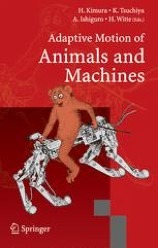
Adaptive Motion of Animals and Machines
Apparently, the ability of animals and robots to adapt in a real world cannot be explained or realized by one single function in a control system and mechanism. That is, adaptation in motion is induced at every level from the central nervous system to the musculoskeletal system.Thus,weorganized the International Symposium on Adaptive Motion in Animals and Machines (AMAM) forscientist sandengineersconcerned with adaptation on various level stobebrought together todiscussprinciplesateachleveland to investigate principles governing total systems.
Adaptive and natural computing algorithms ; Proceedings of the International Conference in Coimbra, Portugal, 2005
The ICANNGA series of Conferences has been organised since 1993 and has a long history of promoting the principles and understanding of computational intelligence paradigms within the scientific community and is a reference for established workers in this area.and this book about Proceedings of the International Conference in Coimbra, Portugal, 2005 including Topics Artificial Intelligence Simulation and Modeling / Mathematics of Computing / Computer Applications
Adaptive and Natural Computing Algorithms ; 8th International Conference, ICANNGA 2007, Warsaw, Poland, April 11-14, 2007, Proceedings, Part II
The ICANNGA series of conferences has been organized since 1993 and has a long history of promoting the principles and understanding of computational intelligence paradigms within the scientifc community. the ICANNGA series has established itself as a reference for scientists and practitioners in this area. The series has also been of value to young researchers wishing both to extend their knowledge and experience and to meet experienced professionals in their ?elds. In a rapidly advancing world, where technology and engineering change d- matically, new challenges in computer science compel us to broaden the c- ference scope in order to take into account new developments.

A vision-based system to early detection of drowning incidents in swimming pools
Being one of the leading causes of death; drowning has become a severe problem in the past few years. Our goal from this project is to focus on the comprehensive survey of drowning detection and prevention techniques. There are various methodologies put up in the domain of swimming pool safety using different intelligent control systems. Various methods have been adopted for drowning detection using the concepts of image processing, pressure and motion sensing. The main objectives of this work are to detect the drowning person in an indoor swimming pool and send an alarm to the lifeguard to rescue if the previously detected person is missing for a specific amount of time.
A Modern Approach to Intelligent Animation : Theory and Practice
Part of the new series, Advanced Topics in Science and Technology in China, this book discusses concepts, theory, and core technologies of intelligent theory and human animation, including video based human animation, and intelligent technology of motion data management and reusing. It introduces systems developed to demonstrate the technologies of video based animation. Each chapter is independent. Lively pictures and demos will be presented to make the theory and technologies more understandable.
50 Years of Artificial Intelligence : Essays Dedicated to the 50th Anniversary of Artificial Intelligence
This Festschrift volume, published in celebration of the 50th Anniversary of Artificial Intelligence, includes 34 refereed papers written by leading researchers in the field of Artificial Intelligence. The papers were carefully selected from the invited lectures given at the 50th Anniversary Summit of AI, held at the Centro Stefano Franscini, Monte Verità, Ascona, Switzerland, July 9-14, 2006. The summit provided a venue for discussions on a broad range of topics.
3-D Shape Estimation and Image Restoration : Exploiting Defocus and Motion-Blur
Images contain information about the spatial properties of the scene they depict. When coupled with suitable assumptions, images can be used to infer three-dimensional information. This useful volume concentrates on motion blur and defocus, which can be exploited to infer the 3-D structure of a scene—as well as its radiance properties—and which in turn can be used to generate novel images with better quality. 3-D Shape Estimation and Image Restoration presents a coherent framework for the analysis and design of algorithms to estimate 3-D shape from defocused and motion blurred images, and to eliminate defocus and motion blur to yield "restored" images. It provides a collection of algorithms that are optimal with respect to the chosen model and estimation criterion.
