



الصفحة 11
الصفحة 11

Computational science and its applications – ICCSA 2007 ; International Conference, Kuala Lumpur, Malaysia, August 26-29, 2007. Proceedings, Part I
This volume feature outstanding papers that present a wealth of original research results in the field of computational science, from foundational issues in computer science and mathematics to advanced applications in almost all sciences that use computational techniques.

Computational Forensic ; 2nd International Workshop, IWCF 2008, Washington, DC, USA, August 7-8, 2008. Proceedings
This book constitutes the refereed proceedings of the Second International Workshop, IWCF 2008, held in Washington, DC, USA, August 2008. The papers are organized in topical sections on trends and challenges; scanner, printer, and prints; human identification; shoeprints; linguistics;decision making and search; speech analysis; signatures and handwriting.

Combinatorial optimization and applications ; 1st International Conference, COCOA 2007, Xi'an, China, August 14-16, 2007, Proceedings
This book presented feature original research in the areas of combinatorial optimization - both theoretical issues and and applications motivated by real-world problems thus showing convincingly the usefulness and efficiency of the algorithms discussed in a practical setting.

Combinatorial and algorithmic aspects of networking ; Vol.3405 ; 1st Workshop on combinatorial and algorithmic aspects of networking, CAAN 2004, Banff, Alberta, Canada, August 5-7, 2004, Revised Selected Papers
The Internet is a massive global network of over 700 million users and it is addingusers at the rate of 300,000 per day. This large, distributed, and everchangingnetwork poses a challenge to researchers: How does one study, model, or under-stand such a decentralized, constantly evolving entity? The workshop Combi-natorial and Algorithmic Aspects of Networking and the Internet (CAAN 2004)provided a forum for the exchange of ideas on these topics. and among thepapers were some new and surprising results as well as some introductions tothe foundations of the field.The workshop program featured 12 peer-reviewed papers bracketed by Topics covered by the talks ranged from the Web graph to game theoryto string matching, all in the context of large-scale networks. This volume collectstogether the talks delivered at the workshop along with a number of survey articlesto round out the presentation and give a comprehensive introduction to the topic.

Coding for Data and Computer Communications
In a unique, single volume, this highly versatile text/reference introduces readers to the importance of channel coding (error-correcting codes), secure coding (cryptography), and source coding (data compression). It is organized in three main parts and uses clear, nonmathematical explanations to develop the concepts, principles, and techniques in each area of coding. Requiring only a general familiarity with computer methods, the book deals with all aspects of coding and its relevance to fast, secure, and reliable data transmission and storage. Features & Benefits: Presents comprehensive coverage of areas of coding often found in separate books, and stresses data coding’s relevance in today’s world / Provides a wealth of examples and exercises (with solutions) to help readers easily grasp the material / Incorporates an extensive chapter on data hiding, a sparsely documented topic of increasing importance in the community / Includes an author-supplied website with supplementary material / Possesses a detailed bibliography and helpful glossary, index, and appendixes (including projects for self-study).

Code : The Hidden Language of Computer Hardware and Software ; 2nd ed
The classic guide to how computers work, updated with new chapters and interactive graphics Computers are everywhere --- most obviously in our laptops and smartphones, but also our cars, televisions, microwave ovens, alarm clocks, robot vacuum cleaners, and other smart appliances. Have you ever wondered what goes on inside these devices to make our lives easier but occasionally more infuriating? Explores more deeply the bit-by-bit, gate-by-gate construction of the heart of every smart device ― the central processing unit that combines the simplest of basic operations to perform the most complex of feats. Along with new chapters, Petzold created a new website, CodeHiddenLanguage.com, that uses animated interactive graphics to make computers even easier to comprehend.

CMOS PLL synthesizers : Analysis and design
CMOS PLL Synthesizers: Analysis and Design presents both fundamentals and state-of-the-art PLL synthesizer design and analysis techniques. A complete overview of both system-level and circuit-level design and analysis is given. A 16mW, 2.4GHz, sub-2V, S D fractional-N synthesizer prototype is implemented in 0.35mm CMOS. It features a high-speed and robust phase-switching prescaler, and a low-complexity and area-efficient loop capacitance multiplier, which tackle speed and integration bottlenecks of PLL synthesizers." "This book is useful as a PLL synthesizer manual for both academic researchers and industry design engineers.
Machine learning approach for cloud data analytics in IoT
Covers the multidimensional perspective of machine learning through the perspective of cloud computing and Internet of Things ranging from fundamentals to advanced applications. Elucidates some of the best practices and their respective outcomes in cloud and fog computing environments. It focuses on all the various research issues related to big data storage and analysis, large-scale data processing, knowledge discovery and knowledge management, computational intelligence, data security and privacy, data representation and visualization, and data analytics. The featured technologies presented in the book optimizes various industry processes using business intelligence in engineering and technology. Light is also shed on cloud-based embedded software development practices to integrate complex machines so as to increase productivity and reduce operational costs. The various practices of data science and analytics which are used in all sectors to understand big data and analyze massive data patterns are also detailed in the book.
Logics of Specification Languages
Dedicated chapters address : the use of ASM (Abstract State Machines) in the classroom; the Event-B modelling method; a methodological guide to CafeOBJ logic; CASL, the Common Algebraic Specification Language; the Duration Calculus; the logic of the RAISE specification language (RSL); the specification language TLA+; the typed logic of partial functions and the Vienna Development Method (VDM); and Z logic and its applications. Each chapter is self-contained, with references, and symbol and concept indexes. Finally, in a unique feature, the book closes with short commentaries on the specification languages written by researchers closely associated with their original development.
Logging in Java with the JDK 1.4 Logging API and Apache log4j
In development scenarios where things can't be run in a debugger, or when you run the risk of masking the problem, logs are the greatest source of information about running a program. Pro Apache Log4j, Second Edition provides best practices guidelines and comprehensive coverage of the most recent release. Step by step, the book explains core concepts, from basic to advanced. Code samples are in Java and include guidelines for different application-specific needs. You'll also learn how to extend the API to write custom components and best practices for using the feature-rich log4j API. This book concludes with enterprise Java applications using log4j with JSP and J2EE.

Location- and Context-Awareness ; Vol. 3479 ; First International Workshop, LoCA 2005, Oberpfaffenhofen, Germany, May 12-13, 2005, Proceedings
The workshop was organized by the Institute of Communications and Navigation of the German Aerospace Center (DLR) in Oberpfa?enhofen, and the Mobile and Distributed Systems Group of the University of Munich. During the workshop, novel positioning algorithms and location sensing techniques were discussed, comprising not only enhancements of singular systems, like positioning in GSM or WLAN, but also hybrid technologies, such as the integration of global satellite systems with inertial positioning. Furthermore, improvements in sensor technology, as well as the integration and fusion of sensors, were addressed both on a theoretical and on an implementation level. Personal and confidential data, such as location data of users, have p- found implications for personal information privacy. Thus privacy protection, privacy-oriented location-aware systems, and how privacy aspects the feasibility and usefulness of systems were also addressed in the workshop.
LINQ for Visual C# 2008
Every C# programmer needs to learn about LINQ (Language–Integrated Query), Microsoft's breakthrough technology for simplifying and unifying data access from any data source. With LINQ, you can write more elegant and flexible code—not just to access databases and files, but to manipulate data structures and XML. This book is a short, yet comprehensive guide to the major features of LINQ and the significant enhancements introduced with .NET 3.5. There is no better source for getting a head–start on the future of these technologies than this book.
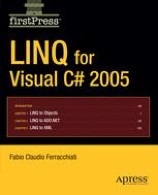
LINQ for Visual C# 2005
LINQ for Visual C# 2005 is a short, yet comprehensive guide to the major features of LINQ. It thoroughly covers LINQ to Objects, LINQ to SQL, LINQ to DataSet, and LINQ to XML. It also details significant enhancements to C#, .NET, and ADO.NET.

Learning to Live in the Knowledge Society ; IFIP 20th World Computer Congress, IFIP TC 3 ED-L2L Conference September 7–10, 2008, Milano, Italy
The IFIP series publishes state-of-the-art results in the sciences and technologies of information and communication. The scope of the series includes: foundations of computer science; software theory and practice; education; computer applications in technology; communication systems; systems modeling and optimization; information systems; computers and society; computer systems technology; security and protection in information processing systems; artificial intelligence; and human-computer interaction. Proceedings and post-proceedings of refereed international conferences in computer science and interdisciplinary fields are featured. These results often precede journal publication and represent the most current research.
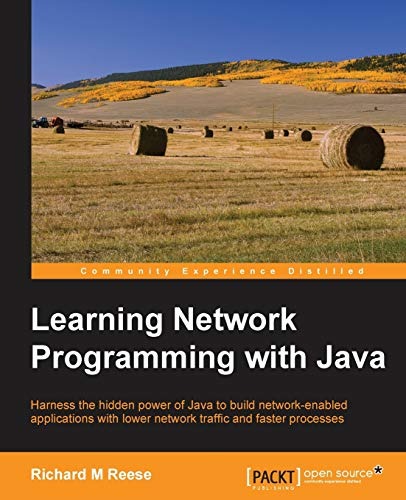
Learning network programming with Java
Learn to deliver superior server-to-server communication through the networking channels / Gain expertise of the networking features of your own applications to support various network architectures such as client/server and peer-to-peer Explore the issues that impact scalability, affect security, and allow applications to work in a heterogeneous environment

Learn to Tango with D
Learn to Tango with D introduces you to the powerful D language, with special attention given to the Tango software library. A concise yet thorough overview of the language's syntax and features is presented, followed by an introduction to Tango, the popular general–purpose library you'll find invaluable when building your D applications.

Lean Business Systems and Beyond ; 1st IFIP TC 5 Advanced Production Management Systems Conference (APMS’2006), Wroclaw, Poland, September 18-20, 2006
Includes : foundations of computer science; software theory and practice; education; computer applications in technology; communication systems; systems modeling and optimization; information systems; computers and society; computer systems technology; security and protection in information processing systems; artificial intelligence; and human-computer interaction. Proceedings and post-proceedings of referred international conferences in computer science and interdisciplinary fields are featured.

Languages and Compilers for Parallel Computing ; Vol. 2481 : 15th Workshop, LCPC 2002, College Park, MD, USA, July 25-27, 2002, Revised Papers
LCPC 2002 brought together over 60 researchers from academia and research institutions from many countries. The program of 26 papers was selected from 32 submissions. Each paper was reviewed by at least three Program Committee members and sometimes by additional reviewers. Prior to the workshop, revised versions of accepted papers were informally published on the workshop’s website and in a paper proceedings that was distributed at the meeting. This year, the workshopwas organizedinto sessions of papers on related topics, and each session consisted of two to three 30-minute presentations.Based on feedback from the workshop,the papers were revised and submitted for inclusion in the formal proceedings published in this volume. Two papers were presented at the workshop but later withdrawn from the ?nal proceedings by their authors. We were very lucky to have Bill Carlson from the Department of Defense give the LCPC 2002 keynote speech on “UPC: A C Language for Shared M- ory Parallel Programming.” Bill gave an excellent overview of the features and programming model of the UPC parallel programming language.
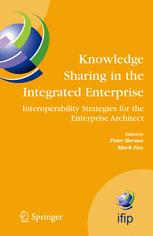
Knowledge Sharing in the Integrated Enterprise : Interoperability Strategies for the Enterprise Architect
The IFIP series publishes state-of-the-art results in the sciences and technologies of information and communication. The scope of the series includes: foundations of computer science; software theory and practice; education; computer applications in technology; communication systems; systems modeling and optimization; information systems; computers and society; computer systems technology; security and protection in information processing systems; artificial intelligence; and human-computer interaction. Proceedings and post-proceedings of referred international conferences in computer science and interdisciplinary fields are featured. These results often precede journal publication and represent the most current research. The principal aim of the IFIP series is to encourage education and the dissemination and exchange of information about all aspects of computing.

Knowledge Management In Action ; IFIP 20th World Computer Congress, Conference on Knowledge Management in Action, September 7-10, 2008, Milano, Italy
The IFIP series publishes state-of-the-art results in the sciences and technologies of information and communication. The scope of the series includes: foundations of computer science; software theory and practice; education; computer applications in technology; communication systems; systems modeling and optimization; information systems; computers and society; computer systems technology; security and protection in information processing systems; artificial intelligence; and human-computer interaction. Proceedings and post-proceedings of refereed international conferences in computer science and interdisciplinary fields are featured.
