



الصفحة 101
الصفحة 101

Advanced driver assistance system (ADAS)
The purpose of Advanced Driver Assistance Systems (ADAS) is to reduce or eliminate driver errors, and to enhance efficiency in traffic and transportation. Our project is a means and a great contribution to safe driving, and the user does not need to install sensors or hard tools to the vehicle, and through it, the cost can be reduced and maintenance cost can be eliminated. The images are processed and segmented to find different features in the image. Segmented images are used for identification and classification based on various machine learning algorithms and neural networks. The main focus of ADAS technologies is to contribute to factors such as safety management and automated, stress-free driving for the driver

Advanced distributed systems ; 5th International School and Symposium, ISSADS 2005, Guadalajara, Mexico, January 24-28, 2005, Revised Selected Papers
Poses the papers accepted and presented at the 5th Int- national School and Symposium on Advanced Distributed Systems (ISSADS) in this LNCS volume. The papers presented in the sessions of the symposium cover the subjects of distributed systems from the system level and applications, but also contributions from the area of theory and artificial intelligence concepts.

Advanced Decision Sciences Based on Deep Learning and Ensemble Learning Algorithms : A Practical Approach Using Python
Describes the deep learning models and ensemble approaches applied to decision-making problems. The authors have addressed the concepts of deep learning, convolutional neural networks, recurrent neural networks, and ensemble learning in a practical sense providing complete code and implementation for several real-world examples. The authors of this book teach the concepts of machine learning for undergraduate and graduate-level classes and have worked with Fortune 500 clients to formulate data analytics strategies and operationalise these strategies.

Advanced Data Warehouse Design : From Conventional to Spatial and Temporal Applications
This book serves as an introduction to the state of the art on data warehouse design, with many references to more detailed sources. Providing a clear and a concise presentation of the major concepts and results of data warehouse design, it can also be used as the basis of a graduate or advanced undergraduate course.

Advanced data mining and applications ; Vol. 3584 ; 1st International Conference, ADMA 2005, Wuhan, China, July 22-24, 2005, Proceedings
This book constitutes the refereed proceedings of the First International Conference on Advanced Data Mining and Applications, ADMA 2005, held in Wuhan, China in July 2005. The 25 revised full papers and 75 revised short papers presented were carefully peer-reviewed and The papers are organized in topical sections on association rules, classification, clustering, novel algorithms, text mining, multimedia mining, sequential data mining and time series mining, web mining, biomedical mining, advanced applications, security and privacy issues, spatial data mining, and streaming data mining.

Advanced Data Mining and Applications ; 4th International Conference, ADMA 2008, Chengdu, China, October 8-10, 2008. Proceedings
This book constitutes the refereed proceedings of the 4th International Conference on Advanced Data Mining and Applications, ADMA 2008, held in Chengdu, China, in October 2008.

Advanced Concepts for Intelligent Vision Systems ; Vol. 4179 ; 8th International Conference, ACIVS 2006, Antwerp, Belgium, September 18-21, 2006, Proceedings
This book constitutes the refereed proceedings of the 8th International Conference on Advanced Concepts for Intelligent Vision Systems, ACIVS 2006, held in Antwerp, Belgium in September 2006. The 45 revised full papers and 65 revised poster papers presented were carefully reviewed and selected from around 242 submissions. The papers are organized in topical sections on noise reduction and restoration, segmentation, motion estimation and tracking, video processing and coding, camera calibration, image registration and stereo matching, biometrics and security, medical imaging, image retrieval and image understanding, as well as classification and recognition.

Advanced concepts for intelligent vision systems ; Vol. 3708 ; 7th International conference, ACIVS 2005, Antwerp, Belgium, September 20-23, 2005, Proceedings
"Thisvolumecollectsthepapersacceptedforpresentationatthe7thInternational Conferenceon Advanced Conceptsfor IntelligentVision Systems (ACIVS 2005). ThoughACIVS is a conference on all areas in image processing, one of its major domains is image and video compression. A third of the selected papers dealt with compression, motion estimation, moving object detection and other video applications. This year, topics related to clustering, pattern recognition and biometrics constituted another third of the conference. The last third was more related to the fundamentals of image processing, namely noise reduction, ?ltering, restorationandimagesegmentation.We wouldliketothankthe invited speakers Fernando Pereira"

Advanced Concepts for Intelligent Vision Systems ; 9th International Conference, ACIVS 2007, Delft, The Netherlands, August 28-31, 2007, Proceedings
This volume collects the papers accepted for presentation at the Ninth International Conference on “Advanced Concepts for Intelligent Vision Systems”The ACIVS conference was established in 1999 in Baden-Baden (Germany) as part of a large m ulticonference. Since then ACIVS has been developed as an independent scientific event and has maintained the tradition of being a single track event with oral presentations of 25 minutes each, even though the number of participants has been steadily growing every year. The conference currently attracts computer scientists from more than 20 countries, mostly from Europe, Australia and Japan, but also from the USA, Asia and the Middle East.

Advanced Concepts for Intelligent Vision Systems ; 10th International Conference, ACIVS 2008, Juan-les-Pins, France, October 20-24, 2008. Proceedings
This book constitutes the refereed proceedings of the 10th International Conference on Advanced Concepts for Intelligent Vision Systems, ACIVS 2008, held in Juan-les-Pins, France, in October 2008.
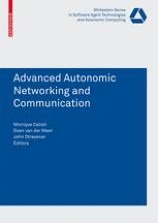
Advanced Autonomic Networking and Communication
This book presents a comprehensive reference of state-of-the-art efforts and early results in the area of autonomic networking and communication.
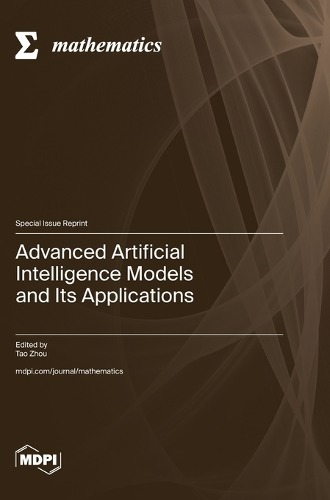
Advanced artificial intelligence models and its applications
The field of artificial intelligence (AI) has undergone enormous expansion since its inception in the mid-20th century, as demonstrated by its application across an array of engineering and scientific challenges. Particularly in the last decade, AI has witnessed a significant breakthrough with the advent of deep learning, which has facilitated the employment of various AI models across a multitude of domains. This reprint features ten papers accepted for publication in the Special Issue titled "Advanced Artificial Intelligence Models and Their Applications," published in the MDPI Mathematics journal. These papers explore numerous facets of advanced artificial intelligence models and their applications, covering areas such as cybersecurity, image classification, logistics optimization, automatic music generation, human capital investment, writer recognition, remote sensing image indexing, target tracking, and more.

Ad-Hoc, mobile, and wireless networks ; Vol.3738 ; 4th International conference, ADHOC-NOW 2005, Cancun, Mexico, October 6-8, 2005, Proceedings
This book constitutes the refereed proceedings of the 4th International Conference on Ad-Hoc Networks and Wireless, ADHOiNOW 2005, The papers discuss architectures, protocols, and algorithms for: access control, scheduling, ad hoc and sensor networks analytic methods and modelling for performance evaluation, characterization, optimization, auto-configuration, incentives and pricing, location awareness, discovery, dependence, and management, mesh networks, new applications, power management, power control, and energy-efficiency, quality-of-service, resource allocation, multimedia, routing (unicast, multicast, etc.), security and privacy, service discovery, systems and testbeds, wireless internet, and data management.

Ad-hoc, Mobile and Wireless Networks ; 7th International Conference, ADHOC-NOW 2008 Sophia-Antipolis, France, September 10-12, 2008 Proceedings
This book constitutes the refereed proceedings of the 7th International Conference on Ad-Hoc, Mobile, and Wireless Networks, ADHOC-NOW 2008, held in Sophia-Antipolis, France, September 2008.

Ad-Hoc Networking ; IFIP 19th World Computer Congress, TC-6, IFIP Interactive Conference on Ad-Hoc Networking, August 20-25, 2006, Santiago, Chile
The IFIP series publishes state-of-the-art results in the sciences and technologies of information and communication. The scope of the series includes: foundations of computer science; software theory and practice; education; computer applications in technology; communication systems; systems modeling and optimization; information systems; computers and society; computer systems technology; security and protection in information processing systems; artificial intelligence; and human-computer interaction. Proceedings and post-proceedings of referred international conferences in computer science and interdisciplinary fields are featured. These results often precede journal publication and represent the most current research. The principal aim of the IFIP series is to encourage education and the dissemination and exchange of information about all aspects of computing.

Addressing Global Challenges and Quality Education ; 15th European Conference on Technology Enhanced Learning, EC-TEL 2020, Heidelberg, Germany, September 14–18, 2020, Proceedings
The chapters: “Designing an Online Self-Assessment for Informed Study Decisions: The User Perspective”; “Living with Learning Difficulties: Two Case Studies Exploring the Relationship Between Emotion and Performance in Students With Learning Difficulties”; “Applying Instructional Design Principles on Augmented Reality Cards for Computer Science Education”; and “Teaching Simulation Literacy With Evacuations - Concept, Technology, and Material for a Novel Approach” are available open access under a Creative Commons Attribution 4.0 International License via link.springer.com.
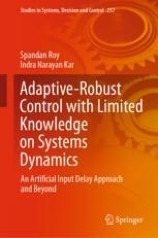
Adaptive-robust control with limited knowledge on systems dynamics : An artificial input delay approach and beyond
investigates the role of artificial input delay in approximating unknown system dynamics, referred to as time-delayed control (TDC), and provides novel solutions to current design issues in TDC. Its central focus is on designing adaptive-switching gain-based robust control (ARC) for a class of Euler–Lagrange (EL) systems with minimal or no knowledge of the system dynamics parameters. The newly proposed TDC-based ARC tackles the commonly observed over- and under-estimation issues in switching gain. The consideration of EL systems lends a practical perspective on the proposed methods, and each chapter is supplemented by relevant experimental data

Adaptive Multimedial Retrieval : Retrieval, User, and Semantics ; 5th International Workshop, AMR 2007, Paris, France, July 5-6, 2007 Revised Selected Papers
This book constitutes the thoroughly refereed post-workshop proceedings of the 5th International Workshop on Adaptive Multimedia Retrieval, AMR 2007, held in Paris, France, in July 2007.

Adaptive Multimedia Retrieval : User, Context, and Feedback ; Third International Workshop, AMR 2005, Glasgow, UK, July 28-29, 2005, Revised Selected Papers
This book is an extended collection of revised contributions that were initially submitted to the International Workshop on Adaptive Multimedia Retrieval (AMR 2005). This workshop was organized during July 28-29, 2005, at the U- versity of Glasgow, UK, as part of an information retrieval research festival and in co-location with the 19th International Joint Conference on Arti?cial Int- ligence (IJCAI 2005). AMR 2005 was the third and so far the biggest event of the series of workshops that started in 2003 with a workshop during the 26th German Conference on Arti?cial Intelligence (KI 2003) and continued in 2004 as part of the 16th European Conference on Arti?cial Intelligence (ECAI 2004).

Adaptive Motion of Animals and Machines
Apparently, the ability of animals and robots to adapt in a real world cannot be explained or realized by one single function in a control system and mechanism. That is, adaptation in motion is induced at every level from the central nervous system to the musculoskeletal system.Thus,weorganized the International Symposium on Adaptive Motion in Animals and Machines (AMAM) forscientist sandengineersconcerned with adaptation on various level stobebrought together todiscussprinciplesateachleveland to investigate principles governing total systems.
