


Refine Results
Sort By
From
To


Fifteen years after the first experiments, the breast cancer screening program was rolled out in France in 2004. It is aimed at more than eight million women aged 50 to 74. Public health action on such a scale is exemplary in Europe and especially in France where the health system is not centralized. The new edition of this book takes stock of the current state of the program and its initial results. It updates technical and radiological aspects, assessment indicators, communication and forensic problems and finally the progress of foreign programs. The history of the French program is detailed from the 1990s until 2006, with the publication of the latest version of the specifications by the Directorate General of Health. The short and medium term objectives are re-specified: to increase the participation of women, to retain them and to further improve the quality of practices. The challenge is to combine the performance of screening and therapeutic management to finally achieve a clear reduction in mortality, which has remained stable for twenty years.
The central nervous system (CNS) represents the organ with the highest structural and functional complexity. Accordingly, uncovering the mechanisms leading to cell diversity, patterning and connectivity in the CNS is one of the major challenges in developmental biology. The developing CNS of the fruitfly Drosophila melanogaster is an ideal model system to study these processes. Several principle questions regarding neurogenesis (like stem cell formation, cell fate specification, axonal pathfinding) have been addressed in Drosophila by focusing on the relatively simply structured truncal parts of the nervous system. This book provides an overview of some major facets of recent research on Drosophila brain development.
Dedicated chapters address : the use of ASM (Abstract State Machines) in the classroom; the Event-B modelling method; a methodological guide to CafeOBJ logic; CASL, the Common Algebraic Specification Language; the Duration Calculus; the logic of the RAISE specification language (RSL); the specification language TLA+; the typed logic of partial functions and the Vienna Development Method (VDM); and Z logic and its applications. Each chapter is self-contained, with references, and symbol and concept indexes. Finally, in a unique feature, the book closes with short commentaries on the specification languages written by researchers closely associated with their original development.
This book provides a gentle, software engineering oriented introduction to category theory. Assuming only a minimum of mathematical preparation, this book explores the use of categorical constructions from the point of view of the methods and techniques that have been proposed for the engineering of complex software systems: object-oriented development, software architectures, logical and algebraic specification techniques, models of concurrency, inter alia. After two parts in which basic and more advanced categorical concepts and techniques are introduced, the book illustrates their application to the semantics of CommUnity – a language for the architectural design of interactive systems. "For computer scientists, this unique book presents Category Theory in a manner tailored to their interests and with examples to which they can relate." Ira Forman, IBM "This book applies little-known yet quite powerful formal tools from category theory to software structures: designs, architectures, patterns, and styles. Rather than focus on issues at the level of computational models and semantics, it instead applies these tools to some of the problems facing the sophisticated software architect.

Probabilistic graphical models and decision graphs are powerful modeling tools for reasoning and decision making under uncertainty. As modeling languages they allow a natural specification of problem domains with inherent uncertainty, and from a computational perspective they support efficient algorithms for automatic construction and query answering. This includes belief updating, finding the most probable explanation for the observed evidence, detecting conflicts in the evidence entered into the network, determining optimal strategies, analyzing for relevance, and performing sensitivity analysis. The book introduces probabilistic graphical models and decision graphs, including Bayesian networks and influence diagrams.It contians two parts. The first part focuses on probabilistic graphical models. Compared with the previous book, the new edition also includes a thorough description of recent extensions to the Bayesian network modeling language, advances in exact and approximate belief updating algorithms, and methods for learning both the structure and the parameters of a Bayesian network. The second part deals with decision graphs, and in addition to the frameworks described in the previous edition, it also introduces Markov decision processes and partially ordered decision problems.
This work, a tribute to renowned researcher Robert Paige, is a collection of revised papers published in his honor in the Higher-Order and Symbolic Computation Journal in 2003 and 2005. The book also includes some papers by members of the IFIP Working Group 2.1 of which Bob was an active member.

This book constitutes the refereed proceedings of the 29th International Conference on Applications and Theory of Petri Nets and Other Models of Concurrency, PETRI NETS 2008, held in Xi'an, China, in June 2008.
Analyzing computer system performance is often regarded by most system administrators, IT professionals and software engineers as a black art that is too time consuming to learn and apply. Finally, this book by acclaimed performance analyst Dr. Neil Gunther makes this subject understandable and applicable through programmatic examples. The means to this end is the open-source performance analyzer Pretty Damn Quick (PDQ) written in Perl As the epigraph in this book points out, Common sense is the pitfall of performance analysis. The performance analysis framework that replaces common sense is revealed in the first few chapters of Part I. The important queueing concepts embedded in PDQ are explained in a very simple style that does not require any knowledge of formal probability theory. Part II begins with a full specification of how to set up and use PDQ replete with examples written in Perl. Subsequent chapters present applications of PDQ to the performance analysis of multicomputer architectures, benchmark results, client/server scalability, and Web-based applications.
An Integrated Approach to Software Engineering introduces software engineering to advanced-level undergraduate and graduate students of computer science. It emphasizes a case-study approach whereby a project is developed through the course of the book, illustrating the different activities of software development. The sequence of chapters is essentially the same as the sequence of activities performed during a typical software project. All activities, including quality assurance and control activities, are described in each chapter as integral activities for that phase of development. Similarly, the author carefully introduces appropriate metrics for controlling and assessing the software process. Chapters in this revised edition, updated for today’s standards, include these new features: Software Process, Requirements Analysis and Specification, Software Architecture, Project Planning, Object Oriented Design, Coding,Testing,
This book constitutes the refereed proceedings of the 12th International Conference on Algebraic Methodology and Software Technology, AMAST 2008, held in Urbana, IL, USA, in July 2008.
This Festschrift volume - published to honor Joseph Goguen on his 65th Birthday on June 28, 2006 - includes 32 refereed papers by leading researchers in the different areas spanned by Joseph Goguen's work. The papers address a broad variety of topics from meaning, meta-logic, specification and composition, behavior and formal languages, as well as models, deduction, and computation.The papers were presented at a Symposium in San Diego, California, USA in June 2006.

The field of agent & multi-agent systems is experiencing tremendous growth. At the same time the field of formal methods is blossoming and has proven its importance in industrial and government applications. The FAABS (Formal Approaches to Agent-Based Systems) workshops, merging the concerns of the two fields, provided a timely and compelling platform on which the growing concerns and requirement of agent-based systems users that systems should be accompanied by behavioral assurances, could be discussed. This book has arisen from the overwhelming response to FAABS ’00, ’02 & ’04 and all chapters are updated or represent new research, and are designed to provide a more in-depth treatment of the topic. Examples of how others have applied formal methods to agent-based systems are included, plus formal method tools & techniques that readers can apply to their own systems.
Modern software systems are becoming more complex in many ways and are having to cope with a growing number of abnormal situations which, in turn, are increasingly complex to handle.This book is composed of five parts; the first four deal with topics related to exception handling in the context of programming languages, concurrency and operating systems, pervasive computing systems, and requirements and specifications. The last part focuses on case studies, experimentation and qualitative comparisons. The 16 coherently written chapters by leading researchers competently address a wide range of issues in exception handling.
Presents a ""practical theory"" of reactive systems, with formal foundations in Temporal Logic of Actions. This book emphasises theoretical understanding of reactive behaviors and using ""horizontal"" modularity to manage their complexity. It illustrates the incremental specification by a number of examples of varying size and complexity
This book gives a comprehensive account of Maude, a language and system based on rewriting logic. Many examples are used throughout the book to illustrate the main ideas and features of Maude, and its many possible uses. Maude modules are rewrite theories. Computation with such modules is - cient deduction by rewriting. Because of its logical basis and its initial model semantics,aMaude module defines a precise mathematical model.This means that Maude and its formal tool environment can be used in three, mutually reinforcing ways: • as a declarative programming language; • as an executable formal specification language; and • as a formal verification system. Maude’s rewriting logic is simple, yet very expressive. This gives Maude good representational capabilities as a semantic framework to formally represent a wide range of systems, including models of concurrency, distributed al- rithms, network protocols, semantics of programming languages, and models of cell biology. Rewriting logic is also an expressive universal logic,making Maude a fiexible logical framework in which many difierent logics and - ference systems can be represented and mechanized. This makes Maude a useful metatool to build many other tools, including those in its own formal tool environment. Thanks to the logic’s simplicity and the use of advanced semi-compilation techniques, Maude has a high-performance implementation, making it competitive with other declarative programming languages.
Part I of this book presents a high-level description of an artificial agent which humans can freely communicate with in their accustomed language. Part II analyzes the major constructions of natural language, i.e., intra- and extrapropositional functor - argument structure, coordination, and coreference, in the speaker and the hearer mode. Part III defines declarative specifications for fragments of English, which are used for an implementation in Java.
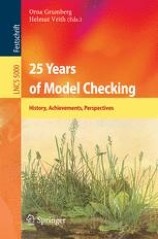
Model checking technology is among the foremost applications of logic to computer science and computer engineering. The model checking community has achieved many breakthroughs, bridging the gap between theoretical computer science and hardware and software engineering, and it is reaching out to new challenging areas such as system biology and hybrid systems. Model checking is extensively used in the hardware industry and has also been applied to the verification of many types of software. Model checking has been introduced into computer science and electrical engineering curricula at universities worldwide and has become a universal tool for the analysis of systems.
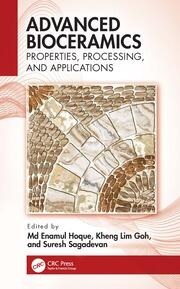
Offers a comprehensive view of properties and processing of bioceramics. Highlights applications in dentistry, orthopaedic and maxillofacial implants, and regenerative and tissue engineering. Covers ISO/ASTM specifications such as processing, clinical applications, recycling/reuse and disposal standards.
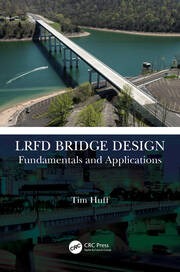
Examines and explains material from the 9th edition of the AASHTO LRFD Bridge Design Specifications, including deck and parapet design, load calculations, limit states and load combinations, concrete and steel I-girder design, bearing design, and more. With increased focus on earthquake resiliency, two separate chapters– one on conventional seismic design and the other on seismic isolation applied to bridges– will fully address this vital topic. The primary focus is on steel and concrete I-girder bridges, with regard to both superstructure and substructure design. / Includes several worked examples for a project bridge as well as actual bridges designed by the author / Examines seismic design concepts and design details for bridges / Presents the latest material based on the 9th edition of the LRFD Bridge Design Specifications / Covers fatigue, strength, service, and extreme event limit states / Includes numerous solved problems and exercises at the end of each chapter to illustrate the concepts presented
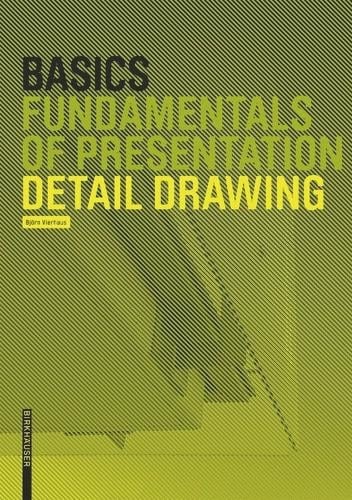
Detailed drawings are developed on the basis of the working drawings; they form an important part of the specification and contain precise information for the tradesmen, indicating how materials are to be used and how they are to be joined. Drawings are produced in various degrees of detail. Depending on the function of the drawings, they are produced in scales from 1:20 to 1:1 in order to define the materials and method of joining, and to better illustrate the various dimensions. Basics Detailed Drawings explains, step by step, how to compose detailed designs and produce correct construction drawings, using clear examples

Daraa Highway - Ghabagheb - Syria
+963-15 2050 - 15 860 380 /1/2/3 - 11 662 3900