


Refine Results
Sort By
From
To

This volume is the first ever collection devoted to the field of proof-theoretic semantics. Contributions address topics including the systematics of introduction and elimination rules and proofs of normalization, the categorial characterization of deductions, the relation between Heyting's and Gentzen's approaches to meaning, knowability paradoxes, proof-theoretic foundations of set theory, Dummett's justification of logical laws, Kreisel's theory of constructions, paradoxical reasoning, and the defence of model theory.
Contribute to our understanding of this dynamic process by clearly presenting and discussing the most important hypotheses, issues and theories in philosophical and logical study of language, thought and action. Among the fundamental issues discussed are the rationality and freedom of agents, theoretical and practical reasoning, individual and collective attitudes and actions, the nature of cooperation and communication, the construction and conditions of adequacy of scientific theories, propositional contents and their truth conditions, illocutionary force, time, aspect and presupposition in meaning, speech acts within dialogue, the dialogical approach to logic and the structure of dialogues and other language games, as well as formal methods needed in logic or artificial intelligence to account for choice, paradoxes, uncertainty and imprecision.
This second edition of Chance Rules again recounts the story of chance through history and the various ways it impacts on our lives. Here you can read about the earliest gamblers who thought that the fall of the dice was controlled by the gods, as well as the modern geneticist and quantum theory researcher trying to integrate aspects of probability into their chosen speciality. Example included in the first addition such as the infamous Monty Hall problem, tossing coins, coincidences, horse racing, birthdays and babies remain, often with an expanded discussion, in this edition. Additional material in the second edition includes, a probabilistic explanation of why things were better when you were younger, consideration of whether you can use probability to prove the existence of God, how long you may have to wait to win the lottery, some court room dramas, predicting the future, and how evolution scores over creationism. Chance Rules lets you learn about probability without complex mathematics.
With its many easy-to-follow mathematical examples, this book takes the reader on an almost chronological trip through the fascinating and amazing laws of chance, omnipresent in the natural world and in our daily lives. Along the route many fascinating topics are discussed, such as: challenging probability paradoxes; "paranormal" coincidences; game odds; causes and effects; interpretation of opinion polls; winning chances as a game proceeds; the nature of randomness; entropy and randomness; randomness in life; algorithmic complexity and the undecidability of randomness; possibilities and limitations of learning the laws of a Universe immersed in chance events. This charming book will inform and entertain the scientist and non-scientist alike.
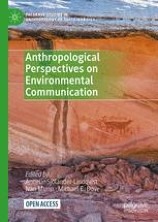
Through anthropological and ethnographic analyses, this collection addresses how interests, values, and ideologies affect dialogue and sustainability work. Drawing on studies from three continents – Europe, North America, and South America – the paradoxes and the plurality of meanings associated with the creation of sustainable futures are explored. The book focuses on how communication practices collide with organizational frameworks, customary practices, livelihoods, and landscape.

Daraa Highway - Ghabagheb - Syria
+963-15 2050 - 15 860 380 /1/2/3 - 11 662 3900