Refine Results
Sort By
From
To



Faculties
Campus Facilities and Online Services

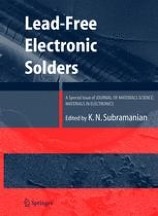
In the last few decades the effect of lead contamination on human health has received significant attention. Based on such concerns, elimination of lead from ceramic glaze, paint, plumbing etc. has been legislated and implemented. However, until recently, solders used in electronics, based on suitability and knowledge-base developed over a long period of time, remained lead-based. Successive rapid advances in microelectronic devices in recent decades make them obsolete within a very short period after their introduction resulting in significant quantities of electronic wastes in landfills. Leaching of toxic lead from such electronic wastes can result in contamination of the human food chain causing serious health hazards. As a consequence, several European and Pacific Rim countries have passed legislations warranting elimination of lead from electronic solders by fast approaching deadlines. Global economic pressures brought on by such legislations have resulted in a flurry of research activities to find suitable lead-free substitutes for the traditional leaded electronic solders.

While tin/lead solders have dominated the electronics industry for many years, environmental considerations and new legislation are forcing change. Backed by more than ten years of research in Pb-free solders, many electronics manufacturers are poised for conversion. A Guide to Lead-free Solders is intended as a tool to help industry as it moves into a new era in the production and use of solders. An overview of the principles of soldering technology is provided beginning with the theory underlying each concept. Focusing on the most up-to-date methods for testing and characterization, these theories are then reinforced by experimental examples and industrial applications.
