


Refine Results
Sort By
From
To


The basic techniques of algebra and number theory useful in recent applications to cryptography and codes are developed, with the aim of being elementary and self-sufficient. The emphasis is on computational problems. This part of the volume can be useful as a textbook for a first course in algebra for mathematicians, computer scientists or engineers. Important applications of algebra and geometry to cryptography and codes are then illustrated. Both, cryptography and codes have significant applications in daily life which are illustrated here. Cryptography is developed in detail in much of its classic and current aspects, and both private and public key cryptography are developed. Cryptography with the use of elliptic curves on finite fields is also illustrated. A chapter introducing the subject is dedicated to linear codes.

Argumentative Indicators: A Pragma-Dialectical Study identifies and analyses English words and expressions that are crucial for an adequate reconstruction of argumentative discourse. It provides the analyst of argumentative discussions and texts with a systematic set of instruments for giving a well-founded analysis which results in an analytic overview of the elements that are relevant for the evaluation of the argumentation. In the book a systematic connection is made between linguistic insights into the characteristics of argumentative discourse and insights from argumentation theory into the resolution of differences of opinion by means of argumentation.
In this book, Walton presents his perspective on argumentation methods for artificial intelligence and law. … the different tools are combined in a way that makes them potentially useful for understanding legal reasoning. … this book offers a valuable perspective on the current state and future research directions of argumentation methods for artificial intelligence and law." (Jelle van Veenen, Artificial Intelligence and Law,

This book brings together the work of leading experts in argumentation in science education. It presents research combining theoretical and empirical perspectives relevant for secondary science classrooms. Since the 1990s, argumentation studies have increased at a rapid pace, from stray papers to a wealth of research exploring ever more sophisticated issues. This volume constitutes a unique collection and covers fundamental issues in argumentation such as cognitive, methodological and epistemological aspects; classroom-based research in teaching and learning of argumentation in science classrooms; and argumentation in context such as in socio-scientific and moral contexts. The book’s underlying premise is that argumentation is a significant aspect of scientific inquiry and plays an important role in teaching and learning of science.

The book is unique in combining a challenging interpretation of one the foremost European conceptions of fundamental rights with the discussion of the pragmatics of constitutional adjudication.

This book addresses the significant environmental changes experienced by high latitude and high altitude ecosystems at the beginning of the 21st c- tury. Increased temperatures and precipitation, reduction in sea ice and glacier ice, the increased levels of UV-radiation and the long-range tra- ported contaminants in arctic and alpine regions are stress factors that challenge terrestrial and aquatic ecosystems. The large natural variation in the physical parameters of these extreme environments is a key factor in structuring the biodiversity and biotic productivity, and the effect of the new stress factors can be critical for the population structures and the - teraction between species. These changes may also have socio-economic effects if the changes affect the bio-production, which form the basis for the marine and terrestrial food chains. The book is uniquely multidisciplinary and provides examples of va- ous aspects of contemporary environmental change in arctic and alpine - gions. The 21 chapters of the book are organised under the fields of •Climate change and ecosystem response, •Long range transport of poll- ants and ecological impacts, and •UV radiation and biological effects, each also including aspects of the •Socio-economic effects of environmental change. The introductory chapter presents and explains the internal c- nection and integration of all chapters.

The sourcebook is divided into four substantive sections, each of which is introduced by a summary statement outlining the chapters in the section. Part I deals with the history of archaeology and the advance of archaeological theory. Part II ranges over the first four million years of our evolution as a cultural species and covers the first hominids to complex hunter-gatherers. Part III concerns the origins of agriculture and features discussions of such issues as craft production, the division of labor, warfare, and the rise of social inquality. Part IV analyzes the rise of states and empired in both the Old and New World; the archaeology of the classical Mediterranean states is also included in this section. A final chapter portends the future of archaeology.
The morphology of Arabic poses special challenges to computational natural language processing systems. The exceptional degree of ambiguity in the writing system, the rich morphology, and the highly complex word formation process of roots and patterns all contribute to making computational approaches to Arabic very challenging. Indeed many computational linguists across the world have taken up this challenge over time, and many of the researchers with a track record in this research area have contributed to this book.
Various aspects of numerical analysis for equations arising in boundary integral equation methods have been the subject of several books published in the last 15 years [95, 102, 183, 196, 198]. Prominent examples include various classes of o- dimensional singular integral equations or equations related to single and double layer potentials. Usually, a mathematically rigorous foundation and error analysis for the approximate solution of such equations is by no means an easy task. One reason is the fact that boundary integral operators generally are neither integral operatorsof the formidentity plus compact operatornor identity plus an operator with a small norm. Consequently, existing standard theories for the numerical analysis of Fredholm integral equations of the second kind are not applicable. In the last 15 years it became clear that the Banach algebra technique is a powerful tool to analyze the stability problem for relevant approximation methods [102, 103, 183, 189]. The starting point for this approach is the observation that the ? stability problem is an invertibility problem in a certain BanachorC -algebra. As a rule, this algebra is very complicated – and one has to ?nd relevant subalgebras to use such tools as local principles and representation theory.

The book proposes a compelling way to elect some 500,000 officials in public elections. After a generation of discussion and debate on the subject, the authors remain convinced that Approval Voting is as relevant today.

This book presents contributions on particle theory, quantum field theory, general relativity, quantum gravity, string theory and cosmology. These represent the outcome of numerous discussions, taking place among the authors over a period of several years, about the research landscape of present-day fundamental theoretical physics. Indeed, the resultant book documents their attempt, out of their respective and highly specialized scientific positions, to find a way of communicating about methods, achievements and promises of the different approaches which shape the development of this field. It is therefore also an attempt to elucidate the connections between these approaches, and present them not as disjoint ventures but rather as facets of a common quest for understanding. Readers interested in fundamental approaches of theoretical physics will find this book highly stimulating and enlightening.

This book offers the first synoptic study of how the primary elements in knowledge structures were analysed in antiquity from Plato to late ancient commentaries, the main emphasis being on the Platonic-Aristotelian tradition. It argues that, in the Platonic-Aristotelian tradition, the question of starting points was treated from two distinct points of view: from the first perspective, as a question of how we acquire basic knowledge; and from the second perspective, as a question of the premises we may immediately accept in the line of argumentation. It was assumed that we acquire some general truths rather naturally and that these function as starting points for inquiry. In the Hellenistic period, an alternative approach was endorsed: the very possibility of knowledge became a central issue when sceptics began demanding that true claims should always be distinguishable from false ones.

At present, how to develop industries is a burning issue in Africa, where population growth remains high and economic development has thus far failed to provide sufficient jobs for many, especially young people and women. The creation of productive jobs through industrial development ought to be a central issue in steering economic activity across the continent.The authors of this book, consisting of two development economists and five practitioners, argue that the adoption of Kaizen management practices, which originated in Japan and have become widely used by manufacturers in advanced and emerging economies, is decisively the most effective first step for industrial development in Africa.This open access book discusses what Kaizen management is, why it is applicable to Africa, and why it can provide Africa with a springboard for sustainable economic growth and employment generation.

This book provides the first explicit case study for an application of the method of reflective equilibrium (RE), using it to develop and defend a precautionary principle. It thereby makes an important and original contribution to questions of philosophical method and methodology. The book shows step-by-step how RE is applied, and develops a methodological framework which will be useful for everyone who wishes to use reflective equilibrium. With respect to precautionary principles, the book demonstrates how a rights-based precautionary principle can be constructed and defended.

This book explores the intersection of fuzzy mathematics and the spatial modeling of preferences in political science. This book develops single- and multidimensional models of fuzzy preference landscapes and characterizes the surprisingly high levels of stability that emerge from interactions between players operating.

This book aims to incorporate major aspects and essential elements underpinning the modern applications and perspectives of stratigraphy. It focuses on traditional and innovative techniques and how these can be utilized in reconstructing the geological history of sedimentary basins and in solving manifold geological problems and phenomena. Each chapter summarizes contributions by leading researchers in the field. It is hoped that this book will provide the reader with key insights into all these aspects and applications.

The main purpose of the book is to give a rigorous, yet mostly nontechnical, introduction to the most important and useful solution methods of various types of stochastic control problems for jump diffusions and its applications.

The main purpose of the book is to give a rigorous, yet mostly nontechnical, introduction to the most important and useful solution methods of various types of stochastic control problems for jump diffusionsThe types of control problems covered include classical stochastic control, optimal stopping, impulse control and singular control. Both the dynamic programming method and the maximum principle method are discussed, as well as the relation between them. Corresponding verification theorems involving the Hamilton-Jacobi Bellman equation and/or (quasi-)variational inequalities are formulated. There are also chapters on the viscosity solution formulation and numerical methods.The text emphasises applications, mostly to finance. All the main results are illustrated by examples and exercises appear at the end of each chapter with complete solutions. This will help the reader understand the theory and see how to apply it.The book assumes some basic knowledge of stochastic analysis, measure theory and partial differential equations.
The book provides a comprehensive coverage of the main statistical analysis topics important for practical applications such as data description, statistical inference, classification and regression, factor analysis, survival data and directional statistics.
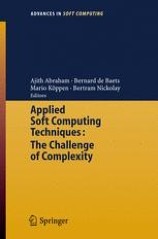
This volume presents the proceedings of the 9th Online World Conference on Soft Computing in Industrial Applications (WSC9), September 20th - October 08th, 2004, held on the World Wide Web. It contains plenary lectures, original papers and tutorials presented during the conference. The book brings together outstanding research and developments in the field of soft computing (evolutionary computation, fuzzy logic, neural networks, and their fusion) and its applications in science and technology.

Daraa Highway - Ghabagheb - Syria
+963-15 2050 - 15 860 380 /1/2/3 - 11 662 3900