


Refine Results
Sort By
From
To


Oceans, which occupy up to two thirds of the surface of our planet, were not really approached from scientific point of view until the second half of the 19th century and even the 20th with regard to microbial and unicellular life. Today, the importance of marine biodiversity has been fully recognized. It is, indeed, one of the aspects which, over the two past decades, have made a major contribution to our knowledge and vision of the living planetThis volume of Advances in Biochemical Engineering/Biotechnology illustrates several topics in line with the following broad objectives: thinking ofmarine biotechnology as the controlled production and use of marine organisms and molecules for useful purposes, firstly by exploring aspects of marine biodiversity and exploitation of biomass, then considering the identification, production and processing of marine products.
This carefully edited proceedings volume provides an extensive review and analysis of the work carried out over the past 20 years at the Mainz Microtron (MAMI). This research centered around the application of Quantum Chromodynamics in the strictly nonperturbative regime at hadronic scales of about 1 fm. Due to the many degrees of freedom in hadrons at this scale the leitmotiv of this research is "Many body structure of strongly interacting systems". Further, an outlook on the research with the forthcoming upgrade of MAMI is given. This volume is an authoritative source of reference for everyone interested in the field of the electro-weak probing of the structure of hadrons.
Presents a fundamental introduction to three solid-state approaches to achieving quantum computation: semiconductor spin-based, semiconductor charge-based, and superconducting approaches.

Many coastal areas and human activities are subject to increasing risks from natural and man-induced hazards such as flooding resulting from major changes in hydrology of river systems that has reached a global scale. Changes in the hydrological cycle coupled with changes in land and water management alter fluxes of materials transmitted from river catchments to the coastal zone, which have a major effect on coastal ecosystems. The increasing complexity of underlying processes and forcing functions that drive changes on coastal systems are witnessed at a multiplicity of temporal and spatial scales.
As it circulates in the atmosphere, in the rivers, lakes, soil, rock, and in the oceans, it is the major conveyer of va- ous chemical substances and of energy, and it can also be called as the blood of the ecosystems of this planet. But at the same time water is interwoven in the va- ous functions of the nature and the human society in countless ways which makes water one of the most complicated challenges of the mankind today.Human beings are exploiting and enjoying, but at the same time polluting and deteriorating, the waters in various ways and water is equally important to the - man socio-economic system as it is to the nature. It may sound a bit anecdotal to say that water obeys no borders, but that is true; the hydrologic cycle with its r- ers, river basins, lakes, aquifers, rainfalls, oceans, etc., cross administrational b- ders without any passport control. River and lake basins are in most cases very different from the administrational borders that the human beings have set up.
A team of outstanding scientists in the field of modern magnetic nanotechnologies illustrates the state of the art in several areas of advanced magneto-electronic devices, magnetic micro-electromechanical systems and high density information storage technologies.The physics and chemistry of nano-scale systems have made rapid advances and there are real prospects of translating exciting scientific findings into a new generation of processes and high technology products with a potential impact on several industrial sectors. In particular the development of nano-structured magnetic materials plays a leading role in the increasing miniaturization of devices with superior performances.

Magnetic heterostructures constitute an important field in magnetism and nanotechnology, which has developed over the past fifteen years due to important advances in epitaxial- growth techniques and lithographic processes. Magnetic heterostructures combine different physical properties which do not exist in nature. Examples are semiconductors/ferromagnets, superconductors/ferromagnets, and ferromagnets/antiferromagnets. These combinations display rich and novel physical properties different from those that exit in any single one of them. Interlayer exchange coupling, exchange bias, proximity effects, giant magneto-resistance, tunneling magneto-resistance, spininjection and spintransport are examples of new physical phenomena that rely on the combination of different materials layers

The objective of Document Analysis and Recognition (DAR) is to recognize the text and graphicalcomponents of a document and to extract information. With ?rst papers dating back to the 1960’s, DAR is a mature but still gr- ing research?eld with consolidated and known techniques. Optical Character Recognition (OCR) engines are some of the most widely recognized pr- ucts of the research in this ?eld, while broader DAR techniques are nowadays studied and applied to other industrial and o?ce automation systems. In the machine learning community, one of the most widely known - search problems addressed in DAR is recognition of unconstrained handwr- ten characters which has been frequently used in the past as a benchmark for evaluating machine learning algorithms, especially supervised classi?ers.

Situated at the crossroads of nature and culture, physics and consciousness, cosmos and life, history – intimately conjoined with time – continues to puzzle the philosopher as well as the scientist. Does brute nature unfold a history? Does human history have a telos? Does human existence have a purpose, Phenomenology of life projects a new interrogative system for reexamining these questions.We are invited to follow the logos of life as it spins in innumerable ways the interplay of natural factors, human passions, social forces, science and experience – through interruptions and kairic moments of accomplishment .

Les médecins et les équipes soignantes perçoivent comme une nouvelle pression la nécessité de transmettre le diagnostic de cancer et de discuter des options thérapeutiques avec un patient qui n’est pas toujours prêt à s y confronter. Bien que l’on puisse saluer le partage de l’information et encourager la transparence, le médecin prend le risque du blocage de dialogue, d’une indifférence, au pire d’un traumatisme. L’idée d’une diminution d’un certain pouvoir médical s’insinue dans le « dispositif » d’annonce qui renvoie la clinique à des apprentissages techniques. Au contraire, certains médecins cherchent à s’inscrire dans un mouvement plus démocratique. Ils constatent que pour le malade, savoir n’est pas choisir, et que dans les cas difficiles, ils restent encore décideurs. Cet ouvrage fait le point sur les changements obtenus par les lois et leurs conséquences sur les pratiques et incite à une réflexion philosophique sur la vérité et les vérités des interlocuteurs de la scène médicale.
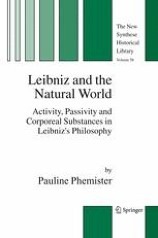
In the present book, Pauline Phemister argues against traditional Anglo-American interpretations of Leibniz as an idealist who conceives ultimate reality as a plurality of mind-like immaterial beings and for whom physical bodies are ultimately unreal and our perceptions of them illusory. Re-reading the texts without the prior assumption of idealism allows the more material aspects of Leibniz's metaphysics to emerge. Leibniz is found to advance a synthesis of idealism and materialism. His ontology posits indivisible, living, animal-like corporeal substances as the real metaphysical constituents of the universe; his epistemology combines sense-experience and reason; and his ethics fuses confused perceptions and insensible appetites with distinct perceptions and rational choice. In the light of his sustained commitment to the reality of bodies, Phemister re-examines his dynamics, the doctrine of pre-established harmony and his views on freedom.
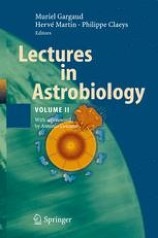
Based on material delivered at several summer schools, this book is the first comprehensive textbook at the graduate level encompassing all aspects associated with the emerging field of astrobiology. Volume II gathers another set of extensive lectures covering topics so diverse as the formation and the distribution of elements in the Universe, the concept of habitability from both the planetologists' and the biologists' point of view and artificial life. The contributions are held together by the common goal to understand better the origin of life, its evolution and possible existence outside the Earth's realm.

The push toward lead-free soldering in computers, cell phones and other electronic and electrical devices has taken on a greater urgency as laws have been passed or are pending in the United States, the European Union and Asia which ban lead-bearing solder. These new restrictions on hazardous substances are changing the way electronic devices are assembled, and specifically affect process engineering, manufacturing and quality assurance. Lead-Free Soldering offers in a single volume a broad collection of practical techniques for lead-free soldering design and manufacture, which up to now have been scattered in difficult-to-find scholarly sources. The book includes the latest information on proposed changes to lead-free standards, and up-to-date analysis of government and legislative activities and regulations in North America, Europe and Asia.
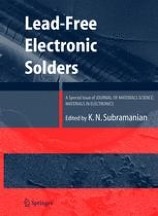
In the last few decades the effect of lead contamination on human health has received significant attention. Based on such concerns, elimination of lead from ceramic glaze, paint, plumbing etc. has been legislated and implemented. However, until recently, solders used in electronics, based on suitability and knowledge-base developed over a long period of time, remained lead-based. Successive rapid advances in microelectronic devices in recent decades make them obsolete within a very short period after their introduction resulting in significant quantities of electronic wastes in landfills. Leaching of toxic lead from such electronic wastes can result in contamination of the human food chain causing serious health hazards. As a consequence, several European and Pacific Rim countries have passed legislations warranting elimination of lead from electronic solders by fast approaching deadlines. Global economic pressures brought on by such legislations have resulted in a flurry of research activities to find suitable lead-free substitutes for the traditional leaded electronic solders.
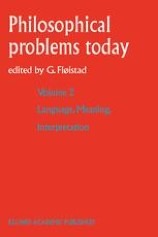
Philosophy of logic and language, and of meaning and communication are central to this volume. The discussion of these issues involves analytical approaches, including semantics and semiotics, philosophy of science, mathematical logic, phenomenology, hermeneutics and some aspects of philosophical anthropology and aesthetics. Philosophy of the Absolute also belongs to this broad repertoire of philosophical problems and disciplines. A number of problems and viewpoints derive from the metaphysical system; any relativistic view on ethical values, for instance, makes sense in relation to some absolute. Metaphysical system building may have come to an end, but after all it belongs to philosophy to remind us of our past.
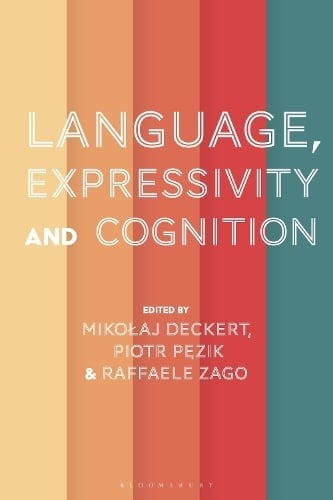
The book presents how language shapes communicative and cognitive processes but at the same time is also shaped by those processes. The chapters put forward a number of disciplinary and methodological perspectives encompassing insights from cognitive and social psychology, (critical) discourse analysis, cognitive linguistics, corpus linguistics and sociolinguistics. Both intralingual as well as contrastive, each chapter also engages with qualitative and quantitative methods.
The book presents recent estimates of the rates in changes of major land classes such as forest, cropland and pasture. Among the causative mechanisms behind land change, synergetic factor combinations are found to be more common than single key factor explanations. Aggregated globally, multiple impacts of local land changes are shown to significantly affect central aspects of Earth System functioning. Innovative developments and applications in the fields of modeling and scenario construction are presented. Finally, conclusions are drawn about the most pressing implications for the design of appropriate intervention policies, and on new directions and frontiers of research.

Based on contributions to the first General Assembly of the International Consortium on Landslides, this reference and status report emphasizes the mechanisms of different types of landslides, landslide risk analysis, and sustainable disaster management. It comprises the achievements of the ICL over the past three years, since the Kyoto assembly. It consists of three parts: research results of the International Programme on Landslides (IPL); contributions on landslide risk analysis; and articles on sustainable disaster management. The contributions reflect a wide range of topics and concerns, randing from field studies, identification of objects of cultural heritage at landslide risk, as well as landslide countermeasures.
Land use and land-cover change research over the past decade has focused mainly on contemporary primary land-cover conversions in the tropics and sub-tropics, with considerable resources dedicated to the explanation and prediction of tropical deforestation and often ignoring the dynamism in the world’s agro-pastoral landscapes. This collection integrates cutting-edge research in the social, biogeophysical, and geographical information sciences to understand the human and environmental dynamics that change the type, magnitude and location of land uses and land covers in the changing countryside.This book describes the monitoring of land-cover changes, explains the processes through which land is altered, and describes the development of spatially-explicit models to predict land change. This book illustrates how practitioners have integrated knowledge from the three scientific realms - social, biophysical, and GIScience - that underpin land-change science.
A Differential-Geometric Approach for Bernstein’s Degrees-of-Freedom Problem.- Nonsmooth Riemannian Optimization with Applications to Sphere Packing and Grasping.- Synchronization of Networked Lagrangian Systems.- An Algorithm to Discretize One-Dimensional Distributed Port Hamiltonian Systems.- Virtual Lagrangian Construction Method for Infinitedimensional Systems with Homotopy Operators.- Direct Discrete-Time Design for Sampled-Data Hamiltonian Control Systems.- Kinematic Compensation in Port-Hamiltonian Telemanipulation.- Interconnection and Damping Assignment Passivity-Based Control of a Four-Tank System.- Towards Power-based Control Strategies for a Class of Nonlinear Mechanical Systems.- Power Shaping Control of Nonlinear Systems: A Benchmark Example.- Total Energy Shaping Control of Mechanical Systems: Simplifying the Matching Equations via Coordinate Changes.- Simultaneous Interconnection and Damping Assignment Passivity–Based Control: Two Practical Examples.

Daraa Highway - Ghabagheb - Syria
+963-15 2050 - 15 860 380 /1/2/3 - 11 662 3900