


Refine Results
Sort By
From
To

Presents the most current and comprehensive review of oral anatomy for clinicians and researchers alike. In 26 chapters, the reader is taken on a unique anatomical journey, starting with the oral fissure, continuing via the maxilla and mandible to the tongue and floor of the mouth, and concluding with the temporomandibular joint and masticatory muscles. Each chapter offers a detailed description of the relevant anatomical structures and their spatial relationships, provides quantitative morphological assessments, and explains the relevance of the region for clinical dentistry. All dental health care professionals require a sound knowledge of anatomy for the purposes of diagnostics, treatment planning, and therapeutic intervention. A full understanding of the relationship between anatomy and clinical practice is the ultimate objective, and this book will enable the reader to achieve such understanding as the basis for provision of the best possible treatment for each individual patient as well as recognition and comprehension of unexpected clinical findings.
Serves as a complete reference guide for the totality of salivary gland (SG) disease. Focusing on the clues available to the practitioner during the patient examination, it will completely review and update the available data concerning all manner of SG conditions. Looking beyond the perspectives of surgery, imaging, pathology, or sialendoscopy in diagnosis and therapy, this book will provide all professionals interested in the head and neck extensive and detailed diagnostic information about each SG entity.
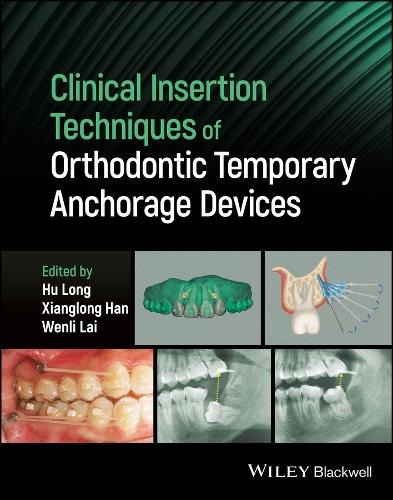
Clinical Insertion Techniques of Orthodontic Temporary Anchorage Devices is the first comprehensive guide to the clinical insertion techniques for temporary anchorage devices (TADs) and the clinical applications of TADs according to different anatomic regions. It provides detailed clinical insertion instructions and applications, as well as guidance on choosing an optimal insertion site, detailed insertion techniques, and potential complications and their solutions.
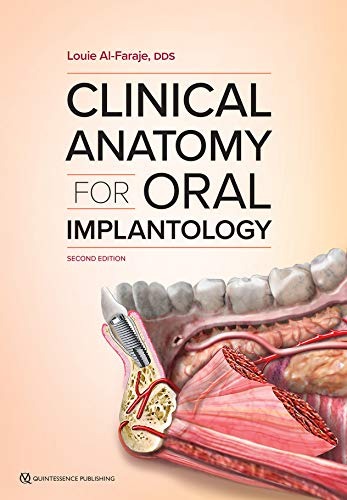
Designed with the practicing implantologist in mind, and it has been revitalized to have the utmost relevance to the clinical reality of oral implantology today. Impeccable full-page illustrations demonstrate a detailed view of each anatomical area, and clinical photos, radiographs, CBCT scans, and cadaver specimens provide a complete picture of what the clinician can expect to encounter.
Presents an in-depth multidisciplinary approach to the detection, recovery, analysis, and identification of thermally altered remains. Bridging the gap between research and practice, this invaluable one-stop reference provides detailed coverage of analytical techniques in forensic medicine and pathology, forensic anthropology, forensic odontology, and forensic chemistry and forensic biology.
Focuses on overall makeup of dental bioceramics and relevant clinical situations in endodontics. Blends together detailed information on the physico-chemical and biological properties of bioceramics with their clinical application in endodontics, exploring history and chemistry, mechanical properties, advantages of bioceramics over other materials, and clinical cases with high definition pictures and videos demonstrating their usage across wide variety of clinical situations in endodontics.
Covers all the surgical techniques across the entire remit of the specialty. The content encompasses coverage of safe surgical practice, including human factors, and includes detailed coverage of the major OMFS sub-specialties: Oral Surgery and Implantology, Trauma, Oncology, Reconstructive Surgery, Salivary Gland & Thyroid Surgery, Temporomandibular Joint Disorders, Orthognathic and Craniofacial Surgery, Cleft Lip and Palate, Facial Aesthetic Surgery, and Advances in Operative Oral & Maxillofacial Surgery.
Provides a detailed step-by-step approach to the dissection of the forehead, face, and neck, in a structural, layered approach. This dissection manual follows an atlas format, with color photographs from past professional lectures and classroom courses, as well as line drawings, enhancing descriptions. Clinical correlations are also interjected throughout to highlight the importance of individual anatomic structures. Chapters describe the preparation and storage of specimens and the dissection of the forehead and eyebrows, the midface, nose, ear, and lower face, and the neck.
This excellently illustrated book aims to equip dentists, oral surgeons, and trainees with the detailed knowledge of anatomical variations in the oral region that is now required for optimal daily clinical practice.
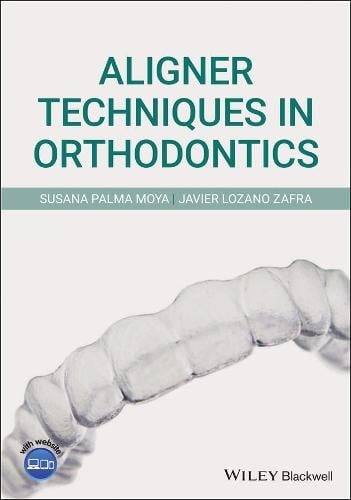
Filled with the theoretical and practical clinical information on the popular aligner techniques with a focus on Invisalign. Written by practicing orthodontists and noted experts on the topic, the book is designed to help practitioners develop their skills in using aligners in orthodontics. The authors describe in detail the clear and simple methods for treating patients using different aligner techniques, as well as material on treating any given malocclusion.
Full understanding of the role of cone beam computed tomography (CBCT) in helping to solve many of the most challenging problems in endodontics. It will shorten the learning curve in application of this exciting imaging technology in a variety of contexts: difficult diagnostic cases, treatment planning, evaluation of internal tooth anatomy prior to root canal therapy, nonsurgical and surgical treatments, early detection and treatment of resorptive defects, and outcomes assessment. The ability to obtain an accurate 3D representation of a tooth and the surrounding structures by means of noninvasive CBCT imaging is changing the approach to clinical decision making in endodontics. Clinicians long accustomed to working in very small, three-dimensional spaces are no longer constrained by the limitations of two-dimensional imaging. The challenges of mastering the new technology can, however, be daunting. The detailed guidance contained in this book will help endodontists to take full advantage of the important benefits offered by CBCT.

This book presents the first detailed study of one of the most important masterpieces of Renaissance cartography, Martin Waldseemüller’s Carta marina of 1516. By transcribing, translating into English, and detailing the sources of all of the descriptive texts on the map, as well as the sources of many of the images, the book makes the map available to scholars in a wholly unprecedented way.
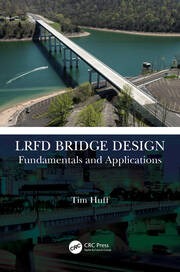
Examines and explains material from the 9th edition of the AASHTO LRFD Bridge Design Specifications, including deck and parapet design, load calculations, limit states and load combinations, concrete and steel I-girder design, bearing design, and more. With increased focus on earthquake resiliency, two separate chapters– one on conventional seismic design and the other on seismic isolation applied to bridges– will fully address this vital topic. The primary focus is on steel and concrete I-girder bridges, with regard to both superstructure and substructure design. / Includes several worked examples for a project bridge as well as actual bridges designed by the author / Examines seismic design concepts and design details for bridges / Presents the latest material based on the 9th edition of the LRFD Bridge Design Specifications / Covers fatigue, strength, service, and extreme event limit states / Includes numerous solved problems and exercises at the end of each chapter to illustrate the concepts presented
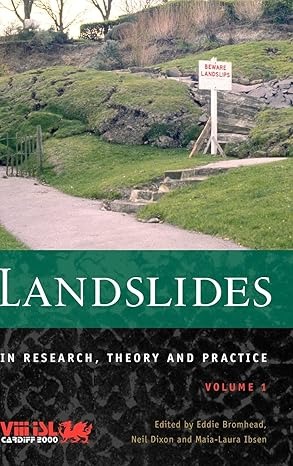
Contains vital information from throughout the world on landslide and slope instability problems. Every four years the worlds leading scientists and engineers dealing with landslides, have the opportunity to meet up and engage in the exchange of ideas and experiences at a symposium run under the auspices of ISSMGE Technical Committee 11. These volumes, taken from the 8th symposium in the series, detail investigations into landslide causes, mechanisms and hazards, together with accounts of monitoring and mapping.

Details the story of London Underground's award winning Jubilee Line Extension (JLE), how it came to being, how it was planned, how it was designed, built and commissioned, and how the millennium deadline imposed by the Dome was met. Always in the public eye and the political spotlight, the JLE has played a significant role in the success of the Canary Wharf development, improved public transport immeasurably in the areas of southeast and east London, and set new standards for London Underground and public transport.
Pesents buildings developed using modular assembly approaches based on lightweight and corrosion-resistant fiber reinforced polymer (FRP) composites. Construction methods and the choice of building materials offer great opportunities for more productive and environmentally friendly solutions. This book includes valuable experimental data on large-scale structural components (beams, slabs, amd columns), connections (shear connections, wall stud connections, beam-column connections, column-column connections) and structures (composite floor system, structural sandwich assemblies, and full-scale structural demonstrations), supported with detailed numerical modelling and analytical methods.
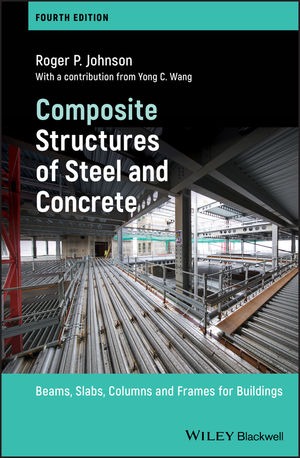
Provides an introduction to the theory and design of composite structures of steel and concrete. Material applicable to both buildings and bridges is included, with more detailed information relating to structures for buildings. Throughout, the design methods are illustrated by calculations in accordance with the Eurocode for composite structures, EN 1994, Part 1-1, 'General rules and rules for buildings' and Part 1-2, 'Structural fire design', and their cross-references to ENs 1990 to 1993.
This document is a comprehensive design code for concrete. It is the result of a comprehensive revision to the original model code of 1978, which was produced jointly by the Comite Euro-International du Beton (CEB) and the Federation Internationale de la Precontrainte (FIP). Model Code 1990 has more detailed guidelines and explanations than national codes and can be used as a basis for them. It has already influenced the codification work that is being carried out both nationally and internationally and will continue to do so. With the publication of Eurocode 2: Part 1 as a draft pre-standard, this document is a useful reference during the consultative period before Eurocode 2 becomes a European standard. It may be of use to anyone involved in codification work on concrete.
Presents practical information about the design and construction of building projects by addressing the principles of each method, unveiling background factors for requirements, and state-of-the-art application details, and presents general design and application principles of construction methods and technologies without diving into engineering calculations and formulas to keep the content easily understandable by all AEC practitioners and participants.
This book provides a compendium of material properties, demonstrates several successful examples of bio-based materials’ application in building facades, and offers ideas for new designs and novel solutions. It features a state-of-the-art review, addresses the latest trends in material selection, assembling systems, and innovative functions of facades in detail. Selected case studies on buildings from diverse locations are subsequently presented to demonstrate the successful implementation of various biomaterial solutions, which defines unique architectural styles and building functions. The structures, morphologies and aesthetic impressions related to bio-based building facades are discussed from the perspective of art and innovation; essential factors influencing the performance of materials with respect to functionality and safety are also presented. Special emphasis is placed on assessing the performance of a given facade throughout the service life of a building, and after its end.

Daraa Highway - Ghabagheb - Syria
+963-15 2050 - 15 860 380 /1/2/3 - 11 662 3900