


Refine Results
Sort By
From
To


The book is divided into two sections. The first techniques section covers the principles and characteristics of techniques ranging from rapid antigen testing, to advanced antibody detection, to in vitro nucleic acid amplification techniques, and to nucleic acid microarray and mass spectrometry. Sufficient space is assigned to cover different nucleic acid amplification formats that are currently being used widely in the diagnostic microbiology field. Within each technique, examples are given regarding its application in the diagnostic field. Commercial product information, if available, is introduced with commentary in each chapt

Advanced Structural Chemistry clarifies the relationships between synthesis and structure, as well as structure and property, both of which are central to the creation of new materials with unique functions. In addition to subjects like the syntheses of metal-oxide clusters, metal-organic cages, and metal-organic frameworks with tailored optical, electric, ferroelectric, magnetic, adsorption, separation, and catalytic properties, the accomplished editor Rong Cao provides readers with information on a wide variety of topics
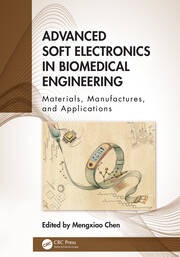
Presents the latest advances in soft electronics in biomedical engineering and its potential applications in various biomedical fields. Provide comprehensive coverage of how soft electronics are used in diagnostics and monitoring, medical therapy, neural engineering, and wearable and implantable systems. In particular, some emerging research areas such as advanced soft robotics, fiber sensing technologies, and power optimization strategies are explored. In addition, the book highlights international standardization activities in wearable technologies and implantable bioelectronics.

Organized around the central dogma of life, progressing from genes to proteins and higher-order cellular structures, including core application areas such as imaging, chemical genetics, activity-based protein profiling, and natural product discovery and biosynthesis. Advanced topics and applications in, e. g., microbiology, developmental biology, and neurobiology, are covered in separate sections.
This book provides a perspective on the current status of bioimaging technologies developed to assess the quality of musculoskeletal tissue with an emphasis on bone and cartilage. It offers evaluations of scaffold biomaterials developed for enhancing the repair of musculoskeletal tissues. These bioimaging techniques include micro-CT, nano-CT, pQCT/QCT, MRI, and ultrasound, which provide not only 2-D and 3-D images of the related organs or tissues, but also quantifications of the relevant parameters. The advance bioimaging technologies developed for the above applications are also extended by incorporating imaging contrast-enhancement materials.

Adrenomedullin in Cardiovascular Disease is an up-to-date review of the most relevant aspects of adrenomedullin. It encompasses a broad range of fields including biochemistry, molecular biology, physiology, pharmacology, pathophysiology of cardiovascular disease and clinical applications of adrenomedullin to cardiovascular disease.

Discusses of the latest technology and advancements in the field of human-derived ASC and SVF. The chapters in this book are organized into four parts. Part One focuses on human ASC’s isolation, characterization, and differentiation. Part Two describes the isolation and characterization of ASC and SVF from canine, feline, and murine tissues. Part Three looks at hydrogels, scaffolds, and microphysiological systems, and Part Four talks about the new assays and applications using ASC. Written in the highly successful Methods in Molecular Biology series format, chapters include introductions to their respective topics, lists of the necessary materials and reagents, step-by-step, readily reproducible laboratory protocols, and tips on troubleshooting and avoiding known pitfalls.
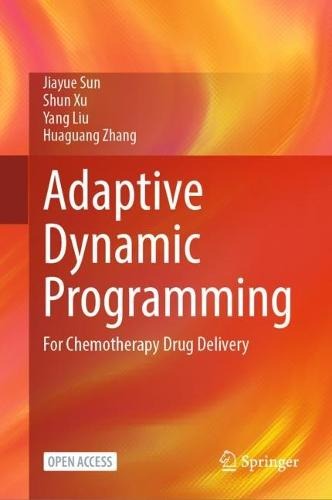
Focuses on the practical application of Adaptive Dynamic Programming (ADP) in chemotherapy drug delivery, taking into account clinical variables and real-time data. ADP's ability to adapt to changing conditions and make optimal decisions in complex and uncertain situations makes it a valuable tool in addressing pressing challenges in healthcare and other fields. As optimization technology evolves, we can expect to see even more sophisticated and powerful solutions emerge.

In 2D Functional Nanomaterials: Synthesis, Characterization, and Applications, Dr. Ganesh S. Kamble presents an authoritative overview of the most recent progress in the rational design and synthesis of 2D nanomaterials and their applications in semiconducting catalysts, biosensors, electrolysis, batteries, and solar cells. This interdisciplinary volume is a valuable resource for materials scientists, electrical engineers, nanoscientists, and solid-state physicists looking for up-to-date information on 2D heterojunction nanomaterials.
This book shows the factors linking information flow, social intelligence, rights management and modelling with epistemic democracy, offering licensed linked data along with information about the rights involved. This model of democracy for the web of data brings new challenges for the social organisation of knowledge, collective innovation, and the coordination of actions. Licensed linked data, licensed linguistic linked data, right expression languages, semantic web regulatory models, electronic institutions, artificial socio-cognitive systems are examples of regulatory and institutional design (regulations by design). The web has been massively populated with both data and services, and semantically structured data, the linked data cloud, facilitates and fosters human-machine interaction. Linked data aims to create ecosystems to make it possible to browse, discover, exploit and reuse data sets for applications. Rights Expression Languages semi-automatically regulate the use and reuse of content.

Delves into the theoretical and practical studies of al-Qawaid al-Fiqhiyyah in Islamic legal theory. It elucidates the importance of this concept in the application of Islamic law and demonstrates how the concept relates to the objectives of Islamic law generally.
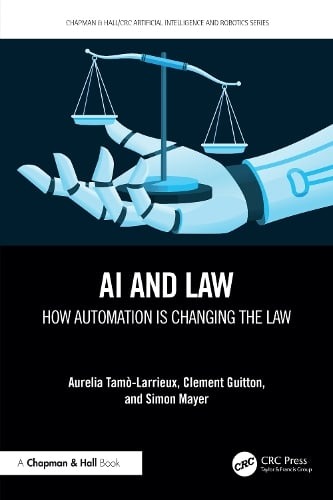
Provides insights into how AI is changing legal practice, government processes, and individuals’ access to those processes, encouraging each of us to consider how technological advances are changing the legal system. Particularly, and distinct from current debates on how to regulate AI, this books focuses on how the progressive merger between computational methods and legal rules changes the very structure and application of the law itself.
Explores ways to leverage information technology and machine learning to combat disease and promote health, especially in resource-constrained settings. It focuses on digital disease surveillance through the application of machine learning to non-traditional data sources.
Provides basic concepts and deep knowledge about various security mechanisms that can be implemented in IoT through Blockchain technology. This book aids readers in gaining insight and knowledge about providing security and solutions to different challenges in IoT using Blockchain technology. This book primarily focuses on challenges to addressing the integration of the IoT with Blockchain with respect to potential benefits for IoT. This book gives descriptive analysis of Blockchain integrated with IoT applications and platforms for the development of IoT solutions along with possible topologies to that integration. Several application examples are included in a variety of industries / Provides the latest on secure IIoT communication using Blockchain technology for Industry 4.0 / Includes updates on using Blockchain technology in secure vehicular communication (VANET), healthcare, retail, and gaming / Provides the latest on secure IIoT communication using Blockchain technology for Industry 4.0
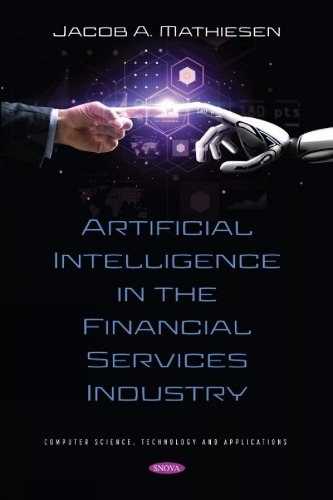
Today, the financial services sector is facing a period of rapid disruption and innovation, and artificial intelligence (AI) is at the heart of these changes. Artificial intelligence can be used to gather enormous amounts of data, detect abnormalities, and solve complex problems. Financial institutions are already experimenting extensively with AI strategies to enhance and streamline financial institutions, BSA and AML compliance, CRA requirements, fraud detection, and real estate valuations, all while reducing cost levels. This book looks at how artificial intelligence is affecting the financial services industry.
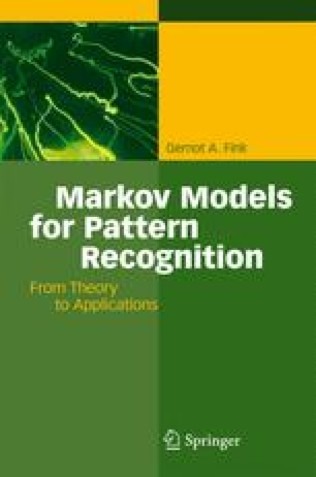
Describes the underlying theoretical concepts - covering Hidden Markov models and Markov chain models - and presents the techniques and algorithmic solutions essential to creating real world applications. The actual use of Markov models in their three main application areas - namely speech recognition, handwriting recognition, and biological sequence analysis - is presented with examples of successful systems.
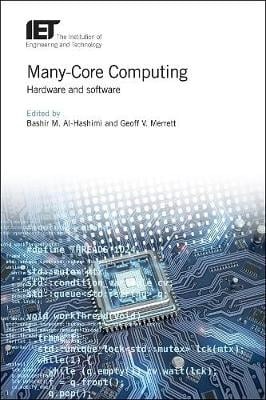
Provides a timely and coherent account of the recent advances in many-core computing research. Starting with programming models, operating systems and their applications; it presents runtime management techniques, followed by system modelling, verification and testing methods, and architectures and systems. Computing has moved away from a focus on performance-centric serial computation, instead towards energy-efficient parallel computation. This provides continued performance increases without increasing clock frequencies, and overcomes the thermal and power limitations of the dark-silicon era. As the number of parallel cores increases, we transition into the many-core computing era. There is considerable interest in developing methods, tools, architectures and applications to support many-core computing.
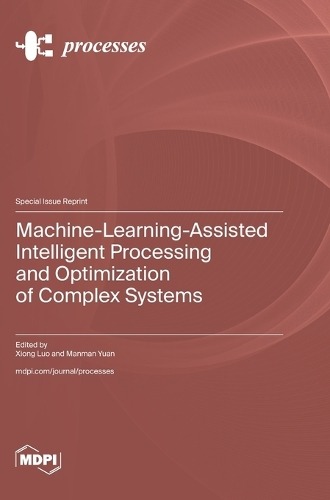
Focuses on the most recent developments in intelligent optimization methods and their applications in various test cases. The reprint covers various topics, including distributed multiagent modeling, metaheuristic algorithms, multisource data fusion, mobile computing and mobile sensing, machine learning-based intelligent processing for modeling complex manufacturing systems, and data-driven intelligent modeling
Provides students with the fundamental knowledge and practical tools needed to conduct research and build data-driven products. The authors prioritize geometric intuition and algorithmic thinking, and include detail on all the essential mathematical prerequisites, to offer a fresh and accessible way to learn. Practical applications are emphasized, with examples from disciplines including computer vision, natural language processing, economics, neuroscience, recommender systems, physics, and biology.
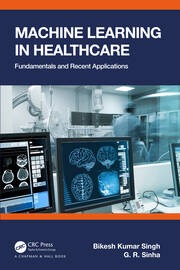
Discusses how to build various ML algorithms and how they can be applied to improve healthcare systems. Healthcare applications of AI are innumerable: medical data analysis, early detection and diagnosis of disease, providing objective-based evidence to reduce human errors, curtailing inter- and intra-observer errors, risk identification and interventions for healthcare management, real-time health monitoring, assisting clinicians and patients for selecting appropriate medications, and evaluating drug responses. Extensive demonstrations and discussion on the various principles of machine learning and its application in healthcare is provided, along with solved examples and exercises.

Daraa Highway - Ghabagheb - Syria
+963-15 2050 - 15 860 380 /1/2/3 - 11 662 3900