


Refine Results
Sort By
From
To


Inflammatory cell recruitment requires the concerted action of at least five major sets of adhesion molecules: integrins, immunoglobulin-like molecules, selectins, carbohydrate structures serving as selectin ligands, and certain ectoenzymes. This volume gives a comprehensive overview on the most relevant leukocyte and endothelial adhesion molecules. The chapters are written by leaders in the field and focus on the biology, structure, function, and regulation of adhesion molecules. Currently approved adhesion molecule-based therapies are reviewed and an outlook for future approaches is also provided. The book is of interest to clinicians and scientists from immunology, physiology, cancer research, rheumatology, allergology, infectious diseases, gastroenterology, pulmonology and cardiology.
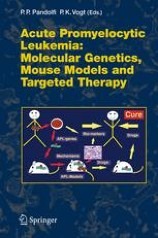
Over the past 10 years, work on acute promyelocytic leukemia (APL) has become the paradigm of translational research that began with the discovery of a recurrent chromosomal translocation, followed by the identification of the genes and proteins involved, finding their molecular functions in transcriptional control, establishing mouse models and culminating in the development of targeted therapy.

The focus is on selected critical molecular determinants of AML pathogenesis and pathophysiology and the exploitation of these factors by diverse therapeutic agents and modalities. Bringing together new concepts and findings in the basic and clinical science of AML, the book emphasizes the molecular basis for new therapies that stand to have the greatest potential impact on the clinical face of these diseases. The text provides insights into selected novel strategies currently and prospectively being developed, including interruption of specific signal transduction pathways, modulation of gene expression, attempts to reinstate differentiation, and immunomodulation.

Accelerated partial breast irradiation (APBI) is being rapidly introduced into the clinical management of early breast cancer. APBI, in fact, encompasses a number of different techniques and approaches that include brachytherapy, intraoperative, and external beam techniques. There is currently no single source that describes these techniques and their clinical implementation. This text will be a concise handbook designed to assist the clinician in the implementation of APBI.

Abeta Peptide and Alzheimer’s Disease summarizes current knowledge of beta-amyloid peptide (Aß) and its role as the major culprit in Alzheimer’s Disease (AD), shown by recent advances in genetics and brain biochemistry.the book covers fundamental biochemical studies on the Aß peptide, the genetic impact on Aß expression and processing, and various AD therapeutic strategies that target Aß. Although specifically focusing on Aß and AD, there is also some discussion on the similarity and differences of this peptide and AD with other amyloidogenic diseases.
A Sea Change in a Changing Sea The oceans, seas and coastal areas encompass over 70% of the earth’s surface. They are a critical driver of the earth’s hydrologic cycle and climate system, important for c- merce, transport, and tourism, a source of economically important living marine resources, minerals such as hydrocarbons, as well as new pharmaceutical compounds. The marine environment provides essential habitats for thousands of marine living 1 2 resources, which in turn contribute significantly to global food security, employment, 3 and trade. Overall, the sea’s contribution to human welfare, in terms of market and non-market resources and environmental services, has been estimated at US$21 trillion/year (Costanza, 2000). However, despite the importance of the ocean realm to humans, there is a growing sense that human impacts are destabilizing this system. Some experts believe that current fishing levels are approaching or exceeding the total 4 productivity of the ocean ecosystem (National Research Council, 1999).
Communication, awareness and access to information: Given the complexity of the field and the fact that data pertaining to each particular aspects of p53 biology or deregulation are scattered in many different publications, it is extremely difficult to access the full scale of relevant information of any specific p53-related topic. This book may help in this task by putting into perspective both general considerations on the p53 pathway and more specific information on various aspects of p53. In the longer term, however, open access to p53 complexity will require the development of knowledge bases accessible through the web and using simple navigation tools to guide users towards the specific information they need. Several efforts are currently being developed in that direction. They need to be strenghtened and better integrated within the rapidly growing galaxy of web-based information sources on molecular and individual variations in cancer. 2. Reference functional assays and structural analysis: Given the huge diversity of cellular and animal models for wild-type or mutant p53 functions, it will be important to set up standard, universally accepted assays to measure critical p53 protein functions.

The book deals with the intricacies of contract law in a straightforward and lucid style. The book covers many new developing areas in contract law which are of practical and academic importance. The current twelfth edition of the book has been thoroughly revised and updated by the author.

Consists of a selection of papers presented at the Asia-Pacific Research Conference on Social Sciences and Humanities. It contains essays on current legal issues in law and justice, and their role and transformation in a globalizing world. Topics covered include human rights, criminal law, law of the sea, good governance, democracy, foreign investment, and regional integration. The conference focused on Asia and the Pacific, two regions where law has taken an important position in creating and shaping the regional integrations, new legal institutions, and norms.

Covering all core aspects of land law including legal estates, legal interests, equitable interests, interests in the home, leases, easements, covenants and security interests in land, the book provides students with the detailed knowledge and analytical tools required to understand and engage fully with the current topical debates surrounding the subject.

Provides insights into how AI is changing legal practice, government processes, and individuals’ access to those processes, encouraging each of us to consider how technological advances are changing the legal system. Particularly, and distinct from current debates on how to regulate AI, this books focuses on how the progressive merger between computational methods and legal rules changes the very structure and application of the law itself.

The book provides a detailed introduction to maintenance policies, updates the reader on the current status of the field and indicates future directions. The reader will learn the theory of maintenance and how to apply models in practice.
The goal of this book is to address the use of several important machine learning techniques into computer vision applications. An innovative combination of computer vision and machine learning techniques has the promise of advancing the field of computer vision, which contributes to better understanding of complex real-world applications. The effective usage of machine learning technology in real-world computer vision problems requires understanding the domain of application, abstraction of a learning problem from a given computer vision task, and the selection of appropriate representations for the learnable (input) and learned (internal) entities of the system. In this book, we address all these important aspects from a new perspective: that the key element in the current computer revolution is the use of machine learning to capture the variations in visual appearance, rather than having the designer of the model accomplish this. As a bonus, models learned from large datasets are likely to be more robust and more realistic than the brittle all-design models.

These two fields, ML and turbulent combustion, have large body of work and knowledge on their own, and this book brings them together and explain the complexities and challenges involved in applying ML techniques to simulate and study reacting flows. This is important as to the world’s total primary energy supply (TPES), since more than 90% of this supply is through combustion technologies and the non-negligible effects of combustion on environment. Although alternative technologies based on renewable energies are coming up, their shares for the TPES is are less than 5% currently and one needs a complete paradigm shift to replace combustion sources. The book covers the current state of the art in these two topics and outlines the challenges involved, merits and drawbacks of using ML for turbulent combustion simulations including avenues which can be explored to overcome the challenges.
Machine Learning - Modeling Data Locally and Globally presents a novel and unified theory that tries to seamlessly integrate different algorithms. Specifically, the book distinguishes the inner nature of machine learning algorithms as either "local learning"or "global learning."This theory not only connects previous machine learning methods, or serves as roadmap in various models, but – more importantly – it also motivates a theory that can learn from data both locally and globally. This would help the researchers gain a deeper insight and comprehensive understanding of the techniques in this field. The book reviews current topics,new theories and applications.

As part of this objective, ICT (information and communication technologies) services should become available for every citizen, and for all schools, homes and businesses. The book you have in front of you is about Semantic Web technology and law. Law is something omnipresent; all citizens — at some points in their lives — have to deal with it. In addition, law involves a large group of professionals, and is a mul- billion business world wide. Information technology is important because it that can improve citizens’ interaction with law, as well as improve legal professionals’ work environment. Legal professionals dedicate a significant amount of their time to finding, reading, analyzing and synthesizing information in order to take decisions, and prepare advice and trials, among other tasks. As part of the “Semantic-Based Knowledge and Content Systems” Strategic Objective, the European Commission is funding projects to construct technology to make the Semantic Web vision come true. 1 The articles in this book are related to two current foci of the Strategic Objective : • Knowledge acquisition and modelling, capturing knowledge from raw information and multimedia content in webs and other distributed repositories to turn poorly structured information into machi- processable knowledge.
The IFIP series publishes state-of-the-art results in the sciences and technologies of information and communication. The scope of the series includes: foundations of computer science; software theory and practice; education; computer applications in technology; communication systems; systems modeling and optimization; information systems; computers and society; computer systems technology; security and protection in information processing systems; artificial intelligence; and human-computer interaction. Proceedings and post-proceedings of referred international conferences in computer science and interdisciplinary fields are featured. These results often precede journal publication and represent the most current research. The principal aim of the IFIP series is to encourage education and the dissemination and exchange of information about all aspects of computing.
The authors see mapping software as a set of visual tools for reading and writing in a networked age. In an information ocean, the primary challenge is to find meaningful patterns around which we can weave plausible narratives. Maps of concepts, discussions and arguments make the connections between ideas tangible and disputable.With 17 chapters from the leading researchers and practitioners, the reader will find the current state–of-the-art in the field. Part 1 focuses on educational applications in schools and universities, before Part 2 turns to applications in professional communities.
Explores knowledge and skill chains in engineering and manufacturing in the age of global communications. Information infrastructure involves a range of activities from product planning, engineering, and manufacturing trough transportation, marketing, and repair/upgrade to returns and recycling/disposal. Distinct from the traditional engineering database, life-cycle support information has its own characteristic requirements, -- flexible extensibility, distributed architecture, multiple viewpoints, long-time archiving, and product usage information. Several authors address the architecture of the information infrastructure, its services and its requirements. Other papers focus on the knowledge and skill chains that develop in a variety of situations: the supply chain, the factory floor, the man-system interaction, etc. For each of these, state-of-the-art and state-of-research scenarios for various industrial sectors address both engineering and operations requirements in the current socio-economic environment.
Knowledge and Data Management in GRIDs is the third volume of the CoreGRID series and brings together scientific contributions by researchers and scientists working on storage, data, and knowledge management in GRID and Peer-to-Peer systems. This volume presents the latest GRID solutions and research results in key areas of knowledge and data management such as distributed storage management, GRID databases, Semantic GRID and GRID-aware data mining.

Daraa Highway - Ghabagheb - Syria
+963-15 2050 - 15 860 380 /1/2/3 - 11 662 3900