


Refine Results
Sort By
From
To

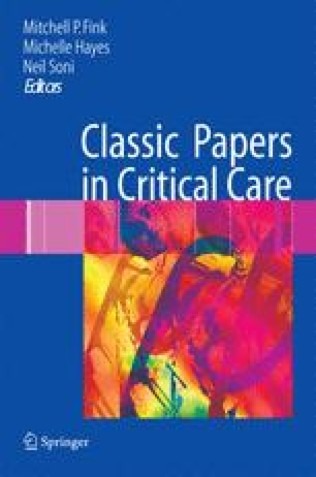
Every medical specialty has at its basis a core of classic papers, which both reflect the historical background and give insight into present and future developments. The papers discussed in this book are considered classics for many reasons, but in all cases they highlight landmarks in the development in critical care medicine and therefore providing an invaluable reference for both trainee and practising clinicians.

Springer Handbook of Enzymes provides data on enzymes sufficiently well characterized. It offers concise and complete descriptions of some 5,000 enzymes and their application areas. Data sheets are arranged in their EC-Number sequence and the volumes themselves are arranged according to enzyme classes. This new, second edition reflects considerable progress in enzymology: many enzymes are newly classified or reclassified. Each entry is correlated with references and one or more source organisms. New datafields are created: application and engineering (for the properties of enzymes where the sequence has been changed). The total amount of material contained in the Handbook has more than doubled so that the complete second edition consists of 39 volumes as well as a Synonym Index.

Springer Handbook of Enzymes provides data on enzymes sufficiently well characterized. It offers concise and complete descriptions of some 5,000 enzymes and their application areas. Data sheets are arranged in their EC-Number sequence and the volumes themselves are arranged according to enzyme classes. This new, second edition reflects considerable progress in enzymology: many enzymes are newly classified or reclassified. Each entry is correlated with references and one or more source organisms. New datafields are created: application and engineering (for the properties of enzymes where the sequence has been changed). The total amount of material contained in the Handbook has more than doubled so that the complete second edition consists of 39 volumes as well as a Synonym Index.

Springer Handbook of Enzymes provides data on enzymes sufficiently well characterized. It offers concise and complete descriptions of some 5,000 enzymes and their application areas. Data sheets are arranged in their EC-Number sequence and the volumes themselves are arranged according to enzyme classes. This new, second edition reflects considerable progress in enzymology: many enzymes are newly classified or reclassified. Each entry is correlated with references and one or more source organisms. New datafields are created: application and engineering (for the properties of enzymes where the sequence has been changed). The total amount of material contained in the Handbook has more than doubled so that the complete second edition consists of 39 volumes as well as a Synonym Index.

This new, second edition reflects considerable progress in enzymology: many enzymes are newly classified or reclassified. Each entry is correlated with references and one or more source organisms. New datafields are created: application and engineering (for the properties of enzymes where the sequence has been changed). The total amount of material contained in the Handbook has more than doubled so that the complete second edition consists of 39 volumes as well as a Synonym Index. In addition, starting in 2009, all newly classified enzymes are treated in Supplement Volumes. Springer Handbook of Enzymes is an ideal source of information for researchers in biochemistry, biotechnology, organic and analytical chemistry, and food sciences, as well as for medicinal applications

Springer Handbook of Enzymes provides data on enzymes sufficiently well characterized. It offers concise and complete descriptions of some 5,000 enzymes and their application areas. Data sheets are arranged in their EC-Number sequence and the volumes themselves are arranged according to enzyme classes. This new, second edition reflects considerable progress in enzymology: many enzymes are newly classified or reclassified. Each entry is correlated with references and one or more source organisms. New datafields are created: application and engineering (for the properties of enzymes where the sequence has been changed). The total amount of material contained in the Handbook has more than doubled so that the complete second edition consists of 39 volumes as well as a Synonym Index.

This new, second edition reflects considerable progress in enzymology: many enzymes are newly classified or reclassified. Each entry is correlated with references and one or more source organisms. New datafields are created: application and engineering (for the properties of enzymes where the sequence has been changed). The total amount of material contained in the Handbook has more than doubled so that the complete second edition consists of 39 volumes as well as a Synonym Index. In addition, starting in 2009, all newly classified enzymes are treated in Supplement Volumes. Springer Handbook of Enzymes is an ideal source of information for researchers in biochemistry, biotechnology, organic and analytical chemistry, and food sciences, as well as for medicinal applications.

This new, second edition reflects considerable progress in enzymology: many enzymes are newly classified or reclassified. Each entry is correlated with references and one or more source organisms. New datafields are created: application and engineering (for the properties of enzymes where the sequence has been changed). The total amount of material contained in the Handbook has more than doubled so that the complete second edition consists of 39 volumes as well as a Synonym Index. In addition, starting in 2009, all newly classified enzymes are treated in Supplement Volumes. Springer Handbook of Enzymes is an ideal source of information for researchers in biochemistry, biotechnology, organic and analytical chemistry, and food sciences, as well as for medicinal applications.

Springer Handbook of Enzymes provides data on enzymes sufficiently well characterized. It offers concise and complete descriptions of some 5,000 enzymes and their application areas. Data sheets are arranged in their EC-Number sequence and the volumes themselves are arranged according to enzyme classes. This new, second edition reflects considerable progress in enzymology: many enzymes are newly classified or reclassified. Each entry is correlated with references and one or more source organisms. New datafields are created: application and engineering (for the properties of enzymes where the sequence has been changed). Springer Handbook of Enzymes is an ideal source of information for researchers in biochemistry, biotechnology, organic and analytical chemistry, and food sciences, as well as for medicinal applications.

Springer Handbook of Enzymes provides data on enzymes sufficiently well characterized. It offers concise and complete descriptions of some 5,000 enzymes and their application areas. Data sheets are arranged in their EC-Number sequence and the volumes themselves are arranged according to enzyme classes. This new, second edition reflects considerable progress in enzymology: many enzymes are newly classified or reclassified. Each entry is correlated with references and one or more source organisms. New datafields are created: application and engineering (for the properties of enzymes where the sequence has been changed). Springer Handbook of Enzymes is an ideal source of information for researchers in biochemistry, biotechnology, organic and analytical chemistry, and food sciences, as well as for medicinal applications.

Springer Handbook of Enzymes provides data on enzymes sufficiently well characterized. It offers concise and complete descriptions of some 5,000 enzymes and their application areas. Data sheets are arranged in their EC-Number sequence and the volumes themselves are arranged according to enzyme classes. This new, second edition reflects considerable progress in enzymology: many enzymes are newly classified or reclassified. Each entry is correlated with references and one or more source organisms. New datafields are created: application and engineering (for the properties of enzymes where the sequence has been changed). Springer Handbook of Enzymes is an ideal source of information for researchers in biochemistry, biotechnology, organic and analytical chemistry, and food sciences, as well as for medicinal applications.
Covers the latest advancements in the study of ciliary complexity. Protocols cover genomic, proteomic, imaging, and functional analysis of different ciliated tissues and their wide applicability in cilia biology. Chapters in this book primarily focus on methods to study multiciliated cells, and discuss topics such as SARS-CoV-2 infections of human primary nasal multiciliated epithelial cells; expansion microscopy of ciliary proteins; live-imaging centriole amplification in mouse brain multiciliated cells; biophysical properties of cilia motility; and mucociliary transport device construction. Written in the highly successful Methods in Molecular Biology series format, chapters include introductions to their respective topics, lists of the necessary materials and reagents, step-by-step, readily reproducible laboratory protocols, and tips on troubleshooting and avoiding known pitfalls.

CHRONIC DISEASES AND HEALTH CARE: New Patterns of Diabetes, Arthritis, Osteoporosis, Fibromyalgia, Low Back Pain, Cardiovascular Disease, and Cancer. This book evaluates new trends in epidemiology, health care costs, risk factors, treatment and rehabilitation outcomes, stress and coping strategies, social support, disability, patient education, and self-management for seven prevalent chronic diseases.
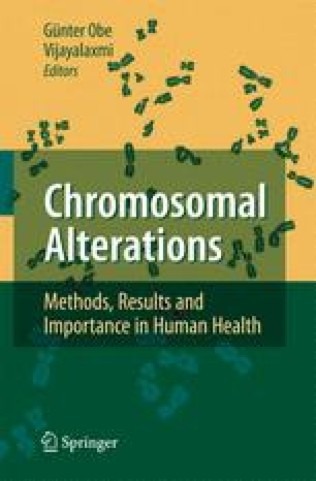
Cytogenetics is a very important research tool in basic and applied research. The uses of cytogenetics in human-population monitoring, in biological dosimetry in radiation accidents and in astronauts and as a predictive measure of cancer are topics discussed in this book. The book will help the reader to better understand cytogenetics and the intricacies of the methodology. The different methods of fluorescence in situ hybridization are discussed and the results achieved are presented. The book provides a comprehensive review of basic and applied aspects of cytogenetics and therefore will be of interest to all who are interested in chromosomes and their alterations by different types of mutagens, including chemical mutagens and ionizing and nonionizing radiation, with special reference to electromagnetic fields.

This book summarizes the chemical, physical, biological and medical aspects of chlorophyll (and bacteriochlorophyll) research and development, with a focus on the tremendous progress achieved over the past 15 years. Each section has an up-to-date introductory overview which is followed by a series of concise well-focused and fully-referenced chapters written by experts in (bio)chemistry, (bio)physics, photobiology and photomedicine.
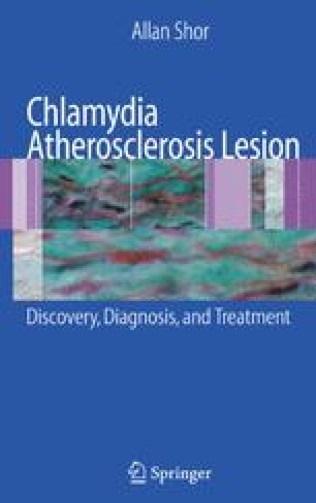
This book presents current understanding on the specific pathological features of the C. pneumoniae arterial lesion and the unique morphological features and life cycle of C. pneumoniae in atheromatous arteries. It is important for every medical practitioner to be aware of this disease. All internal medicine physicians, intensivists, family medicine practitioners, infectious disease and immunology physicians should be aware of the impact of C. pneumoniae, the specific pathological features, and methods of diagnosing the lesion. This book presents a unique review of this important
Discovery in the use of chitosan-based nanocomposites in biomedical applications, including the scope to which these novel materials have been incorporated by the community. It provides an exceptional insight into the strategies for the synthesis and chemical modifications of chitosan, characterization techniques, their use as anticancer agents, antimicrobial, antiviral, and antifungal agents, their role in the biomedical field, and applications in drug delivery, gene therapy, dentistry, orthopedics, etc. This book will also emphasize the challenges with previous signs of progress and way for further research, details relating to the current pioneering technology, and future perspectives with a multidisciplinary approach. Furthermore, it presents up-to-date information on the economics, toxicity, and regulations related to these novel materials.
This book is the application of plastic surgery techniques to cancer situations that is called "oncoplastic" surgery. The Institut Curie team takes stock of these techniques and indications applied in 2007 in France.
Chest sonography is an established procedure in the stepwise imaging diagnosis of pulmonary and pleural disease. It is the method of choice to distinguish between solid and liquid lesions and allows the investigator to make an unequivocal diagnosis without exposing the patient to costly and stressful procedures. This book presents the state of the art in chest investigation by means of ultrasonography.

Chemometrics and Cheminformatics in Aquatic Toxicology delivers an exploration of the existing and emerging problems of contamination of the aquatic environment through various metal and organic pollutants, including industrial chemicals, pharmaceuticals, cosmetics, biocides, nanomaterials, pesticides, surfactants, dyes, and more. The book discusses different chemometric and cheminformatic tools for non-experts and their application to the analysis and modeling of toxicity data of chemicals to various aquatic organisms.

Daraa Highway - Ghabagheb - Syria
+963-15 2050 - 15 860 380 /1/2/3 - 11 662 3900