


Refine Results
Sort By
From
To

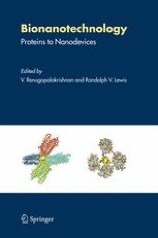
Bionanotechnology is the key integrative technology of the 21st century and aims to use the knowledge, gathered from the natural construction of cellular systems, for the advancement of science and engineering. Investigating the topology and communication processes of cell parts can lead to invention of novel biological devices with exciting applications. Though microscale to nanoscale research offers an excellent space for the development of futuristic technologies, a number of challenges must be overcome. Due to paucity of a dedicated literature on the protein based nanodevices we bring you this monograph that combines collective research works of scientists probing into this fascinating universe of bionanotechnology. The monograph has been written with an aim of surveying engineering design principles of biomolecular nanodevices, prototype nanodevices based on redox proteins, bacteriorhodopsins and natural fibers, and touching upon the future developments in the field.

Biomedical EPR – Part B focuses on applications of EPR techniques and instrumentation, with applications to dynamics. The book celebrates the 70th birthday of Prof. James S. Hyde, Medical College of Wisconsin, and his contributions to this field. Chapters are written to provide introductory material for new-comers to the field that lead into up-to-date reviews that provide perspective on the wide range of questions that can be addressed by EPR.
Biomedical EPR – Part A focuses on applications of EPR spectroscopy in the areas of free radicals, metals, medicine, and physiology. The book celebrates the 70th birthday of Prof. James S. Hyde, Medical College of Wisconsin, and his contributions to this field. Chapters are written to provide introductory material for new-comers to the field which lead into up-to-date reviews that provide perspective on the wide range of questions that can be addressed by EPR.
Covers the recent trends on the biological applications of nanomaterials, methods for their preparation, and techniques for their characterization. Further, the book examines the fundamentals of nanotoxicity, methods to assess the toxicity of engineered nanomaterials, approaches to reduce toxicity during synthesis. It also provides an overview of the state of the art in the application of Artificial intelligence-based methodologies for evaluation of toxicity of drugs and nanoparticles. The book further discusses nanocarrier design, routes of various nanoparticle administration, nano based drug delivery systems, and the toxicity challenges associated with each drug delivery method. It presents the latest advances in the interaction of nanoparticles with the cellular environment and assess nanotoxicity of these engineered nanoparticles. The book also explores the comparative and mechanistic genotoxicity assessment of the nanomaterials. This book is useful source of information for industrial practitioners, policy makers, and other professionals in the fields of toxicology, medicine, pharmacology, food, and drugs.
Helping to accelerate Alzheimer’s disease drug development. Addressing the latest advances in preclinical and clinical research, including new insights into the molecular mechanisms and emerging therapeutic strategies, the book continues by exploring digital biomarkers and advanced neuroimaging analysis which will transform how clinical trials in the Alzheimer’s disease field are performed.
Aims to build a new generation of experts with a broader understanding of key topics in the Alzheimer’s disease field. Chapters guide readers through innovative approaches to the discovery of novel biomarkers in cerebrospinal fluid, innovation in blood-based biomarkers, a comprehensive overview of magnetic resonance imaging and molecular imaging approaches and their value for developing drugs for Alzheimer’s disease, cutting-edge developments in neuropathology and their relevance for Alzheimer’s disease trials, novel genomic strategies for biomarker development, and related topics including neuropsychological testing and advanced analytical methods.Written in the highly successful Methods in Molecular Biology series format, chapters include introductions to their respective topics, lists of the necessary materials and reagents, step-by-step, readily reproducible laboratory protocols, and tips on troubleshooting and avoiding known pitfalls.
Biological Low-Voltage Scanning Electron Microscopy is the first book to address both of these aspects of biological LVSEM. After providing a thorough description of the unique advantages and the operating constraints related to operating a scanning electron microscope at low beam voltage, the remainder of book focuses on the the best way to image all types of plant and animal cells and covers specimens that range from macromolecules to the surfaces revealed by de-embedding resin-embedded samples. Advanced specimen preparation techniques such as cryo-LVSEM, and immuno-gold-LVSEM are fully covered, as is x-ray microanalysis at low beam voltage and live-time stereo imaging. The preparative protocols provided represent the distilled essence of the experience of a group of world-renowned authors who have, for many decades, been instrumental in developing and applying new approaches to LVSEM to support their own biological research.
Many plants, animals, and microbes use adhesive polymers and structures to attach to inert substrates, to each other, or to other organisms. This is the first major review that brings together research on many of the well-known biological adhesives. Emphasizing the diversity of biological adhesives and associated adhesion processes, it deals with bacteria, fungi, algae, and marine and terrestrial animals. It bridges a variety of disciplines including biochemistry, molecular biology, biomechanics, bioengineering, microbiology, organism structure and function, and ultrastructure. As we learn more about the molecular and mechanical properties of these adhesives, we begin to understand why they adhere so well and how they develop cohesive strength. With this understanding comes the prospect of developing synthetic or semi-synthetic adhesives with broad applications in areas such as medicine, dentistry, and biotechnology. The book is suitable for both industrial and academic researchers.
This book provides students and researchers in the life sciences with essential practical information on how to quantitatively analyze data images. It refrains from focusing on theory, and instead uses practical examples and step-by step protocols to familiarize readers with the most commonly used image processing and analysis platforms such as ImageJ, MatLab and Python.
This open access book presents a comprehensive analysis of biofuel use strategies from an interdisciplinary perspective using sustainability science. This interdisciplinary perspective (social science-natural science) means that the strategies and policy options proposed will have significant impacts on the economy and society alike. Biofuels are expected to contribute to reducing greenhouse gas emissions, revitalizing economies in agricultural communities and alleviating poverty. However, despite these anticipated benefits, international organizations such as the FAO, OECD and UN have published reports expressing concerns that biofuel promotion may lead to deforestation, water pollution and water shortages. The impacts of biofuel use are extensive, cross-sectoral and complex, and as such, comprehensive analyses are required in order to assess the extent to which biofuels can contribute to sustainable societies.
This book addresses a variety of issues relating to bioethics, in order to initiate cross-cultural dialogue. Beginning with the history, it introduces various views on bioethics, based on specific experiences from Japan. It describes how Japan has been confronted with Western bioethics and the ethical issues new to this modern age, and how it has found its foothold as it decides where it stands on these issues. In the last chapter, the author proposes discarding the overarching term ‘Global Bioethics’ in favor of the new term, ‘Bioethics Across the Globe (BAG)’, which carries a more universal connotation.
This book brings an updated state of the art of phylogenetic diversity in conservation biology. Nineteen chapters written by scientists from research institutions of fourteen countries demonstrate that approaches for preserving the evolutionary heritage are now very tuned into human impacts and sustainability issues. The questions, methods and applications around which it is organized show the importance of phylogenetic diversity in avoiding biodiversity losses in the present extinction crisis. They touch important points such as the way we value phylogenetic diversity, the importance of thinking at a much wider sample of the Tree of Life, the choice of adequate measures. In methods section, new solutions, such as dealing with abundances, sampling effort, or with information coming from conflicting phylogenetic trees are provided. Application section includes study cases of different groups of organi
In the last few decades more and more yeast habitats that were not investigated earlier, spanning cold climates to tropical regions and dry deserts to rainforests, have been explored. As a result, a large body of ecological data has been accumulated and the number of known yeast species has increased rapidly. This book provides an overview of the biodiversity of yeasts in different habitats. The recent advances achieved by the application of molecular biological methods in the field of yeast taxonomy and ecology are also incorporated in the book. Wherever possible, the interaction between yeasts and the surrounding environment is discussed.
Advances in Biochemistry in Heath and Disease presents state-of-the-art discussions in cutting-edge biochemical research, offering exciting developments that impact healthcare and disease research. Volumes in the series focus on cross-disciplinary biomedical research and examine various topics in biochemistry, cell biology, molecular biology, and biomedicine. Biochemistry of Atherosclerosis examines atherosclerosis in great detail, focusing on the risk of atherosclerosis, and the biochemical pathways involved. It provides a breadth of knowledge as well as new insights into a variety of topics relating to atherosclerosis from leading scientists around the world who are at the forefront of atherosclerosis research. Biochemistry of Atherosclerosis is essential reading for biomedical and clinical researchers.
Covering interesting and significant biomedical ageing topics not included in the earlier volumes. Comprehensive and cutting-edge, this book is a valuable resource for experienced researchers and early career scientist alike, who are interested in learning more about the fascinating and challenging question of why and how our cells age.
Provides a wealth of information on plants in the Lamiaceae family, noted for their essential oils and bioactives and pharmacological properties. The chapters investigate a wide variety of species, providing for each an introduction, characteristics, properties, distribution, traditional uses, and current and potential pharmacological applications. Aiming to be a resource for the development of new drugs based on species within the Lamiaceae family, the volume discusses 26 species, including bungleweed (Ajuga), Malabar catmint (Anisomeles malabarica), beechwood (Gmelina arborea), Brazilian mint (Hyptis crenata), rosemary (Rosmarinus officinalis L.), holy basil (Ocimum tenuiflorum), and many more.
Hen eggs have exceptional potential as an inexhaustible source for a variety of products with unique properties. These products are valuable to human health and nutrition and can be used as raw materials for diverse purposes in the cosmetics and pharmaceutical industries. Bioactive Egg Compounds presents the latest results and concepts in the biotechnological use of egg compounds. Following an introduction to the different compounds of egg white, yolk and shell, the nutritive value of egg compounds is discussed. Procedures for processing egg compounds to improve their nutritive value are described, including the concept of so-called enriched eggs. Also described is the isolation and application of egg compounds with special properties, such as antibiotic action.
The book provides an overview on biliary lithiasis and all its clinical pictures, twenty years after the first laparoscopic cholecystectomy. The gallbladder, the main bile duct and intra-hepatic stones, in their uncomplicated and complicated forms are illustrated.
The molecular genetics of the cholinergic system including both muscarinic and nicotinic acetylcholine receptors, cholinesterases, acetylcholine synthesis and release have provided significant insights into potential targeting for pharmacological intervention. Cholinergic drugs are being used or evaluated for the treatment of diseases. Thus, this volume aims to broaden our understanding of the current state of cholinergic mechanisms to enable implementation of novel approaches for the development of more effective treatments.
Medical researchers including doctors, nurses, medical students and allied health professionals are required to undertake a period of research as part of their career pathway. Basic Science Techniques in Clinical Practice covers the main areas, allowing anyone to set up and complete research projects and this information can easily be translated to clinical projects. Written by international authors to provide a flavor from many institutions, the book’s appeal is cross-sectional, both at hospital and primary care levels worldwide.

Daraa Highway - Ghabagheb - Syria
+963-15 2050 - 15 860 380 /1/2/3 - 11 662 3900