


Refine Results
Sort By
From
To


Magnetism and Structure in Functional Materials addresses three distinct but related topics: (i) magnetoelastic materials such as magnetic martensites and magnetic shape memory alloys, (ii) the magnetocaloric effect related to magnetostructural transitions, and (iii) colossal magnetoresistance (CMR) and related magnanites. The goal is to identify common underlying principles in these classes of materials that are relevant for optimizing various functionalities. The emergence of apparently different magnetic/structural phenomena in disparate classes of materials clearly points to a need for common concepts in order to achieve a broader understanding of the interplay between magnetism and structure in this general class of new functional materials exhibiting ever more complex microstructure and function. The topic is interdisciplinary in nature and the contributors correspondingly include physicists, materials scientists and engineers. Likewise the book will appeal to scientists from all these areas.

Addresses the exciting and rapidly developing topic of nanostructured magnetic materials. It combines modern topics in nanoscale magnetism with issues relating to the fabrication and characterization of magnetic nanostructures. The chapters describe a wide range of physical aspects, together with theoretical and experimental methods. "Magnetic Nanostructures" will be of interest to researchers and specialists both in academic and industrial research. Graduate students will also find in this book an accessible introduction to the essential issues.

This monograph addresses the field theoretical aspects of magnetic monopoles. Written for graduate students as well as researchers, the author demonstrates the interplay between mathematics and physics. He delves into details as necessary and develops many techniques that find applications in modern theoretical physics. This introduction to the basic ideas used for the description and construction of monopoles is also the first coherent presentation of the concept of magnetic monopoles. It arises in many different contexts in modern theoretical physics, from classical mechanics and electrodynamics to multidimensional branes. The book summarizes the present status of the theory and gives an extensive but carefully selected bibliography on the subject. The first part deals with the Dirac monopole, followed in part two by the monopole in non-abelian gauge theories. The third part is devoted to monopoles in supersymmetric Yang-Mills theories.

Contains a comprehensive collection of overview articles on novel microscopy methods for imaging magnetic structures on the nanoscale. Written by leading scientists in the field the book covers synchrotron based methods, spin polarized electron methods, and scanning probe techniques. It will be a valuable source of reference for graduate students and newcomers to the field.
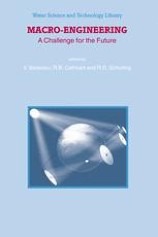
Macro-engineering involves the large-scale modification and manipulation of natural systems for the benefit of mankind. The primary goals of some Earth-based macroprojects described in this book are power production, land reclamation, food production, climate change, environment, water, transport and coastal protection. Other Earth or space projects considered here have a more futuristic ring, but our present-day technical skill makes their realization possible. Earth-based macroprojects usually combine different aspects and aims. They have a major impact on the ecology of a region and the inhabitants' means of living (like tourism, fishing, shipping). Its effects may be felt worldwide, like the rise in global sea level after the damming and evaporation of large ocean gulfs for power production, or the change in climate following the regional reduction of solar insolation.

Macrocyclic Chemistry: Current Trends and Future Perspectives illustrates essential concepts in this expanding research field covering both basic and applied studies. Written by well-known experts from around the world, the topics of the chapters range from new macrocyclic architectures with different functions and self-assembly processes through to the modeling and dynamics of such systems. The content also reflects on application possibilities in analytical chemistry, separation processes, material preparation and medicine. Thus this book serves as a creative source of research strategies and methodic tools.
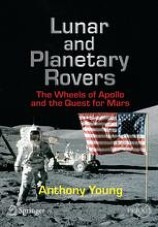
Provides extensive quotes from the astronauts who drove the LRV on the Moon from interviews conducted especially for the book. It also details new material from interviews of engineers and managers at the Jet Propulsion Laboratory covering the robotic rovers, Sojourner, Sprit and Opportunity. The Foreword is written by David R. Scott, Commander of Apollo 15. Chapter 1: From Concept to Reality; Chapter 2: Lunar Roving Vehicle Subsystems; Chapter 3: Training for the Moon; Chapter 4: To the Hadley Plains; Chapter 4: Mysterious and Unknown Descartes; Chapter 5: Destiny at Taurus-Littrow; Chapter Six: The Quest for Mars-Chapter Seven: The New Vision of Exploration.
This book provides a concise but thorough introduction to important phenomena of low-temperature physics. It is ideally suited as a textbook for advanced undergraduates but will also be valuable for graduate students, scientists and engineers working in this field. Clear explanations of both theoretical and experimental approaches coupled with carefully selected problems will enable students to gain a firm understanding of even the most recent research developments.
At the system level, a novel systematic study on the full feedforward Sigma-Delta topology is presented in this book. As a design example, a fourth-order single-loop full feedforward Sigma-Delta modulator design in a 130-nm pure digital CMOS technology is presented. This design is the first design using the full feedforward Sigma-Delta topology and reaches the highest conversion speed among all the 1-V Sigma-Delta modulators to date.

Low-Frequency Noise in Advanced CMOS Devices begins with an introduction to noise, describing the fundamental noise sources and basic circuit analysis. The characterization of low-frequency noise is discussed in detail and useful practical advice is given. The various theoretical and compact low-frequency (1/f) noise models in MOS transistors are treated extensively providing an in-depth understanding of the low-frequency noise mechanisms and the potential sources of the noise in MOS transistors. Advanced CMOS technology including nanometer scaled devices, strained Si, SiGe, SOI, high-k gate dielectrics, multiple gates and metal gates are discussed from a low-frequency noise point of view. Some of the most recent publications and conference presentations are included in order to give the very latest view on the topics. The book ends with an introduction to noise in analog/RF circuits and describes how the low-frequency noise can affect these circuits.

Assimilating new research in the field of low-dimensional metals, this monograph provides a detailed overview of the current status of research on quasi-one- and two-dimensional molecular metals, describing normal-state properties, magnetic field effects, superconductivity, and the phenomena of interacting p and d electrons. It will be useful not only for frontier researchers with a broad interest in low-dimensional electronic and magnetic properties, but also for graduate students of solid-state physics and chemistry with some background knowledge of solid-state physics. It includes a number of fundamental and novel findings relating to the characteristics of these low-dimensional metals, which in future are likely to become standard material in textbooks on solid-state physics.
Lost Causes in and Beyond Physics deals with a selection of research topics mostly from theoretical physics that have been shown to be a dead-end or continue at least to be highly controversial. This book is written as both an entertainment and serious study and should be accessible to anyone with a background in theoretical physics and mathematics.
This book deals with the differential geometry of manifolds, loop spaces, line bundles and groupoids, and the relations of this geometry to mathematical physics. Various developments in mathematical physics (e.g., in knot theory, gauge theory, and topological quantum field theory) have led mathematicians and physicists to search for new geometric structures on manifolds and to seek a synthesis of ideas from geometry, topology and category theory. In this spirit, this book develops the differential geometry associated to the topology and obstruction theory of certain fiber bundles (more precisely, associated to grebes). The theory is a 3-dimensional analog of the familiar Kostant--Weil theory of line bundles. In particular the curvature now becomes a 3-form.

Focuses on theoretical issues and empirical findings related to trends and determinants of healthy aging, including factors related to "healthy longevity" of the oldest-old, aged 80 and over. The group is the most rapidly increasing elderly sub-population and is most likely to need assistance in daily living in all countries. Chapters include both longitudinal and cross-sectional data from North America, Europe, and Asia in country-specific studies and cross-national comparisons. Part I focuses on the definition, components, concepts, measurements, and determinants of healthy aging, and discusses the trends and patterns of disability and healthy life expectancy at the macro level. Part II addresses individual healthy aging, including its biological and socio-demographic aspects. Part III focuses on issues concerning the family and healthy aging, and Part IV explores formal and informal care for healthy aging through governmental policy interventions and community service programs.

During its century-long unfolding, spreading in numerous directions, Husserlian phenomenology while loosening inner articulations, has nevertheless maintained a somewhat consistent profile. As we see in this collection, the numerous conceptions and theories advanced in the various phases of reinterpretations have remained identifiable with phenomenology.
The Human Condition-in-the-unity-of-everything-there-is-alive, under whose aegis the present selection of essays falls, offers the urgently needed new approach to reinvestigating humanness. While recent advances in the neurosciences, genetics and bio-engineering challenge the traditional abstract conception of "human nature", indicating its transformability, thus putting in question the main tenets of traditional philosophical anthropology, in the new perspective of the Human Creative Condition the human individual is seen in its emergence and unfolding within the dynamic networks of the logos of life, and within the evolution of living types.
Situated at the crossroads of nature and culture, physics and consciousness, cosmos and life, history – intimately conjoined with time – continues to puzzle the philosopher as well as the scientist. Does brute nature unfold a history? Does human history have a telos? Does human existence have a purpose, Phenomenology of life projects a new interrogative system for reexamining these questions.We are invited to follow the logos of life as it spins in innumerable ways the interplay of natural factors, human passions, social forces, science and experience – through interruptions and kairic moments of accomplishment .

Prompted and ever diversified by the specifically human interrogative logos, scientific inquiries seek a common system of links in order to mutually confirm and rectify their results. Coming closer and closer to phenomenology, the sciences of life find the common ground of the reality in the ontopoiesis of life.Could it not be that the interrogative logos of science, participating in human creative inventiveness will bring together also the divergent scientific methods in a common network? A network which comprises natural processes, societal sharing-in-life, and existential communication.

Having established in the ontopoiesis/phenomenology of life the creative function of the human being as the fulcrum of our beingness-in-becoming, let us now turn to investigate the creative logos.In this collection, the momentum of a gathering "creative brainstorm" leads to the vertiginous imaginative transformability of the creative logos as it ciphers through the aesthetic sense, the elements of experience – sensing, feeling, emotions, forming – in works of art, thus lifting human experience into spirit and culture.
Modern logic has been intimately connected with algebra since its origins in figures such as Boole, De Morgan, and Peirce. But while universal algebra is a long recognized field, universal logic has only recently been named as such. This is perhaps because classical logic was until relatively recently taken by many as the "one true logic". But with the proliferation of special purpose non-classical logics in recent years, universal logic is clearly a field whose time has come. This book contains many excellent papers demonstrating the value of this approach.

Daraa Highway - Ghabagheb - Syria
+963-15 2050 - 15 860 380 /1/2/3 - 11 662 3900