


Refine Results
Sort By
From
To

Concurrent engineering is well-established as an approach to engineer product parts. However, the concept has much broader application. Complex Systems Concurrent Engineering: Collaboration, Technology Innovation and Sustainability demonstrates how concurrent engineering can be used to benefit the development of complex systems, to produce results that sustain balanced stakeholder satisfaction over time. Gathered from the 14th ISPE International Conference on Concurrent Engineering, the collected papers cover all aspects of the sustainable and integrated development of complex systems, such as airplanes, satellites, space vehicles, automobiles and ships.

Complex Orthogonal Space-Time Processing in Wireless Communications incorporates orthogonal space-time processing using STBCs in MIMO wireless communication systems. Complex Orthogonal STBCs (CO STBCs) are given emphasis because they can be used for PSK/QAM modulation schemes and are more practical than real STBCs. The overall coverage provides general knowledge about space-time processing and its applications for broad audiences. It also includes the most up-to-date review of the literature on space-time processing in general, and space-time block processing in particular.

It is impossible to imagine modern mathematics without complex numbers. Complex Numbers from A to . . . Z introduces the reader to this fascinating subject that, from the time of L. Euler, has become one of the most utilized ideas in mathematics.The exposition concentrates on key concepts and then elementary results concerning these numbers. The reader learns how complex numbers can be used to solve algebraic equations and to understand the geometric interpretation of complex numbers and the operations involving them.The theoretical parts of the book are augmented with rich exercises and problems at various levels of difficulty. A special feature of the book is the last chapter, a selection of outstanding Olympiad and other important mathematical contest problems solved by employing the methods already presented.The book reflects the unique experience of the authors. It distills a vast mathematical literature, most of which is unknown to the western public, and captures the essence of an abundant problem culture.
The book starts with a textbook-like expose on nonlinear dynamics, attractors and chaos, both temporal and spatio-temporal, including modern techniques of chaos–control. Chapter 2 turns to the edge of chaos, in the form of phase transitions (equilibrium and non-equilibrium, oscillatory, fractal and noise-induced), as well as the related field of synergetics. While the natural stage for linear dynamics comprises of flat, Euclidean geometry (with the corresponding calculation tools from linear algebra and analysis), the natural stage for nonlinear dynamics is curved, Riemannian geometry (with the corresponding tools from nonlinear, tensor algebra and analysis). The extreme nonlinearity – chaos – corresponds to the topology change of this curved geometrical stage, usually called configuration manifold. Chapter 3 elaborates on geometry and topology change in relation with complex nonlinearity and chaos. Chapter 4 develops general nonlinear dynamics, continuous and discrete, deterministic and stochastic, in the unique form of path integrals and their action-amplitude formalism.

This volume contains a collection of expert views on the state of the art in Large Eddy Simulation (LES) and its application to complex ?ows. Much of the material in this volume was inspired by contributions that were originally presented at the symposium on Complex E?ects in Large Eddy Simulation held in Lemesos (Limassol), Cyprus, between September 21st and 24th, 2005.
Computer and communication networks are among society's most important infrastructures. The internet, in particular, is a giant global network of networks without central control or administration. It is a paradigm of a complex system, where complexity may arise from different sources: topological structure, network evolution, connection and node diversity, or dynamical evolution. The present volume is the first book entirely devoted to the new and emerging field of nonlinear dynamics of TCP/IP networks. It addresses both scientists and engineers working in the general field of communication networks.
This book explores the possibilities of applying the theories of complexity and self-organization developed to account for various phenomena in the natural science to artifacts traditionally the realm of humanities and social sciences. The emphasis of this volume is on the development of cities and the impact of these methods on urban simulation methods.

Mechanics, Electrodynamics, Quantum Mechanics, and Statistical Mechanics and Thermodynamics comprise the canonical undergraduate curriculum of theoretical physics. In Compendium of Theoretical Physics, Armin Wachter and Henning Hoeber offer a concise, rigorous and structured overview that will be invaluable for students preparing for their qualifying examinations, readers needing a supplement to standard textbooks, and research or industrial physicists seeking a bridge between extensive textbooks and formula books. The authors take an axiomatic-deductive approach to each topic, starting the discussion of each theory with its fundamental equations. By subsequently deriving the various physical relationships and laws in logical rather than chronological order, and by using a consistent presentation and notation throughout, they emphasize the connections between the individual theories. The reader’s understanding is then reinforced with exercises, solutions and topic summaries.
The book provides a state-of-the-art overview of important theories from mathematics education and the broad variety of empirical approaches currently widely used in mathematics education research.
Compatible spatial discretizations are those that inherit or mimic fundamental properties of the PDE such as topology, conservation, symmetries, and positivity structures and maximum principles. It offer a snapshot of the current trends and developments in compatible spatial discretizations. The reader will find valuable insights on spatial compatibility from several different perspectives and important examples of applications compatible discretizations in computational electromagnetics, geosciences, linear elasticity, eigenvalue approximations and MHD. The contributions collected in this volume will help to elucidate relations between different methods and concepts and to generally advance our understanding of compatible spatial discretizations for PDEs.
Decision making in environmental projects is typically a complex and confusing process characterized by trade-offs between socio-political, environmental, and economic impacts. Comparative Risk Assessment (CRA) is a methodology applied to facilitate decision making when various activities compete for limited resources. CRA has become an increasingly accepted research tool and has helped to characterize environmental profiles and priorities on the regional and national level. CRA may be considered as part of the more general but as yet quite academic field of multi-criteria decision analysis (MCDA). Considerable research in the area of MCDA has made available methods for applying scientific decision theoretical approaches to multi-criteria problems, but its applications, especially in environmental areas, are still limited. The papers show that the use of comparative risk assessment can provide the scientific basis for environmentally sound and cost-efficient policies, strategies, and solutions to our environmental challenges.

This book portrays men’s experiences of home alone leave and how it affects their lives and family gender roles in different policy contexts and explores how this unique parental leave design is implemented in these contrasting policy regimes. The book brings together three major theoretical strands: social policy, in particular the literature on comparative leave policy developments; family and gender studies, in particular the analysis of gendered divisions of work and care and recent shifts in parenting and work-family balance; critical studies of men and masculinities, with a specific focus on fathers and fathering in contemporary western societies and life-courses. Drawing on empirical data from in-depth interviews with fathers across eleven countries, the book shows that the experiences and social processes associated with fathers’ home alone leave involve a diversity of trends, revealing both innovations and absence of change, including pluralization as well as the constraining influence of policy, gender, and social context.

The book explores five major topics: state-society relations; environmental non-governmental organizations (ENGOs); Green parties and environmental movements; institutions of government and policy-making; variations in the capacities of states to protect the environment; and national responses to global problems. It compares and contrasts rich and poor nations, large and small countries, liberal democracies and authoritarian states.
Approaches and methods in comparative education research are of obvious importance, but do not always receive adequate attention. This book contributes new insights within the longstanding traditions of the field. A particular feature is the focus on different units of analysis. Individual chapters compare places, systems, times, cultures, values, policies, curricula and other units. These chapters are contextualised within broader analytical frameworks which identify the purposes and strengths of the field. The book includes a focus on intra-national as well as cross-national comparisons, and highlights the value of approaching themes from different angles. The book will be of great value not only to producers of comparative education research but also to consumers who wish to understand more thoroughly the parameters and value of the field.
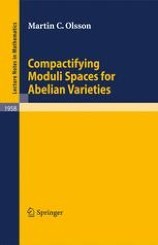
This volume presents the construction of canonical modular compactifications of moduli spaces for polarized Abelian varieties (possibly with level structure), building on the earlier work of Alexeev, Nakamura, and Namikawa. This provides a different approach to compactifying these spaces than the more classical approach using toroical embeddings, which are not canonical. There are two main new contributions in this monograph: (1) The introduction of logarithmic geometry as understood by Fontaine, Illusie, and Kato to the study of degenerating Abelian varieties; and (2) the construction of canonical compactifications for moduli spaces with higher degree polarizations based on stack-theoretic techniques and a study of the theta group.
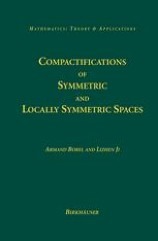
Noncompact symmetric and locally symmetric spaces naturally appear in many mathematical theories, including analysis (representation theory, nonabelian harmonic analysis), number theory (automorphic forms), algebraic geometry (modulae) and algebraic topology (cohomology of discrete groups). In most applications it is necessary to form an appropriate compactification of the space. The literature dealing with such compactifications is vast. The main purpose of this book is to introduce uniform constructions of most of the known compactifications with emphasis on their geometric and topological structures. The book is divided into three parts. Part I studies compactifications of Riemannian symmetric spaces and their arithmetic quotients. Part II is a study of compact smooth manifolds. Part III studies the compactification of locally symmetric spaces.
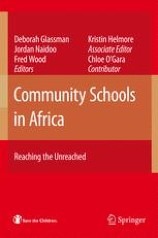
Over the past decade, community schools similar to those supported by Save the Children have been established in many developing countries, and especially in sub-Saharan Africa. As large numbers of children attend schools started and managed by their own communities and/or by nongovernmental organizations, questions have come up about the impact of such schools at large scale: "Can village-based or community schools have a national impact on access to education, spur improved long-term development strategies and education policy, or achieve or influence Education for All? This book explores these and related questions, drawing on Save the Children’s experience with community-based schooling in four countries: Ethiopia, Malawi, Mali, and Uganda.
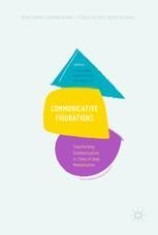
This open access volume is about how to research the influence of our changing media environment. Today, there is not one single medium that is the driving force of change. With the spreading of various technical communication media such as mobile phone and internet platforms, we are confronted with a media manifold of deep mediatization. But how can we investigate its transformative capability? This book answers this question by taking a non-media-centric perspective, researching the various figurations of collectivities and organizations humans are involved in. The first part of the book outlines a fundamental understanding of the changing media environment of deep mediatization and its transformative capacity. The second part focuses on collectivities and movements: communities in the city, critical social movements, maker, online gaming groups and networked groups of young people. The third part moves institutions and organizations into the foreground, discussing the transformation of journalism, religion, politics, and education, whilst the fourth and final part is dedicated to methodologies and perspectives.

The book chapters represent review articles covering the most relevant areas of the field. They are written with the goal of providing students with comprehensive introductions. Further they offer a supply of numerous references to the relevant literature. Besides its usefulness as a textbook, this will make the book a source of valuable information for those who want to improve or refresh their knowledge in the field of communication acoustics – and to work their way deeper into it. Due to its interdisciplinary character Communication Acoustics is bound to attract readers from many different areas, such as: acoustics, cognitive science, speech science, and communication technology.
Addresses the engagement between science and society from multiple viewpoints. At a time when trust in experts is being questioned, misinformation is rife and scientific and technological development show growing social impact, the volume examines the challenges in involving the public in scientific debates and decisions. It takes into account societal needs and concerns in research, and analyses the interface between the roles of institutions and individuals. From environmental challenges to science communication, participatory technological design to animal experimentation, and transdisciplinarity to norms and values in science, the volume brings together research on areas in which scientists and citizens interact, across diverse, often understudied, socio-cultural contexts in Europe.

Daraa Highway - Ghabagheb - Syria
+963-15 2050 - 15 860 380 /1/2/3 - 11 662 3900