


Refine Results
Sort By
From
To

Lifetime spectroscopy is one of the most sensitive diagnostic tools for the identification and analysis of impurities in semiconductors. Since it is based on the recombination process, it provides insight into precisely those defects that are relevant to semiconductor devices such as solar cells. This book introduces a transparent modeling procedure that allows a detailed theoretical evaluation of the spectroscopic potential of the different lifetime spectroscopic techniques. The various theoretical predictions are verified experimentally with the context of a comprehensive study on different metal impurities. The quality and consistency of the spectroscopic results, as explained here, confirms the excellent performance of lifetime spectroscopy.
Summarises existing analysing techniques using data from PIAAC, a study initiated by the OECD that assesses key cognitive and occupational skills of the adult population in more than 40 countries. The approximately 65 PIAAC datasets that has been published worldwide to date has been widely received and used by an interdisciplinary research community
Describes data mining , techniques as they apply to law. Law students, legal academics and applied information technology specialists are guided thorough all phases of the knowledge discovery from databases process with clear explanations of numerous data mining algorithms including rule induction, neural networks and association rules. Throughout the text, assumptions that make data mining in law quite different to mining other data are made explicit. Issues such as the selection of commonplace cases, the use of discretion as a form of open texture, transformation using argumentation concepts and evaluation and deployment approaches are discussed at length.
Composite decisions consist of interconnected parts or subdecisions and correspond to a composite (composable, modular, decomposable) system. Composite Systems Decisions describes an educational approach that is based on systems engineering and considered modular design of composite decisions. Divided into four parts, this book contains descriptions of basic systems approaches and examines basic ‘technological’ problems for composite systems, including: modular hierarchical design; multistage design; multistage planning; redesign/improvement/adaptation; evaluation; and, combinatorial evolution/development.
The increasingly complex environment of today's world, characterized by technological innovation and global communication, generates myriads of possible and actual interactions while limited physical and intellectual resources severely impinge on decision makers, be it in the public or private domains. At the core of the decision-making process is the need for quality information that allows the decision maker to better assess the impact of decisions in terms of outcomes, nonlinear feedback processes and time delays on the performance of the complex system invoked.
This book is second in a series covering best practices in community quality-of-life (QOL) indicators. The first volume in this series is a compilation of cases of best work in community indicators research. This second volume continues to build on the goal of the series and includes eleven cases (chapters). The cases in both volumes describe communities that have launched their own community indicators programs.
climate change focussing on technical solutions for the most important and climate relevant economic sectors is presented. It is intended for key decision makers, and administrators within industry, agricultural and energy sectors, as well as masters students and post graduates. The first of three sections covers the scientific basis of climate change and the instruments to prevent or reduce negative climate effects. It includes a survey covering current practices at different levels.It discusses evaluation methods for climate impacts from industrial processes. Climate relevant processes and measures to reduce their impact such as sequestration are defined in the final section, with the main focus being on renewable resources. Details are given on climate impacts of waste prevention, recycling and waste management as well as are proposals for every day solutions.
Offers an introduction to the mathematical, probabilistic and numerical methods that are the basis of the models for the valuation of derivative instruments, such as options and futures, dealt with in modern financial markets. The book is aimed at readers with scientific training, wishing to develop skills in the field of stochastic calculus applied to finance.

An international board of authors from universities, research institutes, and industries describe various biotechnological methods ranging from laboratory, to pilot evaluation and to full-scale process implementation. Topics include bioprocesses for the treatment of odors and air pollutants in wastewater treatment plants, rendering plants, chemical production facilities, and food and flavor manufacturing facilities. In addition to the basic microbiological and engineering aspects, the design, modeling and control of bioreactors are also presented.
This book offers an environmental-economic analysis of exploited ecosystems with a clear policy orientation. The study tries to move beyond traditional economic fishery analysis in two respects. First, several theoretical and numerical models are offered that combine economic and ecological descriptions of fisheries. These models give special attention to spatial processes as well as to combining exploitation and conservation objectives. Second, valuation and stakeholder concerns are addressed in empirical analyses employing both qualitative and quantitative approaches. The latter is done by using advanced methods of monetary valuation. In addition, the first part of the book presents short, introductory overviews of integrated assessment, economic modeling of fishery management, and incorporating uncertainty in fisheries analysis.
Bioactive Marine Natural Products is the first book available that covers all aspects of bioactive marine natural products. It fills the void in the literature for bioactive marine natural products. The book covers various aspects of marine natural products and it is hoped that all the major classes of bioactive compounds are included. Different classes of marine organisms and the separation and isolation techniques are discussed. The chemistry and biology of marine toxins, peptides, alkaloids, nucleosides and prostanoids are discussed in detail. Biological, toxicological and clinical evaluations are also dealt with to ensure that the book may be adopted at any stage by any practicing organic chemist or biologist, working in academia or in R&D divisions of pharmaceutical companies. Each chapter in the book includes an abstract to highlight the major points discussed in the text and concluding remarks are given. References to books, monographs, review articles and original papers are provided at the end of each chapter.
This book shows how humankind can ‘prevent dangerous interference with the c- mate system’ without dangerous interference with the global economic system. In the two underlying studies on behalf of the Ministry of Environment and Transport of i the German federal state of Baden-Württemberg, the results have been elaborated through scientific evaluation of different climate protection systems and intensive developmental work on an efficient climate protection system. The results will be presented in nine chapters according to the following nine basic R&D steps: 1. Quantifying the ‘ultimate climate objective’ of the world community in order ‘to prevent dangerous interference with the climate system,’ thus achieving climate sustainability; 2. Development of a comprehensive standard system for evaluating the prospect of success for different climate protection systems; 3. Based on this scientific standard system, evaluation of the current Kyoto system and of the most important proposals for ‘incremental regime evolution’ of the Kyoto system. Unfortunately, it must be noted that these systems are incapable of achi- ing climate sustainability; 4. Evaluating three proposals for ‘structural regime change’ of the Kyoto system. Following this objective evaluation process and numeric comparison of the diff- ent proposals, 5. Description of the eight basic elements of GCCS and its in-depth ‘critical asse- ment;’ 6.
Provides an overview of current research on a variety of topics related to both large-scale and classroom assessment. First, the purposes, traditions and principles of assessment are considered, with particular attention to those common to all levels of assessment and those more connected with either classroom or large-scale assessment. Assessment design based on sound assessment principles is discussed, differentiating between large-scale and classroom assessment, but also examining how the design principles overlap. The focus then shifts to classroom assessment and provides specific examples of assessment strategies, before examining the impact of large-scale assessment on curriculum, policy, instruction, and classroom assessment.
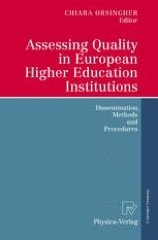
This book collects the evaluation and accreditation experiences gathered by higher education institutions in Finland, France, Germany, Italy, the Netherlands, Portugal, the United Kingdom and Sweden.

Argumentative Indicators: A Pragma-Dialectical Study identifies and analyses English words and expressions that are crucial for an adequate reconstruction of argumentative discourse. It provides the analyst of argumentative discussions and texts with a systematic set of instruments for giving a well-founded analysis which results in an analytic overview of the elements that are relevant for the evaluation of the argumentation. In the book a systematic connection is made between linguistic insights into the characteristics of argumentative discourse and insights from argumentation theory into the resolution of differences of opinion by means of argumentation.

In The Uses of Argument Stephen Toulmin proposed a new model for the layout of arguments, with six components: claim, data, warrant, qualifier, rebuttal, backing. Toulmin’s model has been appropriated, adapted and extended by researchers in the fields of speech communications, philosophy and artificial intelligence. The volume aims to bring together the best contemporary reflection in these fields on the Toulmin model and its current appropriation.

This volume describes the state-of-the-art advances regarding antifouling paint biocides and provides thorough evaluation of research and information on major topics such as occurrence and levels, environmental fate, analytical techniques and methods for the monitoring and control, environmental modeling, ecotoxicological effects and risk assessment placing emphasis on the knowledge acquired over the last 10 years. The contamination of the aquatic environment by antifouling compounds has been a topic of increasing importance during the last few years. The major classes of antifouling active biocides are discussed including the old-fashioned organotin compounds, the modern organic booster biocides and the promising naturally occurring antifoulant products. Therefore, the reader will get a balanced view of this developing field. Chapters were written by leading experts in their field who critically surveyed all the major areas of progress. This volume is an important resource and can constitute a good grounding in the field of antifouling paint biocides.
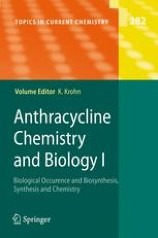
"This book … covers many different aspects of the origin, chemistry, and biosynthesis of one of the oldest but most important classes of anticancer agents. … In summary, the book is nicely produced, very well edited, and should serve as a valuable source of information … . This book will serve as an inspiration for scientists and students in the areas of chemistry, drug discovery, and biological evaluation. It should be an essential addition to institutional library collections … ."
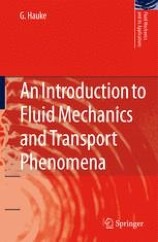
This book presents the foundations of fluid mechanics and transport phenomena in a concise way. It is suitable as an introduction to the subject as it contains many examples, proposed problems and a chapter for self-evaluation. The solutions to all problems are displayed in the corresponding appendix.
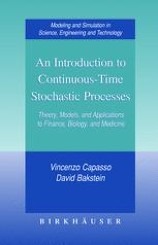
This book is introduction to the theory of continuous-time stochastic processes. A balance of theory and applications, the work features concrete examples of modeling real-world problems from biology, medicine, industrial applications, finance, and insurance using stochastic methods. No previous knowledge of stochastic processes is required. Key topics covered include: * Interacting particles and agent-based models: from polymers to ants * Population dynamics: from birth and death processes to epidemics * Financial market models: the non-arbitrage principle * Contingent claim valuation models: the risk-neutral valuation theory * Risk analysis in insurance

Daraa Highway - Ghabagheb - Syria
+963-15 2050 - 15 860 380 /1/2/3 - 11 662 3900