


Refine Results
Sort By
From
To


The Webisaliveenvironmentthatmanagesanddrivesawidespectrumofapp- cations in which a user may interact with a company, a governmental authority, a non-governmental organization or other non-pro?t institution or other users. User preferences and expectations, together with usage patterns, form the basis for personalized, user-friendly and business-optimal services. Key Web business metrics enabled by proper data capture and processing are essential to run an e?ective business or service. Enabling technologies include data mining, sc- able warehousing and preprocessing, sequence discovery, real time processing, document classi?cation, user modeling and quality evaluation models for them. Recipient technologies required for user pro?ling and usage patterns include recommendation systems, Web analytics applications, and application servers, coupled with content management systems and fraud detectors.

This edited volume contains the selected papers presented at the scientific board meeting of the German Cluster of Excellence on “Integrative Production Technology for High-Wage Countries”, held in November 2014. The topical structure of the book is clustered in six sessions: Integrative Production Technology, Individualised Production, Virtual Production Systems, Integrated Technologies, Self-Optimising Production Systems and Human Factors in Production Technology. The Aachen perspective on a holistic theory of production is complemented by conference papers from external leading researchers in the fields of production, materials science and bordering disciplines.

Fuzzy logic systems have been a hot topic in the scientific and academic community for more than half a century. The idea of making machines behave and make decisions like humans do is astounding. The development and implementation of fuzzy logic systems can be seen in various real physical applications in daily human life. The methods employed using fuzzy logic have resulted in innovative technologies. This book provides insights into understanding the principles and concepts behind the advances of fuzzy logic systems. It presents ideas concerning fuzzy logic systems and their technological applications. The book is arranged into two sections on theories and foundations of fuzzy logic systems and implementations of fuzzy logic systems in service to the community.

ADVANCED WIRED AND WIRELESS NETWORKS brings the reader a sample of recent research efforts representative of advances in the areas of recognized importance for the future Internet, In Part I, we bring ad-hoc networking closer to the reality of practical use. The focus is on more advanced scalable routing suitable for large networks, directed flooding useful in information dissemination networks, as well as self-configuration and security issues important in practical deployments. Part II illustrates the efforts towards development of advanced mobility support techniques (beyond traditional "mobile phone net") and Mobile IP technologies. The issues range from prediction based mobility support, through context transfer during Mobile IP handoff, to service provisioning platforms for heterogeneous networks. The focus of the final section concerns the performance of networks and protocols. Furthermore this section illustrates researchers’ interest in protocol enhancement requests for improved performance with advanced networks, reliable and efficient multicast methods in unreliable networks, and composite scheduling in programmable/active networks where computing resources equal network performance as transmission bandwidth.
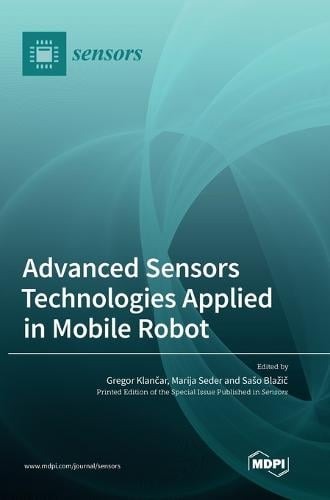
Contains contributions on the latest developments in mobile robotic systems and related research. Various topics with different ideas and applications from mobile robotics have found their place. New ideas are presented for mobile robots that specialise in cleaning floors, power lines and HVAC systems. We also find innovative approaches for navigation path planning using local minima-free potential fields, novel path primitives and/or their parameterisation for minimum-time planning, and various control approaches ranging from visual serving to model predictive and adaptive trajectory tracking, applied to wheeled robots, humanoid manipulators and flying robots. Localisation approaches using LiDAR, motion capture systems, fingerprint-based and biomechanical gait systems are also discussed.
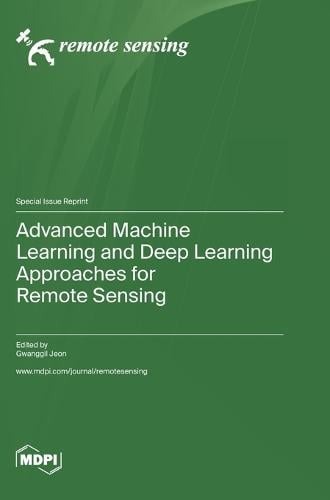
Provides research on how technologies such as artificial intelligence-based machine learning and deep learning can be applied to remote sensing. Through this, we can see the process of solving the existing problems of image and image signal processing for remote sensing. These techniques are computationally intensive and require the help of high-performance computing devices. With the development of devices such as GPUs, remote sensing technology, and aerial sensing technology, it is possible to monitor the Earth with high-resolution images and to obtain vast amounts of Earth observation data. The papers published in this reprint describe recent advances in big data processing and artificial intelligence-based technologies for remote sensing technology.
Divided into three parts. The first part discusses the architectural and design aspects of Flex 3 application development. It explains the internals of a Flex 3 application and advocates a few best practices to fine-tune your application to ensure maximum performance. It includes tutorials on creating custom components, data binding, and creating AIR-powered desktop applications. The second part concentrates on effectively integrating Flex 3 with server- and client-side technologies. Techniques for integration with Java and PHP are covered in detail, and content covering interaction with client-side technologies is also included. After reading the chapter on JavaScript integration, you will be ready to create applications that can use Ajax and Flex 3 together. The third and final part of the book is a unique and eclectic mix of some advanced topics like mash-ups, collaborative applications, 3D rendering, highly interactive visualization, and audio and video streaming.
investigates the role of artificial input delay in approximating unknown system dynamics, referred to as time-delayed control (TDC), and provides novel solutions to current design issues in TDC. Its central focus is on designing adaptive-switching gain-based robust control (ARC) for a class of Euler–Lagrange (EL) systems with minimal or no knowledge of the system dynamics parameters. The newly proposed TDC-based ARC tackles the commonly observed over- and under-estimation issues in switching gain. The consideration of EL systems lends a practical perspective on the proposed methods, and each chapter is supplemented by relevant experimental data

Access Control Systems: Security, Identity Management and Trust Models provides a thorough introduction to the foundations of programming systems security, delving into identity management, trust models, and the theory behind access control models. The book details access control mechanisms that are emerging with the latest Internet programming technologies, and explores all models employed and how they work. The latest role-based access control (RBAC) standard is also highlighted.

Part of the new series, Advanced Topics in Science and Technology in China, this book discusses concepts, theory, and core technologies of intelligent theory and human animation, including video based human animation, and intelligent technology of motion data management and reusing. It introduces systems developed to demonstrate the technologies of video based animation. Each chapter is independent. Lively pictures and demos will be presented to make the theory and technologies more understandable.

Specifically, this book covers the following topics: 6G Use Cases, Requirements, Metrics and Enabling Technologies, PHY Technologies for 6G Wireless, Reconfigurable Intelligent Surface for 6G Wireless Networks, Millimeter-wave and Terahertz Spectrum for 6G Wireless, Challenges in Transport Layer for Tbit/s Communications, High-capacity Backhaul Connectivity for 6G Wireless, Cloud Native Approach for 6G Wireless Networks, Machine Type Communications in 6G, Edge Intelligence and Pervasive AI in 6G, Blockchain: Foundations and Role in 6G, Role of Open-source Platforms in 6G, and Quantum Computing and 6G Wireless.

This book is so far the first that covers the current state of the art in 3D imaging for safety and security. Special attention was given to advanced 3D imaging technologies in the context of safety and security applications. Comparative evaluation studies showing advantages of 3D imaging over traditional 2D imaging for a given computer vision or pattern recognition task were emphasized. Moreover, additional experts in the field of 3D imaging for safety and security were invited by the editors for a contribution to this book.
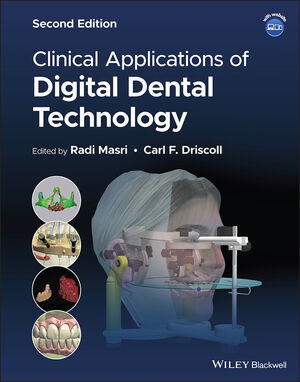
Provides comprehensive yet practical references to a wide range of potential uses for digital technology in dental practice, discussing a wide range of digital technologies including their indications, contraindications, advantages, disadvantages, limitations, and applications. Overall, the book emphasizes how to use digital dentistry in daily practice across all specialties. With broad coverage of the subject, Clinical Applications of Digital Dental Technology discusses digital imaging, digital impressions, digital prosthodontics, digital implant planning and placement, and digital applications in endodontics, orthodontics, and oral surgery. Each chapter is written by experts in each topic and covers applications for prosthodontics, implant dentistry, oral surgery, endodontics, orthodontics, and other specialty areas.

Addresses the use of different bioactive materials in dentistry, considering the performance of these biomaterials in the hard tissues of the tooth, and the response of the dental pulp, as well as the influence of the composition of these materials and of the individual’s systemic alterations in bioactivity and in antimicrobial activity. The several in vivo and in vitro tests to evaluate the bioactivity of a biomaterial will also be addressed.

Special attention has been given to bioactive materials developed to induce cells differentiation/stimulation, hard tissue formation and exert antimicrobial actions. New innovations are necessary to continue to help reinforcing existing technologies and to introduce new paradigms for treating dental disease and restoring teeth seriously compromised by caries lesions via biomimetic and more biological operative approaches. Dental bioactive materials is arguably the latest research area in dentistry and thus the amount of new research is overwhelming. However, in this day and age of evidence based practice it important for this new information to be distilled into a practical and understandable format.
Provides an introduction to next-generation applications and technologies for improving diagnostic accuracy and prediction of treatment outcomes in dentistry through the use of artificial intelligence (AI) and machine learning (ML). The authors attempt to bridge the gap between dental research and global health outcomes, as well as provide a comprehensive guide to general and clinical aspects of dental and oral health issues and the etiology, prevalence, assessment, and management of these conditions.
Includes eight chapters that focus on various important aspects of dental prosthetics and implantology, such as modern materials choices, prosthetic management of teeth malposition, and novel approaches to restoration design.

Covers updated practices and cutting-edge innovations pertinent to advanced Oral & Maxillofacial Surgeons, Otolaryngologists (Head and Neck Surgeons), and Facial Plastic Surgeons. Each chapter will review and update the reader on advancements in procedures and technologies in head and neck surgery.

Consists of one editorial, 12 original research articles and two review papers from scientists across the world, with expertise in materials for dental application. The main subjects covered are: biomaterials and techniques for oral tissue engineering and regeneration; biomaterials for surgical reconstruction; CAD/CAM technologies and dedicated materials; novel restorative and endodontic materials and instruments.

Examines exciting advancements in the field of ceramics, including nanotechnology, clean energy, and tribology as well as fundamental concepts like defects and structure. It is a comprehensive discussion on how today’s ceramics are processed and used in many of today’s critical technologies. It discusses current techniques for synthesizing durable and cost-effective ceramic components with biocompatibility, complexity, and high precision. This book is a comprehensive reference for researchers, engineers, dental clinicians, biologists, academics, and students interested in ceramics.

Daraa Highway - Ghabagheb - Syria
+963-15 2050 - 15 860 380 /1/2/3 - 11 662 3900