


Refine Results
Sort By
From
To


Provides an accessible introduction to knot theory, focussing on Vassiliev invariants, quantum knot invariants constructed via representations of quantum groups, and how these two apparently distinct theories come together through the Kontsevich invariant. Consisting of four parts, the book opens with an introduction to the fundamentals of knot theory, and to knot invariants such as the Jones polynomial. The second part introduces quantum invariants of knots, working constructively from first principles towards the construction of Reshetikhin-Turaev invariants and a description of how these arise through Drinfeld and Jimbo's quantum groups. Its third part offers an introduction to Vassiliev invariants, providing a careful account of how chord diagrams and Jacobi diagrams arise in the theory, and the role that Lie algebras play. The final part of the book introduces the Konstevich invariant. This is a universal quantum invariant and a universal Vassiliev invariant, and brings together these two seemingly different families of knot invariants. The book provides a detailed account of the construction of the Jones polynomial via the quantum groups attached to sl(2), the Vassiliev weight system arising from sl(2), and how these invariants come together through the Kontsevich invariant.
Ambient Intelligence is one of the new paradigms in the development of information and communication technology, which has attracted much attention over the past years. The aim is the to integrate technology into people environment in such a way that it improves their daily lives in terms of well-being, creativity, and productivity. Ambient Intelligence is a multidisciplinary concept, which heavily builds on a number of fundamental breakthroughs that have been achieved in the development of new hardware concepts over the past years. New insights in nano and micro electronics, packaging and interconnection technology, large-area electronics, energy scavenging devices, wireless sensors, low power electronics and computing platforms enable the realization of the heaven of ambient intelligence by overcoming the hell of physics.
Provides a concise explanation of the fundamentals and background of the surround sound recording and playback technology Ambisonics. It equips readers with the psychoacoustical, signal processing, acoustical, and mathematical knowledge needed to understand the inner workings of modern processing utilities, special equipment for recording, manipulation, and reproduction in the higher-order Ambisonic format. The book comes with various practical examples based on free software tools and open scientific data for reproducible research. The book includes an extensive mathematical appendix. The book offers readers a deeper understanding of Ambisonic technologies, and will especially benefit scientists, audio-system and audio-recording engineers.
Medical imaging has been transformed over the past 30 years by the advent of computerized tomography (CT), magnetic resonance imaging (MRI), and various advances in x-ray and ultrasonic techniques. An enabling force behind this progress has been the (so far) exponentially increasing power of computers, which has made it practical to explore fundamentally new approaches. In particular, what our group terms "model-based" modalities-which produce tissue property images from data using nonlinear, iterative numerical modeling techniques-have become increasingly feasible. Alternative Breast Imaging: Four Model-Based Approaches explores our research on four such modalities, particularly with regard to imaging of the breast: (1) MR elastography (MRE), (2) electrical impedance spectroscopy (EIS), (3) microwave imaging spectroscopy (MIS), and (4) near infrared spectroscopic imaging (NIS).
Introduces graph algorithms on an intuitive basis followed by a detailed exposition using structured pseudocode, with correctness proofs as well as worst-case analyses. Centered around the fundamental issue of graph isomorphism, the content goes beyond classical graph problems of shortest paths, spanning trees, flows in networks, and matchings in bipartite graphs. Advanced algorithmic results and techniques of practical relevance are presented in a coherent and consolidated way. Numerous illustrations, examples, problems, exercises, and a comprehensive bibliography support students and professionals in using the book as a text and source of reference. Furthermore, Python code for all algorithms presented is given in an appendix. Topics and features: Algorithms are first presented on an intuitive basis, followed by a detailed exposition using structured pseudocode / Correctness proofs are given, together with a worst-case analysis of the algorithms / Full implementation of all the algorithms in Python / An extensive chapter is devoted to the algorithmic techniques used in the book / Solutions to all the problems
Explains the important concepts and principles of image processing to implement the algorithms and techniques to discover new problems and applications. It contains numerous fundamental and advanced image processing algorithms and pattern recognition techniques to illustrate the framework. It presents essential background theory, shape methods, texture about new methods, and techniques for image processing and pattern recognition. It maintains a good balance between a mathematical background and practical implementation. This book also contains the comparison table and images that are used to show the results of enhanced techniques. This book consists of novel concepts and hybrid methods for providing effective solutions for society. It also includes a detailed explanation of algorithms in various programming languages like MATLAB, Python, etc.
This book clearly demonstrates how the Medium Access Control protocols impose a limit on the level of interference in ad-hoc networks. It has been shown that interference is upper bounded, and a new accurate method for the estimation of interference power statistics in ad-hoc and sensor networks is introduced here. Furthermore, this volume shows how multi-hop traffic affects the capacity of the network. In multi-hop and ad-hoc networks there is a trade-off between the network size and the maximum input bit rate possible per node. Large ad-hoc or sensor networks, consisting of thousands of nodes, can only support low bit-rate applications.
In the modern information era, managers must recognize the competitive opportunities represented by decision-support tools. Adaptive business intelligence systems combine prediction and optimization techniques to assist decision makers in complex, rapidly changing environments. These systems address the fundamental questions: What is likely to happen in the future? And what is the best decision right now? Adaptive Business Intelligence includes elements of data mining, predictive modeling, forecasting, optimization, and adaptability.
The book consists of two parts: the first discusses the fundamentals of matrix algebra in detail, while the second focuses on the applications of matrix algebra approaches in AI. Highlighting matrix algebra in graph-based learning and embedding, network embedding, convolutional neural networks and Pareto optimization theory, and discussing recent topics and advances, the book offers a valuable resource for scientists, engineers, and graduate students in various disciplines

Focuses on the materials used for dental applications looking at the fundamental issues and the developments that have taken place the past decade. While it provides a broad overview of dental materials, the chemicals that are used for the preparation and fabrication of dental materials are explained as well. Also, the desired properties of these materials are discussed and the relevance of the chemical, physical, and mechanical properties is elucidated. Methods for the characterization and classification, as well as clinical studies are reviewed here. In particular, materials for dental crowns, implants, toothpaste compositions, mouth rinses, as well as materials for toothbrushes and dental floss are discussed. For example, in toothpaste compositions, several classes of materials an chemcials are incorporated, such as abrasives, detergents, humectants, thickeners, sweeteners, coloring agents, bad breath reduction agents, flavoring agents, tartar control agents, and others. These chemicals, together with their structures, are detailed in the text.

A standard resource for undergraduate and postgraduate courses in dentistry. It provides fundamental coverage of the materials on which dentistry depends, covering the structure and chemistry that govern the behavior and performance of materials. Particular classes of materials include gypsum, polymers, acrylic, cements, waxes, ceramics and metals. Other chapters review surfaces, corrosion, mixing, casting, cutting and bonding, and mechanical testing. This updated edition, which includes substantial chapters on chemistry, has been extensively revised with new material on temporary restoration resins, hydraulic silicate cements and the practical aspects of wetting surfaces. Mindfully written to provide explanations for behavior, formulation, clinical and laboratory instructions and procedures, there is no comparable resource for researchers, students, teachers and practitioners in the field of dentistry.
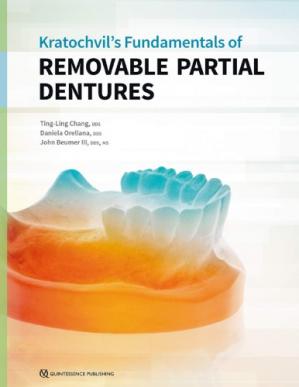
Provides an overview of the RPD design philosophy developed by Prof F. J. Kratochvil. His'RPI system'—a clasp assembly consisting of a rest, a proximal plate, and an I-bar retainer—changed how clinicians approach partial denture design. Topics in this book include RPD components and functions, design sequences for maxillary and mandibular RPDs, and techniques for surveying and determining the most advantageous treatment position. The authors provide illustrations of clinical cases throughout the book as well as an illustrated glossary of prosthodontic terminology. This book will prepare students and general practitioners to design and fabricate a biomechanically sound RPD framework for just about any dental configuration they encounter.
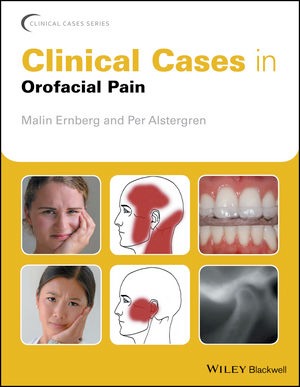
Individual cases cover temporomandibular joint disorders, masticatory muscle disorders, headache, neuropathic pain, dental pain, tooth wear, and dystonia. Following the popular Clinical Cases series style, cases are presented with associated academic commentary, including background information, diagnostic criteria and fundamental points that might influence the diagnosis, treatment planning or management of the case.
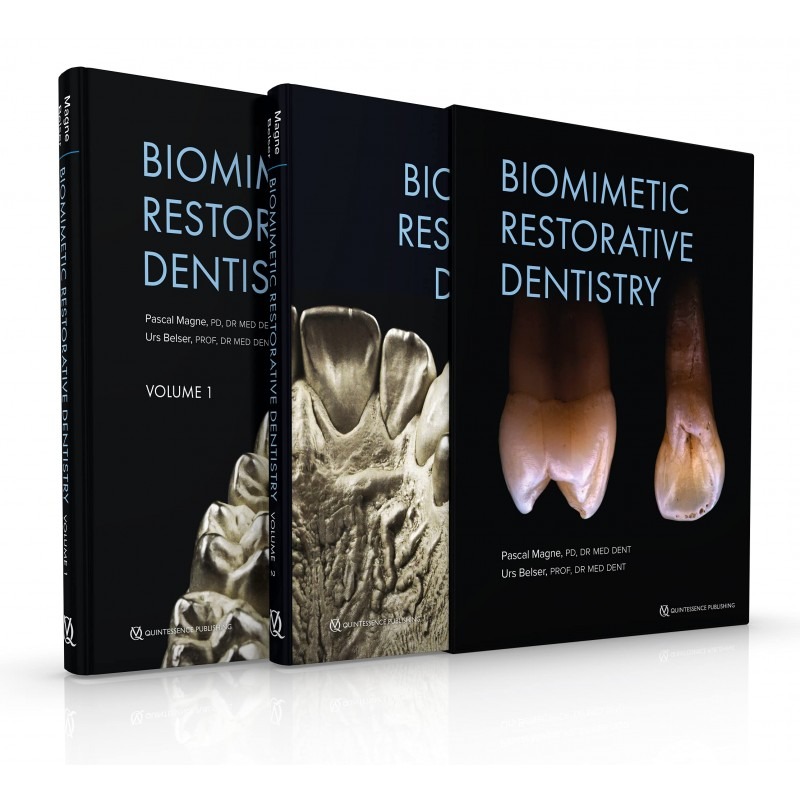
Takes the science of esthetic dental reconstruction to a new level both clinically and academically, and it offers all that a clinician could wish for in terms of indications and the classic clinical steps for tooth preparation, laboratory and CAD/CAM procedures, adhesive luting procedures, and maintenance. But above all, what makes this book so unique is the biomimetic principle—as such, restoring or mimicking the biomechanical, structural, and esthetic integrity of teeth is paramount. The core of this book centers on the application of the biomimetic principle in the form of bonded restorations using composite resins and ceramics, covering indications, treatment planning, diagnosis, tooth preparation and impression, laboratory and CAD/CAM procedures, final delivery, follow-up, maintenance, and repair. Written by a true master and artist, this book will undoubtedly inspire excellence in anyone who picks it up.
Examines exciting advancements in the field of ceramics, including nanotechnology, clean energy, and tribology as well as fundamental concepts like defects and structure. It is a comprehensive discussion on how today’s ceramics are processed and used in many of today’s critical technologies. It discusses current techniques for synthesizing durable and cost-effective ceramic components with biocompatibility, complexity, and high precision. This book is a comprehensive reference for researchers, engineers, dental clinicians, biologists, academics, and students interested in ceramics.
Examines and explains material from the 9th edition of the AASHTO LRFD Bridge Design Specifications, including deck and parapet design, load calculations, limit states and load combinations, concrete and steel I-girder design, bearing design, and more. With increased focus on earthquake resiliency, two separate chapters– one on conventional seismic design and the other on seismic isolation applied to bridges– will fully address this vital topic. The primary focus is on steel and concrete I-girder bridges, with regard to both superstructure and substructure design. / Includes several worked examples for a project bridge as well as actual bridges designed by the author / Examines seismic design concepts and design details for bridges / Presents the latest material based on the 9th edition of the LRFD Bridge Design Specifications / Covers fatigue, strength, service, and extreme event limit states / Includes numerous solved problems and exercises at the end of each chapter to illustrate the concepts presented
Includes the fundamental mechanical and physical properties of materials; properties, tests, and gradation designs of aggregates; production, composition, hydration, properties, and tests of lime and cement; composition, tests, and design of cement concrete; mechanisms, properties, and design of inorganic binder stabilized material; properties, tests, and grading of asphalt; composition, properties, tests, and designs of asphalt mixture; and properties, treatments, tests, and selections of steel.
Presents the state-of-the-art in civil engineering materials, including the fundamental theory of materials needed for civil engineering projects and unique insights from decades of large-scale construction in China. The title includes the latest advances in new materials and techniques for civil engineering, showing the relationship between composition, structure and properties, and covering ultra-high-performance concrete and self-compacting concrete developed in China. This book provides comprehensive coverage of the most commonly used, most advanced materials for use in civil engineering. This volume consists of eight chapters covering the fundamentals of materials, inorganic cementing materials, Portland cement concrete, bricks, blocks and building mortar, metal, wood, asphalt and polymers.

Provides a unique approach, combining the fundamentals of concept design and structural analysis of bridges in a single volume. The book provides insights into conceptual design with concrete, steel or composite bridge solutions as alternatives.

This book is the first comprehensive guideline for the beryllium-7 (Be-7) technique that can be applied to evaluate short-term patterns and budgets of soil redistribution in agricultural landscapes. While covering the fundamental and basic concepts of the approach, this book distinguishes itself from other publications by offering step-by-step instructions on how to use this isotopic technique effectively. It covers experimental design considerations and clear instruction is given on data processing. As accurate laboratory measurement is crucial to ensure successful use of Be-7 to investigate soil erosion, a full chapter is devoted to its specific determination by gamma spectrometry.

Daraa Highway - Ghabagheb - Syria
+963-15 2050 - 15 860 380 /1/2/3 - 11 662 3900