


Refine Results
Sort By
From
To

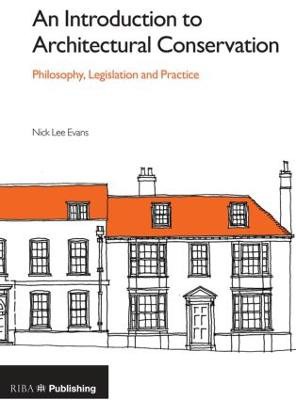
An Introduction to Architectural Conservation introduces non-specialist architects to the principles behind legislation concerning historic buildings. It is a practical guide to good working practice.
Marlon Blackwell is a passionate polemicist. He's also a very gifted architect. The projects in this first monograph on the "radical ruralist," as touted by the Royal Institute of British Architects, offer a new architectural language that at once celebrate the vernacular and transgress the boundaries of the conventional
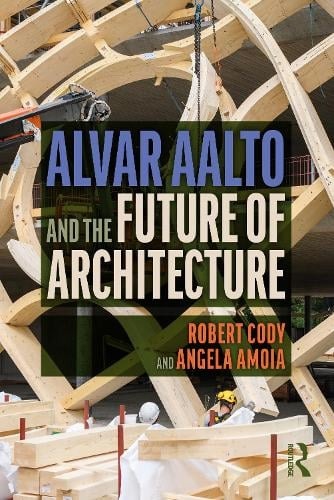
Exposes dialogue between history, theory, design, construction, technology, and sensory experience by means of digital simulations that enhance the assessment and values of our material choices. It offers a critical look to the past to inspire the future. This new edition looks to Alvar Aalto as the primary protagonist for channeling discussions related to these topics. Architects like ALA, Shigeru Ban, 3XN, Peter Zumthor, and others also play the role of contemporary guides in this review. The work of Aalto and selected contemporary architects, along with computer modeling software, showcase the importance of comprehensive design.
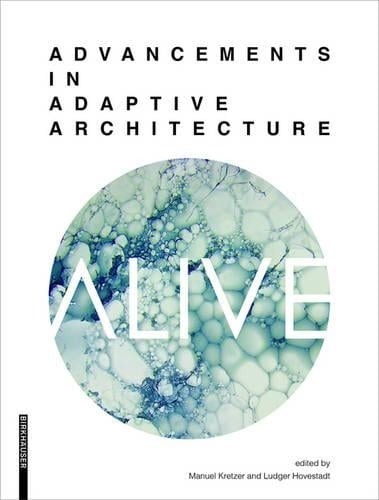
Proposes to embrace the unknown and cultivate the architectural discipline towards an integrated and cross-disciplinary practice. It unravels compelling innovative and forward-thinking design narratives by leading international practitioners and researchers who investigate novel associations between architecture, nature and humanity for a future, alive architecture.
Initiates a fresh discussion of affordability in rural housing set in the context of the rapidly shifting balance between rural and urban populations. It conceptualises affordability in rural housing along a spectrum that is interlaced with cultural and social values integral to rural livelihoods at both personal and community level. Developed around four intersecting themes: explaining houses and housing in rural settings; exploring affordability in the context of aspirations and vulnerability; rural development agendas involving housing and communities; and construction for resilience in rural communities, the book provides an overview of some of the little understood and sometimes counter-intuitive best practices on rural affordability and affordable housing that have emerged in developing economies over the last thirty years.
Presents 50 spectacular conversion and reuse projects worldwide, including buildings such as the TWA Hotel at NewYork's John F. Kennedy Airport, the CaixaForum in Madrid, and the New Museum in Berlin. The projects are presented using a new classification system that addresses practitioners as well as academics.
provides thought-provoking and inquisitive insights into how we can prolong the useful life of buildings by designing them to be more adaptable, and hence create a more sustainable built environment. The book provides a theoretical foundation counterpointed by the experiences and ideas of those involved in the design and use of buildings. It explains many approaches to designing for change, with lessons from history, and case studies including The Cedar Rapids Public Library, Kentish Town Health Centre and Folkestone Performing Arts Centre, which stretch our thinking beyond the conventional notions of adaptability. The authors reveal the many conditions that make it a complex design phenomenon, by considering the purpose, design and business case of buildings as well as the physical product. Full of summaries, diagrams, reference charts, tables, and photos of exemplar solutions for use as conversational tools or working aids, this book is for any professional or student who wants to research, question, imagine, illustrate - and ultimately design for - adaptation.
Provides expert planners and architects but also interested developers with practical knowledge on the subject of acoustics in high-rise architecture, beginning with standards on methods of planning and prognosis and moving on to the areas of acoustics of rooms and architecture and noise protection in urban planning. Presents typologically specific acoustic and soundproofing measures Practical knowledge about acoustics in architecture, and noise protection in urban planning, as well as methods for planning and prognosis Examples of built projects
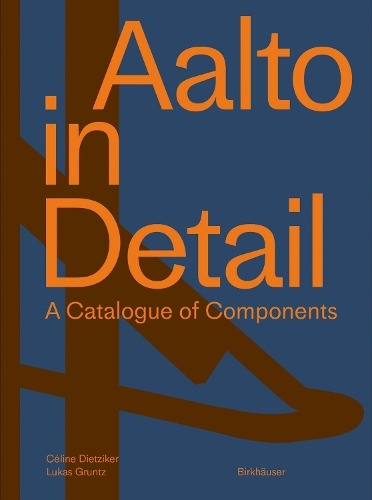
Celebrates the rich detail in the work of Aino, Elissa, and Alvar Aalto. Every support, railing, and handle is the result of intensive formal and functional research. The authors document 50 Aalto buildings - some well-known and others less so - and arrange their photographs by component into 20 chapters. The result is a rich photographic record that will serve as a source of inspiration for every architect. From door handles to skylights: Aalto's infinite wealth of components Inspiring documentation with 400 systematically arranged photos Unconventionally detailed solutions with special attention paid to technical feasibility
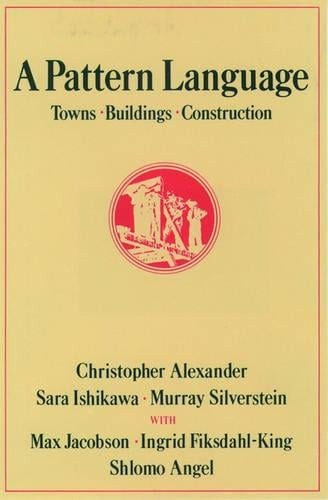
In this volume, 253 archetypal patterns consisting of problem statements, discussions, illustrations, and solutions provide lay persons with a framework for engaging in architectural design.
Provides an index of ideas, theories, projects, and definitions that string into a methodology for evaluating the contemporary language of architecture described as “contemporism” through a review of topology (form) and typology (system and elements). Trying to answer the postmodern question of how to move beyond modernism through a thread of architectural styles that tried to respond to deficiencies from the modern promise and contextual changes. Yet, the question remains, should this ongoing struggle to move beyond modernism be a stylistic battle? Has the present architectural practice ever left the modernist tendencies, and is there a structure for a contemporary language in architecture? Presents a collection of highly illustrated projects that have worked under these parameters to break away from modernism in order to present a holistic integration of topology and typology as a language for “contemporism.” The index is illustrated with individual spreads, which can be read sequentially or independently, and encourages the reader to make their own connections. It also includes interviews and contributions from Toyo Ito, Anthony Vidler, Ben van Berkel, Christian Kerez, and Greg Lynn.
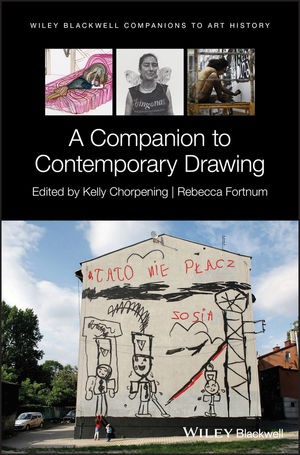
Textbook on the power, condition, and expanse of contemporary fine art drawing. his textbook: Demonstrates ways contemporary issues and concerns are addressed through drawing Reveals how drawing is used to make powerful social and political statements Situates works by contemporary practitioners within the context of their historical moment Explores how contemporary art practices utilize drawing as both process and finished artifact Shows how concepts of observation, representation, and audience have changed dramatically in the digital era Establishes drawing as a mode of thought
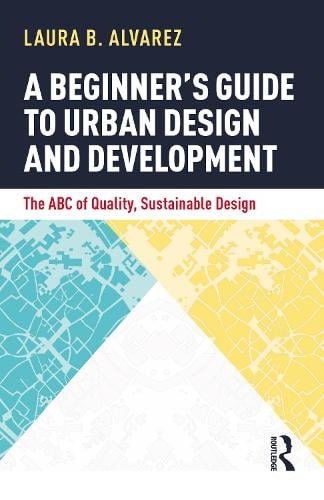
Provides invaluable guidance to all those with an interest in placemaking and the built environment, from those with no experience to those who have worked for many years in industry, illustrating key principles that will secure higher quality, more sustainable design in accessible, jargon-free language. Explains the design process in a straightforward way, exploring the different roles and highlighting the opportunities and limitations different agencies have to influence design over the various stages of the process. Examples from the UK and worldwide look at how the system operates and how best practice can make a real difference on the ground. Case studies examine situations where quality or sustainability fell short – and how this could have been avoided. This book also showcases a variety of evaluation tools, explaining how they operate, and giving guidance on how to create project-specific tools to drive schemes forward. With community empowerment at its core, the book explains technical language and shares bountiful knowledge to broaden place democracy and make influencing design accessible to many, not just a few.
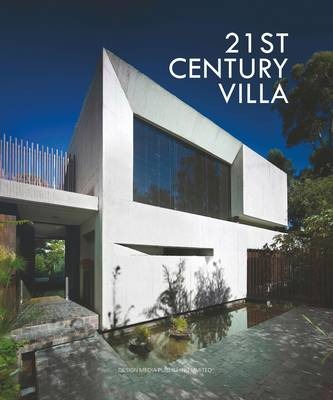
People's everchanging lifestyles bring about more and more requirements for the overall qualities of houses, and the demands for residences have marched towards the psychological dimension and cultural sphere. Consequently, there arise new design trends and new requirements for environment, material selection and design concept. The design projects in this book lead readers to perceive the comfort and cosiness of the natural space. The designers of these projects have created more natural, and convenient living spaces in the most natural and purest design languages, giving them a comprehensive and vivid explanation of the architecture design concept that buildings are created for people.
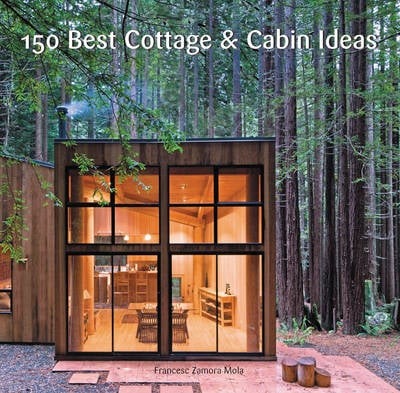
This is an ultimate resource for creating the ideal remote retreat. Discover 150 cottages and cabins from around the world that feature the luxury of modern home construction while preserving the surrounding landscape and utilizing local natural resources. These enviable dwelling showcase inspirations for homeowners, designers, and architects - from exposed-beam ceilings and built-in furnishings to large open-floor plans and floor-to-ceiling windows that accentuate picturesque views of the great outdoors. This volume highlights hidden sanctuaries that offer spacious, comfortable, and, most important, more natural living environments with a range of stunning full-colour photographs and detailed design plans.
Sets out the essential elements of low-energy architecture in a fresh, intuitive way. Where ever-changing technology and complex legislation can cloud the designer’s thought-process, this book equips you with the fundamentals you need to minimise CO2 emissions, design for low-energy use and work with, not against, the forces of nature.

This professional work led to a personal passion, and so the illustrators chose to draw a small series on rosier subjects like maps and love. But as the world around them grew darker, they decided to explore the other end of the emotional spectrum and devote themselves to evil. 100% Evil is the result: a thoughtful, comical, andat timesjoyful book that just goes to show that sometimes it's good to be bad.
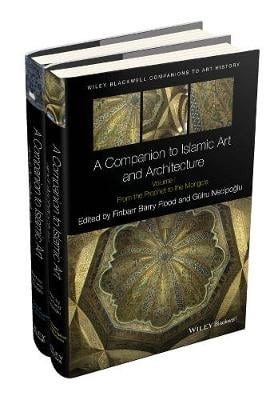
Bridges the gap between monograph and survey text by providing a new level of access and interpretation to Islamic art. The more than 50 newly commissioned essays revisit canonical topics, and include original approaches and scholarship on neglected aspects of the field. showcases more than 50 specially commissioned essays and an introduction that survey Islamic art and architecture in all its traditional grandeurEssays are organized according to a new chronological-geographical paradigm that remaps the unprecedented expansion of the field and reflects the nuances of major artistic and political developments during the 1400-year span. Represents recent developments in the field, and encourages future horizons by commissioning innovative essays that provide fresh perspectives on canonical subjects, such as early Islamic art, sacred spaces, palaces, urbanism, ornament, arts of the book, and the portable arts while introducing others that have been previously neglected, including unexplored geographies and periods, transregional connectivities, talismans and magic, consumption and networks of portability, museums and collecting,
This volume is an interdisciplinary book, which introduces, in a very readable way, state of the art research in the fundamental topics of mathematical modelling of Biosystems. These topics include: the study of Biological Growth and its mechanisms, the coupling of pattern to form via theorems of Differential Geometry, the human immunodeficiency virus dynamics, the inverse folding problem and the possibility of analysing true protein backbone flexibility, the Biclustering techniques for the organization of microarray data, the analytical approach to the modelling of biomolecular structure via Steiner trees, the action of biocides on resistance mechanisms of mutated and phenotypic bacteria strains, a description of the fundamental processes for the distribution and abundances of species towards a unified theory of Ecology, and a special introduction to Protein Physics aiming to explain the all-or-none first order phase transitions from native to denatured states.
Mathematics needs Sustainable Development. When science was gradually reinvented in European medieval societies, it was legitimised as contributing to the disclosure of God’s divine creation. The conflicts that emerged became well known as a result of the clash between Galileo and the Church. Science found a new legitimacy through recognition that it was a powerful force against superstition. In the Enlightenment the argument was pushed forward by attributing Progress to the advancement of science: science could produce a better world by promoting rationality. In our modern society, science has become intimately linked to technology. Science for its own sake unfortunately rarely has positive outcomes in terms of research grant applications. Meanwhile, science and technology, and the progress they are supposed to produce, meet with wide scale scepticism. We all know of the current global problems: climate change, resource depletion, a thinning ozone layer, space debris, declining biodiversity, malnutrition, dying ecosystems, global inequity, and the risk of unprecedented nuclear wars

Daraa Highway - Ghabagheb - Syria
+963-15 2050 - 15 860 380 /1/2/3 - 11 662 3900