


Refine Results
Sort By
From
To

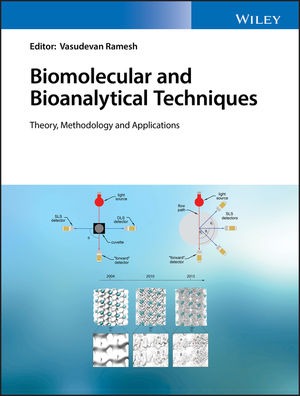
Offers an introduction to, and a basic understanding of, a wide range of biophysical techniques. The text takes an interdisciplinary approach with contributions from a panel of distinguished experts. With a focus on research, the text comprehensively covers a broad selection of topics drawn from contemporary research in the fields of chemistry and biology. Each of the internationally reputed authors has contributed a single chapter on a specific technique. The chapters cover the specific technique’s background, theory, principles, technique, methodology, protocol and applications.
Biomining is the biotechnology that uses microorganisms to recover metals, in particular copper and gold, from ores and concentrates. Having developed from a very simple operational (in terms of both engineering and biology) process, biomining has developed into a multifaceted technology, to the extent that many of the largest industrial stirred tanks and heaps throughout the world are employed for bioprocessing minerals. This book has a strong applied approach and describes emerging and established industrial processes, as well as the underlying theory of the process, and the biology of the microorganisms involved. Chapters have been written by personnel from leading biomining companies, consultants and internationally recognized researchers and academics
Looks at the applications of biomarkers as important tools for herbal drug discovery, presenting research on phytoconstituents with advanced nanotechnological applications for healthcare benefits. Herbal drug discovery based on biomarkers is an emerging area in complementary and alternative medicine that has tremendous potential in healthcare. Conventional medications have limited efficacy and high toxicity, whereas herbal drugs are said to provide wide structural diversity that is not usually seen with conventional/synthetic drug molecules. Recognition of various herbal constituents, such as terpenoids, fatty acids, flavonoids and steroids, are well explored in the management and treatment of various disorders in this volume. These agents target various biomarkers such as nitric oxide (NO), cytokines, chemokines, adhesion molecules, NF- kβ, lipoxygenase (LOX), and arachidonic acid. Reviews the literature on inflammatory biomarkers in the treatment of diseases Looks at the development of herbal drug discovery based on biomarkers Explores emerging concepts of nanomedicines for herbal drug delivery Takes an interdisciplinary approach, with application to disciplines related to medical, pharmaceutical, biotechnological, Ayurvedic, Unani and biomedical engineering fields

Covers aspects of fundamental and applied nitrogen-fixation research, from biochemistry and chemistry through genetics, regulation and physiology to agricultural practice and environmental impact. This work describes progress on studies of potential catalysts for nitrogen fixation; how the N2-fixing process is regulated in living cells; and more.
he most conspicuous biological invasions in terrestrial ecosystems have been by exotic plants, insects and vertebrates. Less conspicuous but possibly of equal importance are invasions by soil invertebrates, which are occurring literally beneath our feet. Familiar examples include the South American fire ant (Solenopsis invicta) which has invaded North America and Australia, and the New Zealand flatworm (Arthurdendyus triangulatus) which has become wide-spread in the United Kingdom; both have caused considerable ecological and economic damage. There is now evidence that exotic earthworm invasions are increasing world-wide and may be having significant impacts on soil processes and plant communities in some regions. Much remains to be learned about these ‘cryptic’ biological invasions. The papers in this book are based on efforts by an international group of soil ecologists to assess the biological and ecological mechanisms of earthworm invasions, their geographic extent and impacts on terrestrial ecosystems, and possible means by which earthworm invasions might be mitigated.
The conference was organized by the Laboratory of Theoretical Genetics, Institute of Cytology and Genetics, Siberian Branch of the Russian Academy of Sciences, Novosibirsk, Russia. The material covers the most recent topics in bioinformatics, including (i) regulatory genomic sequences: databases, knowledge bases, computer analysis, modeling, and recognition; (ii) large-scale genome analysis and functional annotation; (iii) gene structure detection and prediction; (iv) comparative and evolutionary genomics; (v) computer analysis of genome polymorphism and evolution; computer analysis and modeling of transcription, splicing, and translation; structural computational biology: structure- function organization of genomic DNA, RNA, and proteins; (vi) gene networks, signal transduction pathways, and genetically controlled metabolic pathways: databases, knowledge bases, computer analysis, and modeling; principles of organization, operation, and evolution; (vii) data warehousing, knowledge discovery and data mining; and (viii) analysis of basic patterns of genome operation, organization, and evolution.
This open access book presents a comprehensive analysis of biofuel use strategies from an interdisciplinary perspective using sustainability science. This interdisciplinary perspective (social science-natural science) means that the strategies and policy options proposed will have significant impacts on the economy and society alike. Biofuels are expected to contribute to reducing greenhouse gas emissions, revitalizing economies in agricultural communities and alleviating poverty. However, despite these anticipated benefits, international organizations such as the FAO, OECD and UN have published reports expressing concerns that biofuel promotion may lead to deforestation, water pollution and water shortages. The impacts of biofuel use are extensive, cross-sectoral and complex, and as such, comprehensive analyses are required in order to assess the extent to which biofuels can contribute to sustainable societies.
The book identifies Angola as one of the most biologically diverse countries in Africa, but notes that its fauna, flora, habitats and the processes that drive the dynamics of its ecosystems.
This book is the first complete biography of one of the founders of fishery science, William Edwin (Bill) Ricker (1908 - 2001). Bill is immortalized in the Ricker Curve. He developed the Curve in his studies of stock and recruitment in fisheries, but it has been widely applied in many areas of science. Bill is best known for his contributions to fishery science, but he was also internationally recognized as an entomologist and a scientific editor. This book combines Bill’s own recollections with contributions from those who knew him and worked with him as a colleague during his multifaceted career. In an article written shortly before his death, Bill gives his own account of his career and intellectual development.
Through a set of incisive essays, this incredibly timely book shows how much the COVID-19 pandemic has exposed both vulnerabilities and opportunities - for (racial) capitalism and its discontents alike to intervene in food supply chains. A most welcome publication! This book takes the upheaval of the global COVID-19 pandemic as a springboard from which to interrogate a larger set of structural, environmental and political fault lines running through the global food system. In a context in which disruptions to the production, distribution, and consumption of food are figured as exceptions to the smooth, just-in-time efficiencies of global supply chains, these essays reveal the global food system as one that is inherently disruptive of human lives and flourishing, and of relationships between people, places, and environments. The pandemic thus represents a particular, acute moment of disruption, offering a lens on a deeper, longer set of systemic processes, and shining new light on transformational possibilities.
Before AIDS, the role of behavioral interventions in preventing transmission of sexually transmitted diseases was acknowledged in text books and journals but rarely promoted effectively in public health practice. Informed by a comprehensive knowledge of behavioral theory, intervention methods, and affected populations, the authors of this important book examine the central role of behavioral interventions in combating STDs. The book addresses the complexities and social contexts of human behaviors which spread STDs, the cultural barriers to STD education (ranging from conservative mores to "stay out of my bedroom" libertarianism), and the sociopolitical nuances surrounding treatment.
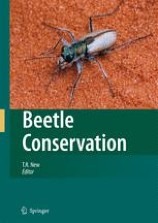
Interest in beetle conservation has long been evident, with many papers treating these abundant, ecologically important and popular insects. However, this issue of Journal of Insect Conservation is the first to be dedicated entirely to beetles, and contains a number of papers, predominantly from outside western Europe, to demonstrate the variety and scope of problems and conservation concerns that surround these insects. A short introductory perspective is followed by eight original contributions, in which beetles from many parts of the world are considered, and in which some major threats to their wellbeing are evaluated.
Presents an updated discussion on the chemical composition and biological properties of the main bee products, which until now have been presented separately in different editions This book scoops out studies about bee products most used in marketing and in traditional medicine such as honey, royal jelly, propolis, bee pollen and bee venom Discusses chemical composition and biological function of the different bee products on topics such as nutrition, aging and age-related diseases, cancer, neurodegenerative diseases and pathogen infections Bee products are rich in several essential nutrients and non essential nutrients, as sugars, minerals, proteins, free amino acids, vitamins, enzymes and polyphenols, that seem to be closely related to their biological functions. The effects of these products in nutrition, aging and age-related diseases, cancer, neurodegenerative diseases and pathogen infections are discussed.
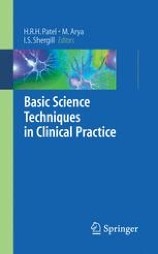
Medical researchers including doctors, nurses, medical students and allied health professionals are required to undertake a period of research as part of their career pathway. Basic Science Techniques in Clinical Practice covers the main areas, allowing anyone to set up and complete research projects and this information can easily be translated to clinical projects. Written by international authors to provide a flavor from many institutions, the book’s appeal is cross-sectional, both at hospital and primary care levels worldwide.
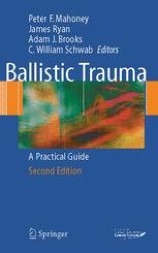
Ballistic Trauma: A Practical Guide provides a concise guide to the clinical and operational issues surrounding the management of the ballistic casualty. The book crystallizes the knowledge and experience accrued by those dealing with ballistic trauma on a regular basis and extends this to those who have to manage these patients on an occasional basis only.
Provides up-to-date guidance on techniques used to work with baculoviruses and insect cells. The book provides basic methods to create recombinant baculoviruses, to improve productivity, to produce a variety of products, to purify products, to quantify baculovirus stocks or to quantify product produced, and it concludes with alternative uses of either baculovirus or insect cells as tools. Written for the highly successful Methods in Molecular Biology series, chapters include introductions to their respective topics, lists of the necessary materials and reagents, step-by-step and readily reproducible laboratory protocols, and tips on troubleshooting and avoiding known pitfalls.
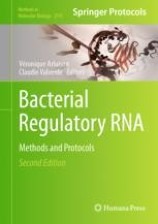
Details new and updated methods used for studying prokaryotic non-coding RNAs and their protein accomplices. Chapters detail discovery of ncRNAs, characterization of their structure, functions, and their interactomes. Written in the highly successful Methods in Molecular Biology series format, chapters include introductions to their respective topics, lists of the necessary materials and reagents, step-by-step, readily reproducible laboratory protocols, and tips on troubleshooting and avoiding known pitfalls.
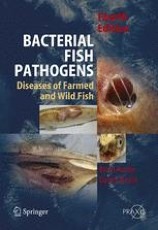
This completely revised and updated edition of Bacterial Fish Pathogens is a comprehensive discussion of the biological aspects of the bacterial taxa which cause disease in fish. Since the 3rd edition was published in 1999, much has changed in the control of disease of farmes and wild fish. New pathogens such as Pasteurella skyensis have been described, and antimicrobial compounds for the control of disease have been replaced by alternative methods, such as probiotics. Consideration is given to all the bacterial taxa which have at some time been reported as fish pathogens, whether they are secondary invaders of already damaged tissues or serious, primary pathogens.
Brings together new and updated methods to explore the structure and function of bacterial chromatin from molecular to the cellular scale. Chapters detail experimental protocols of in vivo and in vitro approaches, approaches to genome structure modeling, and data analysis. Written in the highly successful Methods in Molecular Biology series format, chapters include introductions to their respective topics, lists of the necessary materials and reagents, step-by-step, readily reproducible laboratory protocols, and key tips on troubleshooting and avoiding known pitfalls.
Autoimmune Diseases in Endocrinology is a comprehensive and novel text that examines key features that predispose individuals to autoimmune diseases.

Daraa Highway - Ghabagheb - Syria
+963-15 2050 - 15 860 380 /1/2/3 - 11 662 3900